7 States That Recognize North Carolina Concealed Carry Permits
You can legally carry concealed with your North Carolina permit in seven states: South Carolina, Georgia, Virginia, Tennessee, West Virginia, Kentucky, and Alabama. These states recognize North Carolina concealed carry permits, allowing permit holders to carry concealed firearms under their laws.
Understanding the reciprocity agreements is crucial for safe and lawful gun ownership when traveling. Each state has specific rules, such as age limits, places where carrying is prohibited, and whether open or concealed carry is allowed.
You’ll need to follow these local laws carefully and always carry your permit and ID. If you want to know more about the detailed rules and stay fully compliant, keep exploring these states’ regulations.
Staying informed helps you avoid legal issues and ensures responsible firearm use.
Key Takeaways
- North Carolina concealed carry permits are recognized by South Carolina, Georgia, Virginia, Tennessee, West Virginia, Kentucky, and Alabama.
- Permit holders can legally carry concealed without additional permits in these seven states.
- Reciprocity requires carrying both the permit and valid ID to prove legal carry.
- Each state has unique carry restrictions and prohibited locations permit holders must follow.
- Always verify current state laws and reciprocity agreements before traveling with a concealed carry permit.
States That Recognize North Carolina Concealed Carry Permits
Although gun laws vary widely across the U.S., if you hold a North Carolina concealed carry permit, you’ll be glad to know that several states recognize it, allowing you to carry legally without needing additional permits. These states include South Carolina, Georgia, Virginia, Tennessee, West Virginia, Kentucky, and Alabama. When you travel to any of these states, your North Carolina permit grants you the right to carry a concealed handgun under their laws.
It’s important to remember that even though these states honor your permit, the specific rules about where and how you can carry might differ. So, before you head out, make sure you understand each state’s restrictions on carrying in places like schools, government buildings, or private property. This way, you can stay compliant and avoid legal trouble while exercising your rights responsibly across state lines.
Understanding Reciprocity Rules for North Carolina Concealed Carry Permits
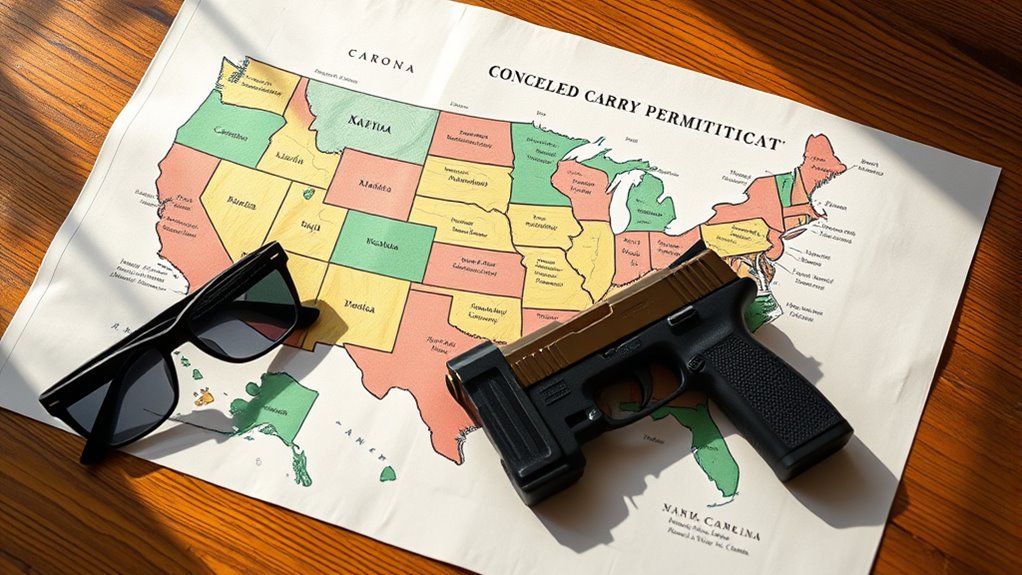
When you hold a North Carolina concealed carry permit, understanding reciprocity rules is crucial to guarantee you carry legally in other states. Reciprocity means some states recognize your North Carolina permit, allowing you to carry without obtaining a new one. However, each state sets its own rules, and not all have the same agreements with North Carolina.
You need to check which states honor your permit and what restrictions apply, like age limits or prohibited locations. Also, some states require you to follow their specific carry laws even if they accept your permit. Ignoring these rules can lead to legal trouble or permit revocation.
Since reciprocity agreements can change, it’s smart to verify current regulations before traveling. Using official state websites or trusted legal resources helps guarantee you stay compliant and avoid surprises while carrying concealed outside North Carolina. Always carry your permit and ID to prove your eligibility when requested.
Carrying Legally in Tennessee With a North Carolina Permit
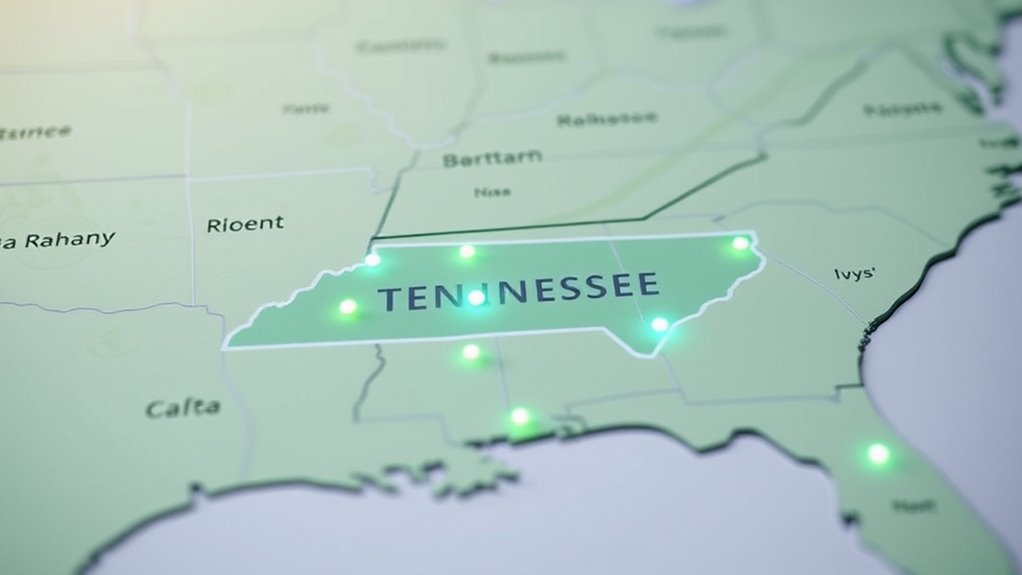
If you carry a North Carolina concealed carry permit, you’ll be glad to know Tennessee recognizes it for legal concealed carry. This means you can carry your concealed handgun in Tennessee without obtaining an additional permit, as long as you follow Tennessee’s laws. You must be at least 21 years old and comply with any restrictions on where firearms are allowed, such as schools, government buildings, and private properties that prohibit guns.
Keep in mind, Tennessee law requires that your firearm be carried either concealed or in a manner consistent with their regulations. Open carry is generally allowed without a permit for those 21 and older, but since you’re using an NC permit, concealed carry rules apply. Also, be mindful of local ordinances and any changes in state laws.
Always carry your permit and a valid photo ID while armed to avoid legal complications. Staying informed ensures you remain compliant and safe while carrying in Tennessee.
What NC Permit Holders Should Know About Carrying in South Carolina
Since South Carolina recognizes North Carolina concealed carry permits, you can legally carry your concealed handgun there, but you’ll need to follow South Carolina’s specific rules and restrictions. For instance, you must be at least 21 years old and cannot carry in places where firearms are expressly prohibited, like government buildings, schools, and certain private properties.
South Carolina allows open carry only if you have a permit, so without one, concealed carry is your legal route.
Key Rules for Using Your North Carolina Permit in Georgia
Although Georgia recognizes concealed carry permits from North Carolina, you’ll need to adhere to specific state rules to carry legally. First, your North Carolina permit allows you to carry concealed in Georgia, but open carry is generally not permitted with an out-of-state license. Make sure your permit is valid and hasn’t expired, as Georgia requires carriers to hold a current, valid permit.
You must be at least 21 years old to carry concealed with an out-of-state permit. Additionally, certain locations remain off-limits regardless of your permit, such as government buildings, schools, and private property owners who prohibit firearms. When stopped by law enforcement, you’re required to inform the officer that you’re carrying a concealed weapon and present your permit upon request.
Recognition of North Carolina Permits in Virginia and Maryland
Two neighboring states, Virginia and Maryland, recognize North Carolina concealed carry permits, but each has distinct requirements you should know. In Virginia, your North Carolina permit allows you to carry concealed weapons legally, as the state honors NC’s permit under its reciprocity laws. However, you must be aware that Virginia enforces strict rules about prohibited locations and firearm handling, so always stay updated on local laws.
Maryland also recognizes North Carolina permits, but with more restrictions. Although Maryland allows carry for permit holders from states with reciprocity, it requires you to follow their specific regulations, such as not carrying in certain public buildings and respecting Maryland’s magazine capacity limits. You won’t need a Maryland permit to carry concealed if you have a valid North Carolina license, but it’s essential to understand Maryland’s unique limitations to avoid legal trouble. Always check current laws before carrying in either state.
How to Stay Compliant When Carrying Out of State With Your North Carolina Permit
When carrying your North Carolina concealed carry permit out of state, you need to understand and follow the specific laws of the state you’re visiting. Each state has different rules about where you can carry, how your permit is recognized, and any restrictions that apply.
To stay compliant, always check the state’s official website or legal resources before traveling with your firearm.
Here’s a quick guide to help you compare essential legal aspects across states recognizing your NC permit:
| State | Allowed Carry Locations | Permit Recognition Type |
|---|---|---|
| Virginia | Public, except schools | Full reciprocity |
| Maryland | Limited in schools & government | Partial reciprocity |
| Tennessee | Public, no permit required | Recognition with restrictions |
| South Carolina | Public, some restrictions | Full reciprocity |
| Georgia | Public, some private property restrict | Full reciprocity |
Following these rules keeps you safe and legal while traveling with your concealed carry permit.
Frequently Asked Questions
How Do I Apply for a North Carolina Concealed Carry Permit?
You’ll need to complete a firearms safety course, gather required documents like your ID, and submit an application to your county sheriff’s office.
Don’t forget to pay the fee and allow time for background checks.
What Are the Eligibility Requirements for a North Carolina Permit?
Did you know over 200,000 North Carolinians hold concealed carry permits? To qualify, you must be 21 or older, complete a firearms safety course, have no felony convictions, and meet mental health requirements without restrictions.
How Long Is a North Carolina Concealed Carry Permit Valid?
Your North Carolina concealed carry permit is valid for five years.
You’ll need to renew it before it expires to keep carrying legally.
Don’t forget to stay updated on any changes in renewal procedures or requirements.
Can I Carry a Concealed Weapon in North Carolina Without a Permit?
No, you can’t legally carry a concealed weapon in North Carolina without a permit. Open carry is generally allowed, but for concealed carry, you must have a valid permit to avoid legal trouble.
Carrying a concealed weapon without the proper permit can result in serious legal consequences. It is important to understand and comply with the state’s laws regarding firearm possession. Always ensure you have the necessary documentation before carrying concealed.
What Are the Penalties for Carrying Without a Permit in North Carolina?
Imagine walking freely yet suddenly facing harsh consequences. If you carry concealed without a permit in North Carolina, you could face misdemeanor charges, fines, and even jail time.
Conclusion
If you thought carrying your North Carolina permit out of state was a maze, think again—it’s practically a VIP pass in seven states! Knowing the ins and outs of reciprocity rules is like having a secret weapon for your peace of mind. Just imagine breezing through Tennessee, South Carolina, Georgia, Virginia, and Maryland without a hitch.
Stay sharp, follow the rules, and you’ll be the undisputed concealed carry ninja across state lines! Understanding the states that recognize North Carolina concealed carry permits can make all the difference. This knowledge ensures you stay compliant and confident wherever you go.