How to Ensure It’s Safe to Own a Gun
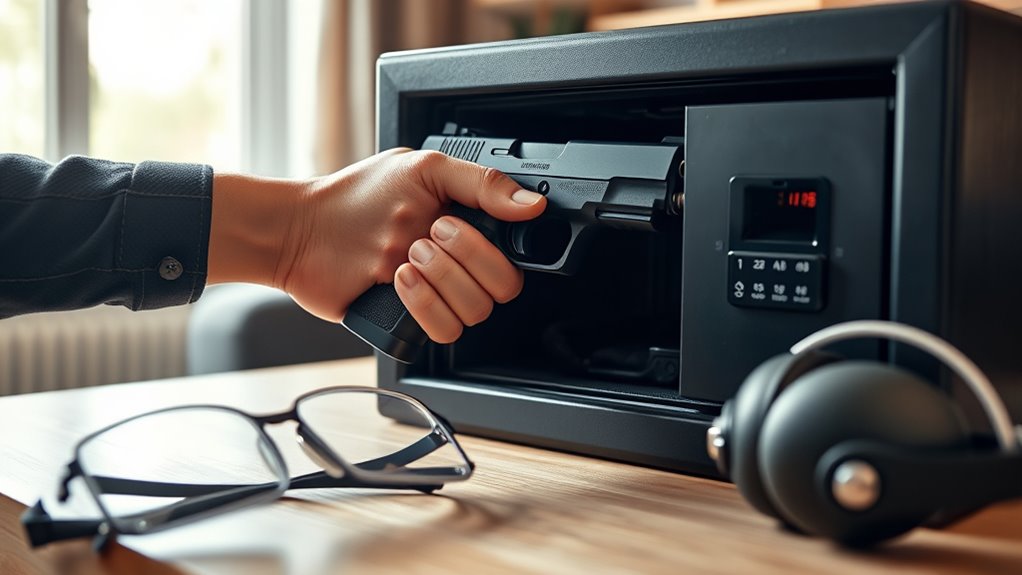
To guarantee it’s safe to own a gun, it’s essential to understand gun safety and follow all legal requirements carefully. Proper gun safety includes securing your firearms with quality safes and trigger locks to prevent unauthorized access.
Always handle guns with caution—treat them as if they are loaded, keep your finger off the trigger until ready to shoot, and point the muzzle in a safe direction.
Enroll in certified training programs to learn responsible gun handling and regularly clean and maintain your firearm for optimal performance.
Teaching family members about gun safety rules and creating an emergency plan will help everyone stay prepared for any situation.
There’s much more to explore on how to responsibly protect yourself and others while ensuring safe gun ownership.
Key Takeaways
- Follow all federal, state, and local gun laws, including background checks, permits, and usage restrictions.
- Store firearms securely in locked safes with additional safety devices, away from unauthorized users and children.
- Handle guns responsibly by treating every firearm as loaded, keeping fingers off triggers, and pointing muzzles safely.
- Complete certified training to understand safe operation, legal responsibilities, and emergency procedures.
- Develop and practice a family emergency plan with clear communication, safe areas, and regular safety drills.
Know Your Legal Responsibilities As a Gun Owner
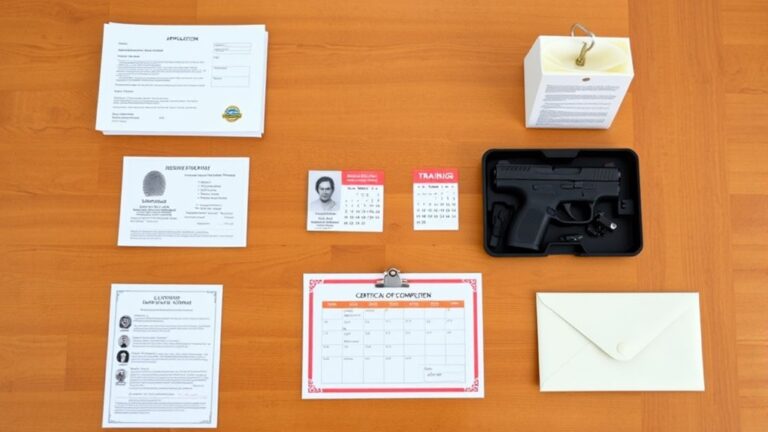
Before you even buy a gun, you need to understand the legal responsibilities that come with ownership. You’re required to follow federal, state, and local laws, which can vary widely depending on where you live. This means you should research background check requirements, waiting periods, and any necessary permits or licenses.
Understand legal responsibilities and research laws before purchasing a firearm to ensure safe and lawful ownership.
You’re also responsible for ensuring your gun isn’t accessible to unauthorized users, especially minors. You must never use your firearm irresponsibly or in situations where it’s not legally justified. Carrying a gun in prohibited places or while under the influence can lead to serious legal consequences.
Knowing when and how you can legally use your weapon for self-defense is essential. Finally, keep up with changes in laws that might affect your ownership. Staying informed means you won’t accidentally break the law, protecting both yourself and those around you.
Being a responsible gun owner starts with understanding your legal duties fully.
Choose the Best Safe Storage Options at Home
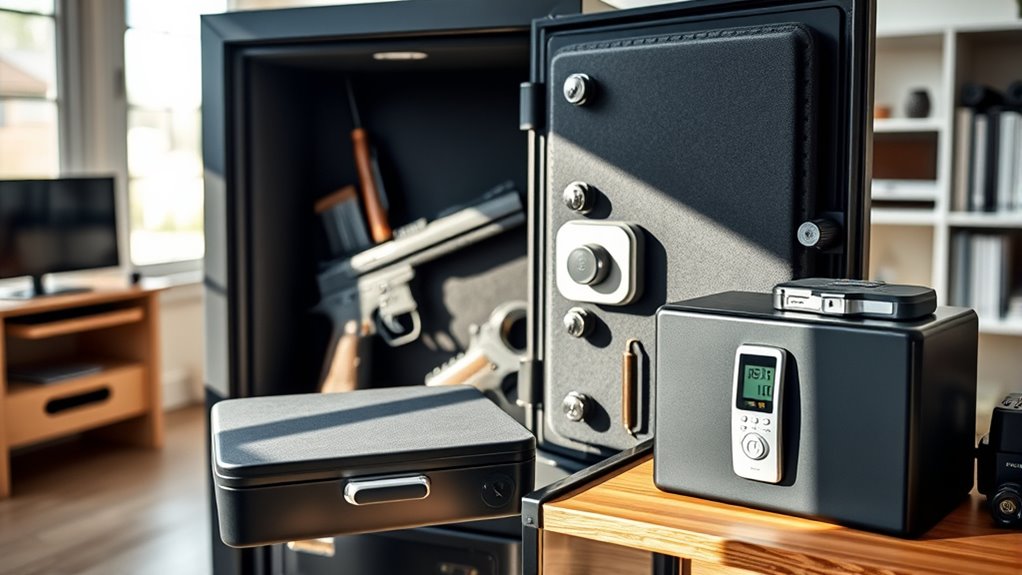
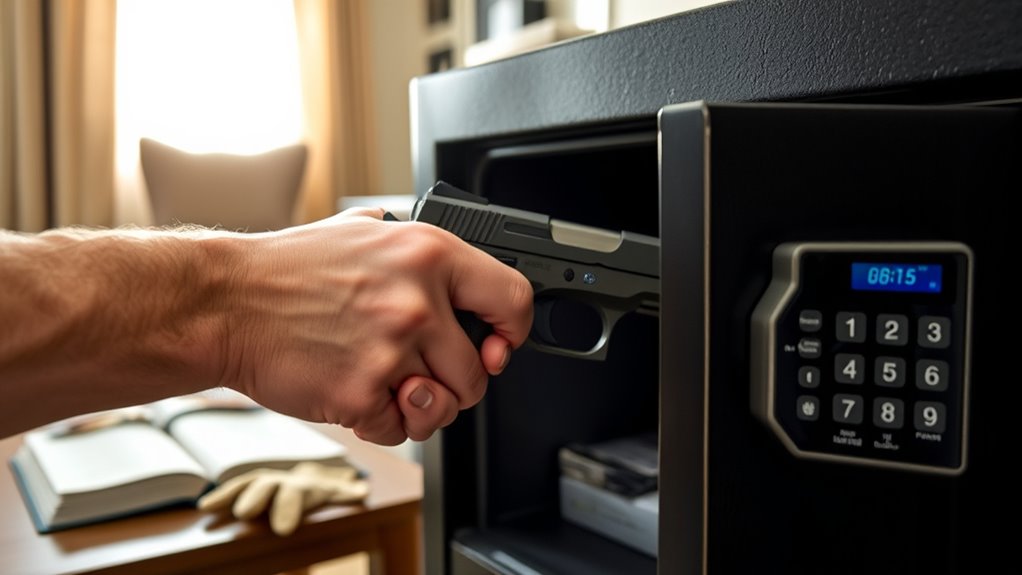
When it comes to storing your gun at home, choosing the right safe is essential for security and accessibility. You’ll want to explore different types of gun safes that fit your needs and follow best practices to keep your firearms locked up properly.
Let’s look at what options are available and how to use them effectively.
Types Of Gun Safes
Although choosing the right gun safe might seem overwhelming, understanding the main types can help you pick the best option for your home. You want a safe that fits your needs, budget, and space while keeping your firearms secure.
Here are three popular types to contemplate:
- Biometric Safes – Use fingerprint recognition for quick access, ideal if you need fast entry but still want security.
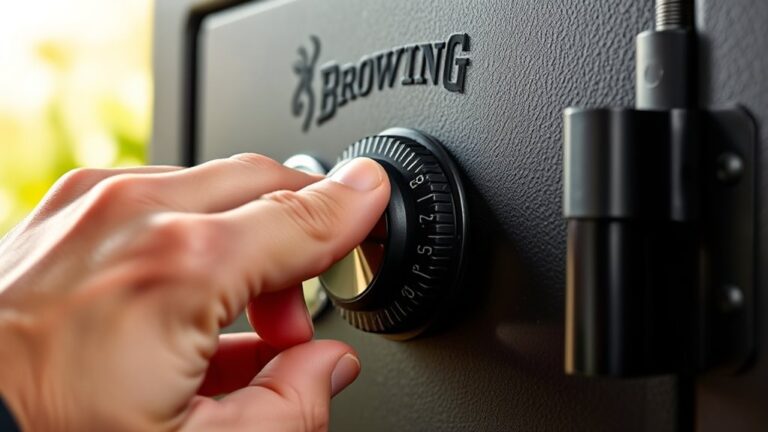
- Mechanical Lock Safes – Feature traditional combination dials, requiring no batteries and offering reliable, durable security.
- Electronic Keypad Safes – Allow you to enter a code for access, combining convenience with solid protection.
Each type has strengths, so think about how quickly you need access and where you’ll store the safe before deciding.
Secure Storage Best Practices
Choosing the right type of gun safe is just one part of keeping your firearms secure at home. You’ll want to place your safe in a discreet, low-traffic area to reduce the risk of theft. Always lock your guns immediately after use, and never leave keys or combinations lying around.
Consider using additional safety devices like trigger locks for extra protection. If you have children or visitors, educate them about gun safety and explain that firearms are off-limits. Regularly check your safe’s locking mechanism to guarantee it functions properly.
Finally, keep your safe bolted to the floor or wall to prevent it from being moved. These best practices make sure you’re not only storing your guns securely but also minimizing accidents and unauthorized access.
Practice Safe Handling and Operation Techniques
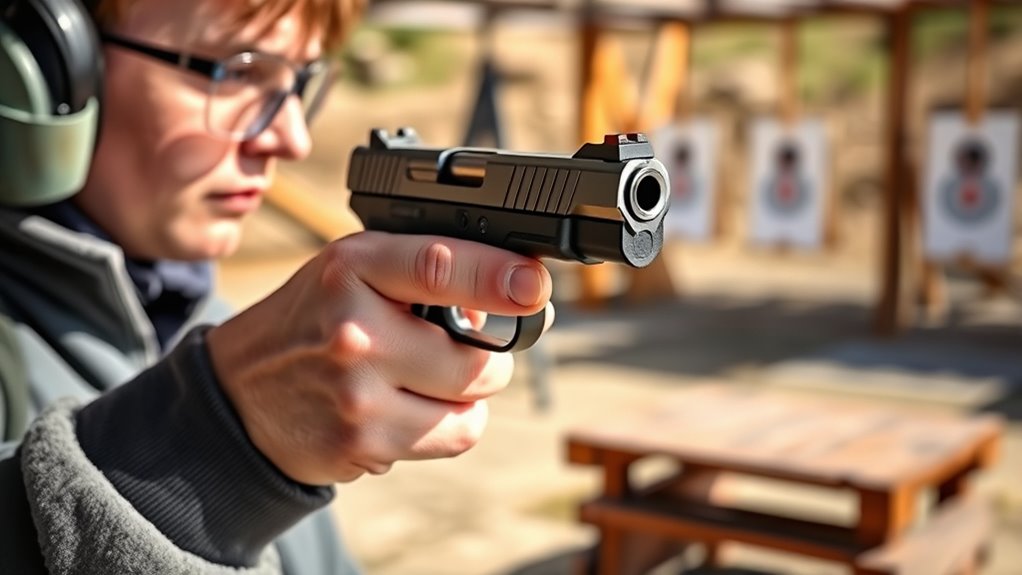
Mastering safe handling and operation techniques is essential to prevent accidents and guarantee responsible gun ownership. When you handle your firearm, always treat it as if it’s loaded, even when you believe it’s not. This mindset keeps you cautious and aware.
Master safe handling by always treating your firearm as loaded to maintain caution and prevent accidents.
Here are three key practices to keep in mind:
- Keep your finger off the trigger until you’re ready to shoot. This helps avoid unintentional discharges.
- Point the muzzle in a safe direction at all times. Never aim at anything you don’t intend to shoot.
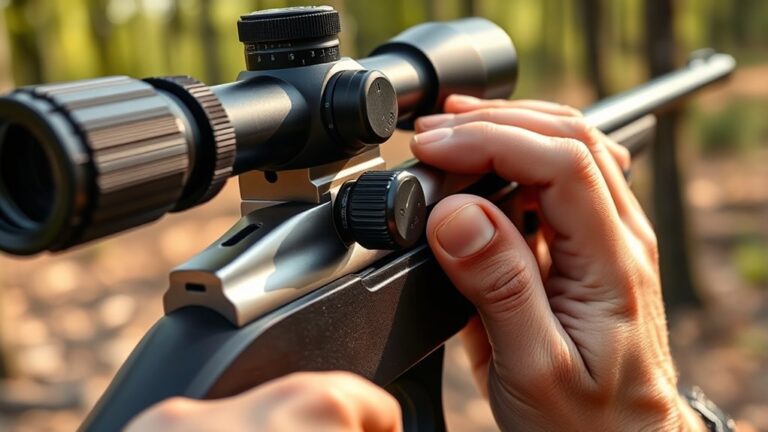
- Know your firearm’s manual of operation thoroughly. Familiarize yourself with how to load, unload, and engage safety mechanisms correctly.
Enroll in Certified Firearm Safety Training
To own a gun safely, you’ll want to enroll in certified firearm safety training that meets legal and practical standards. Confirm the instructors are qualified and experienced to provide you with accurate knowledge and hands-on practice.
This certification not only boosts your confidence but also ensures you understand responsible gun ownership.
Importance of Certification
Why is certification so essential when it comes to owning a gun? Getting certified proves you’ve learned the critical skills and safety measures needed to handle firearms responsibly. It’s not just about passing a test—it’s about gaining confidence and protecting yourself and others.
Here are three key reasons to get certified:
- Safety Assurance: Certification ensures you know how to safely load, unload, and store your gun to prevent accidents.
- Legal Compliance: Many states require firearm certification to legally own or carry a gun, keeping you within the law.
- Skill Validation: Certification shows you’ve met established standards, which can be important for insurance or personal credibility.
Choosing Qualified Instructors
Since proper instruction is essential for handling firearms safely, you’ll want to choose qualified instructors who are certified and experienced. Look for trainers certified by recognized organizations like the NRA, USCCA, or state-approved agencies. These certifications guarantee they follow standardized safety protocols and teaching methods.
Don’t hesitate to ask about their background, experience, and teaching style to make sure it fits your learning needs. Qualified instructors also provide hands-on training, covering not just shooting skills but safe storage, maintenance, and legal responsibilities.
Schedule Regular Gun Cleaning and Maintenance
Although regular use might not always reveal issues immediately, scheduling consistent cleaning and maintenance for your gun is essential to keep it functioning safely and reliably. Neglecting this can lead to malfunctions or unsafe conditions.
Consistent gun cleaning and maintenance are crucial for safe, reliable performance and preventing malfunctions.
To stay on top of it, follow these three key steps:
1. Set a Cleaning Schedule
Clean your gun after each use, or at least once a month if it’s stored unused. This prevents buildup of residue and corrosion.
2. Inspect for Wear and Damage
During maintenance, carefully check for cracks, rust, or worn parts. Early detection can prevent dangerous failures.
3. Use Proper Tools and Products
Always use cleaning kits designed for your firearm type. Avoid harsh chemicals that could damage components.
Teach Family Members Gun Safety Rules
Even if you’re the only one handling the gun, teaching your family members the basic safety rules is essential to preventing accidents and ensuring everyone knows how to respond responsibly. Make sure they understand the four fundamental rules: always treat the gun as if it’s loaded, never point it at anything you don’t intend to shoot, keep your finger off the trigger until ready, and always be aware of your target and what’s beyond it.
Clear communication about these rules helps set firm boundaries. Tailor discussions to age and maturity levels, especially with children, emphasizing that guns are not toys. Consider supervised demonstrations to show safe handling practices.
Reinforce that curiosity should lead them to ask you, never to touch a gun on their own. By consistently educating your family, you reduce risks and create a safer environment where everyone respects the responsibility that comes with firearm ownership.
Create a Firearm Emergency Response Plan
Teaching your family about gun safety lays a strong foundation, but it’s also important to have a clear plan for what to do if a firearm-related emergency arises. Being prepared can save lives and reduce panic during a crisis.
Here’s how you can create an effective firearm emergency response plan:
- Establish Communication Protocols: Decide who should be contacted first — emergency services, family members, or neighbors. Make sure everyone knows how to quickly dial 911 and relay essential information clearly.
- Designate Safe Areas: Identify secure rooms or spots in your home where family members can go during an incident to stay protected while waiting for help.
- Practice Drills: Regularly rehearse your emergency plan with your family. This builds confidence and ensures everyone knows their role if the unexpected happens.
Frequently Asked Questions
Can I Carry a Gun in Public Places Legally?
You can carry a gun in public places legally if you follow your state’s laws, including obtaining necessary permits or licenses. Always check local regulations, as rules vary widely and some areas prohibit carrying firearms altogether.
Be sure to stay informed about any changes in the law to remain compliant. Understanding the specific requirements in your area is crucial for legal gun possession.
Remember that federal, state, and local laws may all apply, so thorough research is essential before carrying a firearm in public.
What Are the Signs of Firearm Malfunctions?
You’ll notice signs like failure to fire, misfeeds, jams, unusual sounds, or difficulty cycling the action.
If your gun’s not firing smoothly or repeatedly jams, it’s a clear sign it’s malfunctioning and needs attention.
How Do I Transport a Gun Safely in a Vehicle?
You should always unload your gun before transporting it, keep it in a locked container, and store ammunition separately.
Secure the container in the vehicle’s trunk or out of reach to prevent accidents and comply with laws.
Are There Insurance Policies for Gun Owners?
You might think gun insurance isn’t necessary, but yes, there are policies covering liability, theft, and damage. These can protect you financially if accidents or legal issues arise from gun ownership, giving you peace of mind.
How Does Mental Health Affect Gun Ownership?
Your mental health plays a vital role in gun ownership because untreated conditions can increase risks of harm to yourself or others. It’s important you seek help and avoid handling firearms during crises or instability.
Conclusion
Owning a gun comes with serious responsibilities, but if you stay on the ball by knowing the laws, storing your firearm safely, and practicing proper handling, you’ll keep yourself and your loved ones protected.
Don’t forget to enroll in safety courses, maintain your gun regularly, and teach your family the rules.
With these steps, you’ll be prepared for anything and guarantee your home stays a safe place for everyone.
In conclusion, following gun safety tips, understanding gun laws, and proper gun storage are essential to ensure it’s safe to own a gun. Prioritizing these practices will help protect your family and maintain a secure environment.