How to Dehumidify a Gun Safe in 7 Simple Steps
To dehumidify your gun safe effectively, start by removing any damp items and wiping down surfaces to eliminate moisture. Proper dehumidification is essential to prevent rust and damage to your firearms.
Adding a hygrometer allows you to monitor the humidity levels, aiming for 30-50% for ideal protection.
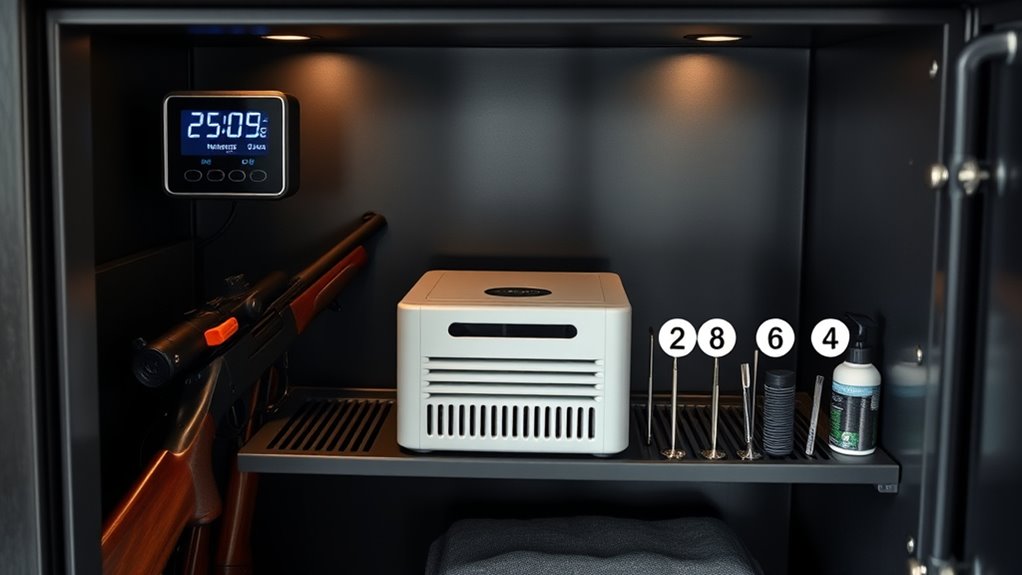
Next, choose a suitable dehumidifier and position it properly inside the safe. Using desiccant packs helps absorb excess moisture efficiently.
Guarantee good air circulation by spacing items evenly within the safe.
Following these simple steps helps protect your firearms from moisture-related damage. Keep going to uncover more detailed tips for safeguarding your gun safe and maintaining your valuable collection.
Key Takeaways
- Remove all moisture sources like damp cloths, wet guns, and humid items before storing firearms inside the safe.
- Place a reliable digital hygrometer inside the safe to monitor and maintain humidity levels between 30% and 50%.
- Use appropriate dehumidifiers such as desiccant packs or electric units sized correctly for your safe’s capacity.
- Arrange firearms and accessories with sufficient spacing to enhance air circulation and prevent moisture buildup.
- Regularly check and recharge or replace dehumidifiers and desiccant packs to ensure continuous moisture control.
Prepare Your Gun Safe by Removing Moisture Sources
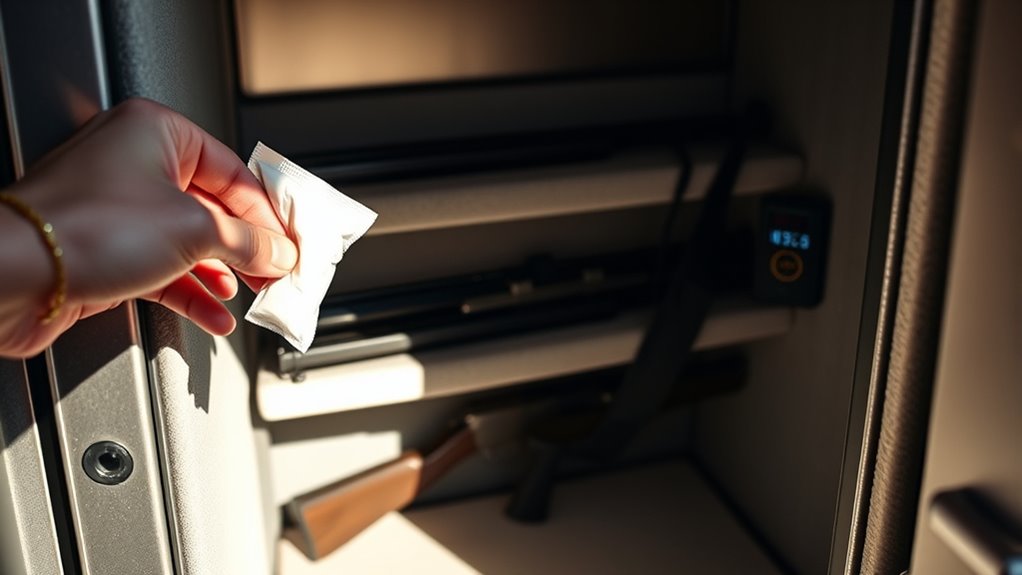
Before you start dehumidifying your gun safe, you’ll want to remove any obvious sources of moisture inside. Check for damp cloths, wet cleaning supplies, or any items that might trap humidity. If you’ve stored oily rags or recently cleaned guns without thoroughly drying them, take them out and let them dry completely before returning.
Also, avoid placing damp clothing or leather gear inside the safe, as these materials can release moisture over time. Make sure the safe’s interior is clean and dry—wipe down surfaces with a dry cloth to remove residual moisture. If your safe has a carpet or foam lining, inspect it for signs of dampness or mold; replace or dry it if necessary.
Add a Hygrometer to Keep an Eye on Humidity Levels
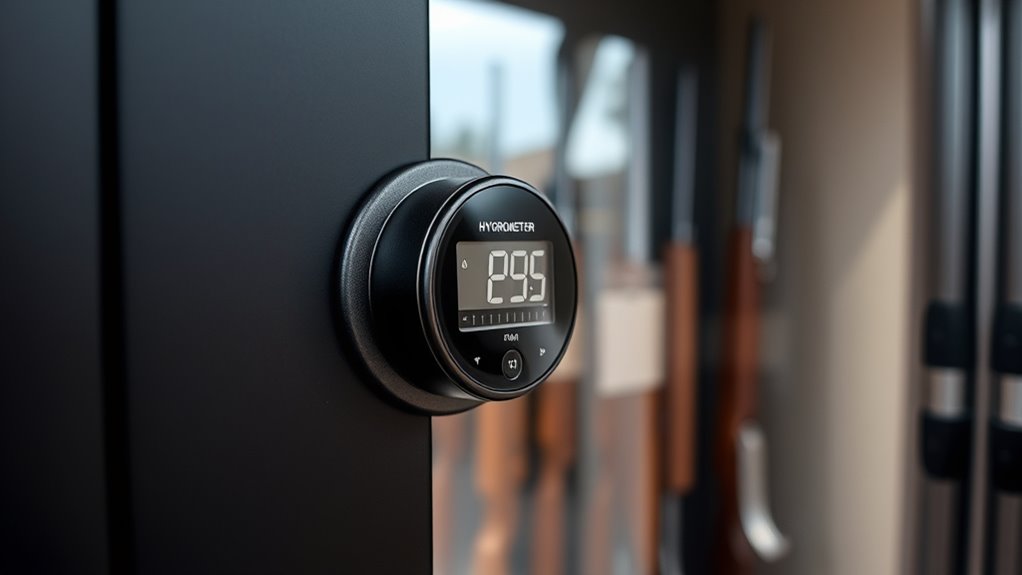
You’ll want to pick a reliable hygrometer to accurately track your gun safe’s humidity levels. Digital models often provide clearer readings and easier monitoring over time.
Keeping an eye on these trends helps you know when it’s time to adjust your dehumidifying methods.
Choosing The Right Hygrometer
Although it might seem like a small detail, choosing the right hygrometer is essential for keeping your gun safe’s humidity levels in check. You’ll want a reliable, accurate device that’s easy to read. Digital hygrometers are popular because they offer precise readings and often come with temperature displays, which can help you better understand your safe’s environment.
Analog hygrometers are simpler and don’t require batteries, but they can be less accurate and harder to calibrate. When picking one, look for options with a calibration feature so you can guarantee ongoing accuracy. Also, consider the size—compact models fit easily inside your safe without taking up much space.
Monitoring Humidity Trends
How often should you check the humidity inside your gun safe? Ideally, you want to monitor it regularly—at least once a week—to catch any changes early. Adding a reliable hygrometer helps you keep an eye on humidity levels without opening the safe frequently, which can let moisture in.
Choose a digital or analog hygrometer and place it where it’s easy to read. By tracking trends over time, you’ll spot if humidity is rising or falling and can adjust your dehumidifying methods accordingly. Consistent monitoring prevents rust and mold buildup, protecting your firearms.
Understand Ideal Gun Safe Humidity Ranges
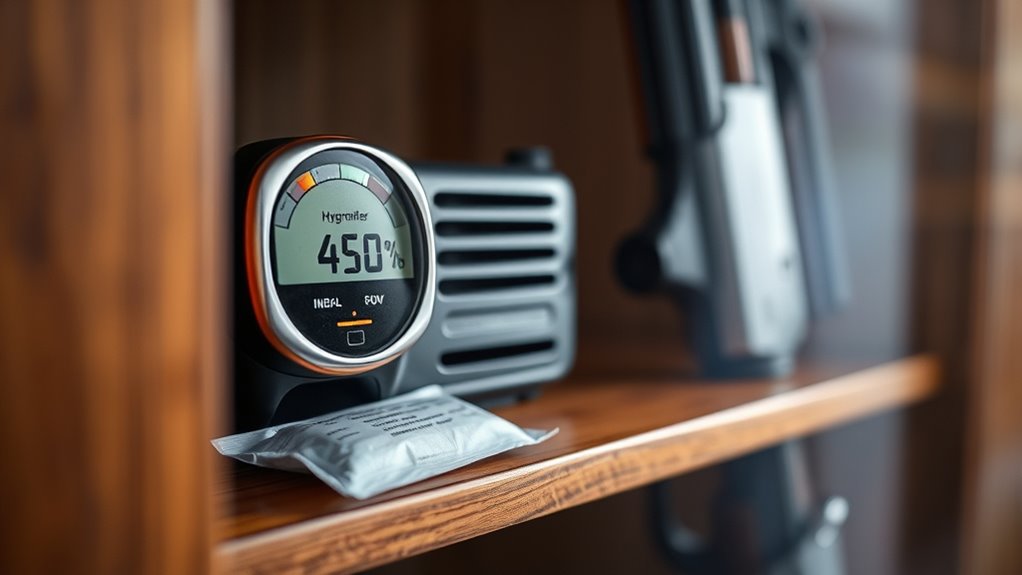
You’ll want to keep your gun safe’s humidity between 30% and 50% to protect your firearms. Too much moisture can cause rust and damage over time.
Understanding these ideal ranges helps you prevent costly problems before they start.
Optimal Humidity Levels
Why is maintaining the right humidity level in your gun safe so important? Keeping it balanced prevents rust, corrosion, and damage to your firearms. You don’t want it too dry or too damp.
The ideal range is typically between 35% and 50% relative humidity. Staying within this range ensures your guns stay in top condition without drying out wooden stocks or causing metal parts to degrade.
To maintain ideal humidity levels, consider:
- Using a quality dehumidifier designed for gun safes
- Regularly monitoring humidity with a reliable hygrometer
- Storing desiccant packs or moisture absorbers as backup
Risks of Excess Moisture
Maintaining the right humidity range protects your firearms, but letting moisture build up can cause serious problems. Excess moisture encourages rust and corrosion on metal parts, which can damage your guns irreversibly. It also promotes mold and mildew growth, potentially harming wooden stocks and leather accessories.
High humidity can compromise the reliability and safety of your firearms by affecting internal mechanisms. If you don’t control moisture, you risk costly repairs or even losing your firearms’ functionality. Ideally, you want to keep the gun safe’s relative humidity between 30% and 50%.
Staying within this range prevents moisture-related damage while preserving the condition of your collection. Monitoring and managing humidity isn’t just smart—it’s essential for long-term firearm care.
Choose the Right Dehumidifier for Your Gun Safe
How do you guarantee the perfect environment inside your gun safe? Choosing the right dehumidifier is key. You want a solution that effectively controls moisture without damaging your firearms or taking up too much space.
Ensuring the ideal gun safe environment starts with selecting a dehumidifier that protects without compromising space.
Consider these factors when picking a dehumidifier:
- Type: Desiccant packs are simple and chemical-free, great for small safes. Electric dehumidifiers offer continuous moisture control but need power sources. Rechargeable units combine convenience with effectiveness.
- Capacity: Match the dehumidifier’s capacity to your safe size. A small pack won’t suffice for a large safe, while a heavy-duty unit might be overkill for a compact one.
- Maintenance: Some dehumidifiers require regular recharging or replacement, while others run continuously with minimal upkeep.
Set Up Your Gun Safe Dehumidifier for Best Results
Once you’ve selected the right dehumidifier for your gun safe, setting it up properly guarantees it works efficiently. Start by placing the dehumidifier on a stable, flat surface inside the safe, ensuring it’s not blocking your firearms or shelves. Position it near the center or slightly towards the back to allow even air circulation.
Avoid placing it directly on metal surfaces to prevent corrosion or damage. If your dehumidifier uses electricity, route the power cord carefully through the door seal without compromising the safe’s security. For rechargeable or chemical-based units, check the manufacturer’s guidelines on activation and placement.
Keep the safe door closed as much as possible to maintain consistent humidity levels. Regularly monitor the dehumidifier’s status or indicator to know when it needs recharging or replacing. By following these steps, you’ll create an ideal environment that protects your firearms from rust and moisture damage.
Use Desiccant Packs to Help Control Gun Safe Humidity
Why rely solely on electric dehumidifiers when desiccant packs offer a simple, chemical-free way to control moisture inside your gun safe? These small, moisture-absorbing packets are an easy addition that helps keep humidity levels in check, preventing rust and corrosion on your firearms.
You can place desiccant packs in various spots inside your safe, and they work silently without any power source. Plus, they’re reusable after drying out, making them cost-effective over time.
Here’s how desiccant packs can help:
- Absorb excess moisture quickly, reducing condensation inside the safe
- Require minimal maintenance—just dry them in the oven or microwave when saturated
- Fit easily into tight spaces without taking up much room
Ensure Proper Air Circulation Inside the Gun Safe
Where should the air flow inside your gun safe to keep moisture at bay? Proper air circulation is essential to prevent condensation and rust. You want air to move freely around your firearms and accessories, reducing stagnant humid spots.
Avoid overpacking the safe; leave enough space for air to circulate between guns and shelves. Installing small vents or a fan designed for safes can notably improve airflow.
Here’s a quick guide on ensuring ideal air circulation:
| Task | Tip |
|---|---|
| Position guns | Space evenly, avoid tight packs |
| Use shelves | Allow gaps for air movement |
| Install vents | Use moisture-resistant vents |
| Add circulation devices | Consider small safe fans |
| Monitor airflow | Check for stagnant air spots |
Frequently Asked Questions
Can Extreme Cold Affect My Gun Safe’s Humidity Levels?
Yes, extreme cold can affect your gun safe’s humidity levels by causing condensation inside. You’ll want to monitor temperature changes closely and use a reliable dehumidifier or desiccant to keep moisture from damaging your firearms.
How Often Should I Replace Desiccant Packs in My Gun Safe?
Think of desiccant packs as tiny moisture sponges; you should replace them every 1 to 3 months, depending on humidity levels.
If you notice they’re saturated or less effective, swapping them keeps your gun safe dry and rust-free.
Are Silica Gel Packs Safe to Use With Firearms?
Yes, silica gel packs are safe to use with firearms. They absorb moisture without causing damage or corrosion, helping keep your guns dry and protected.
Just be sure to replace or recharge them regularly for best results.
Can I Use Household Dehumidifiers Inside a Gun Safe?
You shouldn’t use regular household dehumidifiers inside a gun safe because they’re often too large and may cause moisture buildup.
Instead, opt for small, safe options like desiccant packs or specialized safe dehumidifiers designed for firearms.
Does Gun Safe Location Impact Internal Humidity Control?
Yes, your gun safe’s location impacts humidity control. Placing it in a damp basement or near water sources increases moisture inside.
Choose a dry, well-ventilated spot to help keep internal humidity levels more manageable.
Conclusion
So, you’ve mastered the art of dehumidifying your gun safe—congratulations! Because nothing screams excitement like obsessing over moisture levels and playing with desiccant packs. But hey, if you enjoy turning your safe into a tiny, humidity-controlled fortress, more power to you.
Just remember, keeping your guns dry isn’t just a hobby—it’s a necessity. Otherwise, you might as well be storing your prized collection in a swimming pool. Happy dehumidifying, and may your gun safe stay moisture-free and rust-free!