What Happens to Ammo in a Fire?
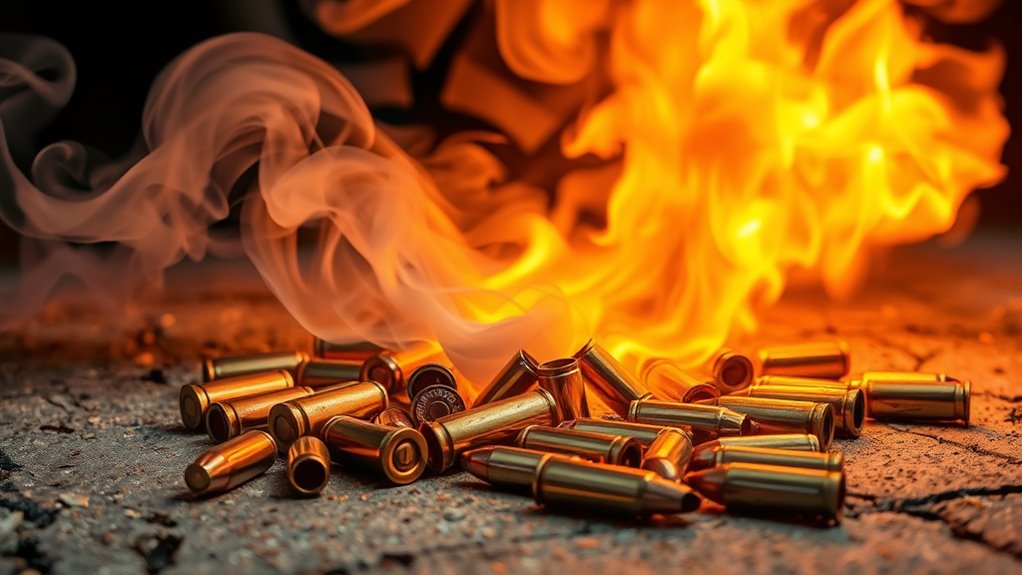
When ammo is exposed to fire, the intense heat causes primers to ignite and gunpowder to burn uncontrollably. This reaction can lead to cartridges rupturing or discharging individually, posing serious safety risks.
Understanding what happens to ammo in a fire is crucial for safe storage and handling.
Metal casings may warp or burst under extreme temperatures, sending dangerous fragments flying. Even after exposure to fire, damaged ammo remains hazardous and unstable.
You should never attempt to handle or dispose of it yourself.
If you want to learn more about the risks, storage tips, and safe handling of ammunition, there is important information to consider. Proper knowledge can help prevent accidents and ensure safety for everyone involved.
Key Takeaways
- Intense heat can ignite the primer and gunpowder inside ammo, causing cartridges to discharge or rupture unpredictably.
- Metal casings may expand, warp, or burst under heat, creating dangerous shrapnel hazards.
- Ammo exposed to fire remains potentially hazardous and may not be safe to handle afterward.
- Fire can cause ammo to “cook off,” discharging rounds individually rather than exploding violently.
- Proper storage in fire-resistant containers reduces fire-related risks and improves safety during fires.
What Happens to Ammunition When It’s Exposed to Fire?
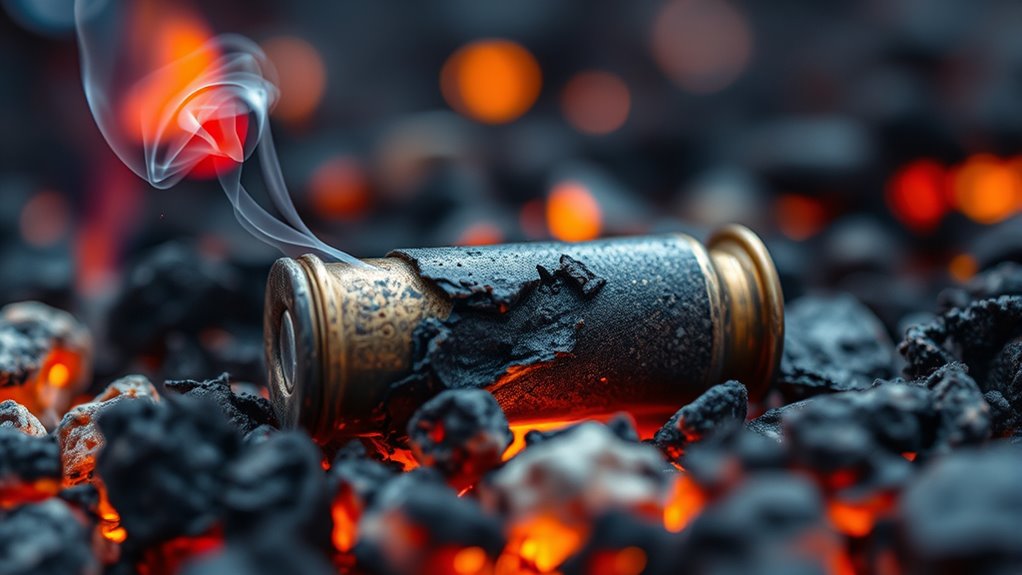
When ammunition is exposed to fire, the intense heat causes the gunpowder inside to ignite uncontrollably. You’ll find that this ignition happens rapidly because the cartridge is a sealed container, trapping expanding gases and increasing pressure. As the temperature rises, the primer ignites, setting off the powder charge, but without a bullet to contain its force, the casing often ruptures or explodes.
You might notice that the bullet can be propelled a short distance due to this pressure, but it doesn’t behave like a fired round from a gun because there’s no barrel guiding it. The metal casing and bullet can become deformed or melted depending on the fire’s intensity. Fundamentally, ammunition exposed to fire behaves like a small, uncontrolled explosion.
Understanding this reaction helps you recognize why ammo in fires can be unpredictable even before considering the safety risks involved.
What Safety Risks Does Burning Ammo Pose?
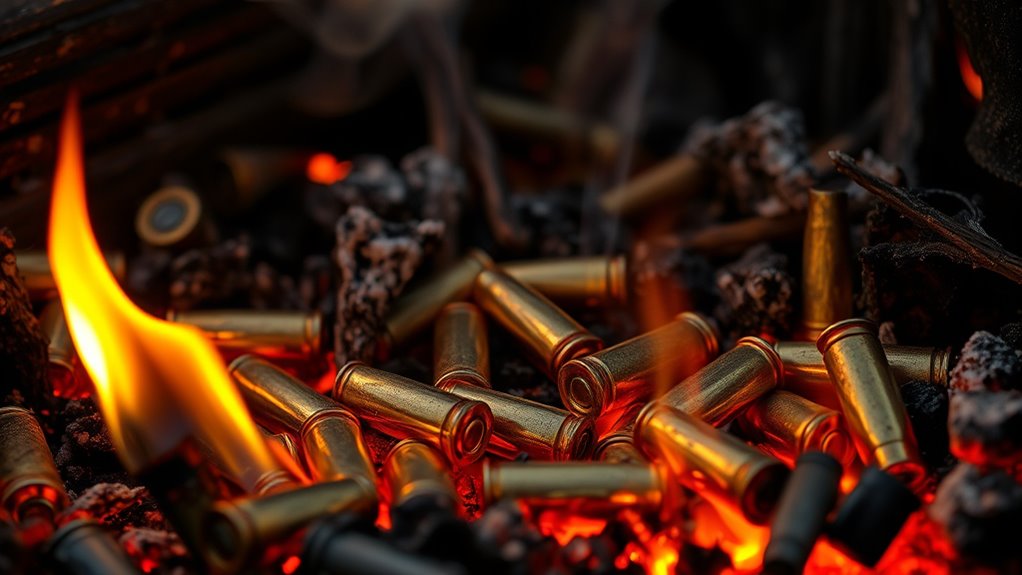
When ammo burns, you face serious explosion hazards that can cause injury or damage. You also risk inhaling toxic fumes released during combustion.
Understanding these dangers is essential for staying safe around fires involving ammunition.
Explosion Hazards
How dangerous can burning ammo really be? When ammo is exposed to fire, the heat can cause the powder inside to ignite, leading to rapid pressure buildup. This can result in small explosions that might send hot fragments flying, posing serious injury risks.
Even without a traditional explosion, the casing can burst, creating dangerous shrapnel.
Here’s a quick look at the explosion hazards:
| Hazard Type | Description |
|---|---|
| Propellant Ignition | Powder ignites, causing pressure rise |
| Case Rupture | Metal casing bursts violently |
| Fragmentation | Shrapnel can cause injuries |
| Secondary Fires | Hot fragments may ignite nearby items |
| Noise Hazard | Loud bangs can harm hearing |
You should always treat burning ammo with extreme caution to avoid these dangers.
Toxic Fume Exposure
Although burning ammo might seem less hazardous once the flames are out, you shouldn’t underestimate the toxic fumes it releases. When ammo burns, chemicals like lead, mercury, and other heavy metals vaporize and mix with the smoke, posing serious health risks. If you inhale these fumes, you could experience respiratory issues, headaches, or worse over time.
To protect yourself, keep these points in mind:
- Avoid breathing in smoke near burning ammo; it contains dangerous metal particles.
- Stay upwind and maintain a safe distance to reduce exposure.
- Use protective gear like masks or respirators if you must be close.
Can Ammo Explode or Go Off in a Fire?
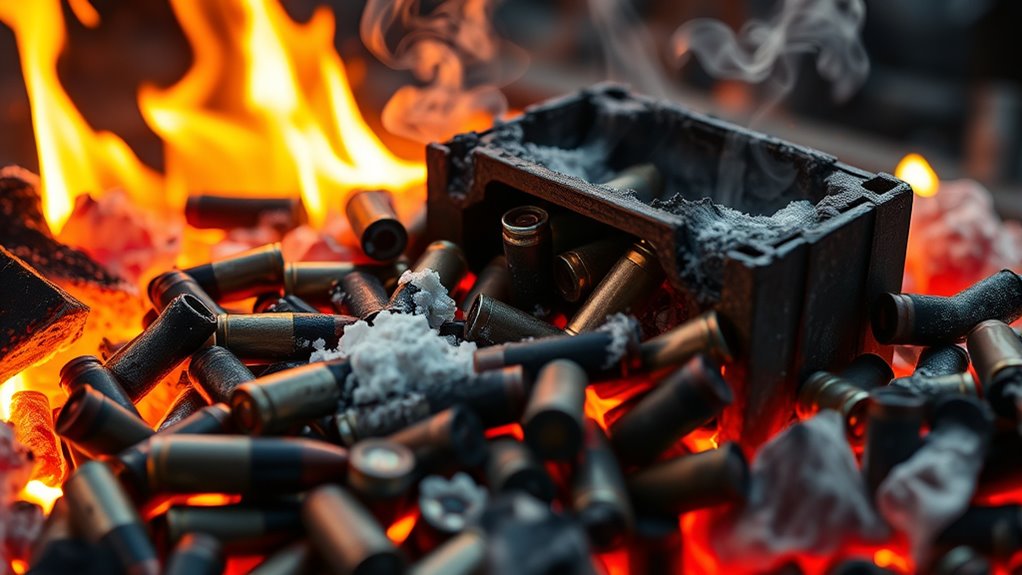
You might wonder if ammo can explode or go off when exposed to fire. Understanding how ammunition reacts to heat and the risks of explosive discharge is essential for your safety.
Let’s look at the precautions you should take during fires involving ammo.
Ammunition Reaction To Heat
When ammunition is exposed to intense heat, it can ignite or even explode, posing serious risks. You might wonder how your ammo reacts under such conditions. Typically, the primer or powder inside can reach ignition temperatures, causing the cartridge to discharge or rupture.
Here’s what you should know:
- Primer Sensitivity: The small explosive in the primer ignites first, making the cartridge vulnerable to heat.
- Powder Combustion: Gunpowder can burn rapidly when heated, generating pressure that may cause the casing to rupture.
- Case Integrity: Metal casings can expand or degrade, influencing whether the ammo simply bursts or ignites fully.
Understanding these reactions helps you gauge the danger of storing ammo near fire sources or in high-heat environments.
Risk Of Explosive Discharge
Heat can cause ammunition to ignite, but the likelihood of a full explosion is often misunderstood. When exposed to fire, individual cartridges may discharge, but they don’t typically cause large explosions like bombs. The casing can rupture due to pressure buildup, sending bullets in random directions, which is dangerous but usually contained to a small area.
You should know that ammo stored loosely in a fire might “cook off” one round at a time, not all at once. Multiple rounds igniting simultaneously are rare unless tightly packed in large quantities. While the noise and sparks can be alarming, the risk of a catastrophic explosion is low.
Still, any discharge in a fire poses hazards, so it’s essential to handle the situation with caution.
Safety Precautions During Fires
Although ammunition rarely causes large explosions in fires, it can still go off unexpectedly, posing serious risks. If you ever face a fire where ammo is present, your safety should be the top priority. You shouldn’t try to handle or move ammunition during a fire, as heat can cause rounds to discharge unpredictably.
Always keep a safe distance and let professionals manage the situation.
Here are some key safety precautions to remember:
- Evacuate immediately if you know ammo is involved.
- Inform firefighters about the presence of ammunition.
- Avoid breaking windows or opening doors near ammo to prevent triggering discharge.
How Heat Affects Ammo Components and Stability
Since ammo contains sensitive chemical components, exposing it to high temperatures can seriously affect its performance and safety. When heat rises, the gunpowder inside the cartridge can start to degrade or ignite prematurely, increasing the risk of accidental discharge or misfires. The primer, a small explosive charge that ignites the powder, is also vulnerable; excessive heat can cause it to become unstable or fail altogether.
The casing, typically made of brass or steel, may expand or warp under intense heat, compromising the cartridge’s structural integrity. This can lead to feeding or chambering problems when you try to use the ammo later. Additionally, propellant degradation reduces the bullet’s velocity and accuracy, making your shots less reliable.
In short, heat doesn’t just threaten the ammo’s safety—it can ruin its functionality too. Understanding these effects helps you appreciate why keeping ammo away from fire is *essential* for both safety and performance.
How to Store Ammo to Protect It From Fire
When you’re storing ammo, keeping it safe from fire hazards should be a top priority to prevent damage or accidental ignition. You want to minimize risks by choosing the right storage methods and locations. Start by storing your ammo in a cool, dry place away from direct heat sources like stoves, heaters, or sunlight.
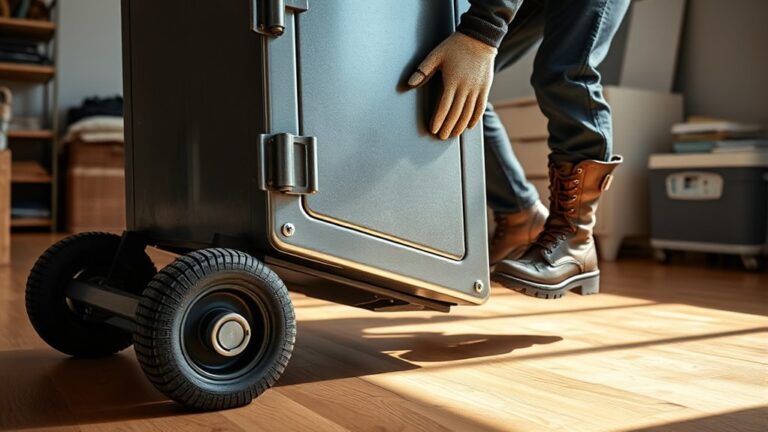
Consider using a fire-resistant safe or ammo can designed to withstand high temperatures. Also, keep your ammo away from flammable materials to reduce the chance of fire spreading.
Use fire-resistant safes and keep ammo away from flammable materials to minimize fire risks.
Here are three key tips to protect your ammo from fire:
- Use fireproof or fire-resistant storage containers specifically rated for heat exposure.
- Store ammo in a secured, well-ventilated area away from potential ignition sources.
- Maintain an organized inventory so you can quickly check and rotate stock, reducing the risk of long-term heat damage.
Following these steps helps ensure your ammo stays safe if a fire occurs nearby.
What to Do If You Find Burned or Damaged Ammo
If you come across burned or damaged ammo, you should handle it with extreme caution to prevent injury or further hazards. First, don’t try to use or reload any compromised rounds; their integrity is likely compromised, making them unpredictable and dangerous. Avoid striking or applying pressure to damaged cartridges, as they might still discharge unexpectedly.
It’s best to place the ammo in a secure, non-flammable container, like a metal box, and move it to a safe, well-ventilated area away from people and ignition sources. Contact your local law enforcement or fire department for guidance on proper disposal—they have protocols for handling hazardous materials safely. Never throw damaged ammo in the trash or attempt to dismantle it yourself.
Common Myths About Ammo and Fire: Debunked
Handling burned or damaged ammo carefully is just one part of staying safe around firearms and fire. You might have heard some common myths about ammo and fire, but it’s important to separate fact from fiction.
Here are a few misconceptions debunked:
- Myth: Ammo explodes like grenades in a fire. In reality, ammo can cook off, but it doesn’t explode like a bomb. The pressure causes cartridges to rupture, not detonate violently.
- Myth: Fire completely destroys the gunpowder and primers. Fire can damage the casing and powder, but it doesn’t always render the entire round inert immediately.
- Myth: All ammo in a fire is safe to handle afterward. Damaged ammo can be unstable and dangerous, so never handle it without proper precautions.
Knowing the truth helps you stay safer and better understand how to deal with ammo after fire exposure.
Frequently Asked Questions
Can Shooting Ammo That Was Previously Exposed to Fire Be Dangerous?
Yes, shooting ammo exposed to fire can be dangerous. The heat may weaken the casing or powder, causing unpredictable pressure. You shouldn’t risk it; damaged ammo can lead to firearm malfunctions or injury.
Always use fresh, undamaged rounds.
How Long Can Ammo Remain Stable After Fire Exposure?
You might expect ammo to stay fine for years, but it usually won’t remain stable long after fire exposure—often just days or weeks.
That unpredictability means you shouldn’t rely on it for safety or performance.
Are Certain Calibers More Prone to Damage in Fires?
Yes, some calibers are more prone to damage in fires. Smaller calibers with thinner casings can deform or rupture quicker, while larger, thicker casings might hold up better but still risk cooking off or losing powder effectiveness.
Does Moisture Affect Ammo After a Fire Incident?
Yes, moisture can ruin ammo after a fire. If water gets inside the casing, it can cause corrosion and misfires.
You’ll want to inspect and test each round carefully to guarantee it’s still safe to use.
Can Fire-Damaged Ammo Be Recycled or Reused Safely?
You shouldn’t reuse fire-damaged ammo because heat can weaken the casing and powder, making it unsafe.
Instead, recycle it through a local hazardous waste program or contact professionals who handle ammunition disposal to avoid accidents.
Conclusion
So, what really happens to ammo in a fire? You might think it just melts away or safely burns out, but the truth is far more unpredictable—and dangerous. Heat can cause it to explode or become unstable, posing serious risks you might not expect.
That’s why knowing how to store and handle your ammo during a fire isn’t just smart—it could save your life. Don’t underestimate what a little heat can do. Proper storage and fire safety are essential to prevent accidents and ensure your safety.