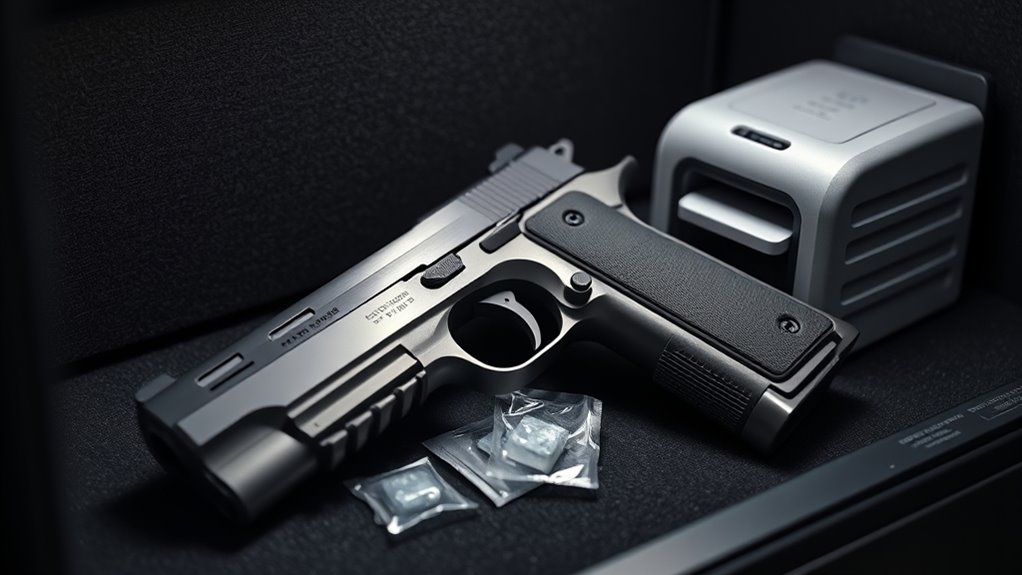
What Do Guns Need to Stop Rusting in Safes?
To stop your guns from rusting in safes, consistent moisture control is essential. Using dehumidifiers or silica gel packs helps keep humidity low, which is critical in preventing rust. Proper storage conditions, combined with regular maintenance, play a major role in protecting your firearms.
Always make sure your firearms are completely dry before storage, and clean them thoroughly after use. Applying proper lubricants creates a barrier against moisture, reducing the risk of rust.
Storing guns away from temperature fluctuations also helps maintain their condition.
Regularly inspecting your firearms allows you to catch early signs of rust and address them promptly. Keep these essentials in mind, and you’ll discover even more ways to protect your firearms from rusting in safes.
Key Takeaways
- Guns must be completely dry before storage to prevent moisture-induced rust.
- Use dehumidifiers or silica gel packs inside safes to control humidity levels.
- Regularly clean and lubricate firearms to create a protective moisture barrier.
- Store guns away from safe doors to minimize temperature fluctuations and condensation.
- Periodically inspect and air out firearms to detect and prevent early rust formation.
Why Do Guns Rust Even Inside Safes?
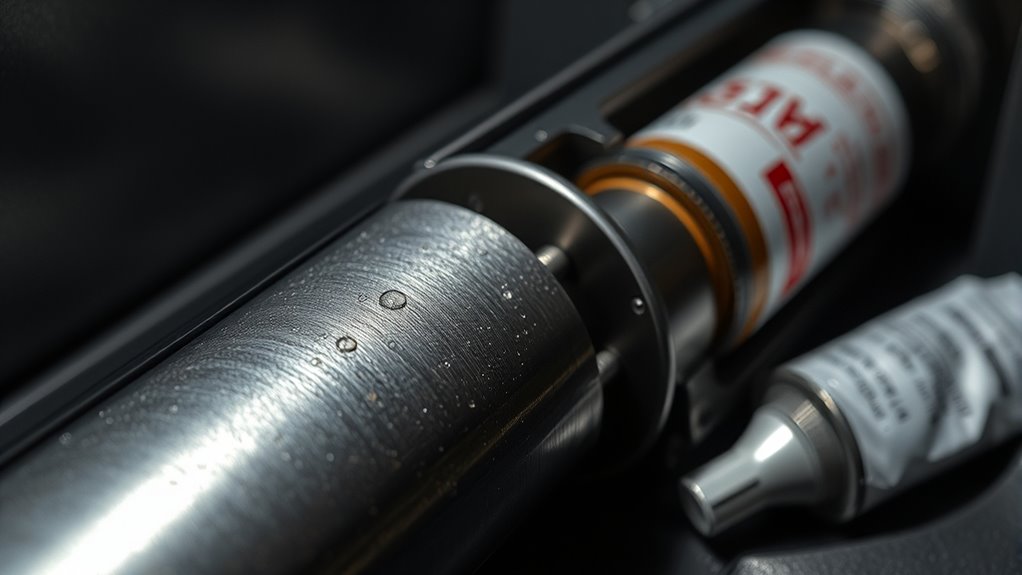
Even though your guns are stored safely inside a locked safe, they can still rust because moisture can easily build up in enclosed spaces. When you lock your firearms away, the air inside the safe doesn’t circulate much, allowing humidity to linger. Even small amounts of moisture from the environment or from your hands can settle on your guns.
Over time, this trapped moisture can cause oxidation, leading to rust. Additionally, temperature fluctuations play a role. When the temperature inside the safe changes, condensation can form on your guns’ metal surfaces.
This is especially common in areas with varying climates or if the safe isn’t climate-controlled. Also, some safes might be made from materials that absorb moisture or don’t provide a perfect seal, which can allow dampness inside. To keep your guns in top condition, it’s essential to understand these factors because simply locking them up isn’t enough to prevent rust.
How Humidity Causes Firearm Rust
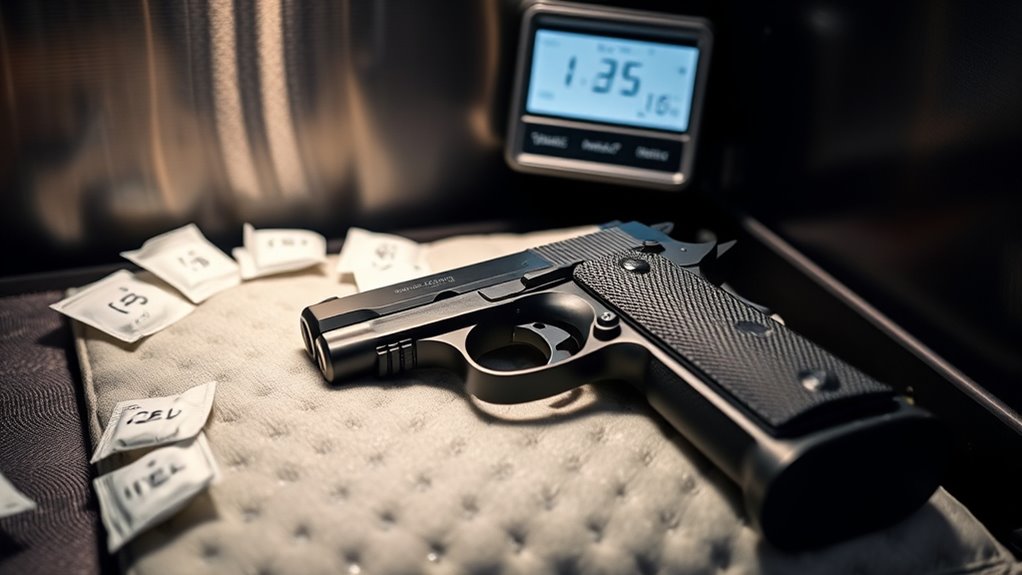
Because humidity introduces moisture into the air, it creates the perfect environment for rust to form on your firearms. When water vapor settles on metal surfaces inside your safe, it reacts with the iron in the steel, causing oxidation—what you see as rust. Even if your gun looks dry, tiny amounts of moisture can cling to metal parts, especially in a humid environment.
This moisture accelerates corrosion, eating away at the protective finishes and weakening the structural integrity of your firearm over time. You might not notice rust immediately, but prolonged exposure can cause pitting and discoloration. Since safes are often airtight, trapped humidity has nowhere to escape, worsening the problem.
Keeping humidity levels low inside your safe is essential because once rust starts, it’s tough to reverse without damaging your gun’s finish. Understanding how humidity impacts your firearms helps you take smarter steps to keep them in top condition.
Choosing the Right Dehumidifiers to Prevent Rust in Gun Safes
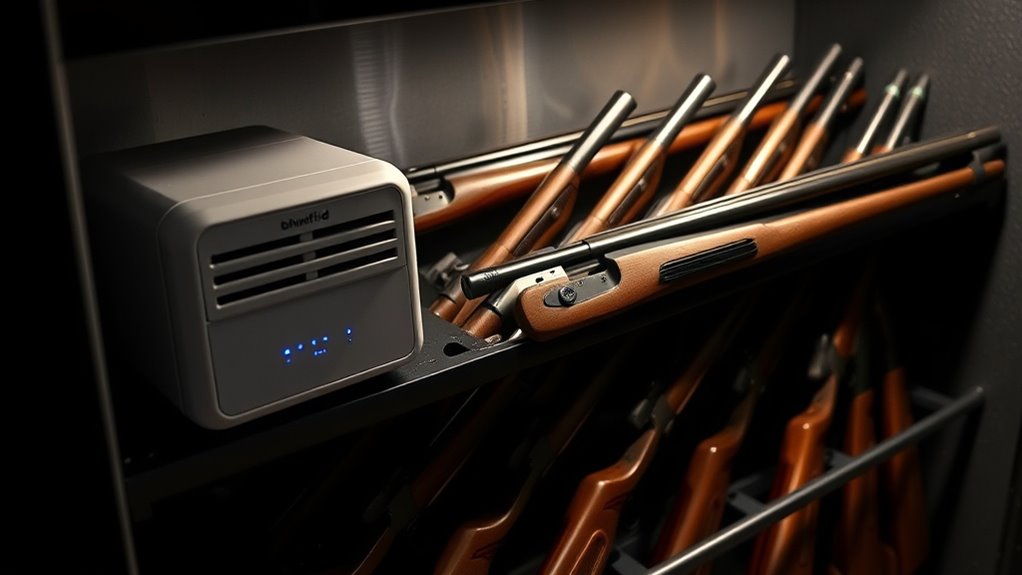
Controlling humidity inside your gun safe is the best way to stop rust before it starts, and choosing the right dehumidifier plays a big role in that. When selecting one, you want to take into account size, efficiency, and maintenance ease. A unit too small won’t protect your guns well, while an oversized one wastes energy.
Think about how often you want to recharge or replace components—it should fit your routine.
Here’s a quick comparison to help you decide:
| Feature | Small Unit | Medium Unit |
|---|---|---|
| Protection Level | Moderate | High |
| Maintenance | Frequent recharge | Monthly recharge |
| Cost | Budget-friendly | Moderate |
Choosing wisely means your firearms stay safe, and you avoid the frustration of unexpected rust. You deserve peace of mind knowing your collection is protected.
How Silicone and Desiccant Packs Help Keep Guns Rust-Free
While dehumidifiers manage overall moisture, silicone and desiccant packs provide targeted protection by absorbing residual humidity inside your gun safe. These small but powerful aids help maintain a dry environment around your firearms, reducing the risk of rust and corrosion.
Here’s how they help keep your guns rust-free:
- Absorb Moisture: They pull excess moisture from the air, preventing damp conditions that promote rust.
- Compact and Convenient: Their small size fits easily in tight spaces, allowing you to place them near your guns or ammo.
- Chemical Stability: Silicone and desiccants won’t release harmful substances, keeping your firearms safe.
- Reusable Options: Many packs can be recharged by drying, offering long-term protection without frequent replacement.
Proper Use of Gun Oil and Protective Coatings
You’ll want to pick the right gun oil to guarantee effective rust prevention without damaging your firearm. Applying it properly creates a protective barrier that keeps moisture at bay.
Protective coatings add an extra layer of defense, making your guns even more resistant to corrosion.
Choosing The Right Oil
How do you choose the right oil to keep your guns rust-free in a safe? Selecting the proper lubricant and protective coating is crucial for long-term preservation. You want an oil that not only prevents rust but also doesn’t gum up or attract dust.
Consider these factors when picking your gun oil:
- Corrosion Resistance – Ensure it forms a strong barrier against moisture.
- Compatibility – Check that it’s safe for all metal types and finishes on your firearm.
- Longevity – Choose an oil that remains effective over extended periods without needing frequent reapplication.
- Non-Residue Formula – Opt for oils that don’t leave sticky or gummy residues to avoid attracting dirt.
Application Techniques For Protection
After choosing the right oil, knowing how to apply it properly makes all the difference in keeping your guns rust-free. Start with a clean, dry firearm—wipe down all surfaces to remove dirt and moisture. Use a soft cloth or applicator to spread a thin, even layer of oil; avoid over-oiling, which can attract dust and grime.
Pay close attention to metal parts prone to rust, like barrels and bolts, but don’t forget less obvious spots such as hinges and screws. For protective coatings, apply according to the manufacturer’s instructions, ensuring full coverage without pooling. Let your guns sit for a few minutes to allow the oil or coating to penetrate.
Regular, careful application is key to maintaining your firearm’s condition inside the safe.
Benefits Of Protective Coatings
Why should you consider using protective coatings alongside regular gun oil? Protective coatings offer an extra barrier against moisture and contaminants, enhancing your gun’s defense against rust. While gun oil lubricates and prevents corrosion, coatings create a durable shield that lasts longer in harsh conditions.
Here’s why incorporating protective coatings benefits your firearms:
- Extended Rust Protection – Coatings resist oxidation better than oil alone.
- Durability – They withstand handling, storage, and environmental exposure.
- Reduced Maintenance – Less frequent reapplication means less hassle.
- Enhanced Appearance – Many coatings preserve your gun’s finish, keeping it looking new.
Best Linings and Storage Materials to Prevent Firearm Rust
Although choosing the right safe is important, the linings and storage materials inside play a crucial role in preventing firearm rust. You want to avoid materials that trap moisture, like foam or fabric that isn’t moisture-resistant. Instead, opt for safe linings made from rubber or silicone-based materials, which resist moisture buildup and provide a protective barrier.
Choosing safe linings that resist moisture, like rubber or silicone, is key to preventing firearm rust.
Cedar lining is popular for its pleasant scent and natural oils, but it can attract moisture, so use it cautiously.
For storage, consider gun socks made from microfiber or treated with rust inhibitors. These socks wick away moisture and provide an extra layer of protection. Desiccant packs or silica gel packets inside your safe also help by absorbing excess humidity.
Avoid storing guns directly on metal racks; instead, use padded or coated racks to minimize contact and prevent scratches that invite rust. By selecting the right linings and storage materials, you’ll greatly reduce the risk of rust forming on your firearms.
How to Clean and Inspect Guns to Avoid Rust
You’ll want to clean your guns thoroughly using proper techniques to remove moisture and residue that cause rust. Regularly inspecting your firearms for any signs of rust helps catch issues early before they worsen.
Staying consistent with these steps keeps your guns in top condition and rust-free.
Cleaning Techniques For Firearms
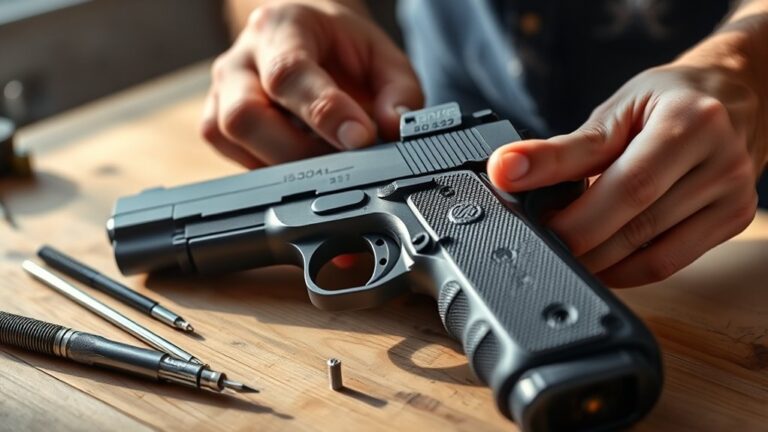
Since moisture and residue are the main culprits behind rust, regular cleaning and inspection of your firearms are essential to keep them in top condition. When cleaning your gun, follow these key steps:
- Disassemble carefully to access all parts without damaging components.
- Use a solvent to break down powder residue and grime, ensuring a thorough clean.
- Brush and wipe all metal surfaces, paying close attention to crevices and the barrel bore.
- Apply a thin coat of lubricant to protect against moisture and prevent rust formation.
Regular Rust Inspection Tips
When inspecting your firearms for rust, it’s important to be thorough and consistent to catch any early signs of corrosion before they worsen. Start by wiping down all metal surfaces with a clean, soft cloth to remove dust or moisture. Use a flashlight to check hard-to-see areas, like inside the barrel, under the sights, and in crevices.
If you spot any discoloration or rough patches, address them immediately with a proper cleaning solvent and lubricant. Pay special attention to parts that often retain moisture, such as the trigger guard and magazine well. Make it a habit to inspect your guns regularly—at least once a month—especially if they’re stored in humid environments.
Staying vigilant now will save you time and money on repairs later.
Routine Maintenance Tips for Firearms
Even if your firearms are stored safely, regular maintenance is essential to keep them in top condition and prevent rust from forming. Neglecting this can lead to corrosion, affecting both safety and performance.
To maintain your guns effectively, focus on these key steps:
- Clean After Use: Always clean your firearm thoroughly after shooting to remove moisture, powder residue, and dirt.
- Apply Protective Oil: Lightly oil metal parts to create a moisture barrier that prevents oxidation.
- Inspect Regularly: Check for signs of wear, rust spots, or buildup, addressing issues promptly.
- Store Properly: Use silica gel packs or dehumidifiers inside your safe to control humidity and keep the environment dry.
Common Mistakes That Cause Rust Despite Safe Storage
Although you might think storing your guns in a safe is enough, certain mistakes can still lead to rust. One common error is placing firearms inside the safe without ensuring they’re completely clean and dry. Moisture or residue left on your guns can create the perfect environment for rust to form.
Another mistake is neglecting the safe’s humidity levels. Even with a safe, high humidity can cause corrosion, so you need a reliable dehumidifier or moisture absorber inside. You should also avoid storing your guns near the safe’s door, where temperature fluctuations are most pronounced, increasing condensation risks.
Additionally, failing to air out your firearms periodically can trap moisture over time. In conclusion, using inappropriate gun oils or skipping protective coatings can leave your guns vulnerable. By avoiding these pitfalls, you’ll greatly reduce the chance of rust and keep your firearms in ideal condition.
Frequently Asked Questions
Can Storing Guns in Leather Cases Cause Rust?
Yes, storing guns in leather cases can cause rust because leather can retain moisture. If you don’t keep the leather dry and the gun properly oiled, that moisture can lead to rust forming on your firearm over time.
Does Temperature Affect Gun Rust in Safes?
You might not realize it, but yes, temperature plays a huge role in gun rust. Sudden swings create moisture, causing corrosion.
Keeping your safe cool and stable helps prevent rust from silently creeping onto your prized firearms.
Are There Specific Gun Oils Better for Humid Climates?
Yes, you should use gun oils with strong moisture-wicking and anti-corrosion properties, like CLP or silicone-based oils. These types work better in humid climates to protect your firearms from rust and corrosion effectively.
Using oils that repel moisture helps maintain the firearm’s functionality and longevity. It’s important to apply the oil regularly, especially in environments with high humidity. This ensures continuous protection against moisture buildup.
How Often Should Rust Prevention Products Be Replaced?
Like changing the oil in a classic car, you should replace rust prevention products every 3 to 6 months to keep your guns pristine. If your environment’s humid, check and refresh them more often to avoid damage.
Can Electronic Gun Safes Help Reduce Rust Risk?
Yes, electronic gun safes can help reduce rust risk by controlling humidity and temperature better than traditional safes.
You’ll still want to use desiccants and regular maintenance to keep your guns in top condition.
Conclusion
To keep your guns rust-free in safes, controlling humidity is key—did you know that even 60% indoor humidity can cause rust over time? Using dehumidifiers, silica packs, and proper gun oil creates a strong defense. Regular cleaning and avoiding common mistakes, like storing guns dirty or in damp conditions, make all the difference.
With these simple steps, you’ll protect your firearms and keep them in top shape for years to come. Remember, guns need controlled humidity, proper lubrication, and clean storage to stop rusting in safes. Following these guidelines ensures your guns remain safe and rust-free.