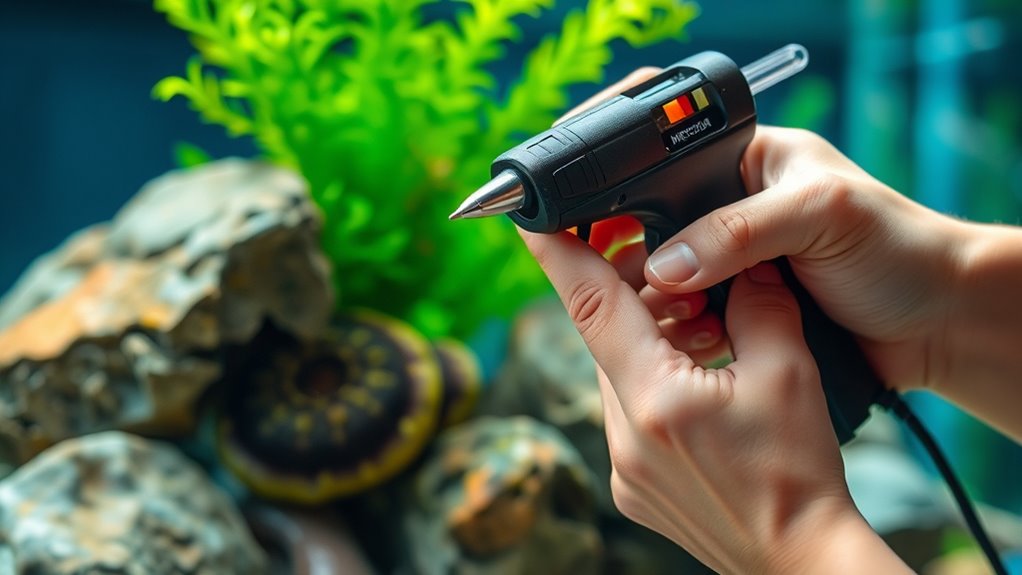
How to Use a Glue Gun Safely in Your Aquarium
To safely use a glue gun in your aquarium, it is essential to select only non-toxic, aquarium-safe adhesives such as epoxy or silicone. These materials ensure that your aquatic environment remains healthy and free from harmful chemicals.
Proper glue gun safety is crucial to prevent accidents and protect both yourself and your underwater inhabitants. Wear heat-resistant gloves and safety glasses to shield yourself from burns and splatters during the application process.
Prepare decorations by cleaning and drying them thoroughly to ensure the adhesive bonds well. Apply small amounts of glue in a dry area, allowing it to fully cure before submerging items underwater.
Avoid using excess glue, as it can harm aquatic life and degrade water quality. Keep these tips in mind to effectively handle and maintain glued items for the safety of your aquarium.
Key Takeaways
- Use only aquarium-safe, non-toxic glue sticks to avoid harming fish and aquatic plants.
- Work in a dry, well-ventilated area away from the tank to prevent water contamination and burns.
- Wear heat-resistant gloves and safety glasses to protect against hot glue burns and splatters.
- Apply small amounts of glue precisely to avoid suffocating plants or causing debris buildup in water.
- Allow glue to cool and cure completely before submerging glued items into the aquarium.
Benefits of Using a Glue Gun for Aquarium Projects
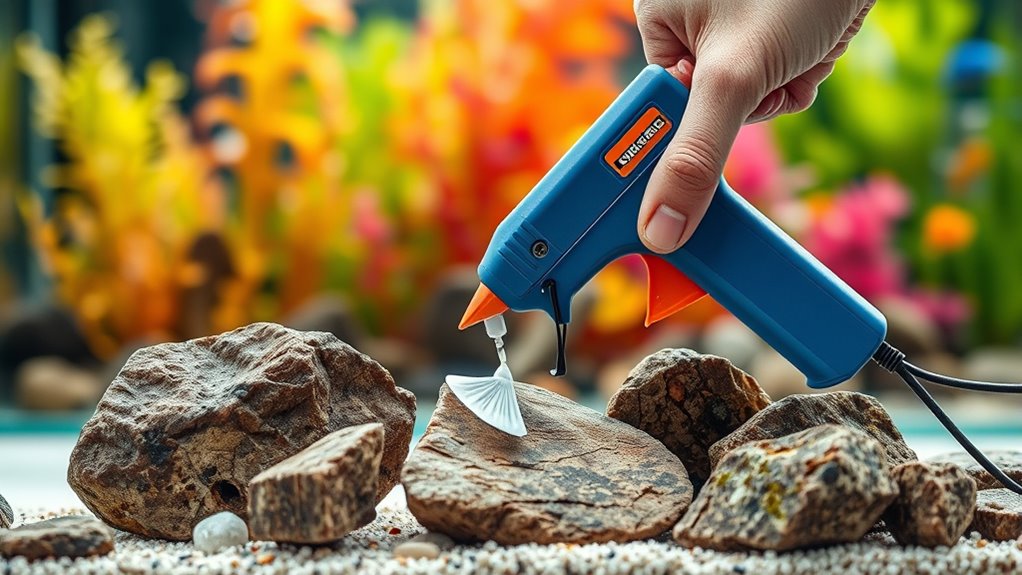
Although you might not have considered it before, using a glue gun for aquarium projects offers several advantages. First, it provides a quick and strong bond, which is essential when you’re assembling decorations or securing plants inside the tank. You won’t have to wait long for the glue to set, so you can finish your project faster.
Plus, the glue from a hot glue gun is versatile enough to adhere to various materials like plastic, wood, and even some stones. Another benefit is the control you get while applying the glue. You can easily manage the amount and placement, reducing mess and waste.
Also, the glue is non-toxic once cooled, making it safer for your aquatic life. Finally, using a glue gun can be cost-effective since glue sticks are affordable and last long. Overall, it’s a practical tool that simplifies your aquarium customization and maintenance tasks.
Choosing the Right Glue for Your Aquarium
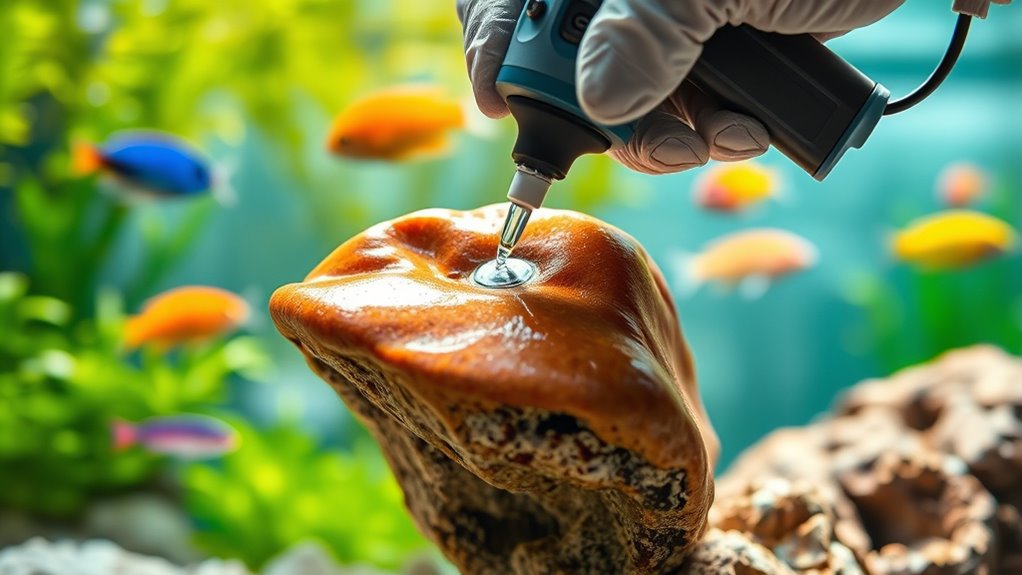
When choosing glue for your aquarium, it’s important to pick a non-toxic option that won’t harm your fish. You’ll want to compare epoxy and silicone adhesives to find one that offers a strong, waterproof bond. Making the right choice guarantees your decorations stay secure without compromising water quality.
Epoxy vs. Silicone
Since choosing the right adhesive is essential for your aquarium’s safety and appearance, understanding the differences between epoxy and silicone will help you make the best decision. Epoxy is a strong, durable glue that cures hard, making it ideal for attaching heavy decorations or rocks. It bonds well underwater but can be tricky to work with due to its quick curing time.
Silicone, on the other hand, remains flexible after curing, which helps absorb stress from temperature changes or movement. It’s great for sealing and attaching lightweight items. However, not all silicone is aquarium-safe, so you need to verify it’s specifically labeled for aquarium use.
Both adhesives have their place, so consider your project’s needs carefully before choosing between epoxy or silicone.
Non-Toxic Adhesive Options
Why does choosing a non-toxic adhesive matter so much for your aquarium? Because harmful chemicals can leach into the water, stressing or even poisoning your aquatic life. When selecting glue, look for options specifically labeled as aquarium-safe or non-toxic.
Cyanoacrylate-based super glues are popular since they cure quickly and are generally safe once fully dried. Gel variants are easier to control and less messy. Avoid adhesives with solvents or strong fumes, as these can be harmful to fish and plants.
You might also consider plant-safe adhesives designed for aquascaping, which prioritize gentle bonding without releasing toxins. Always double-check product labels and reviews to ensure compatibility with your tank’s inhabitants. Opting for the right non-toxic glue helps keep your underwater environment healthy and thriving.
Waterproof Bonding Materials
How do you guarantee your glue won’t wash away or break down in your aquarium’s wet environment? Choosing the right waterproof bonding material is key. Not all adhesives can withstand constant water exposure, so here are three options to consider:
- Silicone-based adhesives – These are flexible, waterproof, and safe for aquatic life once cured.
- Epoxy resin – Offers a strong, durable bond and is fully waterproof, ideal for heavy decorations.
- Cyanoacrylate gel (super glue gel) – Bonds quickly and works well with small, non-porous surfaces; it’s safe once fully cured.
Make sure to check that the glue explicitly states it’s aquarium-safe and non-toxic. Using these materials correctly ensures your fixtures stay secure without compromising your aquatic environment.
What Safety Gear You Need When Using a Glue Gun
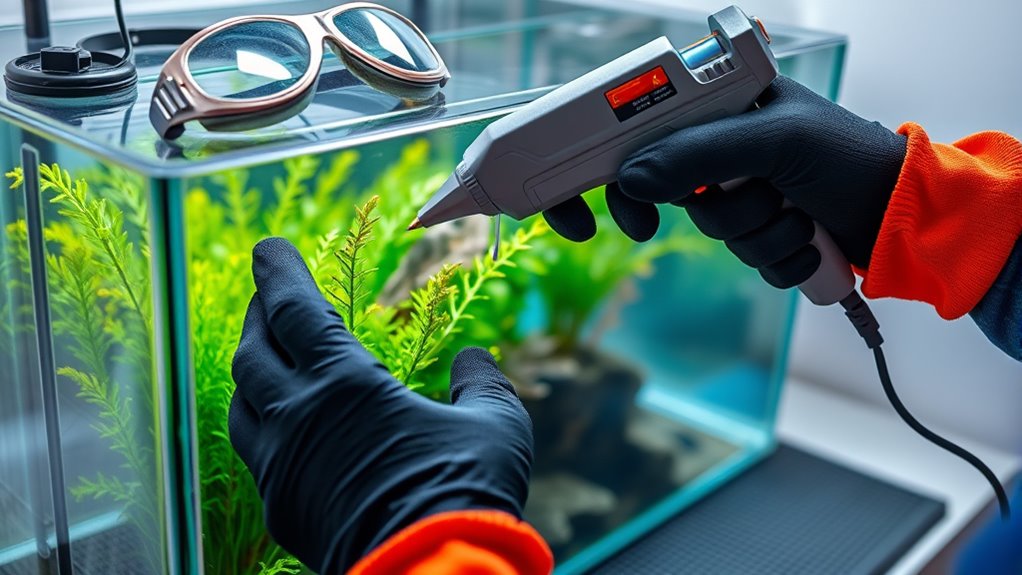
Before you start working with a glue gun in your aquarium, it’s important to gear up properly to protect yourself. First, wear heat-resistant gloves to shield your hands from accidental burns caused by the hot glue or the gun’s nozzle. Safety glasses are also a must; they protect your eyes from unexpected glue splatters or debris.
Consider wearing long sleeves to reduce skin exposure, minimizing the risk of burns on your arms. A well-ventilated workspace is essential too, as glue fumes can be irritating. If ventilation is limited, use a mask designed to filter out fumes.
Avoid loose clothing or jewelry that could catch on the glue gun or decorations. Finally, keep a clean, organized area to prevent accidental tipping or dropping of the glue gun. Taking these simple precautions guarantees you stay safe while crafting your aquarium decorations.
Getting Your Aquarium Decorations Ready for Gluing
Before you start gluing, make sure your aquarium decorations are clean and free of dirt or algae. It’s important to choose materials that won’t harm your aquatic life or react poorly with the glue.
Taking these steps will help guarantee a safe and secure setup for your tank.
Cleaning Aquarium Decorations
Although it might seem simple, thoroughly cleaning your aquarium decorations is essential to guarantee the glue adheres properly and lasts longer. Any dirt, algae, or residue can prevent the glue from bonding effectively, leading to weak holds or pieces coming loose.
To clean your decorations before gluing, follow these steps:
- Rinse the decorations under warm water, scrubbing gently with a soft brush to remove algae and debris.
- Soak them in a vinegar solution (1 part vinegar to 3 parts water) for 10-15 minutes to break down mineral deposits.
- Rinse thoroughly with fresh water and let them dry completely to ensure no moisture interferes with the glue.
Taking these steps will make sure your decorations are ready for a strong, lasting bond.
Choosing Safe Materials
Now that your decorations are clean and dry, it’s important to pick materials that won’t harm your aquatic life. Avoid anything toxic or prone to breaking down underwater. Opt for natural stones, cured wood, or aquarium-safe plastics.
These materials are sturdy and won’t leach harmful chemicals into the water. Avoid metals, untreated wood, or painted items that might deteriorate or release toxins.
Here’s a quick guide to help you choose safe materials:
| Safe Materials | Unsafe Materials |
|---|---|
| Natural stones | Painted rocks |
| Cured driftwood | Metals (e.g., iron) |
| Aquarium-safe plastics | Untreated wood |
| Ceramic decorations | Plastics not labeled aquarium-safe |
| Silicone-based sealants | Treated or varnished wood |
Choosing the right materials guarantees your glue job lasts and your fish stay healthy.
Step-by-Step Guide to Applying Glue Safely
When you’re ready to apply glue in your aquarium, you’ll want to work carefully to protect both your tank’s inhabitants and yourself. Follow these steps to ensure a safe and effective application:
- Prepare the area and materials: Make sure your glue gun is unplugged when loading glue sticks. Use only aquarium-safe glue sticks. Clean and dry the surfaces you’ll bond to ensure strong adhesion.
- Apply glue cautiously: Plug in the glue gun and wait for it to heat up fully. Wearing heat-resistant gloves, apply a small amount of glue directly to the object or surface. Avoid excess glue, as it can fall into the water.
- Secure and cool: Press the glued items together firmly but gently. Hold them in place until the glue cools and hardens, which usually takes a minute or two. Keep your fingers clear of the hot glue to avoid burns.
Using a Glue Gun to Secure Live Aquarium Plants Safely
Securing live aquarium plants with a glue gun can be a quick and effective way to create a stable underwater environment, but you’ll need to handle the process carefully to avoid harming your plants or aquatic life. Use aquarium-safe glue sticks and apply small amounts to avoid excess glue, which can suffocate plants or leach harmful substances.
Work in a dry area outside the tank to let the glue set before submerging the plants. Avoid hot glue directly on delicate leaves or stems; instead, attach plants to rocks or driftwood for better support.
| Step | Tip | Reason |
|---|---|---|
| Use aquarium-safe glue | Prevents toxins from entering water | Keeps fish and plants safe |
| Apply small amounts | Avoids suffocating plants | Ensures healthy plant growth |
| Attach to hard surfaces | Provides stability underwater | Prevents plants from floating |
| Let glue dry first | Reduces glue spreading in water | Protects aquatic life |
Following these tips helps your aquarium thrive safely.
Avoid Common Glue Gun Mistakes That Harm Fish
Although using a glue gun is a handy way to set up your aquarium, mistakes can easily harm your fish if you’re not careful. To keep your aquatic friends safe, you’ll want to avoid these common pitfalls:
Using a glue gun is helpful for aquariums, but mistakes can harm your fish if you’re not careful.
- Using Toxic Glue Sticks – Make sure you only use aquarium-safe glue sticks. Regular glue can release harmful chemicals that stress or even poison your fish.
- Applying Excessive Glue – Overusing glue can create large clumps that trap debris or block water flow, leading to poor tank conditions and unhealthy fish.
- Touching Hot Glue or Gun Near Water – The glue gun and melted glue get very hot. Avoid dropping it into the tank or letting hot glue drip on your fish or plants, as this can cause burns or harm delicate tissues.
How to Clean Up Glue Gun Residue Safely
If you want to keep your aquarium clean and safe, you’ll need to remove any leftover glue gun residue carefully. Start by letting the glue cool and harden completely; this makes it easier to peel off without smearing or spreading. Use a plastic scraper or your fingernail to gently lift the residue—avoid metal tools that could scratch the glass or acrylic.
For stubborn spots, dampen a soft cloth with warm water and mild soap to soften the glue, then wipe gently. Never use harsh chemicals, solvents, or abrasive cleaners, as they can harm your fish and damage aquarium materials. After removal, rinse the area thoroughly with water to ensure no soap or glue traces remain.
Always dry the surface before adding water back to the tank. By handling glue residue with care, you’ll maintain a healthy environment for your aquatic life and keep your aquarium looking its best.
When and How to Remove or Replace Glue Gun-Applied Items
When you notice that a glue gun-applied item is deteriorating or no longer serving its purpose, it’s time to remove or replace it to keep your aquarium safe and functional. Don’t wait too long, as loose pieces can harm your aquatic life or damage the tank.
Here’s how you can handle it:
- Assess the item: Check if the glue bond is weak or the attached object is cracked or broken. If it’s firmly attached but shows wear, replacement is best.
- Gently detach: Use a plastic scraper or your fingers to carefully pry off the item. Avoid metal tools that might scratch the glass or acrylic. If needed, warm the glue slightly with a hairdryer to soften it.
- Clean the surface: Remove any leftover glue residue with warm water and a soft cloth before applying a new glue bond.
Following these steps guarantees your tank stays safe while maintaining the decorations or equipment you’ve installed.
Frequently Asked Questions
Can Glue Gun Adhesives Affect Water Chemistry Over Time?
Yes, glue gun adhesives can affect water chemistry over time if they’re not aquarium-safe. You’ll want to choose non-toxic, waterproof adhesives designed for aquatic use to avoid harming your fish and plants.
Using the wrong type of glue can introduce harmful chemicals into the water. This can disrupt the delicate balance of the aquarium environment. Always check the product label for aquarium compatibility before use.
Are There Specific Glue Guns Designed for Underwater Use?
Yes, you’ll find glue guns specifically made for underwater use, often labeled as waterproof or aquarium-safe. These use special adhesive sticks that won’t harm water chemistry or aquatic life, ensuring safe, strong bonds underwater.
How Long Does Glue Typically Take to Cure in an Aquarium Environment?
You’d think glue cures faster than a lightning bolt, but in an aquarium, it usually takes 24 hours to fully set. Don’t rush—letting it set completely ensures a strong, waterproof bond for your aquatic setup.
Patience is key when working with adhesives underwater. The curing process can be affected by water temperature and humidity. Always follow the manufacturer’s instructions for the best results.
Can Glue Fumes Harm Aquatic Life During Application?
Yes, glue fumes can harm aquatic life during application. You’ll want to work quickly, guarantee good ventilation, and avoid applying glue directly over water to minimize exposure and protect your fish and plants from toxic fumes.
Is It Safe to Use a Glue Gun Near Aquarium Filters or Heaters?
It’s best you avoid using a glue gun right next to filters or heaters since heat and fumes might damage equipment or stress fish.
Keep a safe distance, and guarantee good ventilation to protect both your aquarium and gear.
Conclusion
Using a glue gun in your aquarium is like weaving a delicate web—strong yet gentle enough to keep your aquatic friends safe. By choosing the right glue, wearing safety gear, and following careful steps, you’ll create secure, beautiful habitats without harm.
Remember to avoid common mistakes and clean up properly to maintain a healthy environment. With these tips, you’ll confidently craft stunning aquarium setups that thrive and delight both you and your fish.
In conclusion, using a glue gun safely in your aquarium ensures a safe and healthy environment for your aquatic pets. Proper use of aquarium-safe glue and adherence to safety guidelines will help you build durable and attractive habitats. Follow these best practices to enjoy a thriving aquarium that brings beauty and joy to your home.