How to Ship a Gun Safe in 7 Easy Steps
To ship your gun safe in 7 easy steps, start by removing all ammunition and securing loose items inside. Ensuring safety and compliance with regulations is crucial when transporting firearms and safes.
Clean and inspect the safe for any damage, then research shipping costs and legal requirements thoroughly.
Next, choose the best shipping method that suits your budget and timeline. Consider hiring professional movers for heavy lifting to avoid injury or damage.
Properly pack your safe using protective materials and label it clearly with “Fragile” and “Heavy” stickers.
Finally, track your shipment closely and inspect the safe upon arrival for any issues. Keep following for detailed tips on each step to guarantee a smooth and secure shipping process.
Key Takeaways
- Remove all firearms and ammunition, ensure the safe is unloaded and securely locked before shipping.
- Thoroughly clean and inspect the safe, documenting any existing damage for transit protection.
- Wrap removable components and the safe exterior with heavy-duty bubble wrap and label as “Fragile” and “Heavy.”
- Choose a reliable shipping method, comply with legal regulations, and prepare all necessary shipping documents.
- Track the shipment, inspect the safe upon delivery, and report any damages immediately to the carrier.
Remove Ammunition and Secure Contents Inside Your Gun Safe
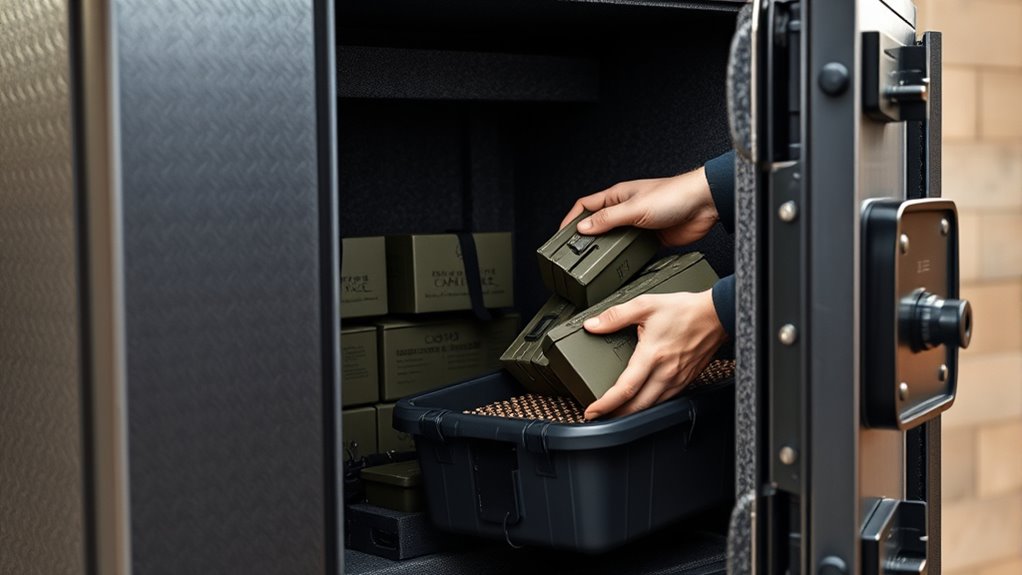
Before you start moving your gun safe, make sure you’ve removed all ammunition and securely stored any firearms inside. This step is essential for safety and compliance with shipping regulations. Ammunition can be hazardous during transport, so take it out completely and store it separately in a safe, approved container.
Next, check your firearms to verify they’re unloaded. Lock them inside the safe or use a separate secure case if possible. If your safe has removable shelves or drawers, take those out to prevent shifting and damage during transit.
Secure any loose items inside the safe by wrapping them or placing them in boxes to avoid rattling or impact damage. Double-check that the safe door is locked tightly to prevent accidental opening. Taking these precautions helps protect your valuable firearms and keeps everyone involved safe while your gun safe is being shipped.
Prepare Your Gun Safe: Cleaning and Inspection Tips
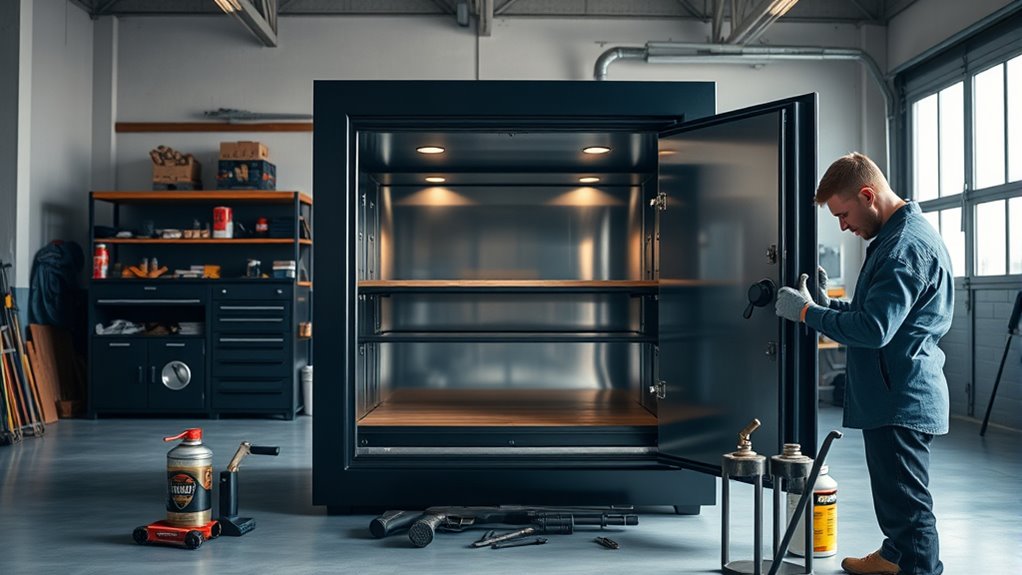
Before shipping your gun safe, you’ll want to give it a thorough cleaning to remove dust and debris. Check for any damage or wear that could worsen during transit.
Don’t forget to secure any loose components to prevent rattling or breakage along the way.
Thorough Cleaning Process
How do you guarantee your gun safe is in top condition before shipping it? Start by thoroughly cleaning the interior and exterior. Remove all contents, including shelves and drawers, to access every corner.
Use a vacuum or brush to clear out dust and debris. Wipe down surfaces with a mild detergent and a damp cloth to eliminate dirt and grime. Make certain to dry everything completely to prevent rust.
Pay special attention to hinges, locks, and seals—clean these areas carefully to maintain their function. Avoid harsh chemicals that could damage the finish or internal components. Once clean and dry, reassemble the safe’s interior parts.
This thorough cleaning ensures your safe stays protected during transit and arrives in the best possible condition.
Inspect for Damage
Why is it important to inspect your gun safe for damage before shipping? Spotting any existing dents, scratches, or structural issues helps you document its condition, protecting you if damage occurs during transit. Carefully check both the exterior and interior, paying close attention to hinges, locks, and seals.
Look for rust spots or cracks that could worsen if left unaddressed. Identifying these problems early lets you make necessary repairs or notify the shipping company about pre-existing damage. This step guarantees you’re not held responsible for new issues and helps you maintain your safe’s integrity throughout the move.
Taking a thorough, detailed approach now can save you time, money, and frustration later.
Secure Loose Components
What should you do with loose parts inside your gun safe before shipping? Securing them is vital to prevent damage and loss. Loose components can rattle, scratch, or get misplaced, risking your investment and peace of mind.
Here’s how to keep everything safe:
- Remove all loose items like shelves, drawers, and accessories.
- Wrap each component in bubble wrap or thick cloth to cushion impacts.
- Use strong tape or elastic bands to bundle smaller pieces together.
- Place wrapped items in a labeled box or secure them inside the safe with foam padding.
Taking these steps ensures your gun safe and its parts arrive intact, so you won’t face unexpected damage or missing pieces. It’s a simple way to protect what matters most.
Understand Shipping Costs and Legal Requirements
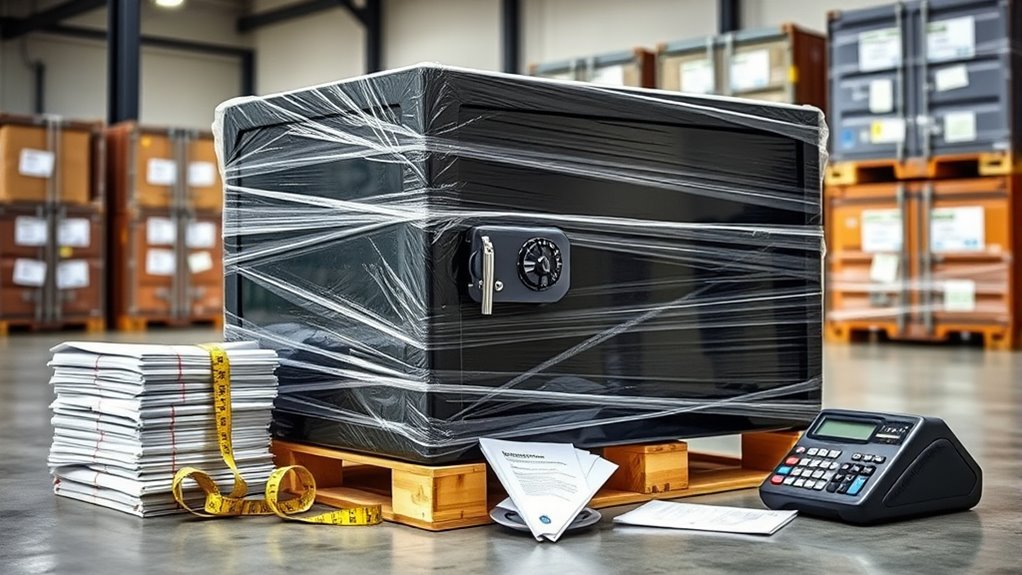
Before you ship your gun safe, you’ll need to take into account factors that affect shipping costs like size, weight, and distance. You also have to follow legal regulations that vary by location to avoid any issues.
Plus, make sure you have all required documentation ready to keep the process smooth.
Shipping Cost Factors
Although shipping a gun safe might seem straightforward, several factors can substantially affect the overall cost and legal requirements you’ll need to meet. Before you ship, you’ll want to consider these key aspects to avoid unexpected expenses or delays.
- Weight and Size – Gun safes are heavy and bulky, which drives up shipping fees significantly.
- Distance – The farther your safe travels, the higher the cost, especially for long-distance or international shipments.
- Handling Requirements – Special equipment or extra labor may be needed to load and unload your safe safely.
- Insurance – Protecting your valuable safe during transit adds to the cost but is often worth it for peace of mind.
Knowing these factors helps you budget wisely and plan accordingly.
Legal Shipping Regulations
Since gun safes often contain firearms or related items, shipping them involves strict legal regulations you’ll need to follow closely. Different states and carriers have specific rules about transporting firearms, so you must guarantee compliance to avoid fines or confiscation. Additionally, some carriers require you to declare the contents and use approved packaging.
Knowing these regulations upfront helps you avoid delays and extra costs.
Here’s a quick overview:
| Regulation Type | Requirement | Carrier Examples |
|---|---|---|
| Firearms Declaration | Must disclose firearm presence | UPS, FedEx, USPS |
| Packaging Standards | Use sturdy, tamper-evident boxes | UPS, FedEx |
| Destination Laws | Check state/local restrictions | Varies by destination |
Always verify current rules before shipping your gun safe.
Required Documentation
What documents do you need to ship a gun safe legally and affordably? Knowing exactly which paperwork is necessary helps you avoid delays, fines, and extra costs.
Here’s a quick rundown of essential documents you’ll need:
- Bill of Lading – This proves the contract between you and the carrier, ensuring your safe is in transit.
- Proof of Ownership – A receipt or title shows you legally own the safe and its contents.
- Shipping Invoice – Details the value and contents, helping with insurance and customs if applicable.
- Compliance Certificates – Depending on your state or carrier, you might need permits verifying your shipment meets legal regulations.
Having these ready keeps your shipment smooth and stress-free. Don’t skip this step!
Pick the Best Way to Ship Your Gun Safe
When you need to ship your gun safe, choosing the right method can make all the difference in ensuring it arrives securely and on time. You’ll want to weigh factors like size, weight, distance, and budget. For short distances, a reliable freight service or specialized moving company that handles heavy items can be cost-effective and safe.
If you’re shipping long-distance or internationally, consider freight shipping options like LTL (less-than-truckload) carriers, which offer protection and tracking without the high cost of full truckloads. Another option is shipping via a parcel service if your safe is small enough, but this is rare due to weight limits. Whichever method you pick, make sure the carrier offers adequate insurance and handles heavy, bulky shipments carefully.
Research reviews and ask about their experience with gun safes to avoid damage or delays. By matching your safe’s specifics with the right shipping service, you’ll protect your investment and have peace of mind during transit.
Get Professional Help Moving Your Heavy Gun Safe
Although moving a heavy gun safe might seem manageable on your own, hiring professionals can save you time, effort, and potential injury. These experts come equipped with the right tools and experience to handle your safe safely, avoiding damage to your property and the safe itself. Plus, they’re insured, giving you peace of mind.
Hiring professionals to move your heavy gun safe ensures safety, efficiency, and protection for your property and peace of mind.
When you choose professional movers, consider these benefits:
- Safety First: Avoid back injuries or accidents from improper lifting techniques.
- Efficiency: Professionals can move your safe quickly, saving you hours of strenuous work.
- Damage Prevention: They know how to protect floors, walls, and the safe during transit.
- Stress Relief: You can relax knowing your valuable safe is in capable hands.
Ultimately, trusting professionals guarantees your gun safe arrives securely, letting you focus on what matters most.
Properly Pack and Label Your Gun Safe
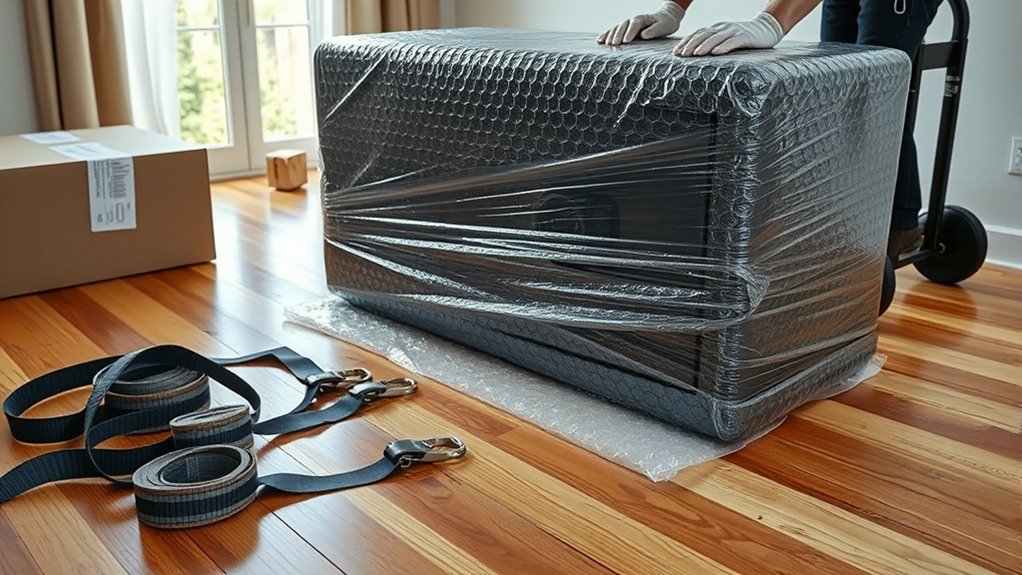
Since your gun safe holds valuable and often heavy contents, properly packing and labeling it is crucial to guarantee everything stays secure and organized during the move. Start by removing all firearms and ammunition, packing them separately according to legal regulations. Use heavy-duty packing materials like bubble wrap or foam to protect the safe’s exterior and corners.
Clearly label the safe with “Heavy” and “Fragile” stickers to alert movers to handle it carefully. Additionally, include a detailed inventory list attached on the outside so you know exactly what’s inside without opening it.
| Step | Material Needed | Labeling Tip |
|---|---|---|
| Empty the safe | None | Mark “Empty” if applicable |
| Wrap the exterior | Bubble wrap or foam | Use “Fragile” stickers |
| Secure contents | Plastic bags | Attach inventory list |
| Label the safe | Heavy-duty labels | Mark “Heavy” |
| Final check | Tape, marker | Double-check labels |
Track Your Gun Safe Shipment and Inspect on Arrival
After you’ve packed and labeled your gun safe properly, the next step is to keep a close eye on its shipment. Tracking your shipment helps you stay informed and reduces anxiety about its status. Most carriers provide a tracking number, so use it to monitor progress online.
When your gun safe arrives, inspect it immediately before signing any delivery receipts.
Here’s what to do:
- Track regularly: Check the carrier’s website daily for updates to avoid surprises.
- Communicate promptly: Contact the carrier if there are delays or unusual status changes.
- Inspect carefully: Look for any visible damage like dents, scratches, or broken locks.
- Document issues: Take photos and report damages to the carrier and seller right away.
Frequently Asked Questions
Can I Insure My Gun Safe During Shipping?
Yes, you can insure your gun safe during shipping. You’ll want to check with the shipping company about coverage options and consider purchasing additional insurance to protect against damage or loss, giving you peace of mind throughout transit.
How Do I Choose the Right Lock for My Gun Safe?
Choosing the right lock is like picking the fortress gate for your treasures—you’ll want one that’s both durable and reliable. Consider electronic, mechanical, or biometric locks based on your convenience, security needs, and budget.
Each type offers unique advantages, so think about how often you’ll access your safe and who needs access. Electronic locks provide quick access and can be reprogrammed easily.
Mechanical locks are reliable and don’t require batteries, making them a solid choice for long-term security. Biometric locks use fingerprint recognition for fast, personalized access but may come at a higher cost.
What Is the Average Lifespan of a Gun Safe?
You can expect a gun safe to last anywhere from 20 to 50 years, depending on its build quality and maintenance.
With proper care, it’ll protect your firearms and valuables for decades without issue.
Are There Climate Considerations for Storing Gun Safes?
Yes, you should consider climate when storing your gun safe. High humidity can cause rust, while extreme temperatures may affect locking mechanisms.
Keeping it in a dry, temperature-controlled area helps protect your firearms and the safe itself.
How Do I Maintain the Gun Safe’s Fire Resistance?
Like a shield guarding a knight, you maintain your gun safe’s fire resistance by regularly checking seals and insulation, avoiding corrosion, and keeping it in a dry, cool spot.
Don’t forget to replace worn fireproof materials promptly!
Conclusion
Shipping your gun safe doesn’t have to be overwhelming. By following these steps, you’ll keep your valuables secure and comply with legal requirements. Did you know the average gun safe weighs between 200 to 1,000 pounds?
That’s why preparing and getting professional help is essential. Stay organized, label everything clearly, and track your shipment closely.
With careful planning, your gun safe will arrive safely and ready for use. Proper packaging, choosing the right carrier, and understanding shipping regulations are key to a successful move.
By following these guidelines, you can ensure your gun safe shipping experience is smooth, secure, and hassle-free.