How Secure Are Gun Safes?
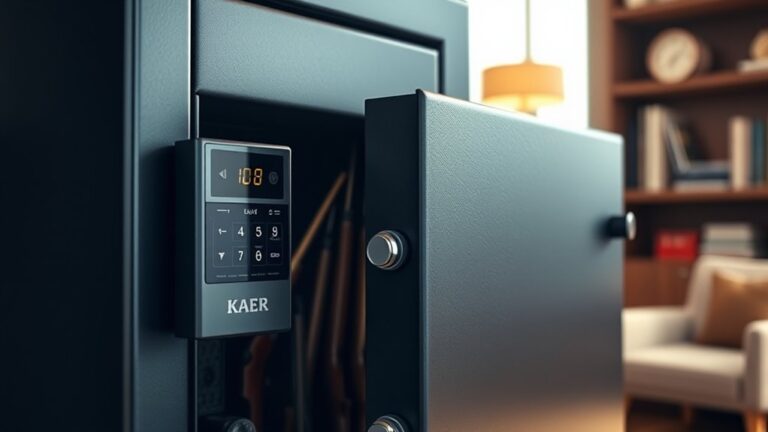
You can trust a quality gun safe to keep your firearms secure from theft, unauthorized use, and damage. Gun safes offer crucial protection by using features like thick steel, reinforced bolts, and advanced locking mechanisms—whether mechanical, electronic, or biometric. These elements work together to ensure your weapons remain safe and inaccessible to intruders.
Certifications on gun safes indicate they have undergone rigorous testing for reliability and security. However, potential weaknesses such as exposed hinges or poor placement can reduce the overall effectiveness of your safe.
Fire resistance is another important feature that adds an essential layer of protection against damage.
If you want to fully understand how the build quality, locking systems, and placement impact your safe’s effectiveness, there’s much more to explore. Knowing these factors can help you choose the best gun safe to protect your firearms adequately.
Key Takeaways
- Gun safes provide strong protection against theft, unauthorized access, and environmental damage with reinforced steel and secure locking systems. Mechanical, electronic, and biometric locks vary in security, with biometric locks offering the highest resistance to lock picking.
- Build quality, including thick steel, solid welds, and internal reinforcements, significantly impacts a safe’s resistance to forced entry. Certified safes (e.g., UL-rated) ensure tested resistance to break-ins and fire, offering more reliable security assurances.
- Proper placement and secure anchoring reduce the risk of theft and improve overall safe security effectiveness.
How Gun Safes Protect Your Firearms
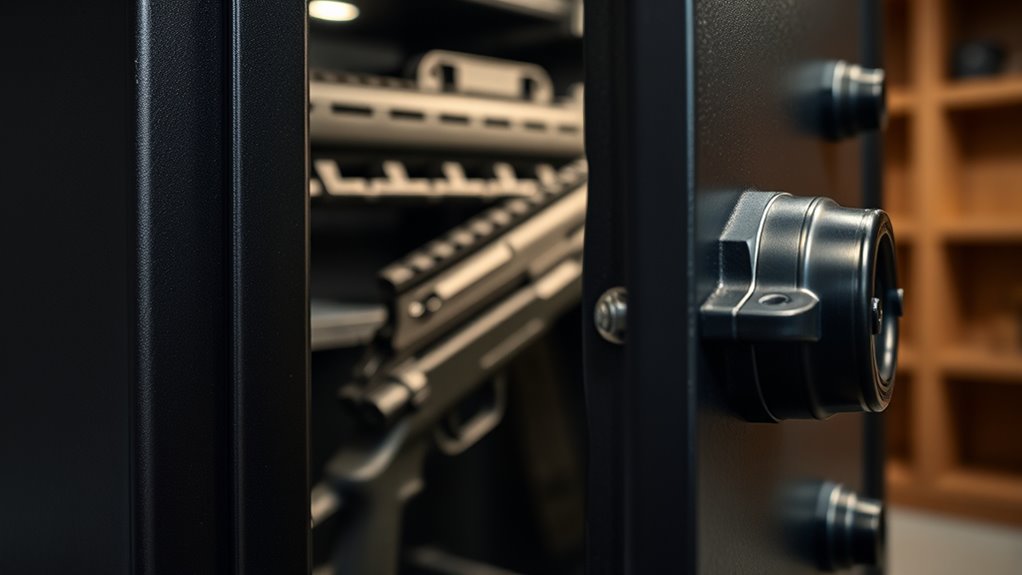
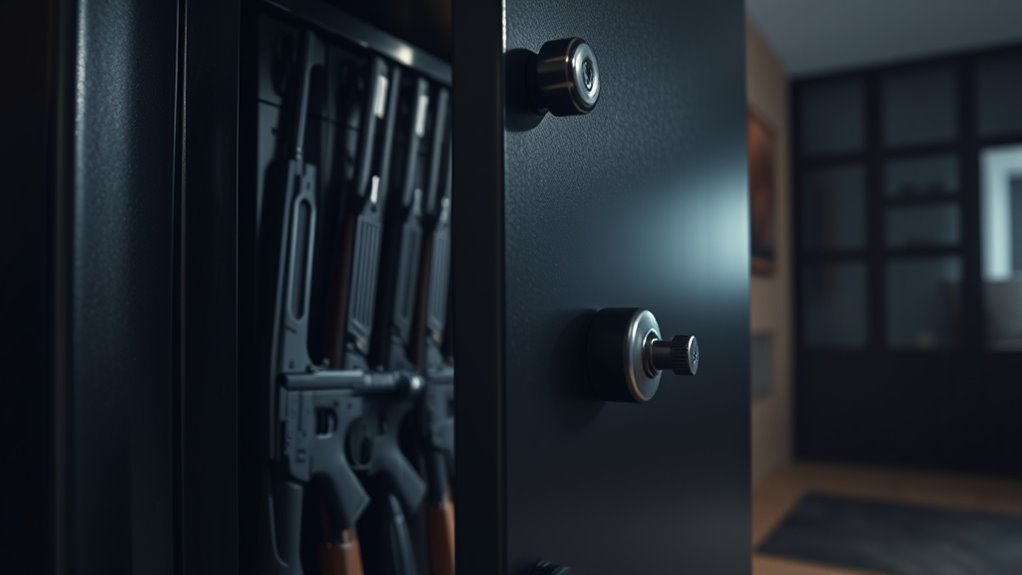
Although you might think storing firearms is straightforward, gun safes offer essential protection beyond simple storage. When you use a gun safe, you’re not just keeping your firearms locked away; you’re safeguarding them from theft, unauthorized use, and damage. Gun safes are designed with reinforced steel and secure locking mechanisms that make it extremely difficult for burglars to break in.
They also protect your firearms from environmental hazards like fire and moisture, which can cause rust or deterioration over time. By keeping your guns in a safe, you reduce the risk of accidents, especially if you have children or visitors in your home. Additionally, gun safes help you stay compliant with legal requirements regarding firearm storage in many regions.
Ultimately, a gun safe provides peace of mind by ensuring your firearms remain secure, functional, and accessible only to those you trust.
Which Locks Secure Gun Safes Best?
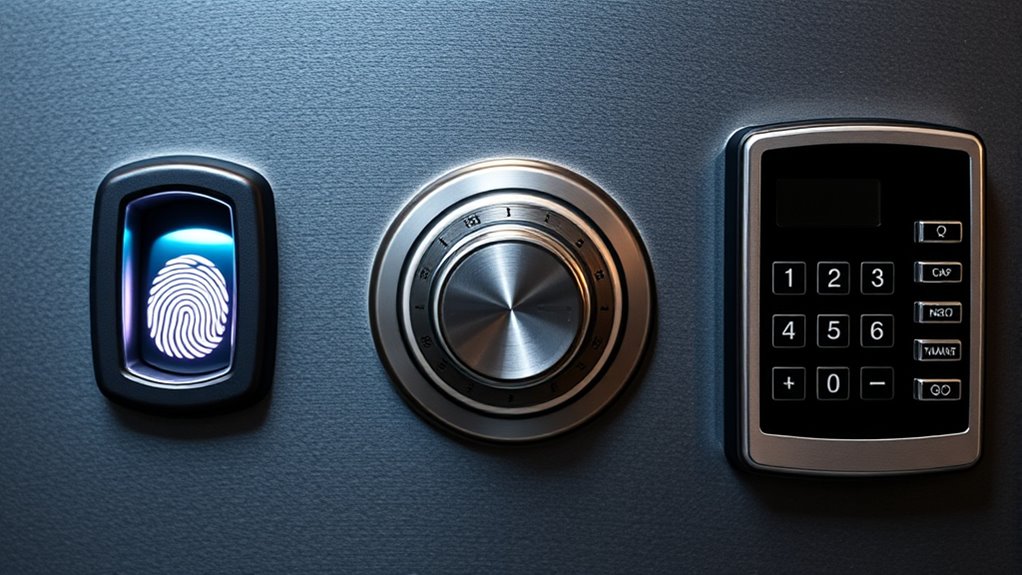
When choosing a lock for your gun safe, you’ll want to weigh mechanical versus electronic options carefully. Biometric locks offer quick access but consider how resistant each type is to lock picking. Understanding these differences helps you pick the most secure option for your firearms.
Mechanical vs Electronic Locks
Deciding between mechanical and electronic locks for your gun safe comes down to understanding how each type balances security, convenience, and reliability. Mechanical locks rely on a traditional dial that requires you to remember and precisely enter a combination. They’re highly reliable, working without batteries or electronics, making them resistant to power failures and hacking attempts.
However, they can be slower to open in emergencies. Electronic locks use keypads for quick code entry, offering faster access and the ability to change codes easily. While they provide added convenience, they depend on batteries, which means you’ll need to monitor power levels to avoid lockouts.
Additionally, some electronic models may be vulnerable to electronic tampering if not well-designed. Ultimately, your choice depends on whether you prioritize speed and flexibility or long-term dependability.
Biometric Lock Advantages
Why choose biometric locks for your gun safe? Because they offer quick, reliable access using your unique fingerprint, eliminating the need to remember combinations or carry keys. Biometric locks enhance security by ensuring only authorized users can open the safe, reducing the risk of unauthorized entry.
They’re especially useful in emergencies when every second counts, allowing you to retrieve your firearm swiftly. Most biometric systems also store multiple fingerprints, so trusted family members can access the safe too. Plus, many models have backup power options to prevent lockouts.
While slightly pricier, the convenience and heightened security make biometric locks an excellent choice if you want a balance of speed, safety, and ease when securing your guns.
Lock Pick Resistance
Although biometric locks offer great convenience, you’ll want to think about how resistant your gun safe’s lock is to picking. Traditional mechanical locks, like combination dials and key locks, vary widely in security. High-quality mechanical locks with complex pin tumblers or rotating discs provide stronger pick resistance.
Electronic keypad locks can be vulnerable to manipulation if poorly designed, but models with advanced encryption and anti-tamper features tend to hold up better. If lock picking is a concern, consider safes with UL-rated locks, as these have been tested for resistance.
Ultimately, the best locks combine mechanical complexity with electronic safeguards, making it tough for thieves to bypass them. So, prioritize lock pick resistance when choosing a gun safe to keep your firearms truly secure.
How Build Quality Affects Gun Safe Security
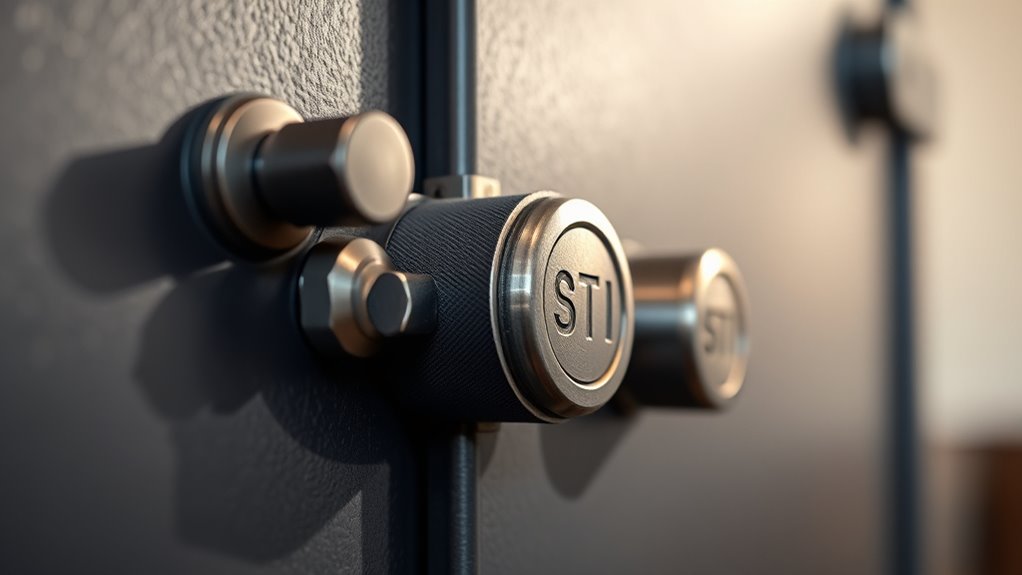
When it comes to gun safe security, the build quality plays a vital role you can’t ignore. You’ll want to focus on the strength and thickness of the materials, the quality of the locking mechanisms, and how well the welds and joints hold up.
These factors directly impact how resistant your safe is to break-ins and tampering.
Material Strength And Thickness
Because the material strength and thickness directly impact a gun safe’s ability to withstand tampering, you need to pay close attention to these factors when choosing one. A stronger, thicker safe can resist drills, pry bars, and other break-in tools more effectively.
Here’s what to take into account:
- Steel Gauge – Lower gauge numbers mean thicker steel; aim for at least 10-gauge for serious protection.
- Door Thickness – A thicker door adds an extra barrier, making forced entry much harder.
- Reinforcements – Look for safes with internal braces or plates that strengthen weak points.
- Weld Quality – Solid, continuous welds prevent easy prying or separation of panels.
Locking Mechanism Quality
Since a gun safe’s locking mechanism is its primary defense against unauthorized access, you’ll want to guarantee it’s built with high-quality materials and precision engineering. A sturdy locking system resists tampering, picking, and forced entry, so pay attention to the type of lock—whether mechanical dial, electronic keypad, or biometric scanner. Each has strengths, but quality construction matters most.
Look for thick, hardened steel locking bolts that engage fully, ensuring the door stays firmly shut. Poorly made locks can fail under pressure or wear out quickly, compromising your firearms’ safety. You should also consider the lock’s internal components; precision-machined parts reduce jamming and improve reliability.
Ultimately, investing in a well-crafted locking mechanism gives you peace of mind, knowing your safe truly protects what’s inside.
Welds And Joint Integrity
A high-quality locking mechanism won’t protect your firearms if the safe’s welds and joints aren’t up to par. The strength of these connections directly impacts how resistant your safe is to prying or cutting attacks. When checking welds and joints, consider these points:
- Uniformity: Look for consistent, smooth welds without gaps or cracks, which indicate solid craftsmanship.
- Material Thickness: Thicker steel at joints means better resistance to forced entry.
- Reinforcement: Additional bracing or gussets around corners add extra security.
- Seam Design: Overlapping seams or interlocking joints reduce weak points.
What Certification Standards Reveal About Security
How do certification standards impact the security you can expect from a gun safe? These standards serve as benchmarks, showing you how well a safe performs under specific stress tests. Organizations like Underwriters Laboratories (UL) and the California Department of Justice (CA DOJ) test safes for resistance against forced entry, fire, and lock manipulation.
When a safe meets these certifications, you can trust it’s been rigorously evaluated for real-world threats. Certifications also help you compare products objectively. A safe with a UL TL-15 rating, for example, means it resists attacks with common hand tools for at least 15 minutes.
This doesn’t guarantee invulnerability but sets a clear baseline for security. Without certification, you’re relying solely on manufacturer claims, which might not reflect actual performance. So, when choosing your gun safe, checking its certification can give you confidence that it offers the protection you need.
What Are Common Weak Points in Gun Safe Designs?
When choosing a gun safe, you’ll want to watch out for weak spots like locking mechanism vulnerabilities, material strength limitations, and exposed hinges or bolts. These flaws can make it easier for intruders to break in.
Understanding these common weak points helps you pick a safer option.
Locking Mechanism Vulnerabilities
Although gun safes are designed to protect your firearms, their locking mechanisms often have weak points that can be exploited. Understanding these vulnerabilities helps you make smarter choices when securing your guns.
- Mechanical Locks – Traditional dial or lever locks can be manipulated or decoded with enough skill and patience.
- Electronic Keypads – These are susceptible to power outages, hacking, or electronic failures, potentially leaving you locked out or compromised.
- Biometric Scanners – While convenient, they can sometimes be bypassed by spoofing fingerprints or suffer from sensor malfunctions.
- Bolt Work – If the locking bolts aren’t robust or properly aligned, they can be pried or forced open despite the lock itself remaining intact.
Knowing these weak points lets you better evaluate which safe suits your security needs.
Material Strength Limitations
Because the strength of a gun safe largely depends on its materials, you need to understand where common weaknesses lie. Many safes use thinner steel or composite materials that can be cut or pried open easily. Welds and seams are also vulnerable spots, as poor construction can reduce overall integrity.
Even high-quality steel can have weak points if not properly reinforced.
| Weak Point | Description | Risk Level |
|---|---|---|
| Thin Steel | Easily cut or drilled | High |
| Welds & Seams | Potentially weak joins | Medium |
| Composite Panels | Less resistant than steel | High |
| Back Panels | Sometimes thinner, less protected | Medium to High |
Knowing these weak points helps you choose a safe that’s genuinely secure.
Hinges and Bolt Exposure
Material weaknesses like thin steel and vulnerable seams aren’t the only concerns you should watch for in a gun safe. Hinges and bolt exposure can be critical weak points that compromise your safe’s security. When hinges are mounted externally, they might be vulnerable to tampering or removal, allowing unauthorized access.
Similarly, if the locking bolts are exposed or poorly designed, they can be pried or cut. To keep your firearms secure, pay attention to these common weak points:
- External hinges that can be unscrewed or cut
- Thin hinge pins that bend or snap easily
- Bolts that don’t extend fully into the frame
- Bolt mechanisms exposed on the door’s edge
Addressing these can considerably boost your safe’s defense.
Where Should You Place Your Gun Safe for Maximum Protection?
When choosing where to place your gun safe, you’ll want to take into account both security and accessibility. Ideally, position it in a hidden or less obvious spot to deter burglars. Avoid placing the safe near exterior walls or windows, as these areas are easier to breach.
Instead, consider interior rooms like closets or basements, where the safe is less visible and harder to remove quickly. Also, keep the safe anchored securely to the floor or wall to prevent thieves from carrying it away. Think about how often you’ll need access—placing it too far or in an inconvenient spot may hinder quick retrieval.
Balancing concealment with ease of access is key. Finally, verify the surrounding area is free from clutter to avoid obstructing the safe door. By carefully selecting the location, you markedly enhance your gun safe’s protection without compromising your ability to get to your firearms when necessary.
How Fire Resistance Impacts Gun Safe Security
Although securing your firearms against theft is essential, protecting them from fire damage is just as important. Fires can destroy your guns and valuable documents, so choosing a fire-resistant safe adds an indispensable layer of security. Here’s what you should consider:
- Fire Rating – Look for safes with a UL fire rating, which indicates how long they can withstand high temperatures, usually measured in minutes or hours.
- Temperature Limit – Check the maximum internal temperature the safe can endure without damaging your firearms. Ideally, it should stay below 350°F to prevent ammo and gun damage.
- Insulation Quality – Good insulation slows heat transfer, giving you more time in case of fire.
- Seal Integrity – A fire-resistant safe should have sturdy door seals that prevent smoke and heat from entering, protecting your guns and paperwork.
Incorporating fire resistance into your gun safe choice means you’re not only guarding against theft but also fire-related loss.
Why Quick Access Matters for Gun Safe Security
Because emergencies often happen without warning, having quick access to your firearm can be crucial for your safety. If your gun safe is too slow to open or difficult to operate, it could cost you precious seconds when every moment counts. You want a safe that balances security with speed, ensuring you can retrieve your firearm immediately if needed.
This means choosing a locking mechanism that’s reliable but also fast—like biometric or keypad locks—and positioning the safe where it’s easily reachable. Quick access doesn’t mean compromising protection; it means smart design and technology that lets you act swiftly without giving intruders an advantage. When seconds matter, a gun safe that’s cumbersome or slow to open can turn from a security asset into a liability.
How to Test Your Gun Safe’s Security Effectiveness
To guarantee your gun safe truly protects what matters, you need to test its security effectiveness regularly. This helps you spot weak spots before a potential break-in.
Here’s how you can do it:
- Check the Lock Mechanism: Try locking and unlocking multiple times to ensure smooth operation and no malfunctions.
- Inspect the Door Seal and Hinges: Look for any gaps, loose hinges, or signs of tampering that could compromise security.
- Test the Safe’s Resistance: Apply light force around the door and walls to detect any flexing or weak points without risking damage.
- Simulate Quick Access: Time yourself opening the safe under pressure to verify you can access your firearm swiftly in emergencies.
Regular testing ensures your gun safe remains a reliable barrier against unauthorized access, giving you peace of mind.
How to Maintain and Upgrade Your Gun Safe’s Security
After testing your gun safe’s security, maintaining and upgrading it will help keep your firearms protected over time. Regularly clean the locking mechanism and hinges to prevent dust and debris buildup that can compromise function. Lubricate moving parts with a light oil, but avoid over-lubrication that attracts dirt.
Check the battery on electronic locks frequently and replace it at the first sign of low power to avoid lockouts.
For upgrades, consider adding a secondary locking system like a biometric scanner or a time-delay lock for enhanced security. Reinforcing the safe’s mounting bolts or anchoring it into concrete can prevent theft by removal. You might also upgrade the safe’s interior lighting or install a dehumidifier to protect your firearms from corrosion.
Staying proactive guarantees your safe remains a reliable barrier against unauthorized access, accidents, and environmental damage. Regular maintenance combined with smart upgrades keeps your investment secure and your guns protected.
Frequently Asked Questions
Can Gun Safes Prevent Unauthorized Children From Accessing Firearms?
Yes, gun safes can prevent unauthorized children from accessing firearms if you choose one with reliable locking mechanisms and keep it properly secured.
Still, always combine safes with education and supervision for maximum safety.
Are Biometric Locks More Reliable Than Traditional Combination Locks?
Imagine a fingerprint opening your safe like a key fitting perfectly—biometric locks are usually quicker and more reliable than traditional combination locks, which can be slower and prone to wear or forgotten codes, making biometrics a smarter choice.
How Do Environmental Factors Like Humidity Affect Gun Safe Interiors?
Humidity can cause rust and corrosion inside your gun safe, damaging firearms and ammo.
You’ll want to use dehumidifiers or moisture-absorbing packs to keep the interior dry and protect your valuables from environmental harm.
Can Insurance Companies Require Specific Gun Safe Features?
Think of it like building a fortress—yes, insurance companies can require specific gun safe features to lower risk. You’ll often need fire resistance, tamper-proof locks, or biometric access to meet their coverage terms.
What Are the Common Mistakes When Installing a Gun Safe?
You’ll often make mistakes like choosing a weak mounting spot, not anchoring it properly, or placing the safe in an obvious location.
Avoid these by securely bolting it into concrete and hiding it where intruders won’t easily find it.
Conclusion
When you think about gun safe security, it’s clear that no single feature guarantees complete protection. Imagine your safe like a fortress: strong locks, solid build, and certifications are the walls, but weak points and quick access are the doors and windows. Fire resistance adds another layer of defense, but regular maintenance is the key to keeping everything intact.
By combining all these elements, you create a secure shield that truly safeguards your firearms. Effective gun safe security depends on integrating strong construction, reliable locking mechanisms, fire resistance, and consistent upkeep. This comprehensive approach ensures your firearms remain protected from theft, damage, and unauthorized access.