How to Lock a Cannon Gun Safe in 10 Essential Steps
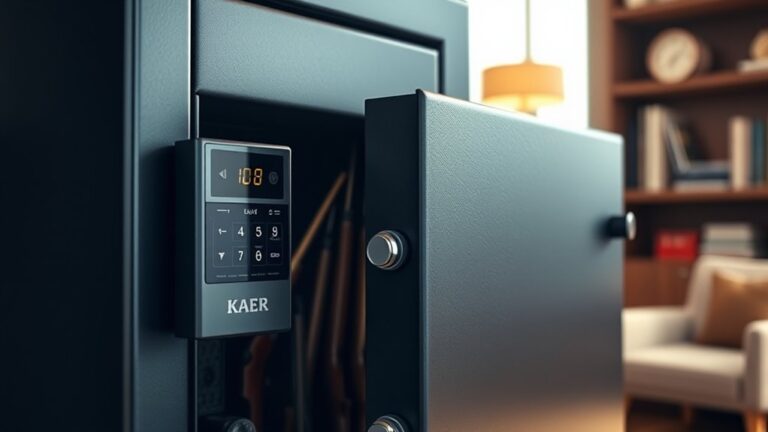
To lock your Cannon gun safe effectively, start by identifying your specific model and lock type. This is crucial for setting up your combination or keypad correctly, following the instructions in the manual. Properly managing your lock ensures your firearms remain secure and accessible only to authorized users.
Next, locate and store your backup key in a safe place for emergencies. Close the door fully, making sure the hinges and bolts align properly before pushing it firmly shut. Engage the lock slowly until you feel resistance.
Test the lock multiple times to ensure smooth operation. Regular maintenance, such as cleaning and lubrication, helps keep the locking mechanism reliable.
By following these steps, you can also learn useful tips for troubleshooting and resetting your lock when needed.
Key Takeaways
- Locate the safe model number and identify the lock type to follow specific locking instructions accurately.
- Close the door fully, ensuring it sits flush and hinges are aligned before engaging the lock.
- Turn the locking mechanism slowly until you feel resistance and hear the bolts engage securely.
- Test the lock by gently pulling the door to confirm the bolts hold firmly and the safe is secure.
- Regularly perform multiple lock/unlock cycles to verify consistent operation and troubleshoot any issues promptly.
Identify Your Cannon Gun Safe Model
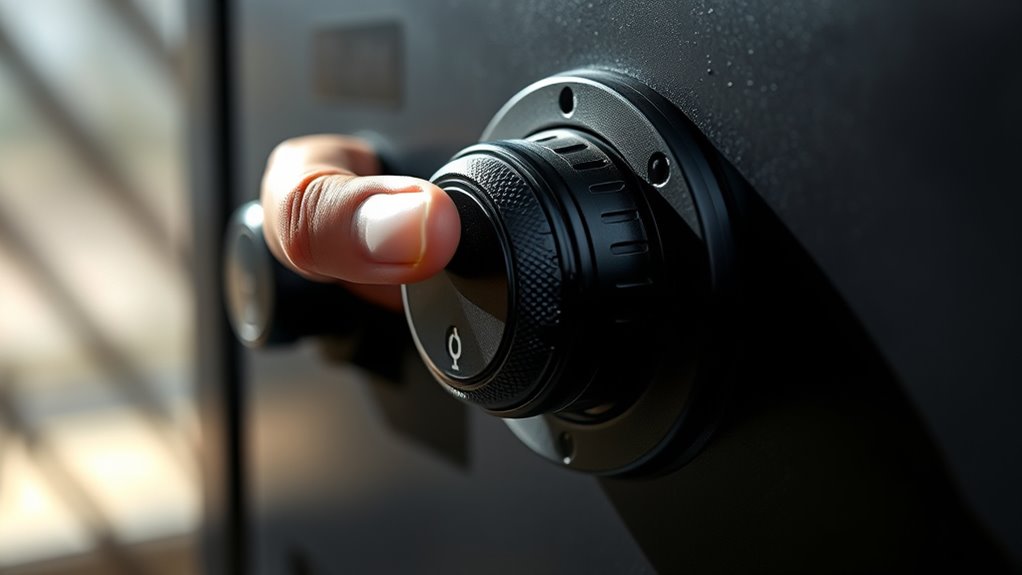
Before you can properly lock your Cannon gun safe, you need to identify its exact model. This step is essential because different models have distinct locking mechanisms and features. To find your model number, check the inside door frame or the back of the safe—it’s usually on a metal plate or a sticker.
If you can’t locate it there, refer to your original purchase documents or the user manual. Knowing the model helps you understand the type of lock installed, whether it’s a mechanical dial, electronic keypad, or biometric system. This information guarantees you follow the correct procedures without damaging the lock or safe.
If your model is older or discontinued, identifying it also helps when seeking replacement parts or support. Taking a moment now to confirm your Cannon safe’s model saves time and frustration later, making the locking process smoother and more secure.
Set Up Your Combination or Digital Lock
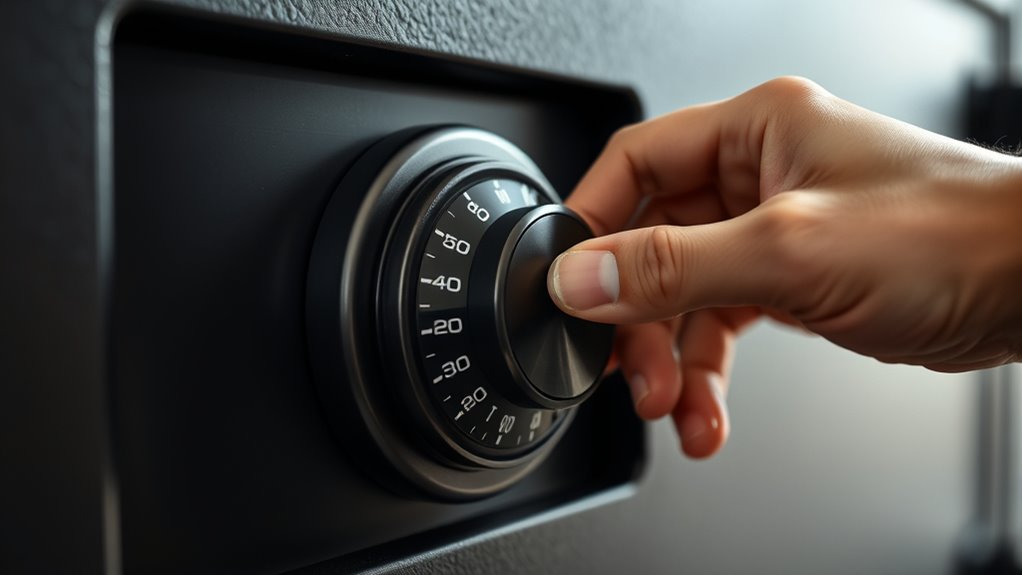
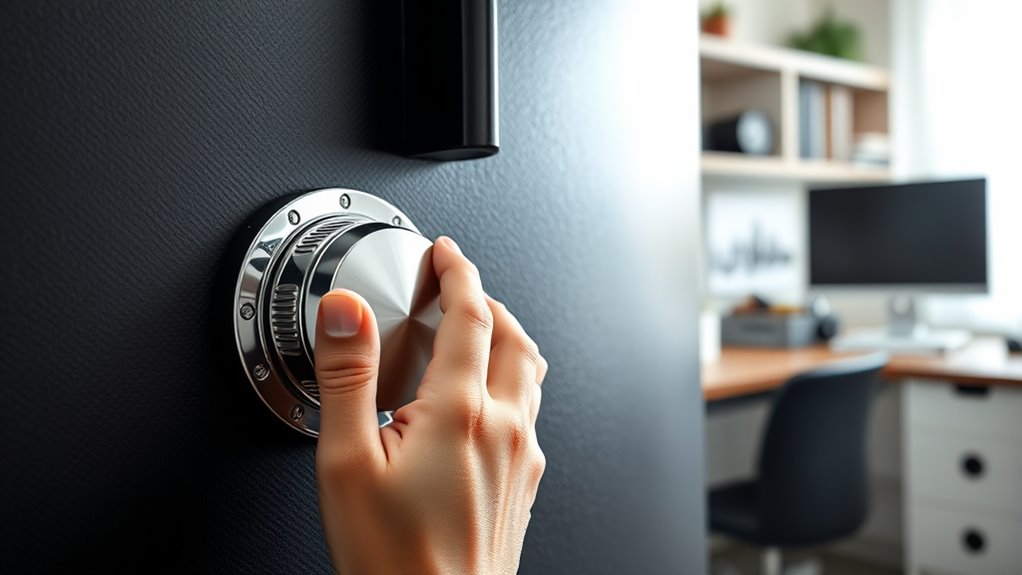
Once you’ve identified your safe’s model, you can set up your combination or digital lock with confidence. Start by locating the user manual or downloading it from Cannon’s website to get model-specific instructions. For combination locks, you’ll typically rotate the dial in specific directions to enter your code.
Identify your safe’s model and use the manual for precise instructions to set up your combination or digital lock.
Digital locks require you to program a code on the keypad.
Here’s a simple checklist to follow:
- Clear the lock mechanism by turning the dial or pressing reset.
- Enter your new combination or code carefully, following the manual’s sequence.
- Test the lock multiple times to ensure it opens and closes correctly.
- Memorize or securely record your code to avoid lockouts.
Use the Backup Key Lock on Your Cannon Gun Safe
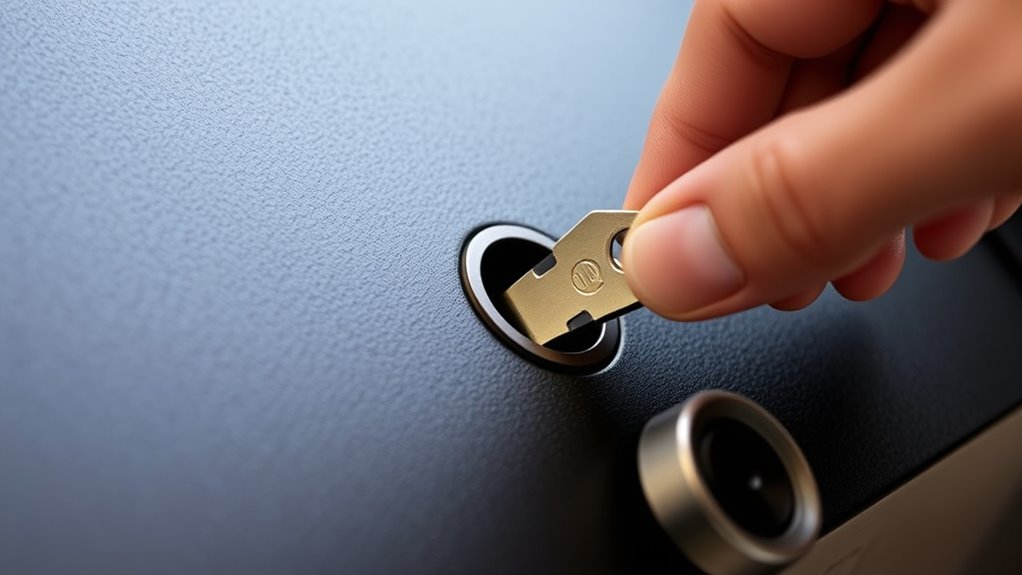
You’ll want to know where your backup key is stored before you need it. Using the backup key securely guarantees you can access your safe without damaging the lock.
It’s especially helpful if you forget your combination or your digital lock malfunctions.
Locating The Backup Key
Although the electronic lock is your primary security feature, the backup key is essential when the keypad malfunctions or the battery dies. Locating the backup key on your Cannon gun safe guarantees you’re never locked out. Here’s how to find it quickly:
- Check the user manual—backup key location is usually detailed there.
- Look near the keypad or under a removable panel on the safe door.
- Inspect the bottom or side edges of the safe for a hidden lock cylinder.
- Some models include a magnetic key holder on the safe’s exterior.
Keep in mind, the backup key lock is designed for easy access during emergencies. Knowing its location beforehand saves time and stress when you need it most.
Using Backup Key Safely
Knowing where your backup key is located is only part of keeping your Cannon gun safe secure. Using the backup key lock properly ensures that you maintain quick access without compromising safety. Always store the backup key in a discreet, secure place separate from the safe itself.
Avoid obvious spots like drawers or under mats. When using the backup key, insert it gently and turn slowly to prevent damage to the lock mechanism.
| Best Practices | Details |
|---|---|
| Secure Storage | Use a locked box or safe deposit |
| Handling | Insert key gently, avoid force |
| Access Control | Limit who knows the backup key’s location |
Following these guidelines helps you protect your firearms while keeping the backup key ready when you need it.
When Backup Key Helps
When might you need to use the backup key lock on your Cannon gun safe? This feature is invaluable when electronic or combination locks fail or when you forget your code.
Here are four key situations where the backup key comes in handy:
- Battery Failure: If the electronic keypad dies, the backup key lets you access your safe without delay.
- Forgotten Combination: Lost or forgotten codes won’t lock you out permanently.
- Malfunctioning Lock: Mechanical or electronic issues can prevent normal unlocking.
- Emergency Access: Quick entry is essential during urgent situations, and the backup key ensures you’re never locked out.
Keep your backup key in a secure but accessible place. It’s your last line of defense to keep your firearms safe yet accessible when needed.
Close the Safe Door Properly Every Time
You’ll want to make sure the door hinges are perfectly aligned before closing the safe. Always confirm the door is fully shut to prevent any gaps.
Finally, check that the lock has engaged properly to keep your safe secure.
Align Door Hinges Correctly
Although it might seem minor, aligning the door hinges correctly is essential to guarantee your Cannon gun safe closes securely every time. Misaligned hinges can cause the door to stick or not latch properly, compromising security.
To guarantee proper alignment, follow these steps:
- Inspect hinges for any damage or wear before installation.
- Use a level to make sure hinges are perfectly vertical.
- Tighten hinge screws evenly to avoid warping the door.
- Test the door movement after installation, adjusting as needed.
Confirm Complete Door Closure
Before locking your Cannon gun safe, make sure the door is fully closed to guarantee maximum security. A door that’s even slightly ajar compromises your safe’s protection and could allow unauthorized access or damage. After aligning the hinges, gently push the door until you feel it settle completely into the frame.
Don’t force it shut; if it resists, double-check for any obstructions like gun racks or shelves catching on the door. Once the door sits flush against the safe body with no gaps, you can proceed confidently. Taking this simple step ensures the locking mechanism operates correctly and keeps your firearms secure.
Always prioritize confirming complete closure every time you use your safe for consistent, reliable protection.
Check Lock Engagement Status
How can you be sure your Cannon gun safe is truly locked after closing the door? Checking the lock engagement status is essential for your safe’s security. Here’s how to confirm it every time:
- Push the door firmly until it sits flush with the frame.
- Turn the locking mechanism slowly and listen for the bolts engaging.
- Try to gently pull the door to test if the bolts hold it securely.
- Verify the locking indicator, if your model has one, to confirm full engagement.
Doing this routine ensures the safe is properly locked and your firearms stay protected. Never skip this step, as a door that looks closed may not be fully secured.
Taking these simple actions guarantees peace of mind and safety.
Engage the Lock Mechanism Securely
Once you’ve aligned the locking bolts, you’ll need to engage the lock mechanism securely to guarantee your Cannon gun safe is fully protected. Start by turning the handle or dial firmly until you feel resistance, assuring the bolts slide fully into the door frame. Avoid forcing the lock, as this can damage internal components.
Double-check that the lock clicks or confirms engagement, depending on your model.
Here’s a quick reference to engage the lock properly:
| Step | Action |
|---|---|
| 1. Align bolts | Turn handle/dial to align bolts |
| 2. Apply firm pressure | Rotate handle/dial firmly |
| 3. Listen for lock click | Confirm audible or tactile click |
| 4. Verify resistance | Ensure smooth, secure resistance |
Following these steps ensures your safe’s lock mechanism is fully engaged, preventing unauthorized access and keeping your firearms secure.
Test Your Cannon Gun Safe Lock Before Use
Before relying on your Cannon gun safe, you’ll want to verify the lock’s functionality by testing it several times. Make sure the lock engages smoothly and aligns properly every time you close it.
This simple check helps prevent any surprises when you need your safe secured the most.
Verify Lock Functionality
Why should you test your Cannon gun safe lock before relying on it? Ensuring it functions properly is vital for your firearm’s security and your peace of mind. Verifying lock functionality helps you avoid potential lock failures when you need access most.
To verify your lock’s functionality, follow these steps:
- Engage the lock by closing and locking the safe.
- Attempt to open the safe using the correct combination or key.
- Check for smooth operation—the lock should turn easily without resistance.
- Inspect locking bolts to ensure they fully extend and retract.
If any issues arise during these steps, address them immediately to maintain your safe’s reliability and keep your firearms secure.
Perform Multiple Lock Tests
Although you’ve verified the lock works, performing multiple lock tests guarantees consistent reliability every time you use your Cannon gun safe. Testing the lock several times helps identify any intermittent issues and assures smooth operation under different conditions.
Here’s a simple checklist to track your test results:
| Test Number | Lock Status (Locked/Unlocked) | Notes |
|---|---|---|
| 1 | Locked | Smooth operation |
| 2 | Unlocked | Slight resistance noted |
| 3 | Locked | No issues |
| 4 | Unlocked | Lock engaged fully |
Ensure Proper Alignment
Since proper alignment guarantees your Cannon gun safe lock functions smoothly, you should test it thoroughly before regular use. Misalignment can cause the lock to jam or fail, risking your safe’s security. To verify proper alignment, follow these steps:
- Close the safe door gently and observe if it latches without resistance.
- Turn the lock dial or enter the code slowly, noting any unusual stiffness.
- Open and close the door several times, checking for consistent smooth operation.
- If you feel any binding or misalignment, adjust the lock or door hinges according to the manufacturer’s instructions.
Troubleshoot Common Locking Issues
If your Cannon gun safe isn’t locking properly, you might be dealing with common issues like a misaligned bolt, a worn-out lock mechanism, or a dead battery. First, check the bolt alignment by opening the door and visually inspecting if the bolts slide smoothly into their slots. Misalignment often happens if the safe has shifted or the door isn’t closed fully.
Next, test the lock mechanism by turning the handle without the door closed—if it feels stiff or doesn’t engage, the internal parts may be worn or jammed. For electronic locks, a dead or weak battery is a frequent culprit. Replace the batteries with fresh ones and see if that resolves the problem.
If you still face issues, try resetting the lock following the manufacturer’s instructions. Avoid forcing the lock, as this can cause more damage. Identifying and addressing these common problems will help guarantee your safe locks securely every time.
Maintain Your Cannon Gun Safe Lock
How often do you check the lock on your Cannon gun safe to keep it working smoothly? Regular maintenance ensures your safe’s lock remains reliable and prevents potential issues. Here’s what you should focus on:
- Clean the Lock Mechanism: Dust and debris can jam the lock. Use a soft brush or compressed air to clear it out.
- Lubricate Moving Parts: Apply a graphite-based lubricant to the lock’s internal components, avoiding oil-based products that can attract dirt.
- Inspect for Wear and Tear: Look for signs of rust, corrosion, or damage. Addressing these early can save you from costly repairs.
- Test the Lock Regularly: Open and close the safe to ensure the lock engages and disengages smoothly.
Change or Reset Your Safe’s Code
Keeping your lock in good shape is only part of securing your Cannon gun safe. Changing or resetting your safe’s code is vital to maintain its security, especially if you suspect someone else knows it or after moving.
Most Cannon safes use electronic keypads, making code changes straightforward.
Here’s a quick overview of the reset process:
| Step | Action | Tip |
|---|---|---|
| 1 | Open the safe door | Make sure the safe is unlocked |
| 2 | Press the reset button | Usually inside the door frame |
| 3 | Enter new code | Choose a strong 4-6 digit code |
| 4 | Confirm new code | Test it before closing the door |
Best Practices for Using Your Cannon Gun Safe Safely and Securely
Although your Cannon gun safe is designed to provide robust security, following best practices guarantees it remains that way. To keep your firearms secure and accessible only to you, consider these important tips.
- Regularly change your access code to prevent unauthorized entry, especially if you suspect someone else knows it.
- Keep the safe in a discreet location that’s not obvious to visitors or intruders.
- Test the locking mechanism periodically to ensure it functions smoothly without any glitches.
- Avoid sharing your combination or key with anyone who doesn’t absolutely need access to your firearms.
Frequently Asked Questions
Can I Store Ammunition Inside My Cannon Gun Safe?
Yes, you can store ammunition inside your Cannon gun safe, but it’s important to keep it in original packaging and separate from firearms. This helps prevent accidental discharge and keeps everything organized and safe.
Storing ammunition properly also minimizes the risk of damage and exposure to moisture. Always follow the manufacturer’s guidelines for both your safe and ammunition storage. This ensures maximum safety and longevity for your items.
What Is the Fire Rating of Cannon Gun Safes?
Cannon gun safes typically have fire ratings ranging from 30 minutes to 2 hours at temperatures around 1200°F.
You’ll want to check the specific model’s rating to guarantee it meets your fire protection needs.
Are Cannon Gun Safes Waterproof or Water-Resistant?
Think of a sturdy fortress shielded from storms—Cannon gun safes aren’t fully waterproof but are water-resistant. You’ll trust them to protect your valuables from splashes and moisture, not a complete flood or heavy submersion.
How Much Weight Can a Cannon Gun Safe Hold?
You can expect a Cannon gun safe to hold several hundred pounds, typically around 500 to 700 pounds, depending on the model.
Always check your specific safe’s manual to know its exact weight capacity for storing firearms and valuables securely.
Can I Relocate My Cannon Gun Safe Without Professional Help?
You can relocate your Cannon gun safe without professional help if it’s small and manageable. For larger safes, it’s safer to get assistance or use proper equipment to avoid injury or damage during the move.
Moving a heavy safe alone can be risky and may cause damage to your property or the safe itself.
Always assess the size and weight before deciding to handle the move yourself.
Conclusion
Locking your Cannon gun safe correctly is essential for protecting your valuables. Did you know that nearly 60% of gun thefts occur due to improperly secured safes? By following these steps, you’re making sure your safe stays locked tight, giving you peace of mind.
Remember, regular maintenance and knowing how to troubleshoot can save you time and frustration. Stay secure, and always handle your safe with care to keep your firearms protected. Properly locking your Cannon gun safe ensures maximum security and helps prevent unauthorized access.