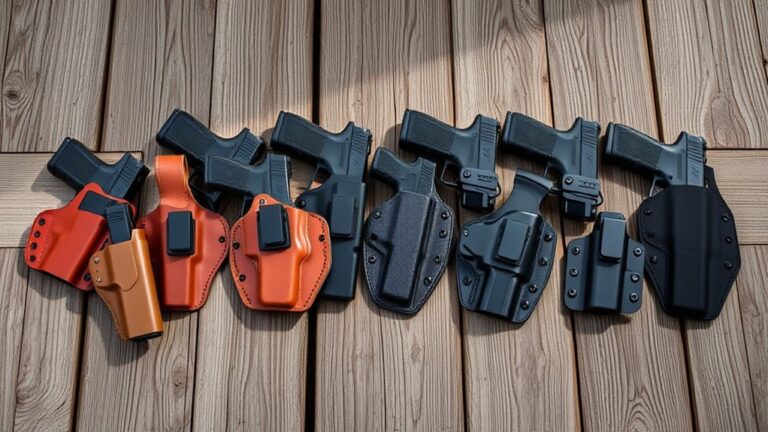

How to Get a Concealed Carry Permit for All States in 7 Steps
To get a concealed carry permit in any state, it is essential to understand the specific requirements and laws that apply to your location. Meeting age, residency, and legal eligibility criteria is the first step. Knowing your state’s concealed carry laws and restrictions will help ensure compliance and avoid legal issues.
Next, complete an approved firearm safety training course to demonstrate your knowledge and responsibility. Prepare and submit your application along with all necessary documents and fingerprints. Passing thorough background and mental health checks is required before approval.
Once your permit is granted, learn safe carry methods and always stay informed about changing laws. By following these key steps, you’ll be ready to carry responsibly and legally in all states.
Key Takeaways
- Verify eligibility including age, residency, and criminal background requirements specific to the state where you apply.
- Complete an approved firearm safety training course and obtain certification required by the state.
- Gather all necessary documents such as ID, proof of residency, fingerprints, and training certificates before applying.
- Submit a fully completed application through accepted methods and promptly respond to any additional requests.
- Upon permit approval, learn state-specific carry laws, use secure holsters, and maintain responsible firearm handling and training.
Check If You’re Eligible for a Concealed Carry Permit

Before applying for a concealed carry permit, you’ll need to verify that you meet your state’s eligibility requirements. Typically, you must be at least 21 years old, though some states allow permits at 18. You’ll also need to be a legal resident of the state where you’re applying.
Background checks are standard, so any felony convictions or certain misdemeanors could disqualify you. Additionally, many states restrict permits for people with specific mental health issues or those under restraining orders. Some states require you to complete a firearms safety course before applying.
It’s important to check if your state mandates any waiting periods or additional documentation, such as proof of residency or citizenship. By understanding these criteria upfront, you can avoid wasting time or money on an application that won’t be accepted. Make sure you review the eligibility rules carefully to confirm you qualify before moving forward with your concealed carry permit application.
Know Your State’s Concealed Carry Laws
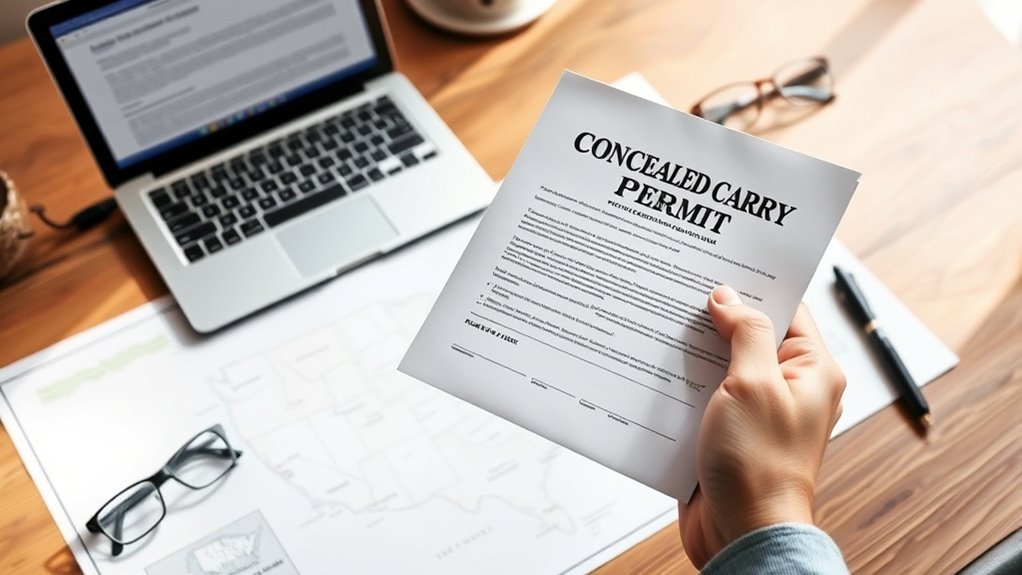
Before applying for your permit, you’ll need to understand your state’s specific requirements and restrictions. Make sure you know which states recognize your permit and any legal limits on where you can carry.
Staying informed helps you avoid costly mistakes and stay compliant with the law.
State-Specific Permit Requirements
Every state has its own rules when it comes to concealed carry permits, and knowing your state’s specific requirements is essential before applying. Some states require you to complete a firearms safety course, while others may have minimum age limits or restrictions based on your criminal history. You’ll often need to submit fingerprints, provide proof of residency, and pay application fees.
Processing times vary widely—from a few days to several months. Additionally, some states issue permits on a “shall-issue” basis, meaning they must grant your permit if you meet criteria, while others are “may-issue,” allowing more discretion. Understanding these details helps guarantee your application isn’t delayed or denied.
Always check your state’s official government website or consult local law enforcement for the most accurate, up-to-date information.
Reciprocity And Recognition Rules
Although having a concealed carry permit in one state is important, you’ll also need to understand how other states recognize—or don’t recognize—your permit. Reciprocity and recognition rules vary widely, so you can’t assume your permit is valid everywhere.
Here’s what you should consider:
- Reciprocity Agreements: Some states have formal agreements to honor permits from specific states.
- Partial Recognition: Certain states recognize permits only under specific conditions or for certain types of firearms.
- No Recognition: A few states don’t honor any out-of-state permits, meaning you’d need to apply locally.
- Temporary Travel Exceptions: Some states allow permit holders to carry temporarily but with strict limitations.
Always check each state’s current laws before traveling with your concealed carry permit.
Legal Restrictions And Prohibitions
Since concealed carry laws vary considerably by state, you’ll need to familiarize yourself with your state’s specific legal restrictions and prohibitions. Some states restrict where you can carry, such as schools or government buildings, while others limit who can apply based on age or criminal history. Knowing these rules helps you avoid legal trouble and guarantees responsible carry.
Here’s a quick look at common restrictions you might encounter:
| Restriction Type | Examples |
|---|---|
| Location Prohibitions | Schools, bars, courthouses |
| Applicant Criteria | Minimum age, no felony record |
| Weapon Limitations | Magazine capacity, firearm types |
Check your state’s laws carefully before applying for a permit.
Take the Required Firearm Safety Training
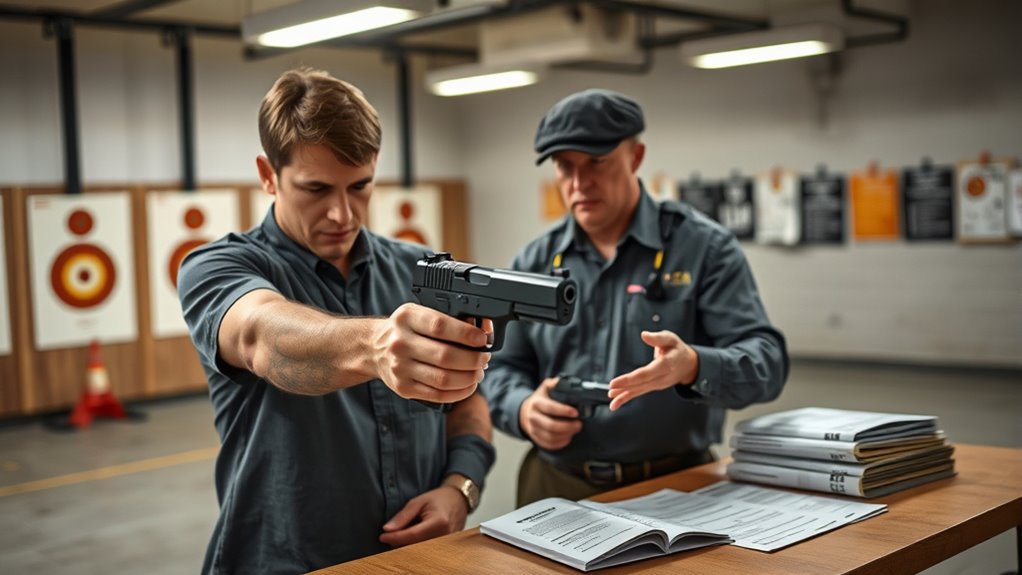
Before you can apply for a concealed carry permit, you’ll need to complete the required firearm safety training. This step guarantees you understand responsible gun handling and local laws. Here’s what you should know:
- Find an Approved Course: Each state has specific training providers or courses approved by their licensing authority. Check your state’s website for the official list.
- Course Content: Expect lessons on firearm safety, operation, maintenance, and relevant laws governing concealed carry.
- Hands-On Training: Most courses include live-fire exercises to demonstrate proper handling and shooting techniques.
- Certification: Upon completion, you’ll receive a certificate or proof of training, which you must include with your permit application.
Completing this training not only fulfills legal requirements but also prepares you to carry your firearm safely and responsibly. Make sure to keep your certification handy, as some states require renewal or periodic refresher courses.
Prepare Your Concealed Carry Permit Application
Now that you’ve completed your training, it’s time to gather all the required documents and fill out the application form accurately. Make sure you double-check the checklist to avoid missing anything important.
Finally, understand the different ways you can submit your application to guarantee it’s processed smoothly.
Required Documentation Checklist
Although gathering all necessary documents might seem overwhelming, having a clear checklist will make the process smoother. To prepare your concealed carry permit application effectively, verify you have the following:
- Proof of Identity – A valid government-issued ID like a driver’s license or passport.
- Proof of Residency – Documents such as utility bills or lease agreements showing you live in the state where you’re applying.
- Fingerprint Card – Some states require fingerprints for background checks; check your state’s specific requirements.
- Training Certificate – Proof that you completed any mandatory firearms safety or concealed carry courses.
Make sure all documents are current and legible to avoid delays. Having this checklist ready before you start will save you time and reduce stress during the application process.
Application Form Completion
How exactly do you guarantee your concealed carry permit application is filled out correctly? Start by carefully reading all instructions before you begin. Use black ink or type your answers if allowed, and write clearly to avoid misinterpretation.
Double-check that every required field is completed—never leave blanks; if something doesn’t apply, write “N/A.” Be honest and accurate with your personal information, including your full legal name, address, and any criminal history. Review your responses for spelling or numerical errors, as even minor mistakes can delay approval.
Attach all required supporting documents as specified in the checklist. Finally, keep a copy of your completed application for your records before moving on to submission. This careful attention assures your application is processed smoothly.
Submission Methods Explained
After carefully completing your concealed carry permit application, the next step is submitting it properly. Different states offer various submission methods, so you’ll want to choose the one that’s most convenient and reliable for you.
Here are four common ways to submit your application:
- In-person submission – Visit the local sheriff’s office or licensing authority to hand in your documents directly.
- Mail-in submission – Send your application via certified mail to ensure it reaches the correct office safely.
- Online submission – Many states have online portals where you can upload your application and pay fees digitally.
- Third-party submission – Some states allow licensed instructors or attorneys to submit on your behalf.
Make sure to confirm the accepted methods in your state to avoid delays.
Submit Your Application and Fingerprints
When you’re ready to submit your concealed carry permit application, you’ll also need to provide your fingerprints as part of the process. Most states require fingerprints to verify your identity and run checks. You can usually get your fingerprints taken at designated law enforcement offices or authorized fingerprinting centers.
Some states allow electronic submission, making it quicker and easier.
Here’s what the submission process might look like:
| Step | What to Expect |
|---|---|
| Fill out application | Complete accurately and legibly |
| Get fingerprints taken | At police station or fingerprint center |
| Submit application and prints | Online, in person, or by mail |
| Receive confirmation | Keep proof for your records |
Make sure to follow your state’s specific instructions closely. Missing or unclear fingerprints can delay your permit approval, so take your time to get it right.
Pass Background Checks and Screening
Once you’ve submitted your application and fingerprints, the next step is to pass background checks and screening. This vital phase guarantees you meet the legal requirements for carrying a concealed weapon. Here’s what you need to know:
- Criminal History Check: Authorities will review your criminal record to confirm you have no disqualifying offenses like felonies or violent misdemeanors.
- Mental Health Screening: Some states require checks for mental health issues that could affect your ability to carry safely.
- Verification of Residency: You’ll need to prove you live in the state where you’re applying, as permits are often state-specific.
- Additional Screening: This might include checking restraining orders, pending charges, or substance abuse history.
Passing these checks is mandatory before your permit can be approved. Stay patient and responsive if officials request more information during this process.
Get Your Permit and Learn How to Carry Safely
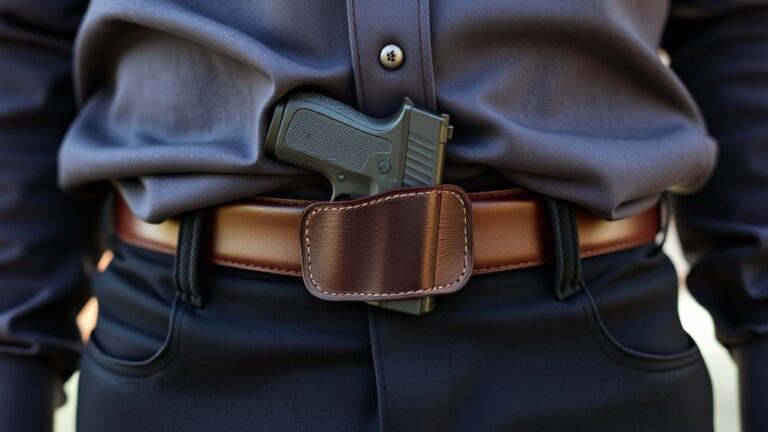
Although obtaining your concealed carry permit is a significant milestone, it’s equally important to understand how to carry your weapon safely and legally. Once you have your permit, make sure you’re familiar with your state’s specific laws about where and how you can carry. Regular training and practice will boost your confidence and help you respond effectively in stressful situations.
Carry your firearm responsibly by always keeping it secure and being mindful of your surroundings.
Here’s a quick reference to help you carry safely and legally:
| Safety Tip | Description |
|---|---|
| Secure Holster | Use a quality holster that fits well |
| Trigger Discipline | Keep your finger off the trigger until ready |
| Situational Awareness | Stay alert to your environment |
| Regular Training | Practice shooting and safety drills |
| Know the Law | Stay updated on local and state laws |
Following these guidelines ensures you carry your firearm both confidently and responsibly.
Frequently Asked Questions
Can I Carry Concealed in National Parks or Federal Buildings?
You generally can’t carry concealed in national parks or federal buildings, even with a permit. Federal laws usually prohibit firearms there, so it’s important you check specific regulations before carrying in these areas to avoid legal trouble.
What Are the Penalties for Carrying Without a Permit?
Carrying without a permit can land you in hot water, with penalties like fines, jail time, or both.
You’ll want to stay on the right side of the law to avoid serious trouble and protect your freedom.
How Do Reciprocity Agreements Between States Work?
Reciprocity agreements mean your concealed carry permit is recognized in other states, but you’ve got to check each state’s specific rules. Not all states honor every license, so you can’t just assume your permit works everywhere.
Can Non-U.S. Citizens Apply for a Concealed Carry Permit?
You usually can’t apply for a concealed carry permit if you’re not a U.S. citizen or permanent resident. Some states may have exceptions, but generally, non-citizens face strict restrictions when it comes to permits.
Are There Restrictions on the Type of Firearm I Can Carry?
Wondering if you can carry any firearm you want? No, you can’t. Restrictions vary by state, often limiting types, calibers, or magazines.
Always check local laws to guarantee your firearm is permitted for concealed carry.
Conclusion
Now that you’ve navigated each step, imagine the confidence of securely carrying your concealed carry permit, the weight of responsibility resting calmly in your hand. With every law learned and safety class completed, you’ve built a shield of knowledge around yourself.
As you hold that permit, remember—it’s not just paper; it’s your key to protection, earned through care and respect. Carry safely, stay aware, and let your preparedness be your strongest armor.
Obtaining a concealed carry permit for all states requires dedication and understanding. Stay informed about your state’s laws, practice safe firearm handling, and always prioritize responsible carrying. Your safety and the safety of others depend on it.