Are Gun-Free Zones Safer?
You might think gun-free zones make places safer by keeping guns away, but the reality is mixed. Gun-free zones are intended to reduce gun violence, yet their effectiveness is debated. Some studies show fewer accidents, while others find no drop in violence since criminals often ignore the rules.
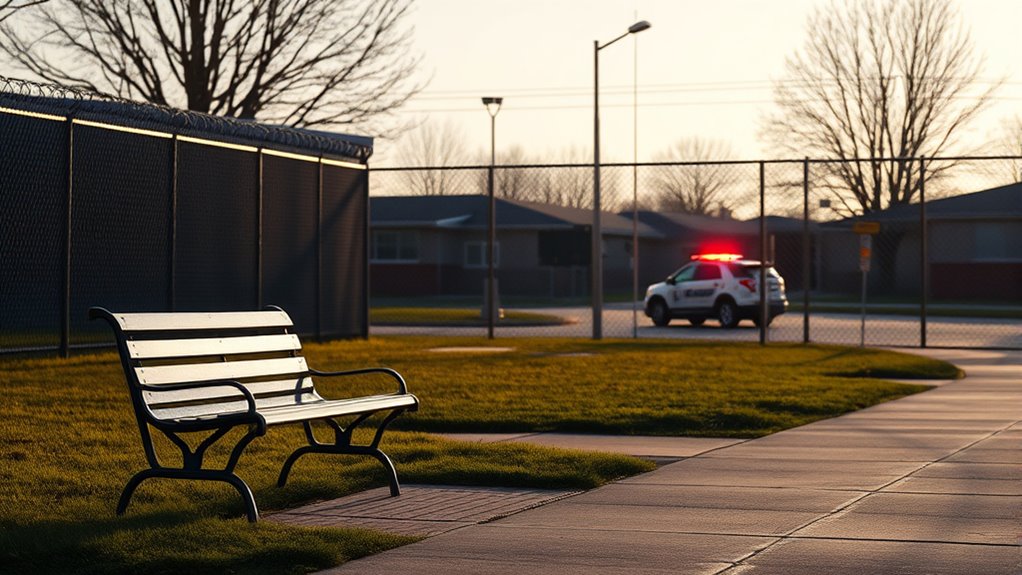
These zones can sometimes leave people more vulnerable, especially if law enforcement is slow to respond. The safety of gun-free zones depends heavily on enforcement and local conditions.
Different countries have varying results based on their laws and culture.
If you want a clearer picture, there’s more to explore about their true impact and alternatives. Understanding the pros and cons of gun-free zones helps inform better policy decisions.
Key Takeaways
- Gun-free zones aim to enhance safety by restricting firearms in vulnerable public areas like schools and hospitals.
- Research shows mixed results, with effectiveness depending on enforcement, public awareness, and context.
- Some studies suggest gun-free zones may attract criminals, potentially increasing vulnerability and violent incidents.
- Countries with strict gun laws and gun-free zones, like Japan and Australia, report low gun-related crime rates.
- Critics argue gun-free zones can create false security and reduce self-defense options, sometimes increasing risk.
What Are Gun-Free Zones and How Do They Work
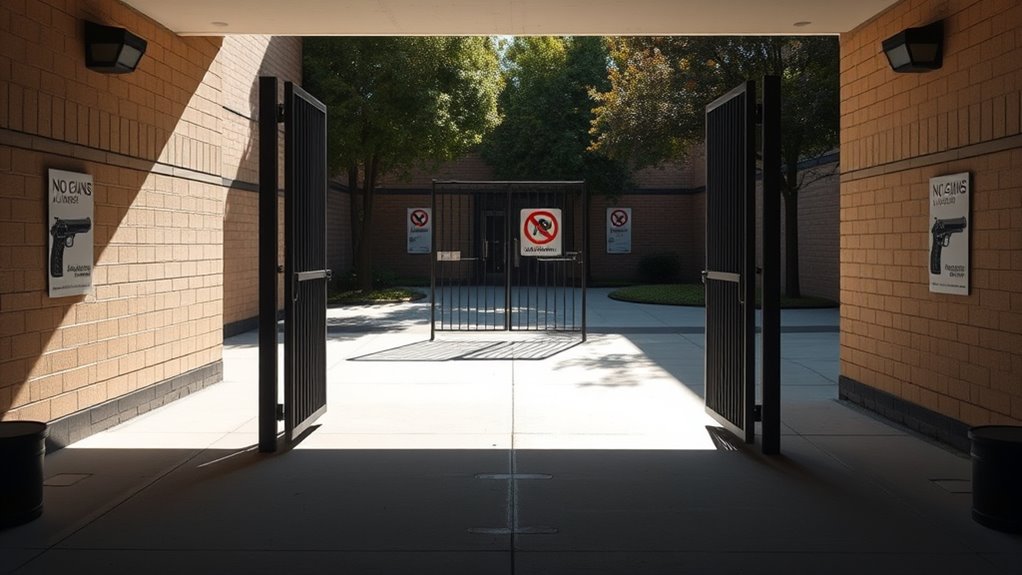
Although you might think gun-free zones simply ban firearms, they’re actually designated areas where carrying guns is prohibited to enhance safety. When you enter these zones, you’re expected to comply with posted signs or regulations that forbid bringing guns inside. These areas can include schools, government buildings, hospitals, and certain private properties.
The goal is to reduce the risk of gun-related incidents by limiting firearms in places where vulnerable populations gather. You should know that enforcement varies; sometimes security personnel or law enforcement monitor these zones to ensure compliance. Penalties for violating gun-free zone rules can range from fines to criminal charges, depending on local laws.
What Research Says About Gun-Free Zones
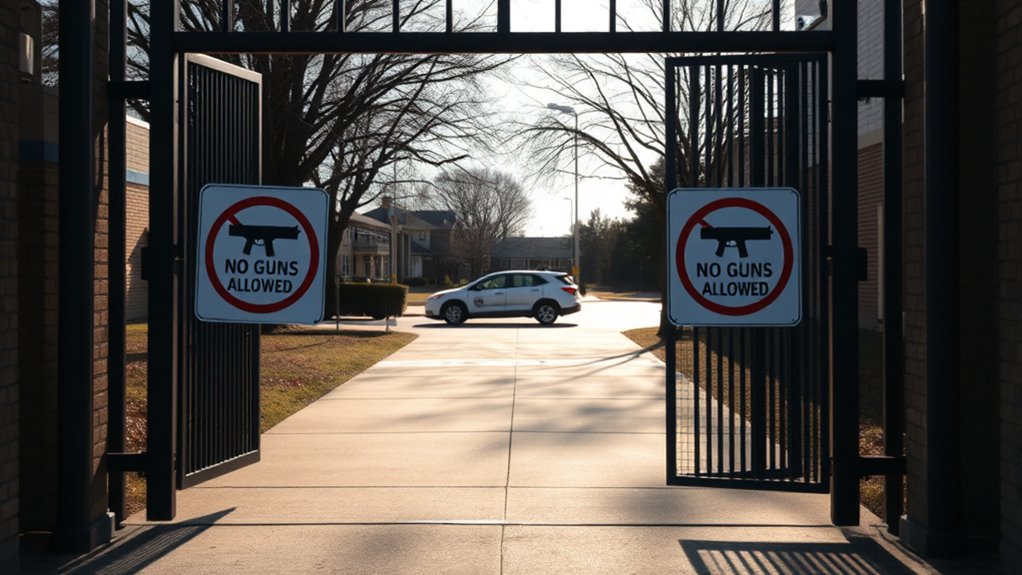
Understanding how gun-free zones are designed to enhance safety naturally leads to questions about their actual effectiveness. You’ll find that research on this topic offers mixed results. Some studies suggest these zones may reduce accidental shootings and create a sense of security, especially in schools and hospitals.
Gun-free zones aim to enhance safety, but research reveals mixed effectiveness, especially in schools and hospitals.
However, other research points out that gun-free zones might not deter criminals, as offenders often don’t follow the rules to begin with. You should also know that much of the research focuses on specific contexts, making broad conclusions difficult.
Surveys and case studies reveal varied experiences, and researchers emphasize that factors like enforcement, public awareness, and surrounding crime rates play significant roles. So, while gun-free zones aim to protect, the data shows their impact isn’t straightforward, and safety outcomes depend on multiple variables beyond simply banning firearms.
It’s important to look at these findings carefully when considering the effectiveness of gun-free zones.
How Gun-Free Zones Affect Crime Rates
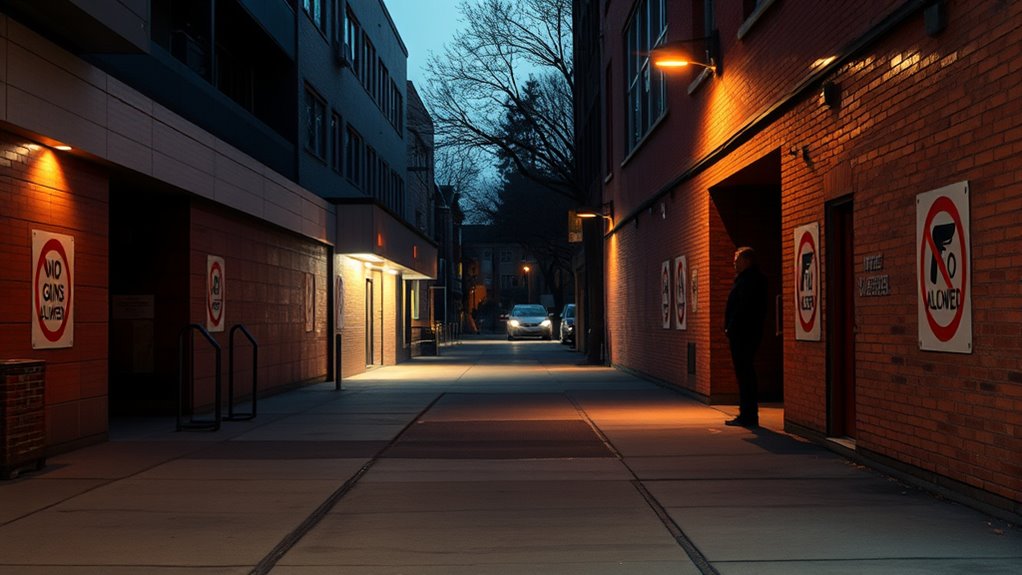
You might wonder how crime rates actually shift in gun-free zones compared to places where people can carry firearms. It’s important to look at trends in violent incidents and see if these areas experience more or less crime.
Crime Trends In Gun-Free Zones
When you look at crime trends in gun-free zones, the data often sparks heated debate. Some studies suggest these areas experience higher crime rates, arguing that criminals take advantage of unarmed targets. Others find no significant difference or even lower crime rates in gun-free zones, attributing it to increased security measures or community vigilance.
It is worth noting that crime trends vary widely depending on location, enforcement rigor, and local demographics. You’ll also see that comparing crime rates without context can be misleading; factors like socioeconomic status and police presence influence results. Understanding these nuances helps you see why crime trends in gun-free zones don’t offer a simple answer, but rather a complex picture shaped by multiple variables.
Impact On Violent Incidents
While crime trends in gun-free zones can be mixed and influenced by many factors, looking specifically at violent incidents reveals more about how these areas might affect safety. You’ll find that some studies suggest violent crimes, like assaults or shootings, don’t necessarily decrease in gun-free zones. In some cases, these areas might unintentionally become targets because offenders assume people inside are unarmed.
However, other research indicates that gun-free zones, especially in schools or hospitals, maintain lower rates of gun-related violence due to strict enforcement and surveillance. What matters is that the impact on violent incidents isn’t uniform—it depends on location, enforcement, and community behavior.
Comparative Analysis With Armed Areas
How do crime rates in gun-free zones really stack up against those in areas where people can carry firearms? When you look closely, the data often reveals surprising trends. Gun-free zones can sometimes become targets because offenders assume they’ll face less resistance.
In contrast, areas allowing armed citizens may deter crime due to the potential for immediate defense.
Consider these points:
- Criminals may feel emboldened in gun-free zones, increasing danger to innocent people.
- Armed areas can experience fewer violent crimes as potential attackers think twice.
- Victims in gun-free zones might be defenseless in sudden attacks.
The presence of legally armed individuals can provide quicker protection and save lives.
You deserve to understand how these dynamics truly impact safety where you live or work.
Why Some Experts Support Gun-Free Zones
You might find it reassuring that some experts back gun-free zones because they believe these areas help reduce accidental shootings. They also argue that such zones can make public spaces feel safer for everyone.
Let’s explore how these points shape their support.
Reducing Accidental Shootings
Why do some experts believe gun-free zones can help reduce accidental shootings? They argue that in areas where firearms aren’t allowed, the chances of unintentional discharges drop considerably. When guns are removed from everyday spaces, the risk of mishandling or careless mistakes naturally decreases.
Think about it:
- No children stumbling upon loaded weapons in schools or parks
- Fewer distractions leading to negligent trigger pulls
- Less stress or panic causing accidental firing
- Reduced chances of someone mistaking a harmless object for a gun
Enhancing Public Perception
Beyond reducing accidental shootings, gun-free zones can also shape how safe people feel in public spaces. When you enter a space where firearms are prohibited, it often signals a commitment to safety and order, which can ease anxiety. Some experts argue that these zones create an environment where people feel more at ease, encouraging community interaction and participation.
You might notice that in places like schools or hospitals, the absence of guns helps maintain a calm atmosphere. While not everyone agrees, many believe that gun-free zones contribute to a stronger sense of security by reducing the visible presence of weapons, which can deter violence. Ultimately, how safe you feel often depends on the environment’s signals, and gun-free zones aim to send a clear message of protection.
Common Criticisms of Gun-Free Zones’ Effectiveness
Although gun-free zones are designed to enhance safety, many critics argue that they may actually invite greater risks. You might feel secure in these areas, but opponents worry that restricting firearms can turn them into easy targets for those intent on harm. Here are some common criticisms you should consider:
Gun-free zones aim for safety but may inadvertently create vulnerable targets for those seeking to cause harm.
- Criminals ignore the rules, knowing that law-abiding citizens won’t be armed to defend themselves.
- Delayed response times from law enforcement can leave victims vulnerable during critical moments.
- False sense of security may prevent people from staying alert or taking protective measures.
- Potential for higher casualty rates as attackers exploit the lack of immediate resistance.
Understanding these criticisms doesn’t mean gun-free zones are without merit, but it highlights why their effectiveness is a hotly debated topic and why you should think critically about the real impact on public safety.
Gun-Free Zones and Their Impact on Law-Abiding Citizens
The presence of gun-free zones directly affects law-abiding citizens by limiting their ability to carry firearms for personal protection. If you follow the law and want to defend yourself, these restrictions mean you’re left vulnerable in places where threats can arise unexpectedly. You might feel safer, but you’re also disarmed when you need protection most.
Gun-free zones assume that prohibiting weapons will prevent violence, but for you, this often means relying solely on others for safety. It’s important to contemplate that criminals don’t follow these rules, so while you comply, they may not. This imbalance can leave you feeling exposed and powerless.
Ultimately, gun-free zones can create an environment where law-abiding citizens like you have fewer options to respond to danger, potentially increasing risks rather than reducing them. Your right and ability to protect yourself are directly impacted by these restrictions.
Real Stories: How Gun-Free Zones Work in Practice
When you look at real incidents in gun-free zones, you’ll find that these areas don’t always prevent violence as intended. Instead, some violent events have tragically unfolded where firearms were banned, leaving people vulnerable. Consider these stories:
- In a Texas church, a gunman opened fire, killing multiple people before anyone could intervene.
- A Colorado school shooting occurred despite strict gun-free policies, leading to heartbreaking losses.
- At a California mall, an attacker exploited the gun-free status to cause harm without facing immediate armed resistance.
- In a Florida nightclub, the absence of armed security allowed a shooter to take many lives before police arrived.
These experiences show that gun-free zones can sometimes become targets for attackers who know they’ll meet little armed resistance. When you’re in these zones, it’s essential to understand how these policies play out in real life—not just in theory.
International Perspectives on Gun-Free Zones
While policies on gun-free zones vary widely around the world, you’ll find that different countries approach the idea based on their unique cultures, histories, and crime rates. For example, some nations enforce strict gun-free zones in schools and public places, while others focus more on regulated carrying laws. Understanding these differences can help you appreciate the complexities of gun control in different contexts.
| Country | Gun-Free Zone Policy | Notable Outcome |
|---|---|---|
| Japan | Strict gun bans, extensive zones | Very low gun-related crime |
| United States | Mixed policies, many gun-free zones | Varied effectiveness |
| Australia | Broad gun-free zones post-1996 | Significant drop in shootings |
| Switzerland | Few gun-free zones, armed citizens | Low crime, high gun ownership |
| UK | Extensive zones, strict gun laws | Low gun violence rates |
These examples show you how culture and policy shape the safety and perception of gun-free zones globally.
Alternatives to Gun-Free Zones for Improving Safety
Looking at how different countries handle gun-free zones, it’s clear there’s no one-size-fits-all solution to improving safety. Instead, you might consider alternatives that address the root causes of violence while protecting everyone involved. For example, enhancing community policing can build trust and deter crime before it happens.
Investing in mental health services helps prevent violent incidents by addressing underlying issues early. You could also support conflict resolution programs that teach de-escalation skills, reducing the chance of violence escalating. In conclusion, improving surveillance and security technology can act as both a deterrent and a rapid response tool.
- Building stronger community relationships reduces fear and suspicion.
- Providing mental health resources shows you care about prevention.
- Teaching peaceful conflict resolution empowers individuals to stay safe.
- Using smart security technology helps catch threats quickly.
Frequently Asked Questions
How Are Gun-Free Zones Legally Enforced?
You implement gun-free zones through laws and regulations prohibiting firearms in specified areas, with penalties like fines or criminal charges for violations. Signs notify you, and law enforcement ensures compliance to maintain safety within these zones.
These measures work together to legally enforce restrictions and promote a secure environment.
What Penalties Exist for Violating Gun-Free Zone Rules?
If you violate gun-free zone rules, you could face fines, criminal charges, or even jail time, depending on local laws. Penalties vary widely, so you should always check specific regulations where you are.
How Do Gun Manufacturers Respond to Gun-Free Zone Policies?
Imagine a silent battlefield; gun manufacturers often oppose gun-free zones, arguing they limit self-defense and market demand. They might lobby against such policies, promoting firearm sales by emphasizing personal protection over restricted zones.
These manufacturers assert that gun-free zones can create vulnerabilities for law-abiding citizens. By challenging these policies, they aim to expand their market and influence legislation.
Their stance highlights a tension between public safety concerns and individual rights advocacy. This dynamic shapes ongoing debates about firearm regulation and usage.
Are There Technological Tools Used to Monitor Gun-Free Zones?
Yes, you’ll find technologies like metal detectors, surveillance cameras, and smart sensors used to monitor gun-free zones. These tools help detect weapons early and enhance security, though they can’t guarantee complete prevention of incidents.
How Do Gun-Free Zones Affect Insurance Premiums for Businesses?
When it comes to insurance premiums, you might find gun-free zones can sometimes lower costs, as insurers see less risk. But it’s not a one-size-fits-all deal; other factors often weigh in heavily.
Conclusion
Choosing whether gun-free zones make places safer can feel like walking a tightrope—you need balance and careful judgment. While some research supports their role in reducing violence, critics argue they might leave law-abiding citizens vulnerable. Understanding both sides helps you see that gun-free zones aren’t a one-size-fits-all solution.
Instead, combining them with other safety measures might be the best way to protect everyone without compromising security or freedom. Implementing comprehensive strategies that include education, enforcement, and community involvement can enhance the effectiveness of gun-free zones. Ultimately, thoughtful policies and collaboration are key to ensuring safer environments in gun-free zones.