How You Can Fly With Ammo Step by Step
To fly with ammo safely and legally, it is essential to understand your airline’s specific rules and TSA regulations.
Generally, TSA limits allow up to 11 pounds of ammunition, which must be packed in checked baggage only. Knowing these key details ensures hassle-free travel with your ammo.
Pack your ammo securely in original or approved rigid containers to prevent damage or accidental discharge. Keep ammo separate from unloaded firearms, which should be stored in locked cases.
Always declare your ammo at check-in and be prepared for TSA inspection.
Stay calm throughout the process and have proper documentation ready for smooth processing.
Following these step-by-step guidelines helps avoid delays and guarantees a stress-free experience when flying with your ammunition.
Key Takeaways
- Pack ammunition in original or approved rigid containers and keep it separate from firearms in locked, hard-sided cases. Confirm airline-specific ammo rules and declare ammunition during check-in, ensuring it is only in checked baggage. Limit ammo quantity to 11 pounds per passenger and avoid loose rounds or soft packaging.
- Present required documentation and declare ammo honestly at security, cooperating with TSA inspections and X-ray checks. Research and comply with destination ammo laws to prevent legal issues or confiscation upon arrival.
Check Airline Ammo Policies Before Booking

Before you book your flight, make sure to check the airline’s specific policies on transporting ammunition. Each airline has its own rules regarding how much ammo you can bring, how it must be packaged, and whether it’s allowed in checked or carry-on luggage. You don’t want to get caught off guard at the airport, so reviewing these details ahead of time is essential.
Some airlines might require you to declare ammo during booking or check-in, while others have strict limits on quantity or type. Policies can also vary based on your destination or connecting flights, so take note of any additional restrictions. Checking the airline’s official website or contacting their customer service directly will save you time and stress.
Understand TSA Rules for Flying With Ammo
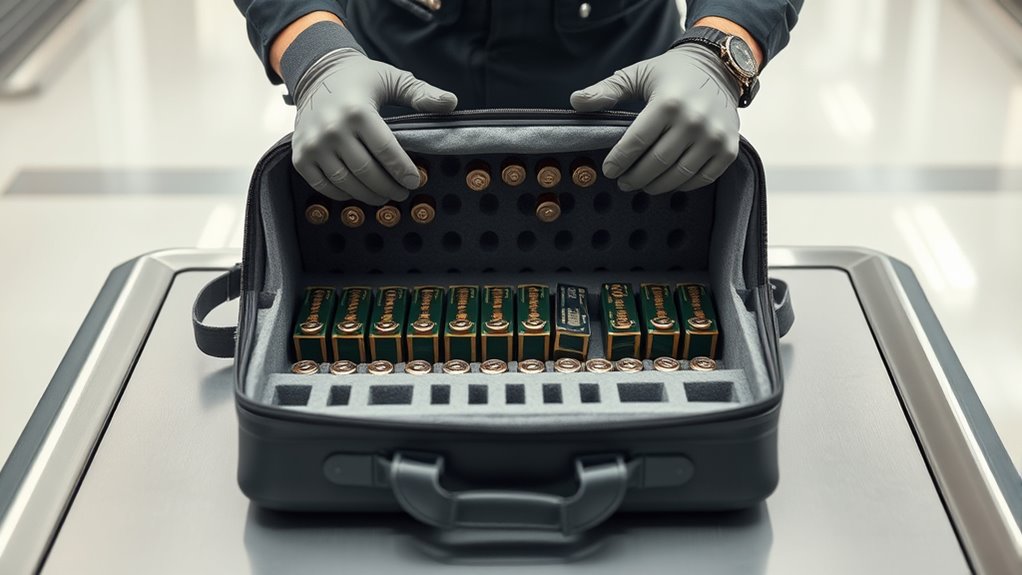
Before you pack your ammo, you’ll need to know the TSA’s specific regulations for flying with it. There are strict guidelines on how ammunition must be stored and declared at the airport.
Understanding these rules will help you avoid delays and make certain your trip goes smoothly.
TSA Ammunition Regulations
Although carrying ammunition when you fly may seem complicated, the TSA has clear regulations that you need to follow to guarantee a smooth travel experience. First, ammunition must be securely packaged in a fiber, wood, or metal box specifically designed to carry ammo. Loose rounds or ammo in plastic bags are not allowed.
You’re limited to carrying up to 11 pounds (roughly 5 kilograms) of ammunition per passenger. Ammunition must be declared to the airline during check-in, so be upfront about it. Keep in mind that ammunition is not permitted in carry-on bags—you must pack it in your checked luggage.
Packing Ammo Guidelines
When packing ammunition for your flight, it’s crucial to follow TSA guidelines to guarantee your ammo is stored safely and complies with regulations. You must pack your ammo in a sturdy, fiber, wood, or metal box specifically designed for ammunition storage. The container should be secure to prevent accidental opening.
Ammunition can only be transported in checked baggage, never in your carry-on. Make sure that your ammo is separated from firearms, which also must be declared and properly stored. Check the airline’s specific policies as some may have additional restrictions.
Labeling the container isn’t required but can help with inspection. By adhering to these rules, you’ll avoid delays or confiscation and ensure your ammunition travels safely and legally with you.
Choose Ammo Type and Amount to Carry
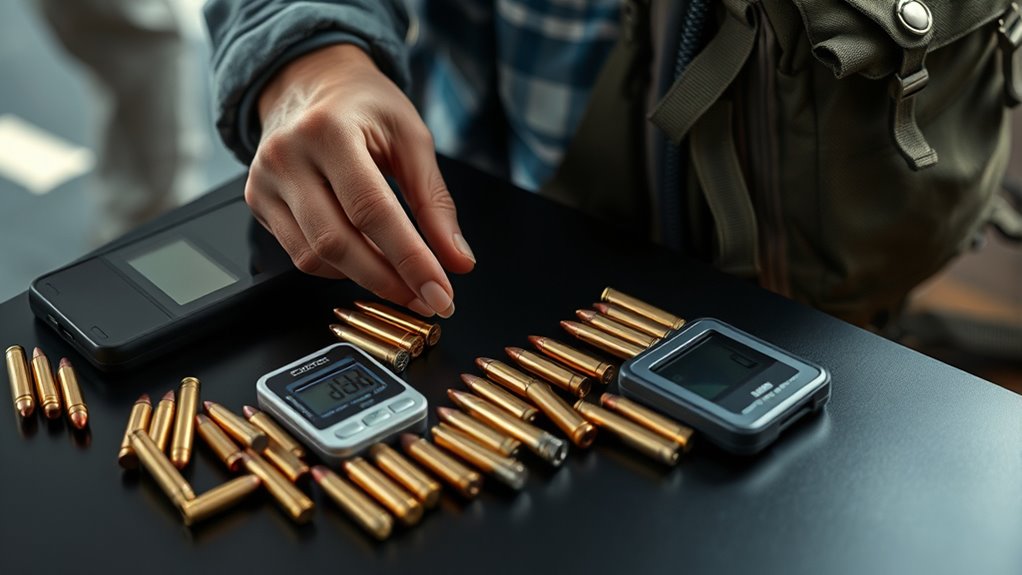
How much ammo should you carry when flying? It depends on your needs but keep it reasonable. Airlines and TSA generally allow you to bring up to 11 pounds of ammunition per passenger.
Don’t overload your luggage; carrying excessive amounts can raise red flags and cause delays.
Avoid overpacking ammo to prevent security issues and travel delays.
Next, consider the type of ammo. Most commercial flights permit only small arms ammunition, like pistol or rifle rounds, but restrict armor-piercing or explosive types. Stick to common calibers you’ll actually use.
This reduces hassle during security checks and ensures compliance with regulations.
You should also think about your destination’s laws regarding ammo possession. Some states or countries have strict limits on ammo types or quantities. Research ahead to avoid surprises.
Pack Ammo in Approved Containers
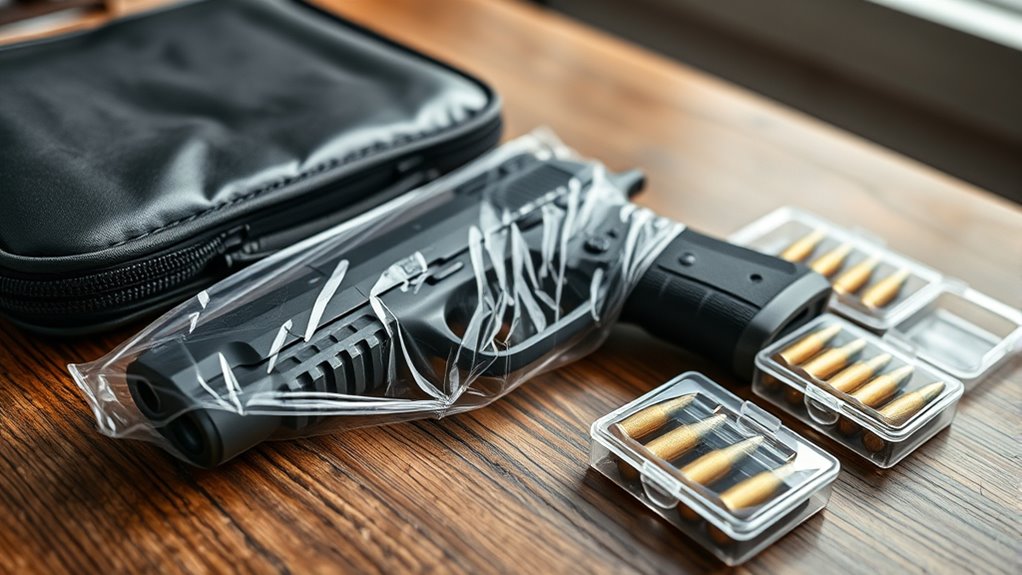
Since ammo must be transported safely, you’ll need to pack it in containers approved by the TSA and airlines. Typically, this means using original manufacturer packaging or a strong, rigid container specifically designed for ammunition. These containers prevent accidental discharge and keep your ammo secure during transit.
Avoid loose rounds or soft bags, as they’re not allowed. Make certain the container is clearly labeled and sealed. If using the original box, keep the lid closed tightly and place the box inside a sturdy plastic or metal case for extra protection.
The container should keep the ammo stable, preventing movement that could cause damage or safety issues. Double-check airline policies ahead of time, since some carriers have specific container requirements. By packing your ammo correctly, you’ll meet regulations, help ensure safe handling, and avoid delays or confiscation at the airport.
Proper packaging is essential for a smooth, hassle-free experience when flying with ammunition.
Separate Ammo From Firearms When Packing
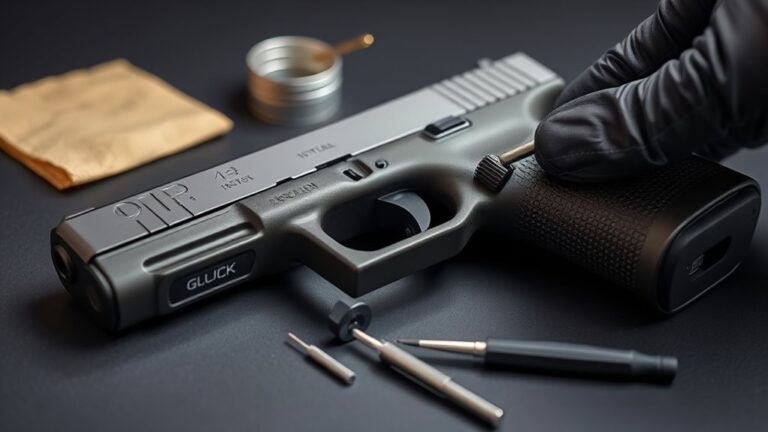
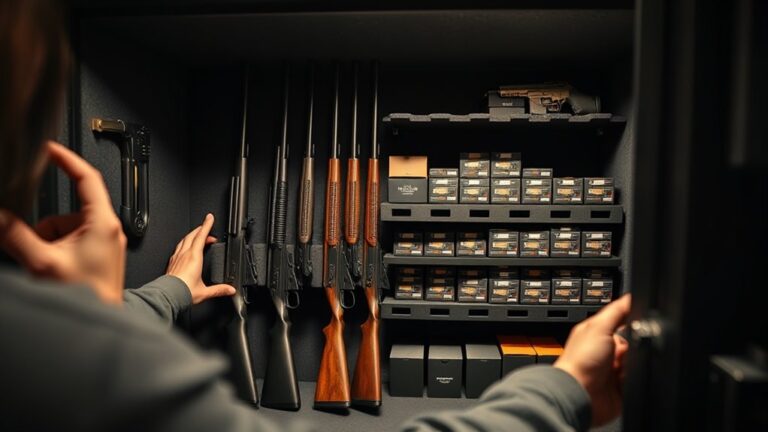
Although it might seem easier to pack your ammo and firearms together, you’ll need to keep them separate to comply with airline regulations and guarantee safety. Airlines require firearms to be stored in a locked, hard-sided container, while ammo must be packed separately in approved containers. This separation helps prevent accidental discharge and simplifies inspections.
Here’s a quick guide to packing firearms and ammo:
| Firearms | Ammunition |
|---|---|
| Locked, hard-sided case | Original packaging or metal container |
| Unloaded | Quantity limits apply |
| Stored in checked baggage | Also checked baggage only |
| Trigger lock or safety device used | Protected from damage and moisture |
| Declaration at check-in (next step) | Must comply with hazardous material rules |
Declare Ammo at Check-In
When you check in, make sure you know your airline’s rules about ammo. You’ll need to fill out any required declaration forms and have the right documents ready. Being prepared helps the process go smoothly and keeps everything legal.
Check Airline Policies
Before you pack your ammunition, make sure you understand the airline’s specific policies on carrying ammo. Each airline sets its own rules, so checking ahead can save you from surprises at the airport. Here’s what you need to do:
- Visit the airline’s official website and search for their hazardous materials or ammunition policy.
- Confirm the allowed quantity, packaging requirements, and whether ammo must be transported in checked baggage only.
- Note any restrictions on the type or caliber of ammunition they permit.
Complete Declaration Forms
How do you guarantee your ammunition is properly accounted for at the airport? The key is to complete all required declaration forms honestly and clearly. When you arrive at check-in, inform the airline staff that you’re traveling with ammo.
You’ll need to fill out specific forms declaring the quantity, type, and packaging of your ammunition. Make sure your descriptions match what’s packed exactly. This helps security personnel track and handle your ammo safely throughout your journey.
Keep copies of these forms with you to avoid confusion later. Skipping or misstating details can cause delays or confiscation. By fully declaring your ammo upfront, you assure compliance with regulations and smooth handling, making your travel experience less stressful.
Provide Proper Documentation
Although many travelers overlook it, providing proper documentation at check-in is essential if you’re flying with ammunition. Airlines and TSA require you to declare your ammo clearly to avoid delays or confiscation.
Here’s what you need to do:
- Present your ammo declaration form, completed and signed, to the check-in agent.
- Show any manufacturer’s documentation or packaging that verifies the type and quantity of ammunition.
- Keep your firearm and ammo receipts handy, as proof of lawful purchase or ownership.
What to Expect at Airport Security
What happens when you bring ammo through airport security? First, TSA agents will want to inspect your ammo separately from your firearm. You’ll need to declare it upfront, so don’t try to sneak it through.
The ammo should be in its original packaging or a secure container. Be prepared for your bag to be opened and the ammo examined by hand or with X-ray.
Here’s a quick overview of what to expect:
| Step | What TSA Does | What You Should Do |
|---|---|---|
| Arrival | Ask if you have ammo | Declare ammo immediately |
| Bag Screening | X-ray inspection | Keep ammo accessible |
| Physical Check | Open and inspect ammo container | Stay calm and answer questions |
| Documentation | Verify your paperwork | Have papers ready |
| Final Check | Clear or additional screening | Follow TSA instructions |
Knowing these steps helps your security process go smoothly and avoids delays.
What to Do If You Hit a Snag With Airline or TSA
If you run into issues with TSA screening, stay calm and ask for clarification on the rules. Don’t hesitate to contact your airline’s customer service to help resolve any misunderstandings.
Knowing who to reach out to can speed up the process and get you back on track.
Resolving TSA Screening Issues
Wondering how to handle it when TSA or your airline raises concerns about your ammo? Stay calm and follow these steps to resolve screening issues efficiently:
- Communicate Clearly: Politely explain that your ammo is packed according to TSA regulations and show any relevant documentation or packaging.
- Request Supervisor Assistance: If the agent remains unsure, ask to speak with a supervisor who may have more experience with ammo compliance.
- Follow TSA Instructions: Comply with any additional screening or inspection processes promptly to avoid delays.
Contacting Airline Authorities
When TSA or airline staff raise concerns that can’t be settled on the spot, reaching out to airline authorities can help clarify things quickly. If you face a snag with your ammo during screening, ask politely to speak with a supervisor or customer service representative.
Explain your situation calmly and provide any necessary documentation, like your ammo purchase receipt or airline policies. Airlines have specific guidelines, and sometimes staff may not be fully aware, so clarifying with authorities can prevent misunderstandings.
If the issue remains unresolved, contact the airline’s customer relations department after your trip. Keep records of all communications and stay patient, as clear, respectful dialogue often leads to a smoother resolution and ensures you’re better prepared for future flights with ammo.
What Happens If Security Inspects Your Ammo
Although security inspections can feel intimidating, knowing what to expect when your ammo is checked can reassure your mind. When TSA or airport security inspects your ammunition, they follow strict procedures to guarantee safety without unnecessarily delaying your travel.
Understanding ammo inspections can ease your mind, as TSA ensures safety while minimizing travel delays.
Here’s what typically happens:
- Identification and Verification: Security will identify your ammo, verifying it matches any declarations or airline requirements. They may ask you questions to confirm details.
- Physical Inspection: They’ll carefully examine your ammunition, often using X-rays or manual checks. This ensures everything is packed correctly and meets safety regulations.
- Possible Additional Screening: If something seems off, your ammo might be subjected to extra screening or temporarily held for further review. You’ll be informed of any delays or actions needed.
Know Ammo Laws at Your Destination
After security inspects your ammo and clears it for travel, your next step is to understand the ammo laws at your destination. Different states and countries have varying regulations about possession, quantity limits, and transportation methods. If you don’t comply, you could face fines or confiscation.
Before you fly, research local laws thoroughly. Here’s a quick reference table showing key differences in ammo laws at popular destinations:
| Destination | Ammo Limit | Transport Restrictions |
|---|---|---|
| California | 50 rounds | Must be in original packaging |
| Texas | Unlimited | No special restrictions |
| New York | 20 rounds | Ammo separate from firearm |
| Florida | 50 rounds | Locked container required |
| Canada | 200 rounds | Declaration required |
Knowing these rules helps you avoid trouble and enjoy your trip safely. Always double-check before you travel.
Frequently Asked Questions
Can I Carry Ammo in My Carry-On Luggage?
No, you can’t carry ammo in your carry-on luggage. Ammunition must be packed in checked baggage and follow airline and TSA regulations.
Always check specific airline rules before flying to avoid any issues at the airport.
Are There Restrictions on Ammo for International Flights?
Yes, there are restrictions on ammo for international flights. You’ll need to check the airline and destination country’s rules, declare your ammo properly, and pack it safely, usually in your checked baggage only.
How Do I Dispose of Unwanted Ammo Before Flying?
You should never throw ammo in the trash. Instead, contact local law enforcement or a shooting range to safely dispose of it.
Some areas offer hazardous waste collection events where you can drop off unwanted ammunition.
Can I Fly With Reloaded or Hand-Loaded Ammunition?
Oh sure, flying with hand-loaded ammo is basically like carrying a ticking surprise party in your bag. But seriously, you can only bring it if it meets airline and TSA regulations—always check before you pack!
What Happens if I Accidentally Pack Ammo With My Clothing?
If you accidentally pack ammo with your clothing, TSA might discover it during screening and delay you. It’s best to separate ammo in approved containers and declare it to avoid issues or confiscation at security checkpoints.
Conclusion
Flying with ammo can seem tricky, but knowing the rules guarantees it makes it easier. For example, imagine you’re flying to a hunting trip in Montana; by checking airline policies and packing your ammo in approved containers, you avoid delays and stress.
Remember to separate your ammo from firearms and stay calm if TSA inspects your bag. Being prepared ensures your trip starts smoothly and safely, letting you focus on the adventure ahead. Following these steps on how you can fly with ammo will help you travel confidently and legally.