7 Tips to Choose a Gun Safe
When choosing a gun safe, it’s essential to consider key factors like size, security features, and durability to protect your firearms effectively. Ensuring your safe fits your collection with extra space for future additions and accessories is crucial.
Opt for a sturdy safe made with thick steel and solid welding to resist tampering.
Decide on a lock type that balances quick access and security—mechanical, electronic, or biometric options are available.
Check for fire and waterproof ratings to safeguard your firearms from damage.
Plan your budget wisely and find a discreet, stable location for installation.
Keep these essentials in mind, and you’ll discover how to optimize every feature for both safety and convenience.
Key Takeaways
- Assess your firearm collection size, storage needs, and allow extra space for accessories and future additions.
- Choose a safe with thick steel construction, reinforced doors, and quality welds for maximum durability and security.
- Select a locking mechanism (mechanical, electronic, or biometric) that balances speed, reliability, and convenience for your lifestyle.
- Prioritize safes with certified fire resistance and waterproofing to protect firearms and ammo from damage.
- Install the safe in a concealed, secure location and bolt it down to prevent theft or unauthorized removal.
Determine the Right Size for Your Gun Safe
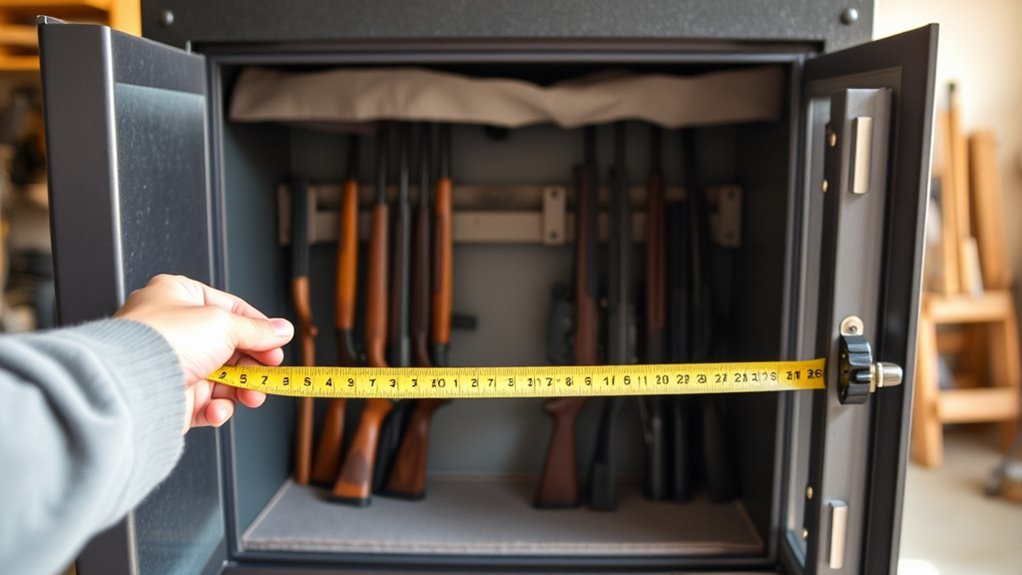
Before you buy a gun safe, you’ll want to figure out exactly how much space you need. Start by counting all the firearms you plan to store, including any you might add in the near future. Don’t forget to contemplate the size and shape of your guns—long rifles require more vertical space, while handguns take up less.
Think about extra room for accessories like ammo boxes, scopes, or cleaning kits. It’s better to have a bit of wiggle room than to cram everything in tightly, which can make accessing your firearms difficult. Also, consider how you want to organize your safe—do you want racks, shelves, or drawers?
Keep in mind that safes with adjustable interiors offer more flexibility as your collection grows or changes. By taking these steps, you’ll ensure you pick a gun safe that fits your current needs and adapts to future ones without unnecessary hassle.
Consider Your Gun Safe’s Build Quality and Material Strength
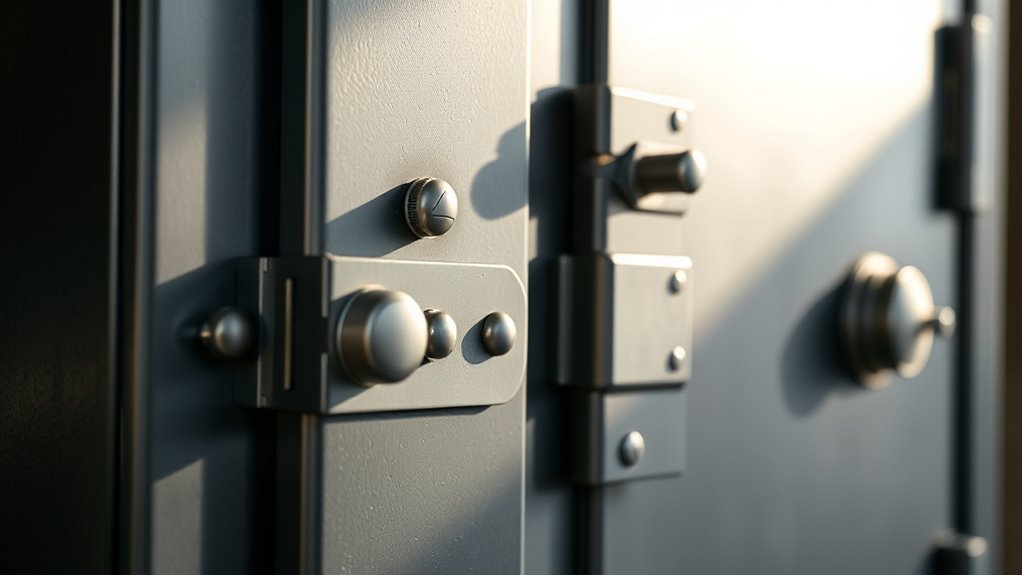
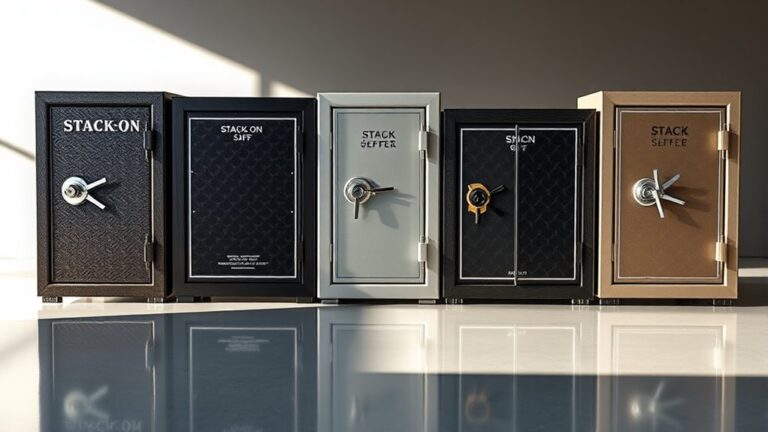
When choosing a gun safe, you’ll want to pay close attention to its build quality and the materials used, as these factors directly impact its durability and security. Look for safes constructed from thick, solid steel—preferably at least 10 to 12 gauge. Thinner materials can be easier to pry open or cut through.
Check the door’s thickness as well; a strong, reinforced door adds significant protection. Also, consider the welding and overall craftsmanship. Seamless welds and sturdy hinges reduce weak points that burglars might exploit.
Some safes feature additional security layers, like composite walls or fire-resistant insulation, which enhance protection.
Choose the Best Locking Mechanism: Mechanical, Electronic, or Biometric
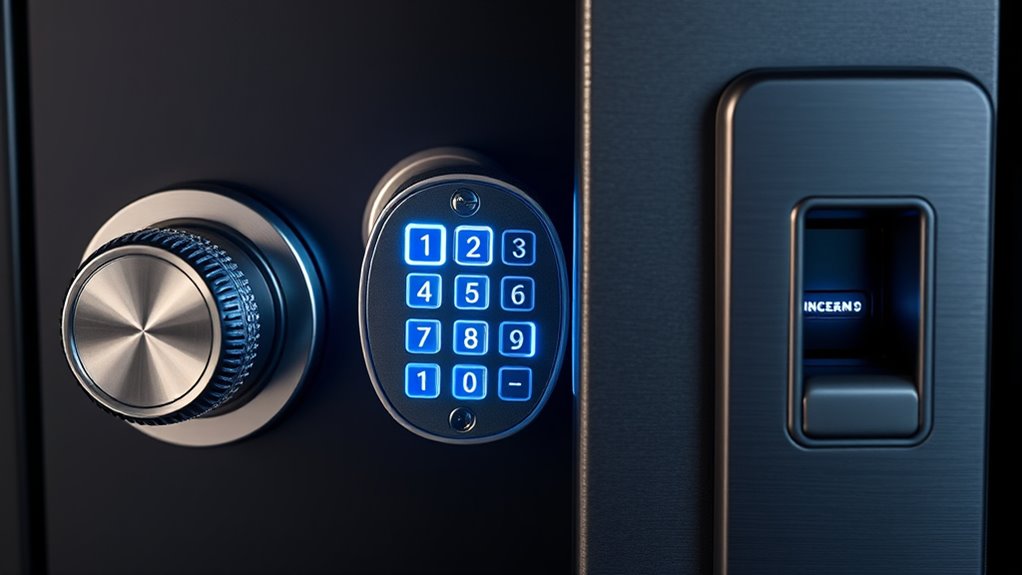
When choosing a gun safe, picking the right locking mechanism is key to balancing security and convenience. You’ll typically find mechanical, electronic, and biometric options, each with its own pros and cons.
Understanding how they work will help you decide which one fits your needs best.
Locking Mechanism Types
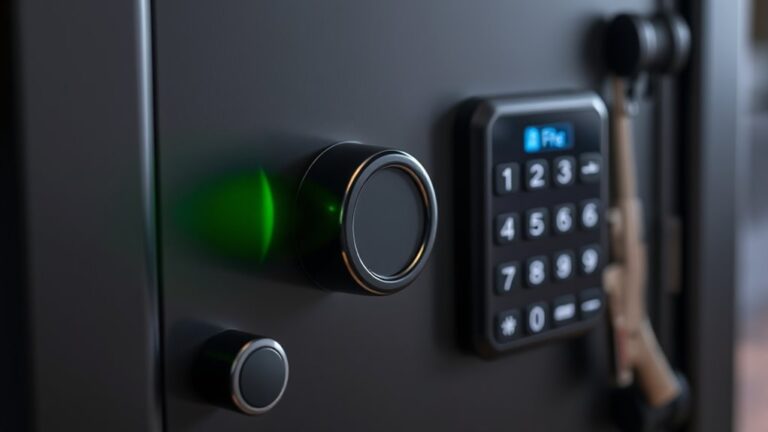
Although choosing a gun safe might seem straightforward, selecting the right locking mechanism is essential for both security and convenience. You’ll find three main types: mechanical, electronic, and biometric. Each offers unique benefits depending on your needs and preferences.
Mechanical locks use traditional dials, electronic locks rely on keypads, and biometric locks use fingerprint recognition. Here’s a quick comparison:
| Locking Mechanism | Key Feature |
|---|---|
| Mechanical | No batteries needed |
| Electronic | Quick access via keypad |
| Biometric | Fingerprint recognition |
| Mechanical | Durable and reliable |
| Electronic | Programmable codes |
Understanding these types helps you decide which suits your lifestyle best, ensuring your firearms stay secure yet accessible when you need them.
Pros And Cons
Since each locking mechanism offers distinct advantages and drawbacks, you’ll want to weigh them carefully to find the best fit for your needs. Here’s a quick rundown:
- Mechanical locks are reliable and don’t need batteries, but they can be slower to open and require manual dialing.
- Electronic locks provide quick access and often have backup keys, though they depend on battery power and may be prone to technical issues.
- Biometric locks offer the fastest entry using fingerprints, adding security, but they’re usually more expensive and can fail if sensors get dirty.
- Consider your priority: speed, reliability, or convenience. If you want a balance, electronic locks are often the best middle ground, but mechanical and biometric options each have solid use cases depending on your needs.
Check Fire Resistance and Waterproofing Features
Because your gun safe will protect valuable firearms and documents, it’s crucial to guarantee it offers reliable fire resistance and waterproofing. Fires and floods can cause irreversible damage, so look for safes with UL (Underwriters Laboratories) fire ratings and waterproof seals. Fire resistance is typically rated by time and temperature, while waterproofing is tested against water submersion or sprays.
Here’s a quick comparison of common fire resistance and waterproofing features:
| Feature | Description |
|---|---|
| Fire Rating | Duration safe can withstand high heat |
| Temperature Rating | Max temperature safe can endure |
| Waterproof Seal | Prevents water penetration |
| Water Resistance | Duration safe can resist water exposure |
| Certification Bodies | UL, ETL, or equivalent |
Choosing a safe with these features ensures your possessions remain secure, even in extreme conditions. Don’t just assume all safes are equal—verify these specs before making your purchase.
Plan Your Budget Without Sacrificing Gun Safe Safety
After verifying your gun safe has the right fire resistance and waterproof features, the next step is to plan your budget carefully. You want a safe that offers solid protection without breaking the bank. Here’s how to balance cost and security:
Plan your budget wisely to find a gun safe that offers strong protection without overspending.
- Set a realistic price range based on your firearm collection size and value.
- Prioritize essential features like solid steel construction and reliable locking mechanisms over extra bells and whistles.
- Compare warranties and certifications to ensure you’re getting quality that matches the price.
- Look for trusted brands and reviews to avoid cheaper safes that might compromise security.
Plan Extra Storage and Organization for Your Gun Safe
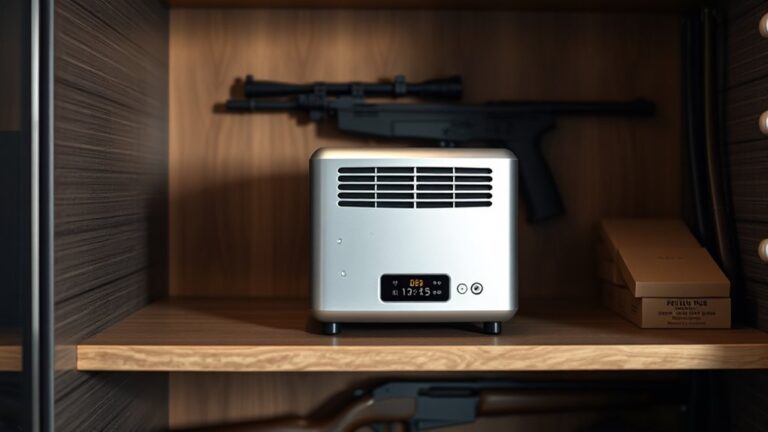
You’ll want to maximize the internal compartments to keep everything organized and accessible. Adjustable shelving can help you customize the space as your collection grows.
Don’t forget to plan a dedicated area for storing ammunition safely inside the safe.
Maximize Internal Compartments
When planning your gun safe, think beyond just storing firearms—you’ll want to maximize internal compartments to keep everything organized and accessible. Having well-planned compartments helps you quickly find what you need and protects your valuables.
Consider these tips:
- Use dedicated slots or racks for different gun types to prevent damage.
- Include small compartments for ammunition, cleaning kits, and accessories.
- Add lockable sections for high-value items or important documents.
- Utilize door panels with pockets or organizers for extra storage space.
Incorporate Adjustable Shelving
How can adjustable shelving transform your gun safe? It lets you customize storage to fit your collection perfectly, making access easier and keeping everything organized. With adjustable shelves, you can store various firearm sizes and accessories without wasted space, ensuring your safe grows with your needs.
Here’s how adjustable shelving impacts you emotionally and practically:
| Benefit | Feeling It Evokes | Why It Matters |
|---|---|---|
| Custom Fit | Satisfaction | Maximizes every inch |
| Easy Access | Confidence | Quick retrieval |
| Flexible Layout | Control | Adaptable to changes |
| Clutter Reduction | Peace of Mind | Keeps items secure and neat |
Incorporate adjustable shelving to make your gun safe work smarter for you.
Plan for Ammunition Storage
Adjustable shelving helps you organize your firearms efficiently, but your gun safe should also accommodate ammunition storage. Planning for ammo space guarantees safety and convenience, preventing clutter and potential hazards.
Here’s how to plan effectively:
- Dedicate separate compartments for ammo to avoid mixing it with firearms.
- Choose storage bins or trays that fit your ammo types and keep rounds secure.
- Consider humidity control like desiccant packs to protect ammo from moisture.
- Label ammo containers clearly for quick identification and better organization.
Choose the Best Location and Installation Method for Your Gun Safe
Where you place your gun safe can be just as important as the safe itself. You want to pick a spot that’s both secure and convenient. Avoid obvious places like bedrooms or entryways, as these can make your safe a target.
Instead, consider hidden or less accessible areas such as closets, basements, or behind heavy furniture. Make sure the floor can support the safe’s weight and that there’s enough room to open the door fully.
When it comes to installation, bolting your safe to the floor or wall is essential. This prevents thieves from easily dragging it away. Use heavy-duty anchors and follow the manufacturer’s instructions carefully.
If your safe is large, consider professional installation to guarantee it’s secure and stable. Picking the right location and installation method not only protects your firearms but also gives you peace of mind knowing your safe is both accessible to you and resistant to theft.
Frequently Asked Questions
How Often Should I Maintain or Service My Gun Safe?
You should maintain your gun safe at least once a year, checking locks, hinges, and seals.
If you use it frequently, inspect it more often to guarantee everything works smoothly and stays secure.
Can a Gun Safe Protect Against Theft During a Home Burglary?
Yes, a gun safe can protect your firearms during a burglary by making them harder to access. But remember, no safe is completely theft-proof, so choosing a high-quality, heavy, and well-secured model is essential.
Are There Legal Requirements for Owning or Storing a Gun Safe?
Yes, you’ll often have legal requirements for owning or storing guns, like secure locking mechanisms and proper storage to prevent unauthorized access.
Check your local laws, as they vary widely and can impact safe selection and usage.
How Long Does It Typically Take to Install a Gun Safe?
Installing a gun safe usually takes a couple of hours, like planting a sturdy oak in your home’s forest. You’ll want to account for anchoring and positioning, ensuring it’s secure and blends seamlessly with your space.
What Are the Best Practices for Securing Ammunition Separately?
You should store ammunition in a cool, dry place away from firearms, ideally in a separate locked container.
Keeping it out of children’s reach and in a fire-resistant box adds extra safety and security.
Conclusion
When choosing a gun safe, you want to balance size, security, and budget to protect what matters most. Imagine Jane, who picked a fire-resistant, biometric safe with extra storage—she sleeps better knowing her firearms and important documents are secure.
By considering build quality, locking mechanisms, and installation, you can find a safe that fits your needs perfectly. Don’t rush; investing time now means peace of mind tomorrow.
Remember, selecting the right gun safe involves evaluating size, security features, and your budget to ensure maximum protection and satisfaction.