Can a Gun Safe Be Too Dry: Maintaining Ideal Humidity
Yes, your gun safe can be too dry, which may lead to issues such as cracking wooden stocks, brittle metal parts, and dried-out lubricants. Maintaining ideal humidity in your gun safe is essential to preserving the condition of your firearms and preventing damage caused by excessive dryness or moisture.
Keeping the humidity balanced between 40% and 50% is key to protecting your collection.
Use a reliable hygrometer to monitor humidity levels regularly. Adjust moisture levels with desiccants to reduce excess humidity or humidifiers to add moisture when the air becomes too dry.
Properly managing these conditions guarantees your firearms stay in excellent shape.
Let’s explore how to maintain that perfect environment for your collection to ensure long-lasting preservation and functionality.
Key Takeaways
- Excessively low humidity can cause wooden stocks and grips to shrink, crack, or warp, compromising firearm integrity.
- Dry environments may dry out lubricants, reducing their effectiveness and increasing firearm wear.
- Metal parts can become brittle and finishes may deteriorate if humidity is too low for long periods.
- Maintaining relative humidity between 40% and 50% prevents both rust and dryness-related damage.
- Regularly monitor humidity with a hygrometer and adjust moisture levels seasonally to maintain optimal conditions.
Why Gun Safe Humidity Matters for Firearm Care
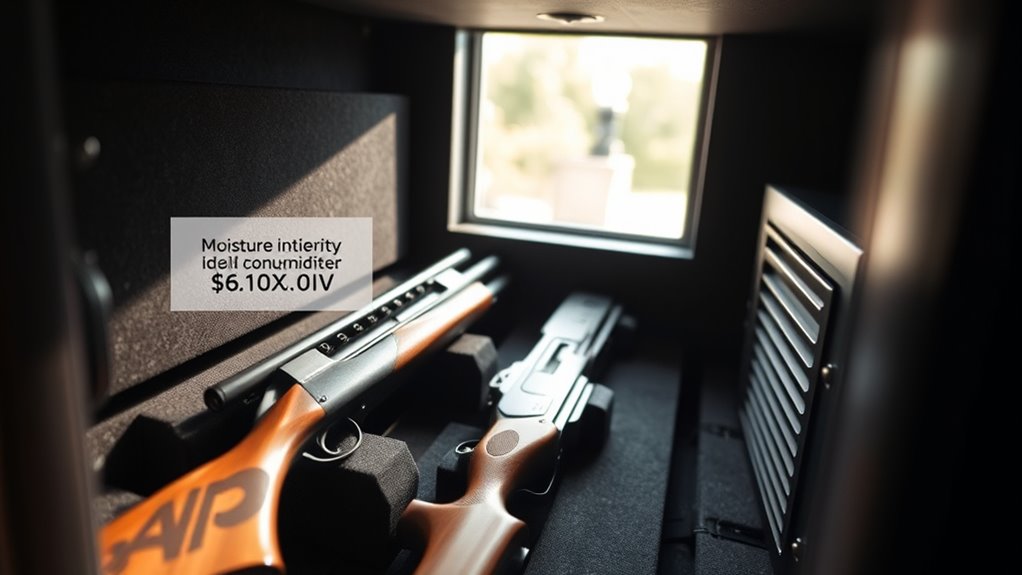
Although you might focus on securing your firearms from theft, controlling the humidity inside your gun safe is just as crucial for proper firearm care. When humidity levels are too high, moisture can accumulate on metal surfaces, leading to rust and corrosion that damage your firearms. You want to avoid this because corrosion not only affects the appearance but can also compromise the function and safety of your guns.
On the other hand, maintaining balanced humidity helps preserve the integrity of metal components and prevents the buildup of harmful residues. It also protects finishes and prevents pitting, which can be costly to repair. You should monitor humidity regularly and use dehumidifiers or desiccants to keep levels stable, ideally between 40-50%.
This way, you’ll guarantee your firearms stay in ideal condition over time, ready for safe and reliable use whenever you need them. Proper humidity control is a key part of responsible gun ownership you can’t overlook.
Effects of Low Humidity on Firearms and Wooden Parts
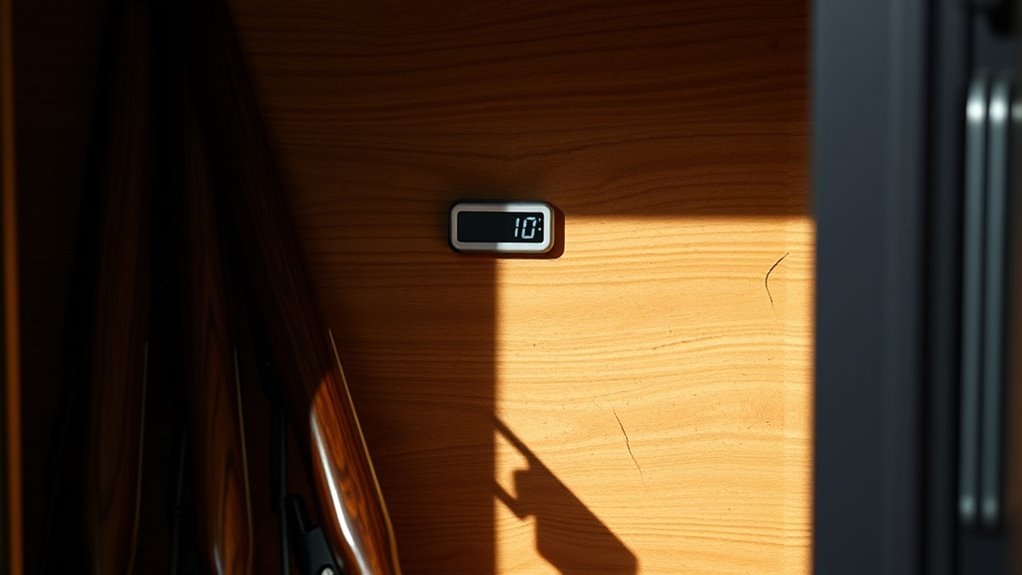
While high humidity can cause rust and corrosion, low humidity levels bring their own set of challenges for your firearms, especially those with wooden components. When the air is too dry inside your gun safe, wooden stocks and grips can lose moisture, leading to shrinkage, cracking, and warping. This deterioration not only affects the aesthetics but can also compromise the structural integrity of your firearm.
Metal parts are less prone to rust in dry conditions but may still suffer from brittleness if the environment is excessively dry over long periods. Additionally, low humidity can cause lubricants to dry out faster, reducing their effectiveness and potentially increasing wear on moving parts. So, while you want to avoid moisture that promotes rust, too little humidity can damage your guns in other ways.
Keeping an eye on your safe’s humidity levels ensures your firearms, both metal and wood, stay in peak condition without suffering from dryness-related issues.
Ideal Humidity Range to Protect Your Gun Safe Contents
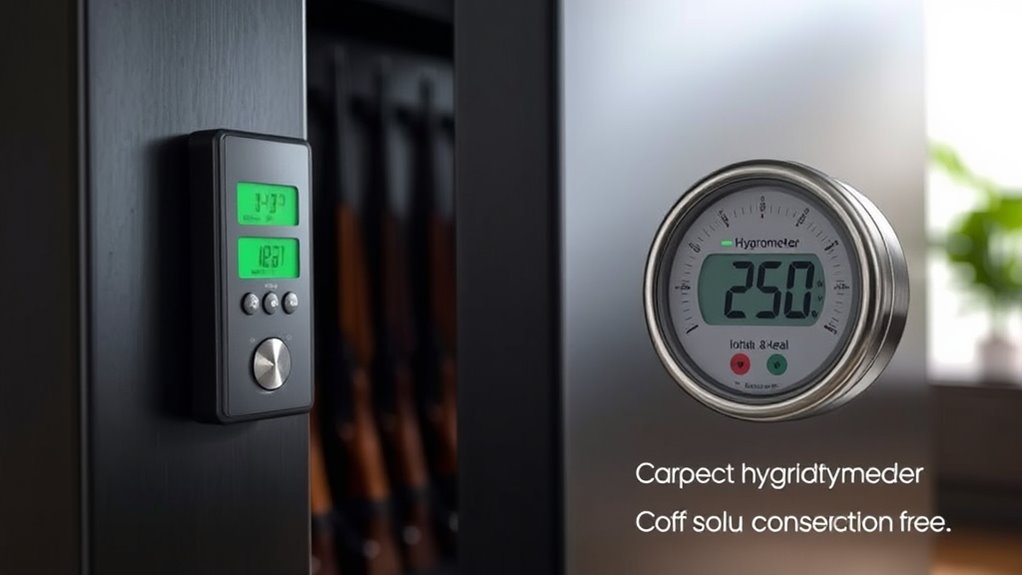
To keep your firearms and wooden parts in top shape, you’ll want to maintain a preferable humidity level inside your gun safe. Too low humidity can cause wood to crack and metal to dry out, leading to potential damage.
Let’s explore the ideal range that offers the best protection for your collection.
Optimal Humidity Levels
Since your gun safe provides a controlled environment, maintaining the ideal humidity level inside is essential to prevent rust and corrosion on your firearms. The best humidity range typically falls between 40% and 50%. This range strikes a balance that’s neither too dry nor too moist, minimizing the risk of metal oxidation and wood warping.
You’ll want to monitor this level regularly using a reliable hygrometer. If humidity rises above 50%, moisture can accumulate, inviting rust. Conversely, staying below 40% helps avoid conditions that might dry out wooden stocks or seals.
Keeping your gun safe within this range ensures your firearms and ammunition remain in excellent condition, ready for use when you need them most.
Effects of Low Humidity
Even if low humidity might seem like a safe bet, it can actually cause problems for your firearms and their components. When the air inside your gun safe is too dry—below 30% relative humidity—wood stocks can crack or shrink, affecting fit and function. Leather accessories risk becoming brittle and losing flexibility.
Metal parts may lose their natural oil moisture, increasing the chance of micro-fractures or stress over time. Additionally, extremely dry conditions can cause finishes to deteriorate or flake. While low humidity reduces rust risk, it’s essential to balance it so you don’t trade one problem for another.
Maintaining an ideal range of 40-50% relative humidity protects your guns and preserves their longevity without causing damage from excessive dryness.
How to Measure Humidity Inside Your Gun Safe
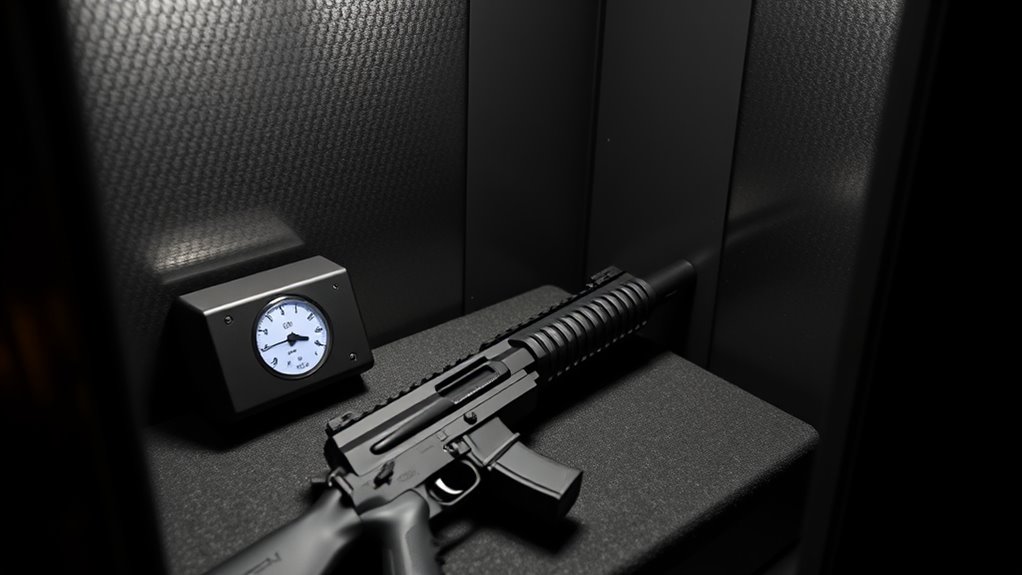
Measuring humidity inside your gun safe is essential for protecting your firearms from rust and corrosion. To do this accurately, you’ll want to use a reliable hygrometer, a device designed to measure moisture levels in the air. Digital hygrometers are popular because they offer precise readings and often include temperature data, which can affect humidity.
Place the hygrometer inside the safe, ideally in the middle or near where your guns are stored, to get a true sense of the environment. Check the reading regularly, especially if you live in a climate with fluctuating humidity. Aim for a relative humidity level between 40% and 50% to keep your firearms in ideal condition.
Avoid placing the hygrometer near vents or the door, as this can give skewed results. By consistently monitoring humidity, you can take timely steps to adjust it and safeguard your firearms effectively.
Humidifiers vs. Desiccants: Which Is Better for Your Safe?
When managing humidity inside your gun safe, you’ll need to decide between using a humidifier or desiccants to maintain the right moisture level. Both have their strengths, but your choice depends on your climate and how often you access your safe.
Humidifiers add moisture, preventing your guns from drying out and cracking wooden stocks. They’re ideal if you live in a dry environment. Desiccants, on the other hand, absorb excess moisture, stopping rust and corrosion in humid conditions.
Consider these factors when choosing:
- Maintenance: Humidifiers require refilling; desiccants need recharging or replacement.
- Effectiveness: Humidifiers maintain consistent moisture; desiccants work passively until saturated.
- Cost: Desiccants are generally cheaper upfront, but humidifiers can be more cost-effective long-term.
Ultimately, balancing moisture is key. You might even use both, depending on seasonal changes and your gun safe’s environment.
Top Tools for Controlling Gun Safe Humidity
You’ll want the right tools to keep your gun safe’s humidity in check. Desiccant packs, electronic dehumidifiers, and hygrometer monitors each play a key role in maintaining the perfect environment.
Let’s explore how these options can protect your firearms effectively.
Desiccant Packs Benefits
Although gun safes provide solid protection against theft and fire, they don’t always keep humidity levels in check. That’s where desiccant packs come in handy. These small, moisture-absorbing packets help maintain the ideal dryness inside your safe without any complicated setup.
You’ll appreciate how:
- Easy to use: Just toss them inside your safe and replace when saturated.
- Cost-effective: They’re affordable and don’t require electricity or maintenance.
- Portable: You can move them between safes or storage areas as needed.
Desiccant packs quietly prevent rust and mold by controlling moisture levels, ensuring your firearms stay in prime condition. They’re a simple, reliable tool to keep humidity balanced without over-drying, making them a smart addition to your gun safe’s protection strategy.
Electronic Dehumidifier Options
Desiccant packs are great for maintaining dryness, but if you’re looking for a more consistent and hands-off solution, electronic dehumidifiers might be the answer. These devices actively remove moisture from the air inside your gun safe, maintaining a stable humidity level without needing frequent replacement like desiccants.
You can find compact plug-in models designed specifically for gun safes, which are quiet, energy-efficient, and easy to use. Some even come with built-in fans to circulate air, preventing moisture pockets. While they require a power source, electronic dehumidifiers provide reliable long-term humidity control, especially in humid climates or larger safes.
Choosing one with adjustable settings lets you tailor the environment, helping protect your firearms from rust and corrosion effectively.
Hygrometer Monitoring Tools
When managing gun safe humidity, keeping a close eye on moisture levels is essential, and that’s where hygrometer monitoring tools come in. These devices help you track humidity accurately, so you can prevent rust or damage to your firearms.
Here are some top options you’ll find useful:
- Analog Hygrometers: Simple, reliable, and don’t need batteries. Great for quick checks but may need occasional calibration.
- Digital Hygrometers: Provide precise readings with easy-to-read displays. Some models offer alerts for high or low humidity.
- Smart Hygrometers: Connect to your phone via Bluetooth or Wi-Fi, allowing remote monitoring and real-time notifications.
Choosing the right hygrometer guarantees you maintain suitable humidity levels, protecting your guns and safe investment.
Tips for Balancing Humidity Without Causing Rust
Keeping the humidity inside your gun safe balanced is essential to prevent rust while protecting your firearms. To strike the right balance, aim for a relative humidity between 40% and 50%. Use quality desiccants or dehumidifiers designed specifically for gun safes—they help absorb excess moisture without overdrying the air.
Avoid using silica gel packets alone, as they may not maintain consistent humidity over time. Make sure your safe is well-sealed to prevent external moisture from sneaking in. Regularly check your hygrometer to monitor conditions and replace or recharge moisture absorbers as needed.
If you notice fluctuations, don’t overcompensate by adding too many desiccants; this can dry out your firearms’ metal parts, increasing the risk of cracking or warping wooden stocks. Instead, adjust gradually and keep an eye on humidity levels. Following these tips will help you maintain a safe environment that prevents rust without causing dryness-related damage.
Adjusting Gun Safe Humidity for Seasonal Changes
How do you adjust your gun safe’s humidity as the seasons change? Different weather conditions affect moisture levels inside your safe, so you need to adapt accordingly to protect your firearms. During humid summers, moisture can build up, promoting rust.
Seasonal weather changes impact your gun safe’s moisture, requiring adjustments to protect your firearms from rust and damage.
In contrast, dry winters might cause wood stocks to crack or metal parts to dry out. To manage this, consider these steps:
- Use a dehumidifier or desiccant packs in humid months to absorb excess moisture and prevent rust.
- Add a humidifier or moisture-retaining products in dry seasons to keep your guns and wood stocks from drying out.
- Monitor humidity levels regularly with a hygrometer so you can make timely adjustments as needed.
How to Spot and Fix Humidity-Related Damage Early
You’ll want to watch for early signs of humidity damage like rust spots and warping on your firearms. Recognizing these common moisture indicators quickly can save you from costly repairs later.
Let’s look at how to spot these issues and the best ways to control moisture before it causes harm.
Identifying Early Humidity Damage
Although humidity damage can start subtly, catching it early is crucial to protecting your firearms and safe. You want to inspect your guns regularly and look for small changes that hint at moisture problems.
Here’s what you should keep an eye on:
- Metal discoloration: Slight dullness or dark spots can indicate early rust.
- Sticky or swollen wood: Wood stock or grips may start absorbing moisture and swell.
- Odor changes: A musty or damp smell inside the safe signals excess humidity.
If you notice any of these signs, act quickly by drying your safe, using silica gel packs, or adjusting your dehumidifier. Early detection will prevent costly repairs and keep your collection in top shape.
Common Signs Of Moisture
When moisture starts affecting your gun safe, you’ll often notice subtle but telling signs before serious damage sets in. Look out for small rust spots on metal surfaces or a musty odor inside the safe. You might also see condensation forming on the interior walls, which signals excessive humidity.
Wooden shelves can warp or swell, and leather or fabric gun cases might develop mold or mildew. Pay attention to any unusual corrosion on firearm parts or metal accessories. Catching these signs early lets you act before rust or mold causes permanent damage.
Regularly inspect your safe’s interior and firearms, especially after seasonal changes or humid weather. Spotting moisture early means you can address the problem promptly, protecting your guns and safe from costly deterioration.
Effective Moisture Control Methods
Since moisture can sneak in unnoticed, knowing how to spot and tackle humidity-related damage early is key to protecting your gun safe. First, regularly check for rust spots or discoloration on your firearms and interior surfaces. These are clear signs moisture is causing harm.
Next, monitor your safe’s humidity levels with a reliable hygrometer to catch any spikes before damage occurs. Finally, take action immediately by using moisture control tools like desiccant packs, dehumidifiers, or safe heaters.
- Inspect your guns and lining for rust or mold.
- Use a hygrometer to track humidity consistently.
- Employ moisture absorbers or climate control devices as needed.
Maintaining Your Gun Safe’s Environment for Long-Term Protection
To keep your firearms in top condition over time, you’ll need to carefully control the environment inside your gun safe. Maintaining consistent temperature and humidity levels prevents rust, corrosion, and damage to wood or metal parts. Using a reliable hygrometer lets you monitor conditions closely.
Aim for relative humidity between 40-50% to balance moisture without overdrying. Regularly inspect and replace moisture absorbers or dehumidifiers, and avoid storing firearms with dirt or oils that attract moisture. Keep the safe sealed tightly to prevent external air and humidity fluctuations.
| Task | Recommended Frequency | Ideal Conditions |
|---|---|---|
| Check hygrometer | Weekly | 40-50% relative humidity |
| Replace desiccants | Every 3-6 months | Dry, no clumping or saturation |
| Clean firearms before storing | After each use | Free of dirt and moisture |
Frequently Asked Questions
Can Humidity Levels Affect Ammunition Storage Safety?
Yes, humidity levels can affect ammunition safety. If it’s too humid, ammo may corrode or misfire. Too dry isn’t as risky, but maintaining moderate humidity helps keep your ammunition reliable and in good condition.
Does Gun Safe Humidity Impact Electronic Gun Locks?
You know what they say, “An ounce of prevention is worth a pound of cure.” Yes, extreme humidity can harm electronic locks by causing corrosion or malfunctions, so you’ll want to keep your safe’s humidity balanced for reliable operation.
How Often Should I Replace Desiccants in My Safe?
You should replace desiccants every 1 to 3 months, depending on your safe’s humidity levels.
If you notice moisture buildup or the desiccant feels heavy, it’s time to recharge or replace it to keep your safe dry.
Can Extreme Dryness Damage Gun Leather Accessories?
Funny you ask—if your leather gun accessories feel brittle or cracked, extreme dryness might be the culprit. You’ll want to keep humidity balanced; too dry can cause leather to dry out and eventually get damaged.
Is It Necessary to Ventilate My Gun Safe Regularly?
Yes, you should ventilate your gun safe regularly to prevent moisture buildup and mold. Proper airflow helps maintain balanced humidity, protecting your firearms and accessories from rust and damage over time.
Don’t skip it.
Conclusion
You might worry that keeping your gun safe too dry is safer, but extremely low humidity can actually harm wooden stocks and cause cracking. The key is balance—aim for that ideal 40-50% humidity range to protect both metal and wood parts.
Using a reliable hygrometer and adjusting with humidifiers or desiccants as needed will keep your firearms in top shape. With a little attention, you’ll protect your investment for years to come. Maintaining ideal humidity is essential to ensure your gun safe is not too dry and your firearms remain in excellent condition.