How to Make Gun Safes EMP Proof
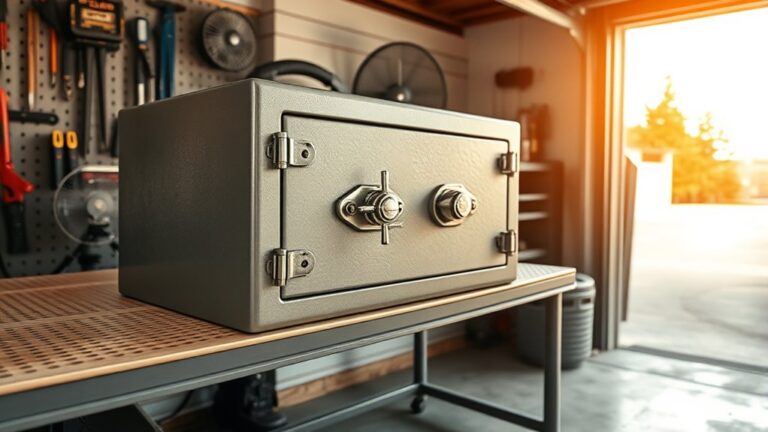
To make your gun safe EMP proof, it is essential to protect it from electromagnetic pulses by using a Faraday cage constructed from conductive materials such as copper or aluminum. This shielding blocks harmful EMP waves that could damage electronic components inside the safe.
In addition to physical shielding, incorporating EMP-resistant or mechanical locks ensures you have reliable manual backup access during power disruptions.
Proper grounding of the safe is crucial to safely dissipate any induced currents caused by an EMP event. Adding surge protection devices further helps divert sudden power surges away from sensitive electronics.
Regularly testing and maintaining all components will guarantee their functionality when you need them most.
By following these steps, you enhance your gun safe’s security and confirm dependable access during critical situations.
Key Takeaways
- Shield your gun safe with a continuous Faraday cage made from conductive materials like copper or aluminum to block EMP energy.
- Use mechanical or EMP-hardened electronic locks with manual backup keys to ensure access during and after an EMP event.
- Ground the safe’s metal frame to an earth grounding rod and install surge protectors rated for high-voltage or EMP events.
- Regularly test and maintain electronic locks, grounding connections, and surge protection devices to ensure functionality and reliability.
- Keep emergency protocols updated, and avoid neglecting maintenance to minimize vulnerabilities and guarantee safe access in crises.
How EMPs Damage Gun Safes and Digital Locks
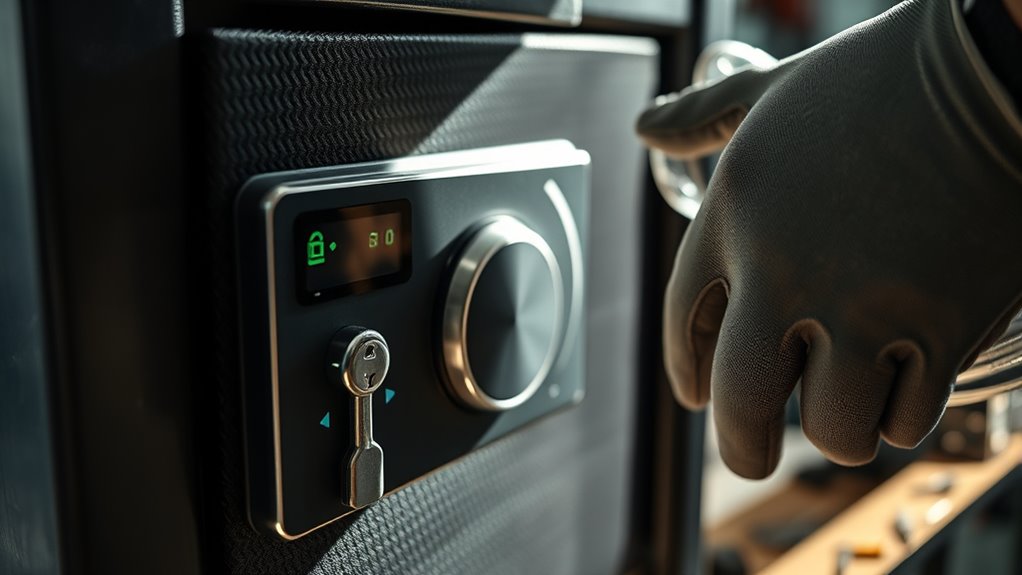
How exactly do EMPs damage gun safes and digital locks? When an electromagnetic pulse occurs, it releases a burst of electromagnetic energy that can fry the delicate electronic components inside your gun safe’s locking mechanism. Digital locks rely on microchips and circuit boards to function, and these parts are highly susceptible to the surge of electricity caused by an EMP.
The sudden spike can overload circuits, rendering the keypad or biometric scanner useless, leaving you locked out or unable to secure your firearms. Since these electronic components are integral to the safe’s operation, an EMP can completely disable the locking system. Even if the safe’s mechanical parts remain intact, you won’t be able to access the contents without a functioning electronic lock.
Understanding this vulnerability is key to protecting your investment and ensuring access to your firearms when it matters most.
Which Gun Safes Are Most Vulnerable to EMPs?
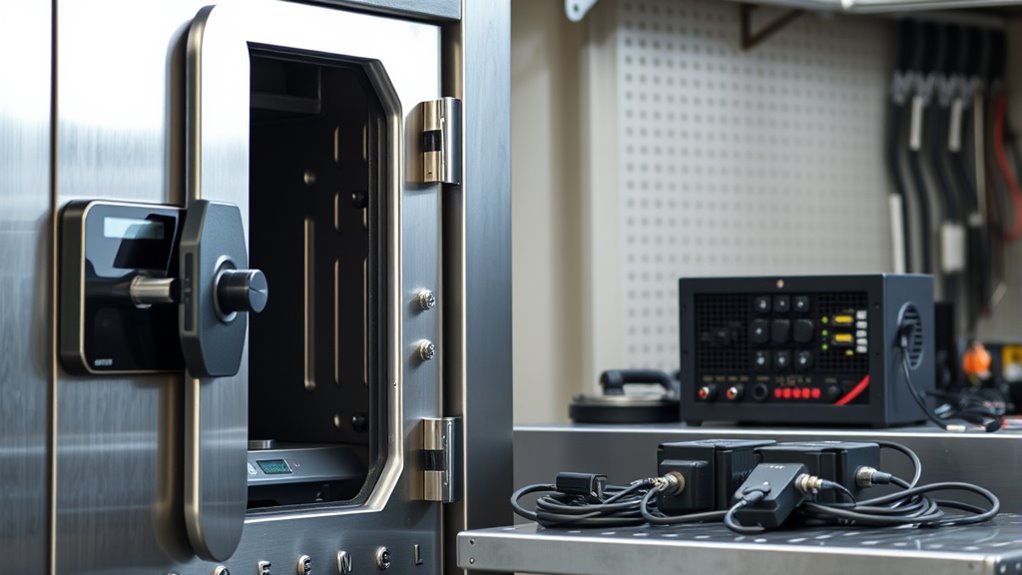
You’ll want to watch out for gun safes with electronic locks, as they’re especially prone to EMP damage. Digital keypads can fail instantly when hit by an EMP pulse, leaving you locked out.
Plus, if your safe relies on batteries, those power sources can be drained or disrupted, making access even harder.
Electronic Lock Vulnerabilities
Why are some electronic locks on gun safes more susceptible to EMPs than others? It mainly comes down to their internal components and design. Locks relying heavily on microchips and integrated circuits are the most vulnerable since EMPs generate powerful electromagnetic fields that can fry these delicate electronics instantly.
On the other hand, locks with simpler, more robust circuitry or mechanical backup features tend to resist EMP damage better. Additionally, the quality of shielding inside the lock plays a big role; cheaper models often lack effective electromagnetic shielding, making them easy targets.
When choosing a gun safe, you should consider the type of electronic lock it uses and whether it has built-in protections against EMPs to avoid being locked out when you need access most.
Digital Keypad Weaknesses
Electronic locks with digital keypads are common on many gun safes, but they often come with their own set of weaknesses when it comes to EMP resistance. The circuitry inside these keypads is especially vulnerable because EMPs can easily induce voltage spikes that fry the sensitive components.
If your safe relies solely on a digital keypad, a strong EMP event could render it completely inoperable, locking you out when you need access most. Additionally, many keypad systems lack proper shielding or surge protection, making them an easy target.
When selecting or upgrading a gun safe, you should look for models that incorporate hardened or shielded keypads, or consider mechanical backup options to guarantee you’re not left defenseless after an EMP.
Battery-Dependent Mechanisms
Although battery-dependent mechanisms offer convenience and advanced features, they’re among the most vulnerable to EMP damage. These safes rely heavily on electronic circuits powered by batteries, which can be instantly disabled by an EMP, leaving you locked out.
If you depend on battery-powered locks, you risk losing access when it matters most. Mechanical backup options help, but many models lack them or have limited functionality.
Here’s a quick comparison:
| Safe Type | EMP Vulnerability |
|---|---|
| Battery-Dependent Locks | High – electronics fail |
| Mechanical Locks | Low – no electronics |
| Hybrid (Battery + Mechanical) | Moderate – backup available |
You’ll want to prioritize safes with mechanical overrides or consider EMP shielding to protect battery-powered mechanisms.
How to Shield Your Gun Safe With a Faraday Cage
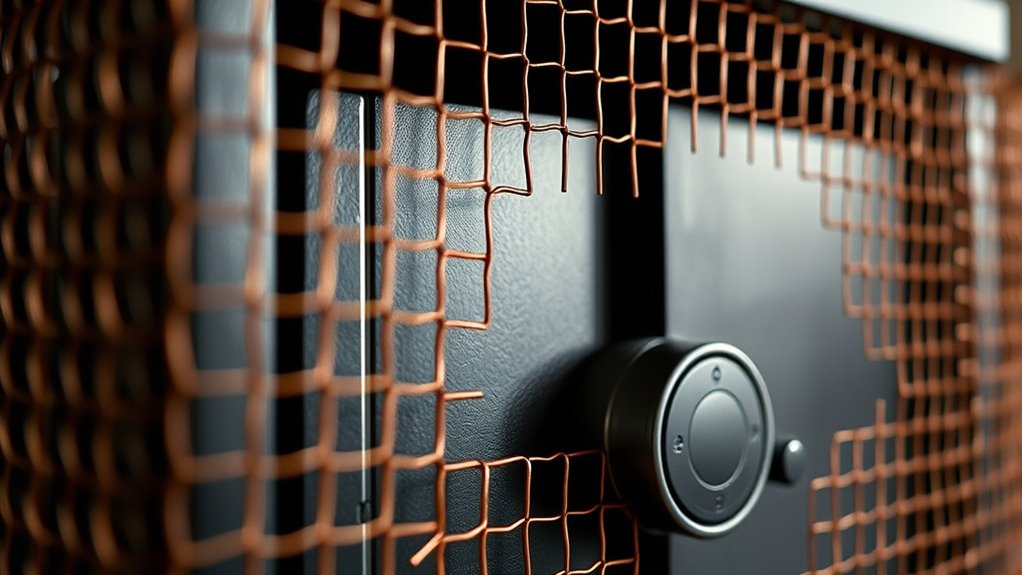
To protect your gun safe from an EMP, you’ll want to understand the basics of a Faraday cage. It works by blocking electromagnetic fields using conductive materials like copper or aluminum. Choosing the right shielding materials is key to making your Faraday cage effective.
Faraday Cage Basics
When protecting your gun safe from an EMP, understanding how a Faraday cage works is essential. A Faraday cage blocks electromagnetic fields by surrounding your safe with conductive material, directing harmful energy around, not through, it. This shield keeps your electronics safe and functional when EMPs strike.
Here’s why you should consider it:
- Peace of mind knowing your firearms and electronics stay protected.
- Simple design that you can customize to fit your safe perfectly.
- Reliable defense against EMP-induced damage without complicated tech.
- Long-term security ensuring your investment lasts through emergencies.
Effective Shielding Materials
Understanding how a Faraday cage works sets the stage for choosing the right materials to shield your gun safe effectively. You’ll want materials that conduct electricity well, like copper, aluminum, or steel. Copper offers excellent conductivity but can be pricey.
Aluminum is lighter and more affordable, making it a popular choice. Steel is durable and widely available but might require a thicker gauge for the best protection. Make sure the material forms a continuous, unbroken enclosure around your safe—gaps or holes can let electromagnetic pulses leak through.
Also, avoid materials that aren’t conductive, like plastic or wood, as they won’t block EMPs. By selecting and installing proper conductive materials, you’ll greatly improve your gun safe’s EMP resistance and keep your valuables secure.
Installing EMP-Resistant Locks and Backup Options
How can you guarantee your gun safe remains accessible even after an EMP event? The key is installing EMP-resistant locks paired with reliable backup options. Standard electronic locks may fail when hit by an electromagnetic pulse, leaving you locked out in critical moments.
To avoid this, consider these solutions:
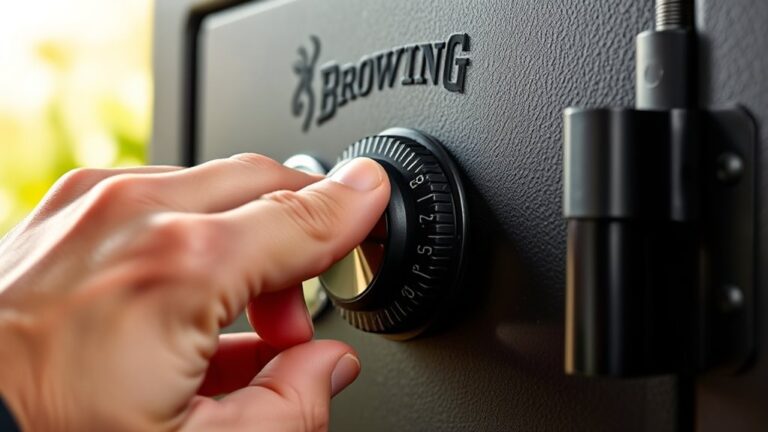
- Mechanical combination locks: They don’t rely on electronics, ensuring access regardless of EMP effects.
- EMP-hardened electronic locks: Designed to withstand EMPs, these offer convenience without vulnerability.
- Manual override keys: Provide a fail-safe way to open your safe if the primary lock fails.
- Backup power sources: Battery packs stored in shielded containers can keep electronic locks operational during power disruptions.
How to Add Grounding and Surge Protection to Your Gun Safe
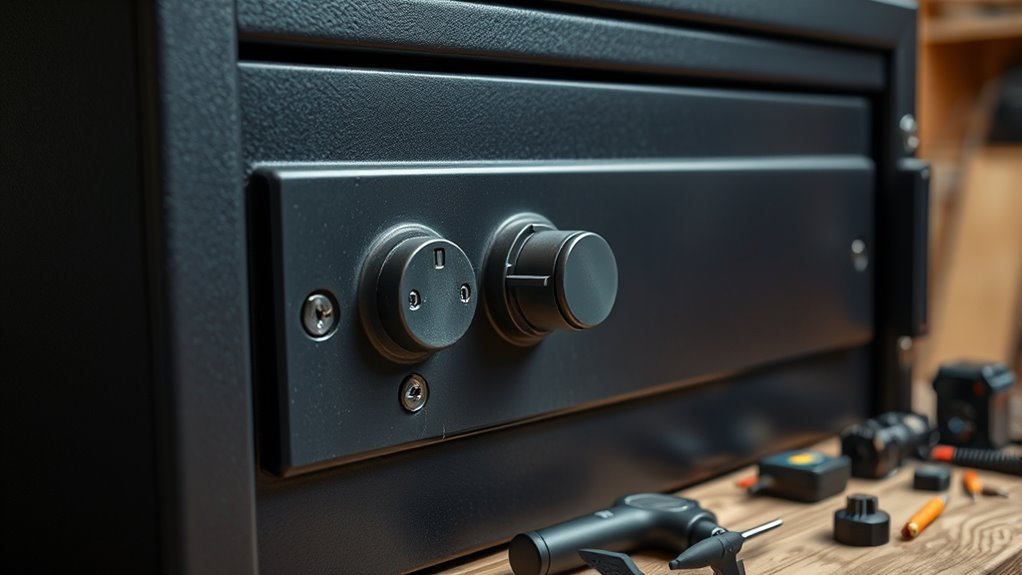
Since electromagnetic pulses can induce dangerous surges, adding proper grounding and surge protection to your gun safe is essential to prevent damage to its electronic components. Start by connecting a grounding wire from the safe’s metal frame directly to a grounding rod driven deep into the earth. This provides a low-resistance path for excess electrical energy, reducing the risk of damage.
Next, install a surge protector specifically rated for EMP or high-voltage events on the safe’s power supply line. This device will absorb and divert sudden voltage spikes away from sensitive electronics. Make sure all connections are tight and corrosion-free, as poor contacts can hinder grounding effectiveness.
If your safe is hardwired, use a surge protection device on the circuit breaker panel serving the safe. Also, avoid running power cords near antennas or other potential EMP sources to minimize induced surges. By combining grounding with surge protection, you markedly boost your safe’s resilience against EMP-related electrical threats.
Testing and Maintaining Your EMP-Proof Gun Safe
Once you’ve installed grounding and surge protection, you’ll want to regularly test and maintain your EMP-proof gun safe to guarantee it stays reliable. Routine checks help assure your weapons remain secure and accessible when you need them most. Neglecting this could leave you vulnerable in an emergency.
Here’s what you should do:
- Test electronic locking mechanisms monthly to confirm they function without glitches.
- Inspect grounding wires and connections quarterly for corrosion or looseness.
- Simulate a power outage or EMP event periodically to verify surge protection effectiveness.
- Clean and lubricate mechanical parts annually to prevent wear or sticking.
Frequently Asked Questions
Can an EMP Affect Mechanical Locking Mechanisms?
No, an EMP won’t affect mechanical locking mechanisms since they don’t rely on electronics or electricity. You can trust purely mechanical locks to function normally even after a strong electromagnetic pulse hits.
How Long Does EMP Protection Last on a Gun Safe?
EMP protection on a gun safe lasts as long as its shielding and grounding remain intact.
You’ll want to regularly inspect and maintain these features, since damage or corrosion can reduce effectiveness over time.
Are Emp-Proof Gun Safes More Expensive Than Regular Safes?
You’ll find EMP-proof gun safes can cost up to 30% more than regular ones. That extra price buys specialized shielding and components, ensuring your valuables stay protected even if an EMP knocks out power nationwide.
Can EMP Shielding Interfere With Safe’s Electronic Functions?
Yes, EMP shielding can interfere with your safe’s electronics by blocking signals or power. You’ll need proper design and grounding to guarantee your safe’s functions work smoothly while still being protected from electromagnetic pulses.
Is Professional Installation Necessary for EMP Protection Upgrades?
Think about handling delicate electronics during a storm—would you trust yourself alone? You don’t have to be a pro, but professional installation guarantees your EMP protection works flawlessly, preventing costly mistakes and safeguarding your valuables effectively.
Conclusion
You might think your gun safe is secure—until an EMP hits, rendering digital locks useless and leaving you locked out when it matters most.
But don’t worry; by shielding your safe with a Faraday cage, installing EMP-resistant locks, and adding proper grounding, you’ll be ready for the unexpected.
The question is—have you taken these steps yet? Because when the lights go out, you’ll want to know you’re not left empty-handed.
Ensuring your gun safe is EMP proof is crucial for protecting your firearms.
Implementing these EMP protection methods guarantees your safe remains functional during an electromagnetic pulse event.
Take action now to make your gun safe EMP proof and safeguard your valuables against any threat.