What Ammo Does the Chicken Cannon Use?
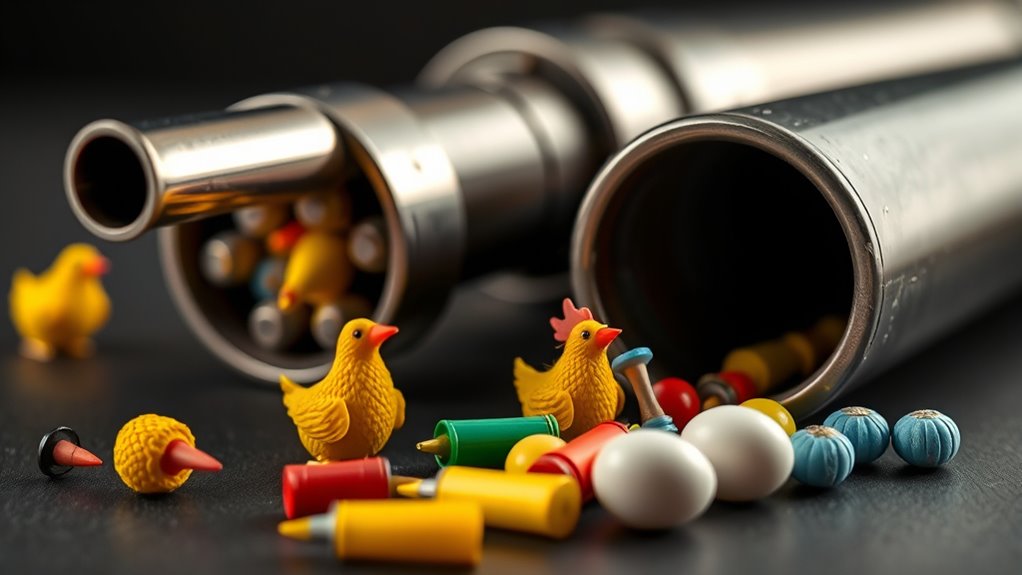
The chicken cannon ammo you’re curious about is specially designed for aviation safety testing. Unlike real birds, this ammo is made from engineered materials such as gelatin or synthetic polymers. These materials replicate the mass, texture, and impact behavior of actual birds during aircraft bird strike simulations.
These projectiles are precisely sized and propelled to mimic realistic bird strikes. This ensures reliable safety data is gathered without any ethical concerns involving live animals.
The innovative design of this ammo plays a crucial role in improving aviation safety standards.
If you want to uncover how this ammo works in detail and what advancements it brings to aircraft testing, keep exploring further information. The technology behind chicken cannon ammo continues to evolve, offering better protection for both aircraft and passengers.
Key Takeaways
- Chicken cannon ammo is made from engineered gelatin-based or synthetic polymer materials mimicking bird tissue.
- Ammo is designed to deform like real bird flesh upon impact for realistic testing.
- Sizes range from 1 to 8 pounds to simulate various bird species and impact forces.
- The ammo is propelled at velocities replicating actual bird flight speeds during tests.
- Synthetic ammo avoids ethical issues by eliminating the use of live or real bird parts.
What Is Chicken Cannon Ammo and Why Is It Special?
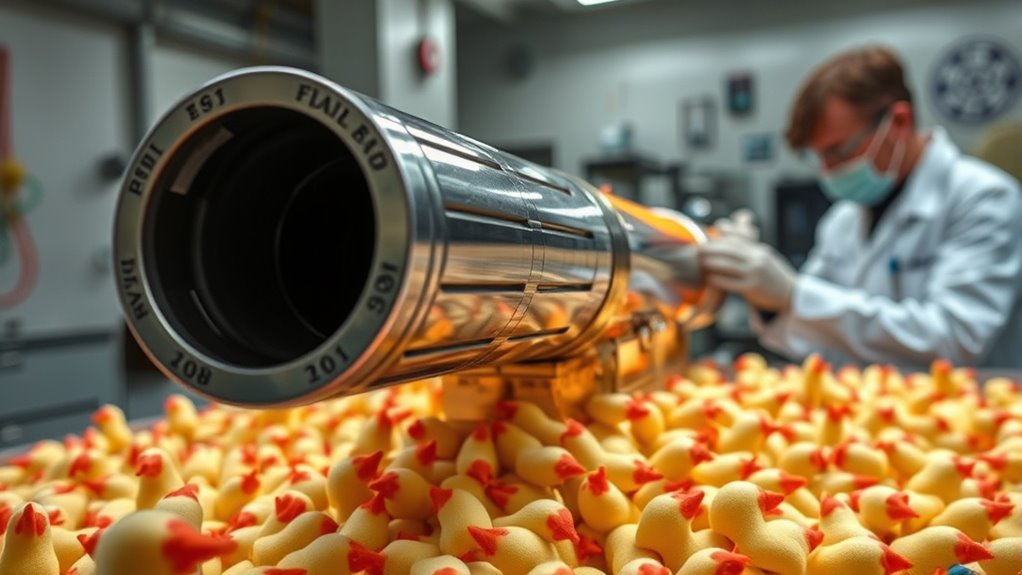
Although it might sound unusual, chicken cannon ammo is specifically designed to test aircraft windshields and engines against bird strikes. When you’re dealing with high-speed impacts, you can’t just use any projectile. The ammo needs to accurately simulate the mass and texture of a bird to guarantee aircraft components can withstand real-life collisions.
Typically, this ammo is made from specially prepared bird carcasses—often chickens—because their size and density closely match the birds planes might encounter. You’ll find that the chicken cannon uses these carcasses in a controlled manner, sometimes frozen or thawed to standard conditions, so every test is consistent. This consistency is essential since aircraft safety depends on reliable data from these impacts.
What makes this ammo special is its balance between biological realism and standardized testing conditions, giving engineers precise insights into how components perform under bird strike scenarios. So, the chicken cannon ammo isn’t just odd; it’s vital for aviation safety.
How Chicken Cannon Ammo Mimics Real Bird Strikes
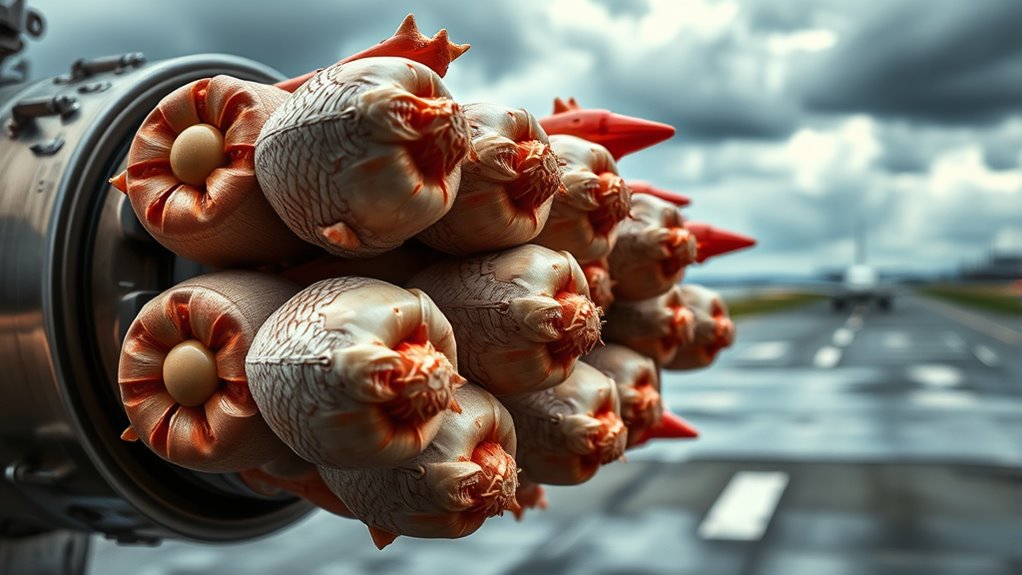
You’ll see that chicken cannon ammo is designed to simulate real bird strikes by matching the speed and force birds exert on aircraft. The materials used closely mimic the density and texture of actual birds to create accurate impacts.
This careful design helps test how well planes can handle bird collisions in real life.
Realistic Bird Impact Simulation
Because bird strikes can cause serious damage to aircraft, the ammo used in chicken cannons is carefully designed to replicate the size, weight, and consistency of real birds. When you fire this ammo, it behaves like an actual bird hitting an aircraft, giving engineers realistic impact data. The simulation accounts for velocity, trajectory, and deformation upon impact, allowing you to test windshields, engine components, and other critical parts under true-to-life conditions.
This precise mimicry helps identify vulnerabilities and improve safety standards. By using ammo that closely matches real bird characteristics, you guarantee the tests are valid and reliable. This way, the results you get reflect actual risks pilots might face, helping prevent bird strike incidents before planes take off.
Material Composition of Ammo
To achieve that realistic impact, the ammo’s material composition plays a big role. You’ll find that chicken cannon ammo isn’t made from actual birds but from carefully engineered materials that mimic the density, texture, and moisture content of real bird tissue. Typically, the ammo uses a gelatin-based or synthetic polymer mixture combined with water to replicate the soft, malleable nature of bird flesh.
This composition guarantees the projectile deforms upon impact similarly to a real bird, providing accurate testing conditions for aircraft engines. The materials are chosen to balance realism with durability so you can repeatedly use the ammo without compromising safety or test accuracy. By matching the physical properties of birds, these specialized materials make the simulation convincing without relying on live or real animal parts.
Speed and Force Matching
Although the materials used in chicken cannon ammo are carefully designed, matching the speed and force of a real bird strike is just as essential for accurate engine testing. When you use a chicken cannon, it’s not enough to simulate what a bird feels like; you have to replicate how fast and how hard it hits an engine.
The ammo is propelled at specific velocities that mimic birds flying at various speeds, from slow pigeons to fast geese. The force generated upon impact is calibrated to match these speeds and the bird’s weight, ensuring the engine’s response is realistic.
Materials Used in Chicken Cannon Projectiles
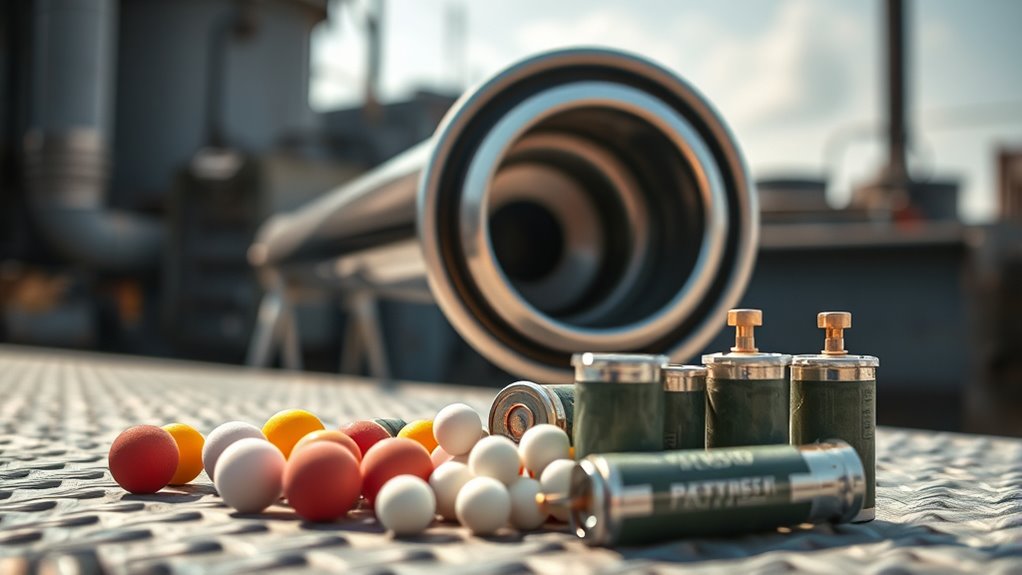
When you look at chicken cannon projectiles, you’ll notice they’re made from specific materials chosen for safety and durability. These materials need to mimic bird strikes closely while protecting the equipment. Understanding why certain materials are used helps you see how the ammo performs effectively.
Common Projectile Materials
Since the primary goal of a chicken cannon is to simulate bird strikes on aircraft, the materials used for its projectiles have to closely mimic the density and consistency of real birds. Typically, you’ll find chicken cannons using actual frozen or thawed chickens, which provide an authentic mass and texture.
In some cases, synthetic materials like gelatin or specialized gels are employed because they replicate the soft tissue of birds while ensuring repeatability in testing. These gels can be molded into bird-like shapes and maintain consistent weight and density for reliable results.
Occasionally, you might encounter composite materials combining rubber and foam to simulate certain impact characteristics. Using these common materials helps you achieve realistic testing conditions, allowing aircraft components to be evaluated accurately against bird strike damage.
Material Selection Criteria
Choosing the right material for chicken cannon projectiles goes beyond just matching the feel of real birds. You need to take into account factors that affect performance and functionality. The material must simulate the density and texture of a real chicken to yield accurate test results.
At the same time, it should be lightweight enough to be safely launched at high speeds without damaging the cannon or test targets. Additionally, the material must maintain consistency across batches to ensure reliable, repeatable testing.
When selecting materials, keep these criteria in mind:
- Density and Weight: Should mimic real chicken properties for realistic impact.
- Texture and Flexibility: To simulate feather and muscle structure during tests.
- Batch Consistency: Ensures uniformity for dependable, comparable results every time.
Safety and Durability
Even though the materials need to closely mimic real chickens, you’ll want to prioritize safety and durability to protect both the cannon and the test environment. The projectiles are typically made from dense foam or rubber composites that absorb impact without causing damage. These materials resist tearing or deformation during repeated firings, ensuring consistent performance.
You’ll also find that coatings or surface treatments help reduce wear and prevent debris from contaminating the cannon’s barrel. Choosing non-toxic, biodegradable substances is common to minimize environmental impact. By balancing realistic weight and structure with toughness, the ammo maintains accuracy while safeguarding the equipment and surroundings.
Ultimately, selecting the right materials means your chicken cannon runs smoothly and safely over many tests without costly repairs or hazards.
Sizes and Weights of Chicken Cannon Ammo Explained
When you look at the sizes and weights of chicken cannon ammo, you’ll notice they vary to match different testing needs. This variation guarantees the ammo simulates bird strikes on aircraft accurately, depending on the specific part or type of aircraft being tested. The ammo must closely mimic real birds in size, weight, and density for reliable results.
Here are the common sizes and weights you’ll encounter:
- Lightweight rounds (around 1-2 pounds): Used for smaller aircraft components or lower-velocity impacts.
- Medium rounds (3-5 pounds): Simulate average-sized birds, suitable for most standard testing scenarios.
- Heavy rounds (6-8 pounds and above): Designed to replicate larger birds or multiple birds hitting simultaneously.
How Testing Ensures Chicken Cannon Ammo Is Safe and Accurate
Matching the size and weight of chicken cannon ammo to real birds is only the first step. To make sure the ammo is safe and accurate, rigorous testing is essential. You’ll find that each batch of ammo undergoes high-speed firing tests to replicate real-world impacts, ensuring it behaves like an actual bird strike without causing unnecessary damage.
These tests check for consistency in shape and density, which helps maintain reliable ballistic performance. You’ll also see durability assessments, where the ammo is examined for cracks or deformations that might affect safety or accuracy. By analyzing impact data, testers adjust the ammo’s materials and manufacturing processes to fine-tune performance.
This thorough testing means you can trust the chicken cannon to simulate bird strikes realistically, protecting aircraft and equipment during trials. Without this careful validation, the ammo wouldn’t provide the precise, repeatable results needed for effective safety testing.
Why Real Birds Aren’t Used for Testing Chicken Cannons
Although it might seem like using real birds would provide the most realistic tests, there are several reasons why they aren’t used in chicken cannon testing. First and foremost, ethical concerns prevent the use of live animals in potentially harmful experiments. Additionally, real birds vary in size, weight, and feather density, making consistent testing difficult.
Using real birds for testing is avoided due to ethical concerns and inconsistent results.
Using actual birds also presents logistical challenges, from sourcing to disposal.
Here’s why real birds aren’t part of the process:
- Ethical Issues: Causing harm to live animals isn’t acceptable or legal in testing.
- Inconsistency: Natural variations in birds lead to unreliable, non-repeatable results.
- Practicality: Handling and storing real birds is complicated and costly.
Instead, engineers rely on synthetic substitutes designed to mimic the physical properties of birds, ensuring tests are humane, repeatable, and precise.
Innovations and the Future of Chicken Cannon Ammo
How can the materials used in chicken cannon ammo evolve to improve safety and accuracy? You’ll see ongoing research focusing on synthetic composites that mimic bird tissue more precisely. These materials aim to replicate real bird impacts without the ethical concerns, enhancing test reliability.
Innovations like biodegradable ammo reduce environmental impact, so you won’t have to worry about leftover debris affecting airfield cleanliness. You can also expect advancements in shape and density, allowing the ammo to better simulate different bird species’ sizes and weights. This means more accurate assessments of aircraft windshield and engine durability under various bird strike scenarios.
Plus, smart materials embedded with sensors could provide real-time data on impact forces, giving you immediate feedback to improve aircraft designs. Looking ahead, these innovations will make chicken cannon testing safer, more efficient, and environmentally friendly—helping you trust that aircraft are thoroughly evaluated against bird strikes without harming real animals.
Frequently Asked Questions
How Is Chicken Cannon Ammo Stored and Transported Safely?
You’ll store chicken cannon ammo in secure, padded containers to prevent damage and keep it chilled if needed.
During transport, you’ll use shock-absorbent packaging and follow safety regulations to guarantee everything arrives intact and safe.
Can Chicken Cannon Ammo Be Reused After Testing?
You can’t press rewind on chicken cannon ammo; once fired, it’s like a popped balloon—spent and unusable.
What Are the Environmental Impacts of Chicken Cannon Ammo?
You’ll find that chicken cannon ammo, mainly composed of bird carcasses, can cause environmental concerns like biohazard waste and odor issues. Proper disposal and treatment are vital to minimize negative impacts on nearby ecosystems and communities.
How Long Does Chicken Cannon Ammo Last Before Expiration?
You’ll find chicken cannon ammo typically lasts about 1 to 2 years before it expires. Storage conditions matter, so keep it cool and dry to maintain effectiveness and avoid premature degradation of the materials.
Are There Different Ammo Types for Various Bird Species?
You’d think the chicken cannon’s ammo could fill an ocean, but nope! There aren’t different types for various bird species; it uses a standard ammo designed to safely deter all birds regardless of size or kind.
Conclusion
So, next time you hear about chicken cannon ammo, think of it as the Goldilocks of bird strike testing—just right in size, weight, and safety. It’s specially designed to mimic real bird strikes without the mess, proving innovation truly takes flight here.
By using these clever projectiles, engineers guarantee your flights stay safe and smooth, all without ruffling any real feathers. It’s science and safety soaring together, just like a well-planned journey. In conclusion, the chicken cannon uses specially designed bird strike testing ammo that ensures aviation safety by simulating real bird impacts effectively.