How You Can Legally Carry a Concealed Weapon in Nevada
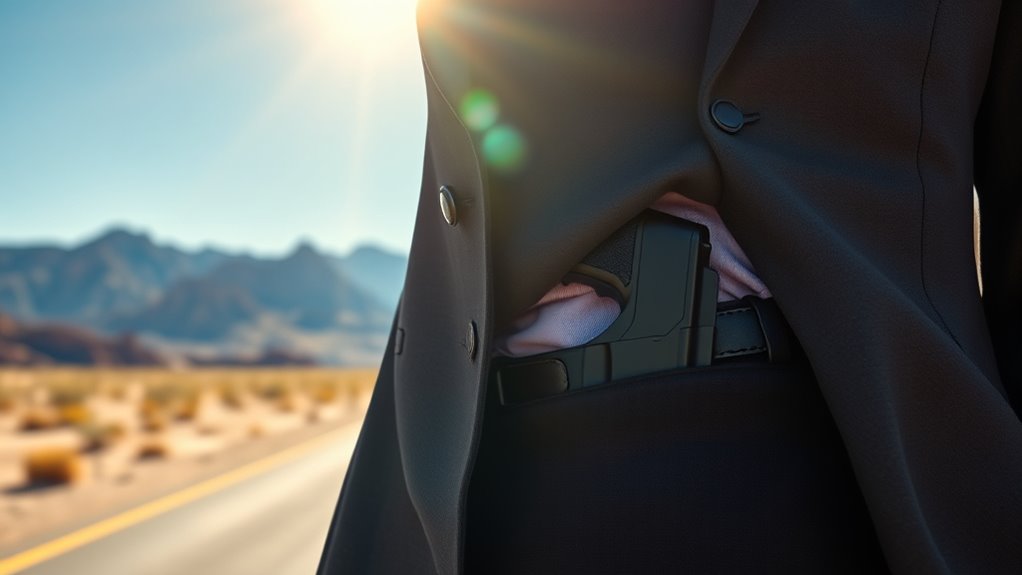
To legally carry a concealed weapon in Nevada, you’ll need a state-issued permit. This permit is available if you’re at least 21 years old or 18 if you are in the military.
You must also pass a background check and complete a firearm safety course to qualify.
Always carry your permit and a valid ID with you.
Be sure to avoid restricted locations such as schools and casinos where concealed carry is prohibited.
While open carry generally does not require a permit, carrying a concealed weapon does.
Keep your permit current by renewing it before it expires.
Understand the laws regarding where you can legally carry your weapon to stay compliant.
There’s more to know about Nevada’s concealed carry regulations to ensure you follow the law properly.
Key Takeaways
- Obtain a Nevada concealed carry permit by meeting eligibility, completing safety training, and applying through the sheriff’s office or Department of Public Safety.
- Always carry your valid concealed carry permit and a government-issued ID when carrying a concealed weapon.
- Concealed carry is prohibited in schools, government buildings, casinos, and private properties with explicit firearm bans.
- Follow all state laws, including not carrying while intoxicated and avoiding brandishing or unnecessary display of the weapon.
- Renew your permit every five years and stay informed about changes in Nevada concealed carry laws.
Nevada Concealed Carry Laws: What You Need to Know

Although Nevada permits residents to carry concealed weapons, you need to understand the specific requirements and restrictions before doing so. Nevada operates under a “shall-issue” policy for concealed carry permits, meaning if you meet the legal criteria, the state must issue you a permit. However, you must always carry your permit and valid ID when carrying concealed.
Open carry is generally legal without a permit, but local ordinances might differ, so staying informed is essential. You should know that carrying in certain places, like schools, courthouses, and federal buildings, is strictly prohibited regardless of your permit status. Also, Nevada recognizes permits from many other states, but it’s wise to verify reciprocity before carrying outside Nevada.
Ultimately, while the state allows you to carry concealed, you must never carry while intoxicated or use the weapon unlawfully. Staying aware of these laws helps you carry responsibly and legally.
Eligibility for Nevada Concealed Carry Permits

To carry a concealed weapon legally in Nevada, you’ll need to meet specific eligibility requirements set by the state. First, you must be at least 21 years old (or 18 if in the military). You also need to be a U.S. citizen or legal resident.
Additionally, you must not have any felony convictions or certain misdemeanor convictions that would disqualify you. Nevada law requires you to be free from any restraining orders or ongoing mental health commitments. Finally, you can’t be addicted to controlled substances.
Here’s a quick summary:
| Eligibility Criteria | Requirement |
|---|---|
| Age | 21+ (18+ if military) |
| Residency | U.S. citizen or legal resident |
| Criminal Record | No felony or disqualifying misdemeanors |
| Mental Health & Substance Abuse | No active commitments or addiction |
Meeting these qualifications ensures you’re legally eligible to apply for a concealed carry permit in Nevada.
Steps to Apply for a Nevada Concealed Carry Permit
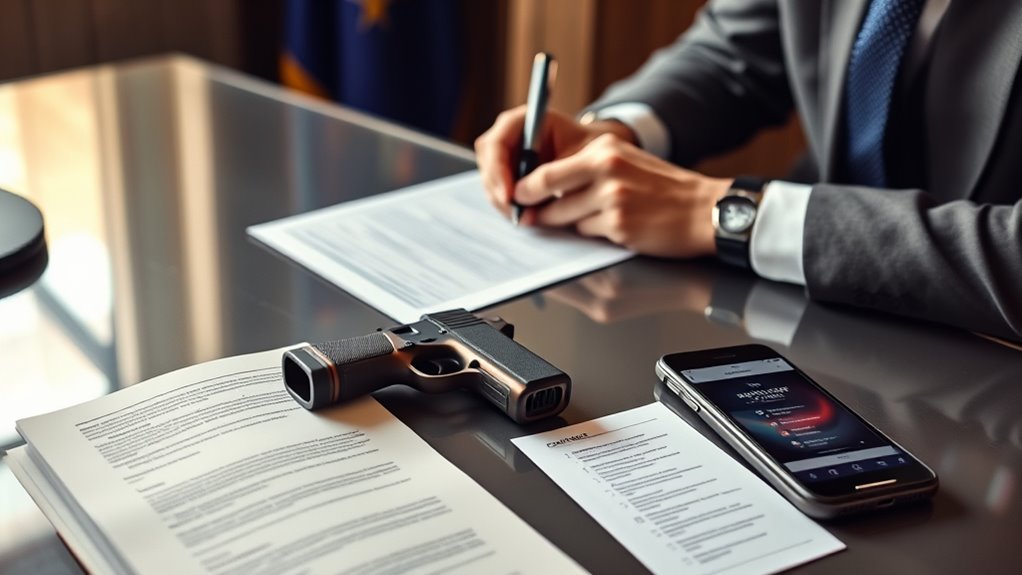
There are several key steps you’ll need to follow when applying for a Nevada concealed carry permit. First, make sure you meet all eligibility requirements, such as being at least 21 years old and having no disqualifying criminal history. Next, complete a firearms safety training course approved by the state.
You’ll then need to fill out the application form, which you can get from your local sheriff’s office or the Nevada Department of Public Safety. After submitting the application, you’ll have to provide fingerprints and pay the required fees. The sheriff’s office will conduct a background check to verify your information.
Processing times vary but typically take around 30 days. If approved, you’ll receive your concealed carry permit, which is valid for five years. Remember, carrying a concealed weapon without a valid permit can lead to serious legal consequences, so following these steps carefully is essential.
Firearms Allowed for Concealed Carry in Nevada
When carrying concealed in Nevada, you’ll want to know which firearms are allowed and what restrictions apply. Not all weapons qualify, so understanding eligible types is key.
Let’s take a closer look at what you can legally carry and any limitations you need to keep in mind.
Eligible Firearm Types
Although Nevada allows a variety of firearms for concealed carry, you need to be aware of which types are legally permitted. Generally, handguns are the primary firearms you can carry concealed, including pistols and revolvers. Long guns, like rifles and shotguns, aren’t allowed to be carried concealed.
Your firearm must be designed to be carried easily and comfortably on your person. Additionally, the weapon must not be altered in a way that makes it illegal under state or federal law. Fully automatic firearms, those classified as machine guns, are generally restricted and not allowed for concealed carry.
Restrictions On Concealed Weapons
Since Nevada has specific rules about which firearms you can carry concealed, it’s important to know the restrictions that apply. You’re allowed to carry most handguns that are legal to own, but certain firearms are off-limits. For example, fully automatic weapons and firearms with altered serial numbers are prohibited.
Additionally, you can’t carry concealed firearms that are designed or modified to be unusually concealable, like certain pocket pistols, unless they meet state guidelines. Knives and other weapons don’t fall under these concealed carry laws but may have their own restrictions. Always verify your firearm is legally owned, registered if required, and that you comply with any local ordinances.
Staying informed helps you stay within the law and carry responsibly in Nevada.
Carrying Concealed Without a Permit: Nevada’s Legal Exceptions
You might be surprised to learn that Nevada allows some people to carry a concealed weapon without a permit under specific circumstances. If you’re a resident or visitor aged 21 or older, you generally need a permit to carry concealed. However, Nevada has exceptions.
For instance, if you’re carrying a firearm within your own home or on your private property, no permit is needed. Also, if you’re legally hunting or engaged in target shooting on public or private lands where it’s allowed, you can carry a concealed weapon without a permit. Additionally, if you’re traveling with a firearm through Nevada, as long as it’s unloaded and stored properly, you’re exempt from needing a concealed carry permit.
Keep in mind, these exceptions don’t grant you free rein everywhere—other laws and restrictions still apply. Understanding these specifics helps you stay compliant while exercising your rights.
Where You Can and Cannot Carry a Concealed Weapon in Nevada
Knowing exactly where you can and cannot carry a concealed weapon in Nevada is essential to avoid legal trouble. While Nevada allows concealed carry with a permit almost anywhere, there are specific places where carrying is strictly prohibited, regardless of your permit status.
Here’s a quick reference to help you understand these locations:
| Allowed Locations | Prohibited Locations |
|---|---|
| Public streets and parks | Schools and school grounds |
| Private property with owner’s permission | Federal buildings and courthouses |
| Licensed businesses that allow firearms | Casinos and establishments serving alcohol |
| While hunting or fishing | Secure areas like airports and prisons |
Always check local ordinances and posted signs, especially in private businesses. Being aware of these boundaries guarantees you carry responsibly and stay within Nevada’s legal framework.
How to Renew or Transfer Your Nevada Concealed Carry Permit
If your Nevada concealed carry permit is about to expire, you’ll need to follow the renewal process to keep it valid. Transferring your permit to a new address or county also has specific requirements you should know.
Let’s go over what you need to do to stay compliant and avoid any gaps in your permit status.
Renewal Process Overview
Since your Nevada concealed carry permit has a limited validity period, you’ll need to renew it before it expires to continue carrying legally. The renewal process typically starts a few months before expiration. You’ll be required to submit an application, provide proof of completion of a firearms safety course (if applicable), and pay the necessary fees.
It’s important to check with the Nevada Department of Public Safety or local law enforcement for specific renewal forms and instructions. You may also need to update your personal information and submit to a background check. Renewing on time helps you avoid any legal complications or gaps in your permit status.
Keep track of your permit’s expiration date and start the renewal process early to guarantee uninterrupted legal carry rights.
Permit Transfer Requirements
While renewing your Nevada concealed carry permit is straightforward, transferring it to another state or jurisdiction involves specific steps you’ll need to follow carefully. Nevada doesn’t have a formal permit transfer process because concealed carry permits are issued by individual states, each with unique laws.
To manage this, you should:
- Check the reciprocity agreements between Nevada and the state you’re moving to.
- Apply for a new concealed carry permit in your new state, following their specific requirements.
- Surrender your Nevada permit if required by the new state or if you no longer reside in Nevada.
- Keep updated on any changes in laws that affect permit validity and reciprocity.
Understanding these steps helps you stay compliant and carry legally after moving.
Legal Mistakes to Avoid When Carrying Concealed in Nevada
Though carrying a concealed weapon in Nevada is legal with the proper permit, you need to be aware of common legal pitfalls that can lead to serious consequences. First, never carry your weapon without your permit on you—it’s the law, and failure to present it during a lawful stop can result in fines or arrest.
Avoid carrying in prohibited places like schools, government buildings, or private properties that explicitly forbid firearms. Don’t carry if you’re intoxicated; Nevada law prohibits carrying while under the influence of alcohol or drugs. Also, be cautious about brandishing your weapon—displaying it unnecessarily can be considered a crime.
Finally, keep your permit current and follow all renewal requirements. By staying informed and respecting these rules, you’ll protect yourself from legal trouble and responsibly exercise your right to carry concealed in Nevada.
Frequently Asked Questions
Can Non-Residents Apply for a Nevada Concealed Carry Permit?
Yes, you can apply for a Nevada concealed carry permit as a non-resident, but you must meet all state requirements, including background checks and training.
Be sure to follow Nevada’s specific laws to avoid legal issues.
How Does Nevada Recognize Concealed Carry Permits From Other States?
If you’ve ever wondered, Nevada recognizes concealed carry permits from states with similar requirements. So, if your permit matches Nevada’s standards, you’re good to go, making travel and carrying more convenient than you’d expect.
Are There Any Fees Associated With Concealed Carry Permit Applications?
Yes, you’ll need to pay a fee when applying for a concealed carry permit in Nevada. The cost can vary by county but typically ranges around $50 to $100, covering processing and fingerprinting expenses.
What Training Is Required to Obtain a Nevada Concealed Carry Permit?
You’ll need to complete a firearms safety course that covers safe handling, storage, and Nevada laws. This training guarantees you understand responsible gun use before applying for your concealed carry permit in Nevada.
Can Concealed Carry Permits Be Revoked, and Under What Circumstances?
Think of your permit like a library card—misuse risks losing it. Yes, your concealed carry permit can be revoked if you commit a felony, violate gun laws, or pose a danger to public safety.
Stay responsible.
Conclusion
Now that you know the ins and outs of carrying concealed in Nevada, you’re ready to stay safe and legal. Remember, following the rules isn’t just smart—it’s as essential as breathing when it comes to protecting yourself and others. Don’t skip steps or ignore restrictions, or you might face serious consequences.
Stay informed, stay responsible, and carry with confidence knowing you’re doing it the right way every time. Understanding how to legally carry a concealed weapon in Nevada ensures you protect your rights while complying with state laws. Always prioritize safety and legal compliance when carrying a concealed firearm.