What Is a Concealed Weapons Permit and How to Get One
A concealed weapons permit is an official authorization that allows you to legally carry a hidden firearm for self-defense in public places. This permit is essential for responsible gun owners who want to protect themselves while complying with state laws and regulations.
Understanding how to get a concealed weapons permit involves knowing the specific requirements and procedures in your state. To obtain one, you typically need to meet age and residency criteria, pass a thorough background check, and complete a certified firearm safety training course.
You also must submit a detailed application along with the required fees. Since rules and processes vary widely by state, it’s crucial to be familiar with your local laws before applying.
If you want to learn more about the steps, qualifications, and important safety tips for carrying a concealed weapon, there’s additional useful information ahead.
Key Takeaways
- A concealed weapons permit allows legal carrying of a hidden firearm in public for self-defense, varying by state laws and restrictions. Applicants must meet age, residency, and criminal background criteria, including passing a mental health and legal history check. Mandatory firearm safety and legal responsibility training is required before applying for the permit.
- The application process involves submitting forms, fingerprints, fees, and can take weeks to months for approval. Permit holders must renew on time, store firearms securely, follow carrying laws, and practice safe handling etiquette.
What Is a Concealed Weapons Permit and Who Needs One?
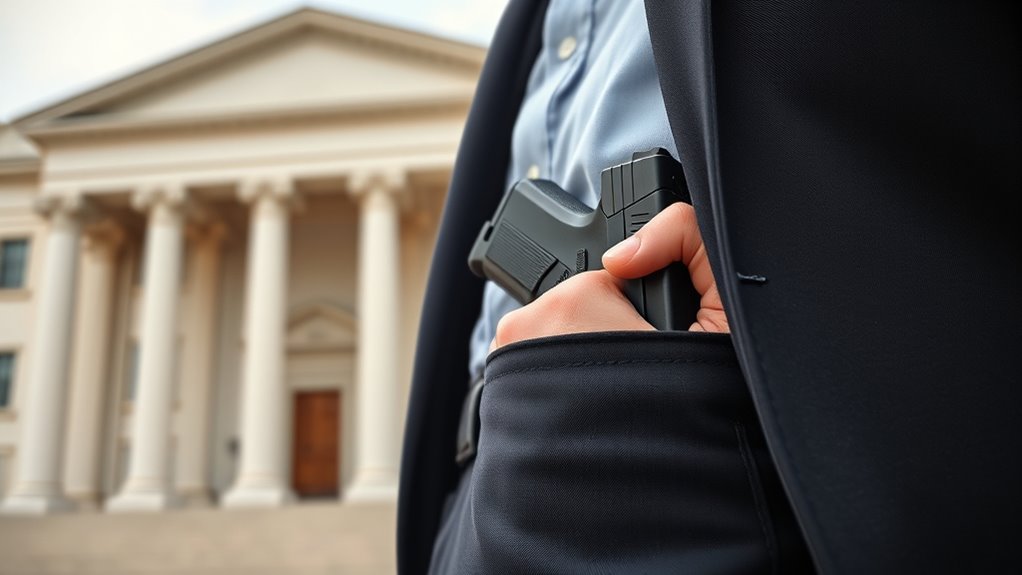
Although laws vary by state, a concealed weapons permit generally allows you to carry a hidden firearm legally in public. If you want to have a firearm on your person without it being visible, this permit is what you need. It’s designed to let you protect yourself while following the law, so you won’t face legal trouble for simply having a concealed weapon.
You might wonder who actually needs this permit. If you carry a firearm regularly for self-defense or other lawful purposes outside your home, you’re typically required to get one. This includes situations like commuting, running errands, or attending events where carrying a visible weapon isn’t practical or allowed.
Without this permit, carrying a concealed gun is usually against the law, even if you own the firearm legally. So, if you want to stay compliant while carrying discreetly, securing a concealed weapons permit is essential.
Who Qualifies for a Concealed Weapons Permit?
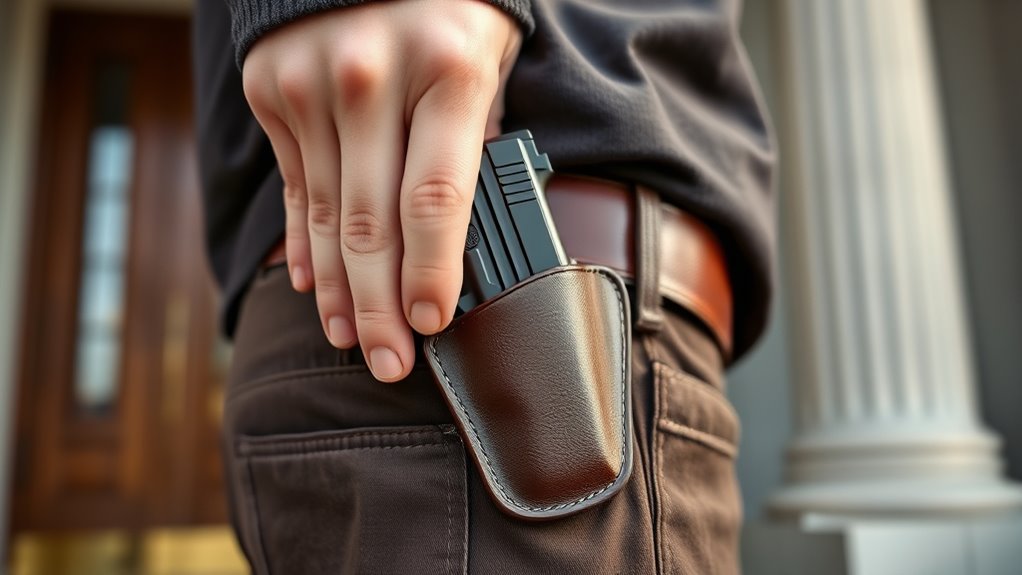
Who exactly qualifies for a concealed weapons permit? You might be surprised to learn that eligibility often hinges on a few key factors that show you’re responsible and law-abiding. Generally, you need to:
- Be at least 21 years old (varies by state)
- Have no felony convictions or serious criminal history
- Meet residency requirements in the state where you apply
- Demonstrate competency with firearms, often through a safety course
- Not be prohibited due to mental health or restraining orders
These criteria aim to guarantee only those who can safely and responsibly carry a concealed weapon get the permit. If you meet these points, you’re likely on the right path.
However, specifics can vary widely depending on your location, so it’s important you check your state’s exact requirements. Qualifying means you’re trusted to carry discreetly while respecting laws designed to keep everyone safe.
Background Checks for Concealed Weapons Permits

Why do background checks play such a essential role in obtaining a concealed weapons permit? They help guarantee that only responsible, law-abiding individuals carry concealed firearms. When you apply, authorities will review your criminal history, mental health records, and any restraining orders.
This process helps prevent those with violent pasts, serious mental illnesses, or legal restrictions from getting a permit. You’ll typically have to submit fingerprints and personal information, which law enforcement uses to conduct thorough checks. The aim is to identify red flags that could pose a public safety risk.
Keep in mind that background check requirements and depth can vary by state, but their purpose remains consistent: to protect you and others by ensuring permits are granted carefully. Passing this step is essential to move forward in obtaining your concealed weapons permit.
Concealed Weapons Permit Training: What to Expect
Before you can carry a concealed weapon, you’ll need to complete a training course designed to assure you understand safety protocols and legal responsibilities. This training guarantees you’re confident and prepared to handle your firearm responsibly.
During the course, you can expect:
- Thorough safety rules to prevent accidents
- Legal guidelines covering when and where you can carry
- Proper firearm handling and maintenance techniques
- Hands-on practice with shooting fundamentals
- Situational awareness to help you make smart decisions
The training isn’t just about skill—it’s about mindset. You’ll learn how to respect your weapon, protect yourself and others, and follow the law. It’s a critical step that builds your confidence and readiness.
How to Apply for a Concealed Weapons Permit
Now that you know what training involves, it’s time to look at how to apply for your concealed weapons permit. You’ll need to meet specific application requirements and follow the proper submission process.
Let’s break down what you’ll need to prepare and where to send your paperwork.
Application Requirements
Although the process can vary by state, applying for a concealed weapons permit generally requires you to submit a detailed application, provide proof of residency, and complete a background check.
You’ll also need to meet specific criteria that show you’re responsible and law-abiding. Here are key application requirements you should be ready for:
- Valid identification, like a driver’s license or state ID
- Proof of residency, such as utility bills or lease agreements
- Completion of a firearms safety or training course
- Submission of fingerprints for a thorough background check
- Disclosure of any criminal history or legal restrictions
Meeting these requirements guarantees you’re prepared and eligible, making the process smoother and increasing your chances of approval.
Submission Process
When you’re ready to apply for a concealed weapons permit, you’ll typically need to submit your application through your state’s designated agency, often the local sheriff’s office or a state law enforcement department. The process usually involves filling out forms, providing identification, and paying a fee.
Some states may require fingerprinting and background checks as part of the submission.
Here’s a quick overview:
| Step | Action |
|---|---|
| 1. Obtain Forms | Download or pick up forms |
| 2. Complete Application | Fill out all required info |
| 3. Submit & Pay Fee | Turn in forms and pay fee |
After submission, wait for processing and possible interviews or training notifications.
How Long Does Permit Approval Take?
If you’re applying for a concealed weapons permit, you’ll want to know how long the approval process typically takes. The timeline can vary widely depending on your state and how quickly you complete each step. On average, it might take anywhere from a few weeks to several months.
Factors like background checks, class completion, and local processing speeds all play a role.
Here’s what might affect your wait:
- Local law enforcement workload can slow down approvals
- Background checks might uncover delays or require additional info
- Completing firearm safety training promptly speeds things up
- Submitting a thorough, error-free application avoids unnecessary hold-ups
- Some states have mandatory waiting periods you can’t skip
Understanding this helps you prepare mentally and plan accordingly. Stay patient and proactive, ensuring you don’t miss any steps to avoid stretching the timeline longer than necessary.
Common Reasons Concealed Weapons Permits Are Denied
Since concealed weapons permits involve strict legal requirements, you might find your application denied for several common reasons. Understanding these can help you avoid pitfalls and improve your chances of approval.
| Reason for Denial | Explanation |
|---|---|
| Criminal Record | Felony convictions or recent misdemeanors can disqualify you. |
| Incomplete Application | Missing documents or incorrect info delay or prevent approval. |
| Failure to Meet Residency Requirements | You usually must reside in the state where you apply. |
| Lack of Proper Training | Many states require firearms safety courses to qualify. |
If you have a criminal history, don’t expect to get a permit. Always double-check your paperwork before submitting it to avoid unnecessary delays.
Meeting residency and training requirements is essential as well. Knowing these common reasons upfront makes the process smoother and increases your chance of success.
How to Renew or Update Your Concealed Weapons Permit
Although the initial application process can seem intimidating, renewing or updating your concealed weapons permit is typically straightforward if you stay organized. To make the process smooth, keep track of your permit’s expiration date and gather any required documents ahead of time. Many states allow you to renew online, by mail, or in person.
Renewing your concealed weapons permit is easy when you stay organized and prepare your documents in advance.
If your personal information changes—like your address or name—you’ll need to update your permit promptly.
Here’s what you should do:
- Mark your permit’s expiration on your calendar.
- Check your state’s renewal procedure and deadlines.
- Prepare updated identification and proof of residency.
- Complete any required refresher training or background checks.
- Submit your renewal or update application before the deadline.
How Concealed Weapons Permit Laws Differ by State
Keeping your concealed weapons permit current is important, but it’s equally important to understand that laws vary widely from state to state. Each state sets its own rules about who can carry concealed, where you can carry, and what training you might need. Some states have “shall-issue” policies, meaning they must issue a permit if you meet certain criteria, while others are “may-issue,” giving authorities more discretion.
You’ll also find differences in reciprocity—some states recognize permits from others, but many don’t. This means you should always check the laws before traveling with your permit. Restrictions on carrying in specific locations like schools or government buildings can also vary, so knowing local regulations is essential.
Ignorance of these differences can lead to legal trouble, even if you have a valid permit. Staying informed about your state’s concealed carry laws helps you exercise your rights responsibly and avoid unexpected penalties.
Legal and Safety Tips for Carrying With a Concealed Weapons Permit
When carrying with a concealed weapons permit, you need to fully understand the specific laws in your state to stay compliant. Practicing safe handling guarantees you protect yourself and others at all times.
Additionally, following responsible carrying etiquette helps maintain trust and safety in your community.
Understanding State Laws
Since state laws on concealed weapons vary widely, you’ll need to familiarize yourself with the specific rules in your area before carrying. Understanding these laws isn’t just about compliance—it’s about your safety and peace of mind. Failing to follow them can lead to serious legal trouble or loss of your permit.
Keep in mind:
- Where you can legally carry your weapon
- Whether you need a permit or if your state allows permitless carry
- Restrictions on carrying in certain places like schools or government buildings
- Reciprocity agreements if you travel to other states
- The process and qualifications for obtaining or renewing your permit
Knowing these details helps you carry responsibly and confidently, protecting yourself and those around you.
Safe Handling Practices
Although carrying a concealed weapon can offer a sense of security, you need to handle it responsibly to guarantee your safety and that of others. Always keep your finger off the trigger until you’re ready to shoot, and never point the firearm at anything you don’t intend to hit. Regularly inspect and clean your weapon to verify it functions correctly.
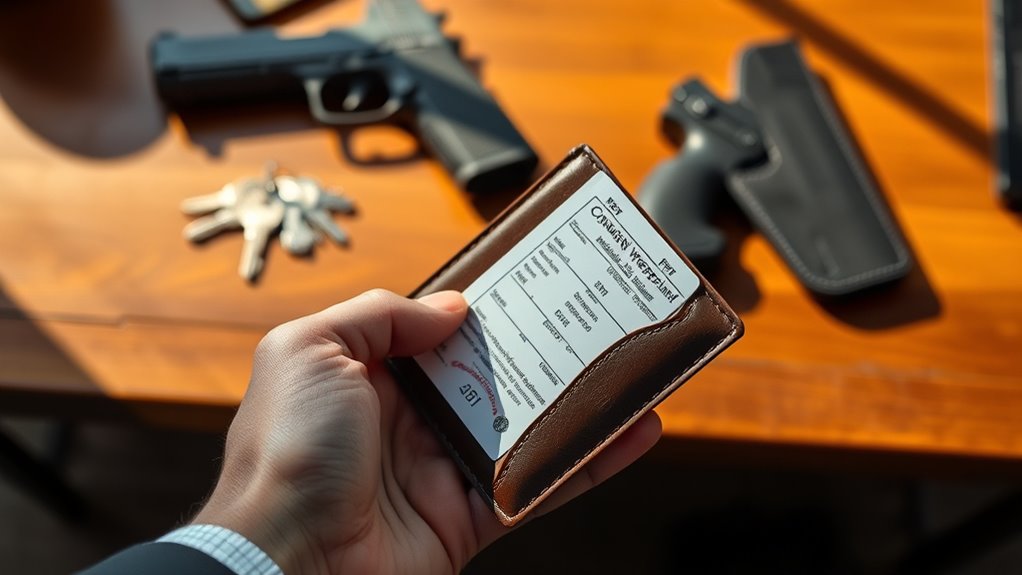
Store your firearm securely when it’s not on your person, using a lockbox or safe to prevent unauthorized access. Be mindful of your surroundings and avoid handling your weapon in public unnecessarily. Additionally, keep your permit and identification accessible but protected.
Finally, stay updated on any changes in laws regarding concealed carry to remain compliant and safe at all times.
Responsible Carrying Etiquette
Carrying a concealed weapon comes with important responsibilities that go beyond simply having a permit. You need to respect the law and prioritize safety at all times. Here are some key points to remember when carrying your weapon:
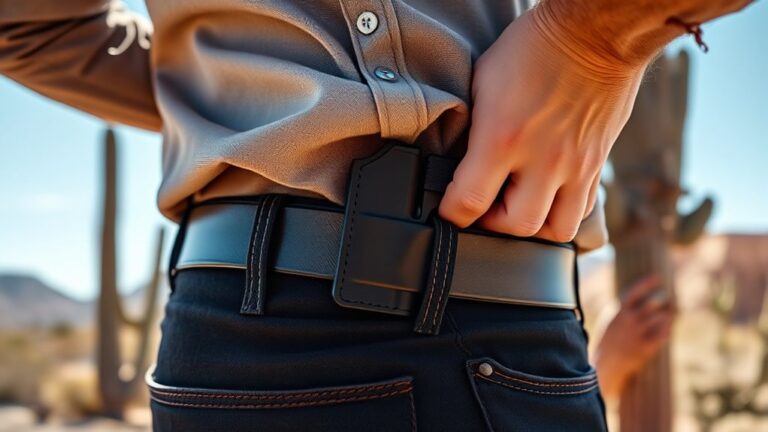
- Always keep your firearm securely holstered to prevent accidental exposure or discharge.
- Know where weapons are prohibited and never carry in restricted areas to avoid legal trouble.
- Be discreet; avoid drawing attention to your weapon to maintain a calm environment.
- Regularly train to stay proficient and confident in handling your firearm responsibly.
- Communicate clearly if you ever need to disclose your permit to law enforcement or authorized personnel.
Following these guidelines helps guarantee you’re protecting yourself and others responsibly.
Frequently Asked Questions
Can a Concealed Weapons Permit Be Used in Other Countries?
No, you usually can’t use a concealed weapons permit from your country in other countries. Each country has its own laws, so you’ll need to check local regulations and possibly get a separate permit where you’re traveling.
What Types of Firearms Are Allowed With a Concealed Weapons Permit?
When it comes to concealed carry, you’re usually allowed handguns like pistols and revolvers. Long guns typically aren’t covered.
Rules vary by state, so you’ll want to check local laws before you hit the road.
Are There Restrictions on Where I Can Carry a Concealed Weapon?
Yes, you can’t carry a concealed weapon in places like schools, government buildings, bars, or private property if they prohibit it.
Always check local laws because restrictions vary widely depending on where you are.
How Does Carrying a Concealed Weapon Affect Insurance Policies?
You might not know that 60% of insurers consider concealed carry when setting rates. Carrying a concealed weapon can increase premiums or impact coverage, so you’ll want to disclose it and review your policy carefully to avoid surprises.
Can Employers Prohibit Concealed Weapons on Their Property?
Yes, your employer can prohibit concealed weapons on their property, especially if state laws allow it. You should check your company’s policy and local regulations to understand your rights and any restrictions that apply.
It is important to stay informed about the specific rules in your area. Employers often have the authority to set safety policies for their premises. Always ensure you comply with both company policies and state laws.
Conclusion
Getting a concealed weapons permit is like opening a new level of responsibility and safety. By understanding the qualifications, background checks, and training involved, you’re better prepared to carry concealed legally and confidently.
Remember, each state’s laws vary, so stay informed and keep your permit up to date. With the right knowledge and respect for the rules, you’ll navigate this journey smoothly and protect yourself and others responsibly.
In conclusion, obtaining a concealed weapons permit requires careful attention to legal requirements and proper training. Staying knowledgeable about your state’s regulations ensures safe and lawful concealed carry. Always prioritize responsibility and safety when carrying a concealed weapon.