How Do You Sight a Muzzleloader in 10 Simple Steps?
To sight your muzzleloader accurately, follow these 10 simple steps for the best results. Properly sighting a muzzleloader ensures precision and improves your shooting experience.
Start by gathering essential tools like rests and bore sighters to make the process easier and more effective.
Set up a stable shooting position and select the appropriate ammunition for your muzzleloader. Load your firearm safely and fire several group shots to check your accuracy.
Make careful front and rear sight adjustments based on where your shots land.
Fine-tune your sight settings with follow-up shots to achieve better grouping.
Practice regularly to keep your shooting skills sharp and maintain consistent accuracy.
Keep going, and you’ll uncover detailed tips to perfect your sighting process.
Key Takeaways
- Establish a stable shooting position using rests or sandbags for consistent support and comfort.
- Load the muzzleloader with the correct powder charge and a snug-fitting bullet for safety and accuracy.
- Fire several group shots at a clear target, maintaining consistent conditions to evaluate shot patterns.
- Measure group size and shot placement to identify sight misalignment and necessary adjustments.
- Make small, precise sight adjustments, then retest and record results to achieve consistent accuracy.
Why Proper Muzzleloader Sighting Matters
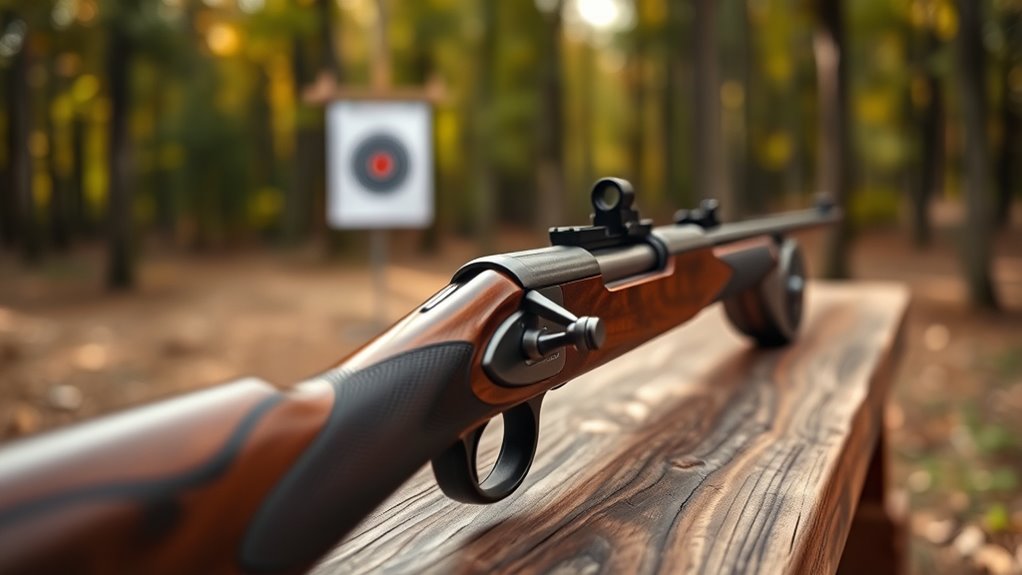
Although muzzleloaders require patience and skill, properly sighting your weapon is vital because it directly impacts your accuracy and safety. When your sights are correctly aligned, you’ll hit your target more consistently, which is essential for ethical hunting and effective shooting. Misaligned sights can cause you to miss shots or, worse, create dangerous situations.
You also need to take into account that muzzleloaders have unique ballistics compared to modern firearms. Their slower projectile speed means small sighting errors can cause bigger misses downrange. Proper sighting ensures you account for this and adjust accordingly.
Additionally, accurately sighted muzzleloaders help you conserve ammunition and reduce wasted effort in the field. Ultimately, taking the time to sight your muzzleloader correctly gives you confidence every time you pull the trigger. It’s not just about hitting your target—it’s about staying safe and responsible during your shooting experience.
Gather the Right Tools for Muzzleloader Sighting
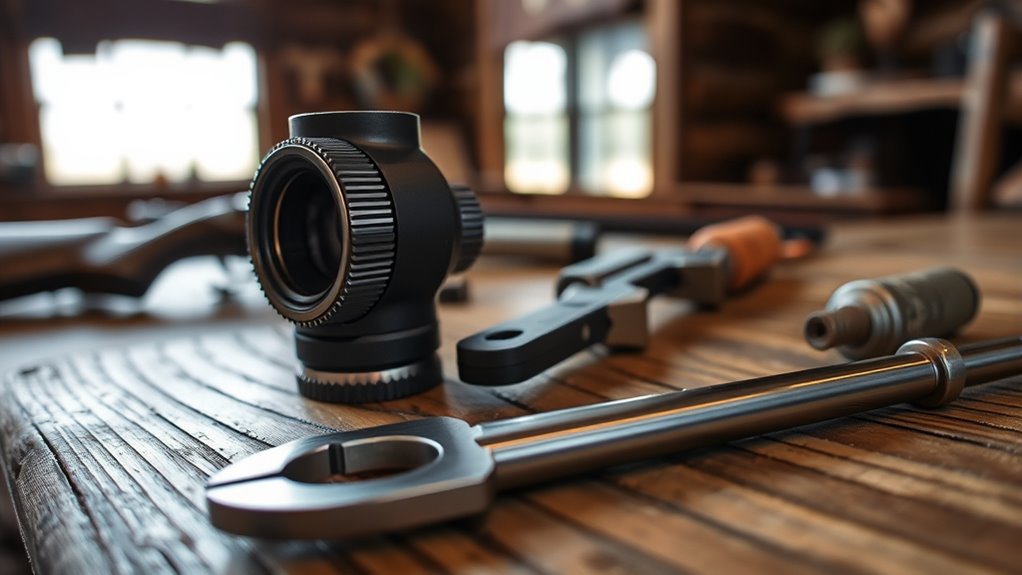
Before you start sighting your muzzleloader, make sure you have all the essential tools on hand. Picking quality sight accessories can make a big difference in accuracy and ease of adjustment.
Let’s go over what you’ll need to get the job done right.
Essential Tools Checklist
Since accuracy depends on proper preparation, you’ll want to gather a few essential tools before sighting your muzzleloader. Start with a reliable shooting rest or sandbags to stabilize your firearm for consistent shots. A quality bore sight or laser bore sighter helps align the sights quickly.
Don’t forget a set of screwdrivers or sight adjustment tools tailored to your muzzleloader’s sight system. Bring along target papers and a tape measure to track shot groupings and distances accurately. A cleaning kit is handy to ensure the barrel is free of fouling between adjustments.
Ultimately, a notebook or range log helps record your settings and observations. Having these tools ready sets you up for more precise and efficient sighting sessions.
Choosing Quality Sight Accessories
When you’re ready to fine-tune your muzzleloader’s accuracy, choosing the right sight accessories is essential. Start by selecting durable, reliable sights that can withstand recoil and harsh conditions. Fiber optic sights offer excellent visibility in low light, while traditional iron sights provide rugged simplicity.
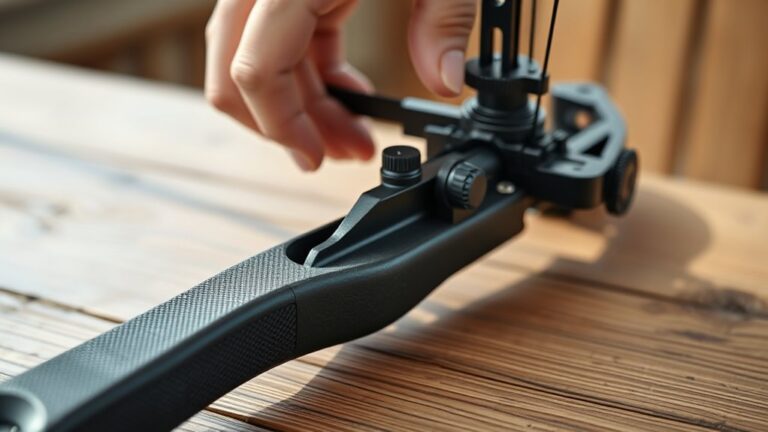
Consider adjustable sights, allowing you to make precise windage and elevation changes without guesswork. Don’t overlook mounting hardware—quality screws and bases keep sights firmly in place. You’ll also want a good lens cleaner and a small screwdriver set for maintenance and adjustments.
Investing in well-made accessories not only improves your shooting experience but guarantees consistent performance. With the right tools, you’ll be able to sight your muzzleloader confidently and hit your target more often.
Set Up a Stable Shooting Position at the Range
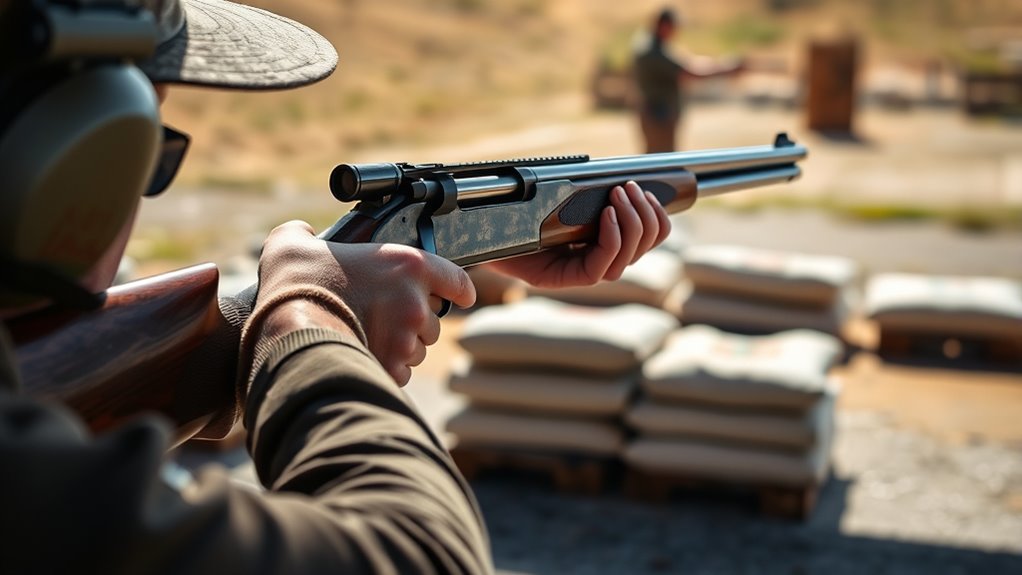
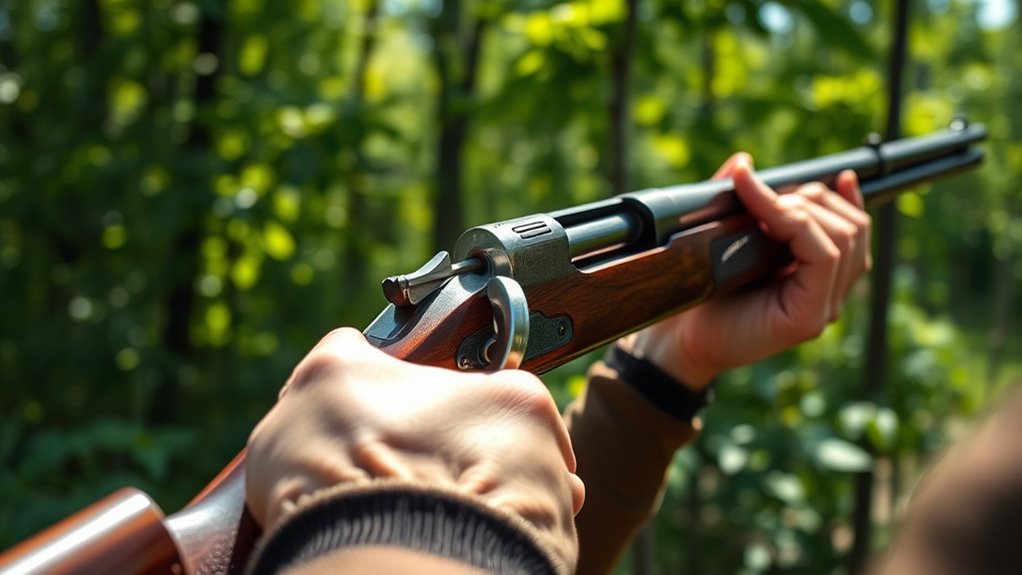
Although it might seem simple, setting up a stable shooting position is essential for accurate muzzleloader sighting. You want a solid foundation to minimize movement and maintain consistent aim. Start by choosing a comfortable stance—whether sitting, prone, or using a bench rest.
Make sure your body is relaxed, but firm, to reduce muscle fatigue and shaking. Use a sturdy rest or sandbags to support the muzzleloader, especially if you’re shooting from a bench. Keep your elbows close to your body for extra stability.
Position yourself so you have a clear line of sight without straining your neck or eyes. Adjust your grip to keep control without tensing up.
Pick the Right Ammo for Your Muzzleloader
A stable shooting position sets the stage, but your accuracy also depends on the ammo you use. For muzzleloaders, picking the right ammunition is vital since these firearms rely on specific projectiles and powder types for consistent performance. You’ll want to choose the correct caliber and type of bullet designed for your muzzleloader—typically round balls, conical bullets, or sabots.
Match this with the recommended black powder or substitute powder to guarantee proper velocity and pressure. Using the wrong ammo can cause poor accuracy or even damage your firearm. Consider the game or target you’re aiming for; heavier bullets offer better penetration, while lighter ones might provide flatter trajectories.
Also, ensure the bullets fit snugly in the barrel to maintain a good seal and consistent velocity. By selecting the right ammo for your muzzleloader, you’ll improve shot placement and make the sighting process smoother and more reliable.
Load Your Muzzleloader Safely for Test Shots
Now that you’ve picked the right ammo, it’s essential to load your muzzleloader correctly for test shots. Always follow proper loading steps and keep safety top of mind to avoid accidents.
Taking these precautions guarantees your sighting process goes smoothly and safely.
Proper Loading Procedures
Before you start loading your muzzleloader for test shots, make sure you fully understand the proper procedures to assure safety and accuracy. Following the right steps guarantees your muzzleloader functions correctly and your shots hit their mark.
- Verify your firearm is clean and free of obstructions.
- Measure and pour the correct powder charge using a powder measure.
- Use a proper patch and ball or bullet that fits snugly.
- Seat the ball firmly with a ramrod, maintaining consistent pressure.
- Place the percussion cap or primer carefully without forcing it.
Safety Precautions During Loading
Once you’ve followed the proper loading steps, it’s important to focus on safety precautions to prevent accidents during test shots. Always keep the muzzle pointed in a safe direction and never look directly down the barrel. Use a proper loading rod to avoid accidental ignition.
Wear eye and ear protection to shield yourself from debris and noise. Make sure your test area is clear of people and pets.
| Precaution | Description |
|---|---|
| Muzzle Direction | Always point away from people |
| Check Barrel | Ensure it’s free of obstructions |
| Loading Rod | Use for safe powder and ball seating |
| Protective Gear | Wear eye and ear protection |
| Clear Test Area | Keep others at a safe distance |
Following these steps helps keep your test shots safe and controlled.
Aim at a Clear, Consistent Target
Although it might seem simple, aiming at a clear, consistent target is crucial for accurate shooting with a muzzleloader. When you focus on the same type of target every time, you reduce variables that can throw off your shot. This consistency helps you better understand how your sights and adjustments affect your accuracy.
Here’s what you should keep in mind:
- Choose a target with a distinct, well-defined center or bullseye.
- Make sure the target is placed against a background that won’t distract your eye.
- Keep the target size manageable for your shooting distance.
- Always aim for the same spot on the target to track your performance accurately.
- Avoid moving or changing targets between shots to maintain consistency.
Fire Group Shots to Check Accuracy
Now, fire a group of shots at your target to see how tight your patterns are.
You’ll want to analyze where the bullets cluster and identify any inconsistencies.
This will help you make the necessary adjustments for better accuracy.
Analyzing Group Patterns
When you fire group shots, you’re gathering essential data about your muzzleloader’s accuracy and consistency. Analyzing these patterns helps you understand how your shots cluster on the target and where adjustments may be needed.
Look closely at the group size and shape to spot trends and inconsistencies.
Focus on these key points when analyzing:
- Measure the distance between the furthest shots to determine group size
- Note if groups are consistently off-center, indicating sight misalignment
- Assess the spread to judge consistency under current conditions
- Identify any outliers that might suggest shooting errors or irregularities
- Compare multiple groups to confirm patterns before making changes
This careful analysis ensures your muzzleloader is performing at its best before adjustments.
Adjusting for Consistency
Before making any adjustments, you’ll want to fire several group shots to check your muzzleloader’s accuracy under consistent conditions. This helps you identify the natural point of impact and spot any patterns in your shots. Make certain your shooting position, powder charge, and bullet type remain the same for each shot to guarantee reliable data.
Once you have a clear group, analyze whether your shots cluster high, low, left, or right of your intended target. Use this information to make precise sight adjustments, moving your sights incrementally in the opposite direction of the group’s deviation. Repeat the process—fire another group, analyze, and adjust—until your shots consistently hit where you aim, ensuring your muzzleloader is sighted for reliable accuracy every time.
Adjust Your Muzzleloader’s Front and Rear Sights
Although sighting a muzzleloader might seem straightforward, adjusting both the front and rear sights correctly is essential for accuracy. You’ll want to make sure each sight is aligned precisely so your shots hit where you aim.
Start by checking the front sight, ensuring it’s centered and level with the rear sight notch or aperture. Then, adjust the rear sight to fine-tune your point of impact.
To adjust your sights effectively:
- Loosen the sight screws gently to avoid damage
- Move the front sight left or right for horizontal alignment
- Raise or lower the front sight to correct vertical placement
- Shift the rear sight left or right to complement front sight adjustments
- Use the rear sight’s elevation knob or slider to fine-tune vertical aim
Fine-Tune Sights With Follow-Up Test Shots
Since initial adjustments rarely get your sights perfect, you’ll want to take a few follow-up test shots to fine-tune your muzzleloader’s alignment. Begin by shooting at a target from your usual shooting distance. Carefully observe where your shots land in relation to the bullseye.
If your rounds consistently hit left, right, high, or low, make small, precise adjustments to your front or rear sights accordingly. Remember, even a slight movement can substantially impact accuracy.
After each adjustment, fire another group of shots to see how the point of impact shifts. This iterative process helps you zero in on the exact sight setting that delivers consistent accuracy. Keep notes on your adjustments and results so you can track progress.
Patience during this phase is key—fine-tuning ensures your muzzleloader performs reliably when it counts. Once your shots consistently cluster around the bullseye, your sights are properly aligned and ready for hunting or target shooting.
Practice Regularly to Keep Your Muzzleloader Accurate
To maintain your muzzleloader’s accuracy, you’ll need to practice regularly and consistently. This guarantees you stay familiar with your firearm’s unique characteristics and how it responds to different conditions. Regular practice helps you recognize any changes in performance, allowing you to adjust your sights promptly.
Focus on these key practices to keep your muzzleloader accurate:
- Clean and inspect your muzzleloader after each session
- Use consistent powder charges and bullet seating depth
- Practice shooting from various positions and distances
- Record your shooting results to track patterns and adjustments
- Test in different weather conditions to understand environmental effects
Frequently Asked Questions
How Do Weather Conditions Affect Muzzleloader Accuracy?
Weather conditions affect your muzzleloader’s accuracy by altering bullet trajectory; wind can push your shot off target, humidity and temperature change powder burn rates, and rain or fog can reduce visibility, making precise aiming harder.
What Is the Best Way to Clean Muzzleloader Sights?
Cleaning your muzzleloader sights is like gently brushing a delicate painting. You’ll want to use a soft cloth, mild solvent, and a small brush to remove residue without damaging the finish, ensuring clear, reliable sighting every time.
Can Muzzleloader Sights Be Upgraded or Customized?
Yes, you can upgrade or customize your muzzleloader sights. You’ll find options like interchangeable front and rear sights, fiber optic inserts, or even scope mounts to enhance accuracy and fit your shooting style perfectly.
These upgrades allow for better precision and adaptability in various shooting conditions. Customizing your sights can significantly improve your overall shooting experience.
Whether you prefer traditional iron sights or modern optics, there are plenty of choices available to suit your needs.
How Do Barrel Length and Caliber Influence Sighting?
You’ll find that longer barrels improve accuracy by stabilizing your shot, while larger calibers create more recoil, affecting your sighting.
Curiously, 70% of muzzleloader hunters prefer 50-inch barrels for better precision. Adjust your sights accordingly.
Are There Specific Safety Tips for Sighting in Cold Weather?
You should wear insulated gloves to keep steady, avoid sudden temperature changes that might fog lenses, and always make sure your firearm is unloaded when adjusting sights.
Cold weather can affect powder performance, so double-check your loads too.
Conclusion
Sighting your muzzleloader properly is key to hitting your target consistently. Remember, “measure twice, cut once” applies here—taking your time to adjust sights carefully saves you frustration later.
With the right tools, steady setup, and regular practice, you’ll keep your muzzleloader accurate and reliable. Keep following these steps, and you’ll enjoy better shots every time you head to the range or the field.
Consistency is your best friend in muzzleloader shooting. By maintaining proper sight alignment and practicing regularly, you ensure your muzzleloader remains precise and effective. This dedication to sighting your muzzleloader will lead to improved accuracy and greater confidence in every shot.