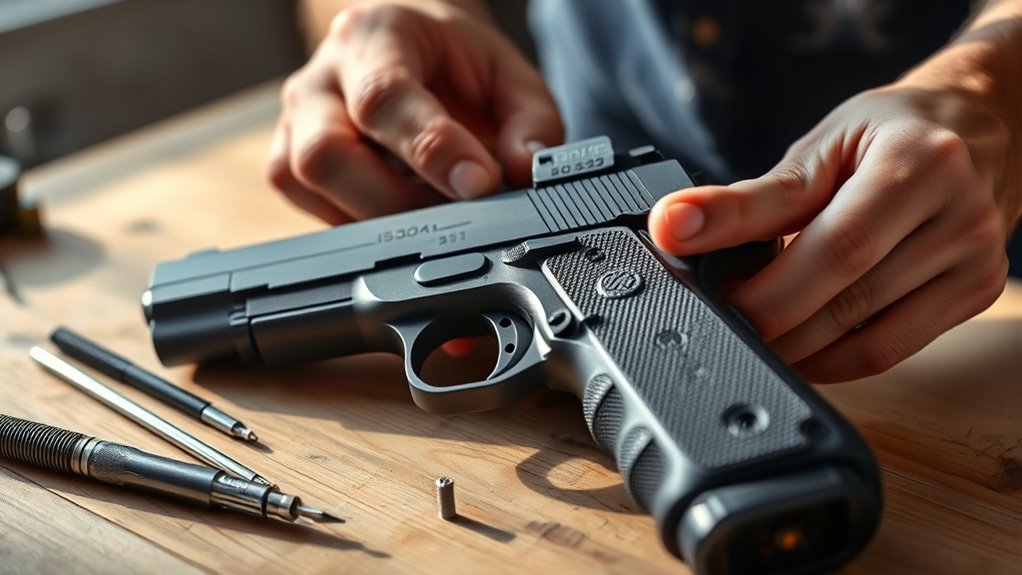
How to Change Pistol Sights in 7 Easy Steps
To change your pistol sights in 7 easy steps, start by selecting sights that match your shooting style and lighting conditions. Choosing the right sights is crucial for accuracy and comfort during use.
Gather all necessary tools such as a sight pusher, safety glasses, and screwdrivers before beginning.
Always unload and clear your pistol to ensure safety. Remove the old sights carefully using the appropriate method for your model.
After removal, clean and prep the slide thoroughly to ensure a proper fit for the new sights.
Install and align the new sights precisely, making sure to tighten screws just enough to hold them securely without overdoing it.
Finally, test your pistol’s accuracy and make adjustments if needed.
Following these steps will build your confidence and guarantee reliable sight performance.
Key Takeaways
- Ensure the pistol is unloaded and the workspace is safe before starting any sight removal or installation.
- Use appropriate tools like a sight pusher or brass punch to carefully remove old sights without damaging the slide.
- Align and install new sights securely, adjusting windage and elevation as needed for proper targeting.
- Tighten screws carefully to avoid over-torquing and ensure sights remain firmly in place.
- Test the new sights through live firing and make adjustments based on accuracy and shot pattern analysis.
How to Pick the Right Replacement Sights
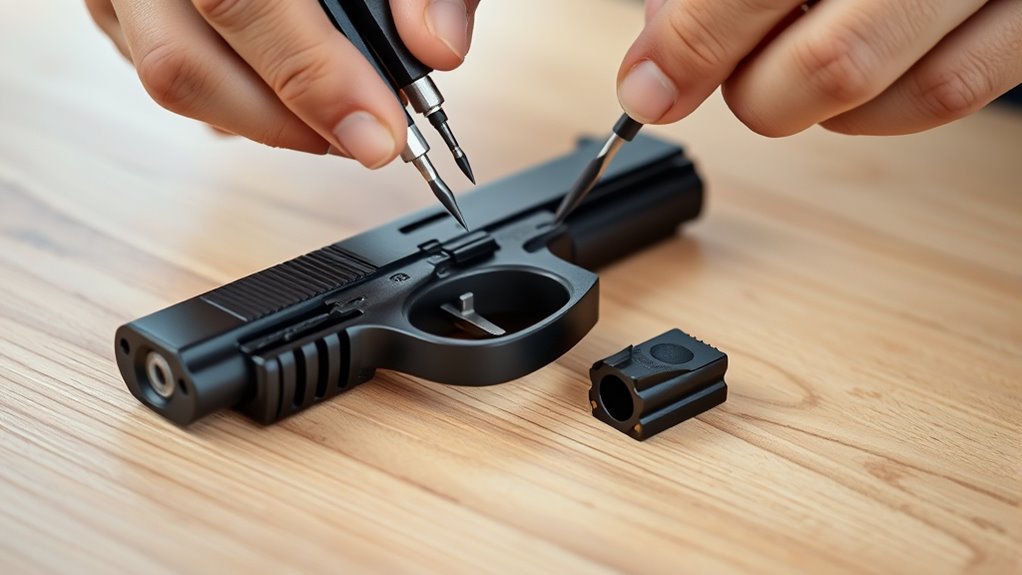
Before you replace your pistol sights, you need to think about what type of shooting you’ll be doing and the conditions you’ll face. Are you primarily shooting at the range, competing, or relying on your pistol for self-defense? Different activities call for different sights.
For instance, if you want quick target acquisition in low light, consider tritium or fiber optic sights. For precision shooting, adjustable sights might be better. Also, think about the size and shape; low-profile sights reduce snagging, ideal for concealed carry, while taller sights can help with sight picture clarity.
Material matters too—steel sights offer durability, but polymer can be lighter. Don’t forget compatibility; your new sights must fit your pistol model exactly. Finally, consider your budget; sometimes paying a bit more ensures better quality and longevity.
Gather Essential Tools for Changing Pistol Sights
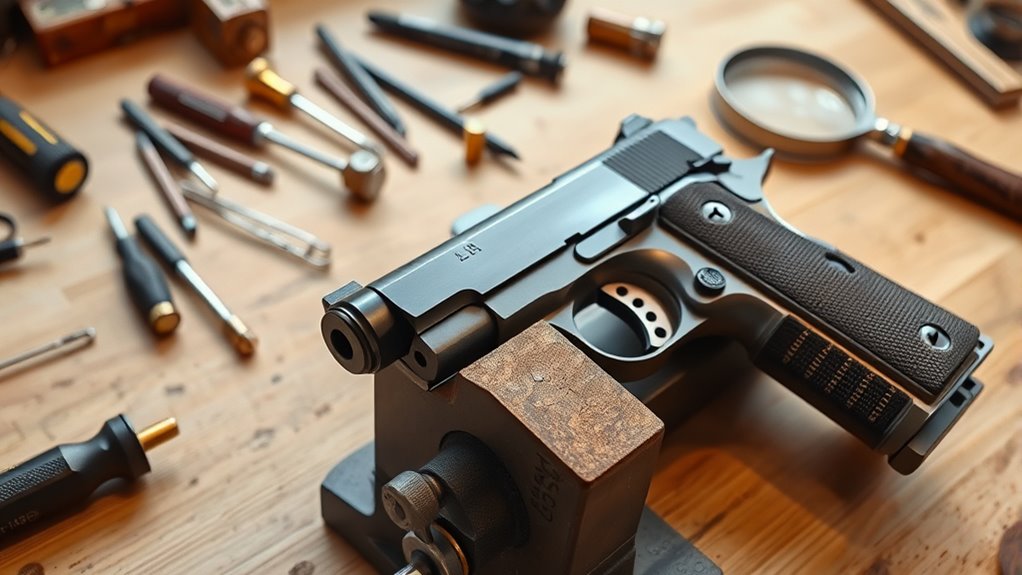
Before you start changing your pistol sights, make sure you have all the necessary tools on hand. Choosing quality equipment will make the process smoother and more accurate.
Don’t forget to wear proper safety gear to protect yourself throughout the job.
Necessary Tools Overview
Although changing pistol sights might seem straightforward, having the right tools on hand is essential to guarantee accuracy and avoid damage. You’ll need a sight pusher or a brass punch kit to remove and install the sights safely without marring the slide. A small hammer, preferably nylon or brass, helps tap sights gently if you don’t have a sight pusher.
Don’t forget a set of screwdrivers or hex wrenches, depending on your pistol’s sight type. A quality cleaning cloth and some gun oil are important to clean and lubricate the slide during the process. In conclusion, safety glasses protect your eyes from flying debris.
Having these tools ready will make the job smoother and protect your pistol from unnecessary harm.
Choosing Quality Equipment
Having the right tools laid out makes it easier to focus on selecting quality equipment that fits your needs for changing pistol sights. You’ll want a sturdy sight pusher or a set of punches specifically designed for your pistol model. Cheap tools can slip or damage your sights, so investing in well-made, durable options is key.
Look for non-marring tips and ergonomic handles to improve control and prevent scratches. Additionally, a good-quality screwdriver or hex driver set with the correct sizes ensures you won’t strip screws during the process. Magnetic trays or organizers help keep small parts secure.
Safety Gear Importance
Why is safety gear essential when changing pistol sights? When you’re working with small parts and tools, protecting yourself is vital. Accidents can happen quickly, and safety gear reduces risks like eye injuries or cuts.
Don’t skip this step—it keeps you safe and focused.
Make sure you have these essentials:
- Safety glasses to shield your eyes from flying debris
- Gloves to protect your hands from sharp edges and tools
- A sturdy work mat to prevent slipping and protect surfaces
- A well-lit workspace so you can see clearly
- Ear protection if you’re testing the pistol after sight installation
Wearing the right gear ensures you complete the job safely and efficiently, avoiding injury and frustration.
Ensure Your Pistol Is Safe and Unloaded
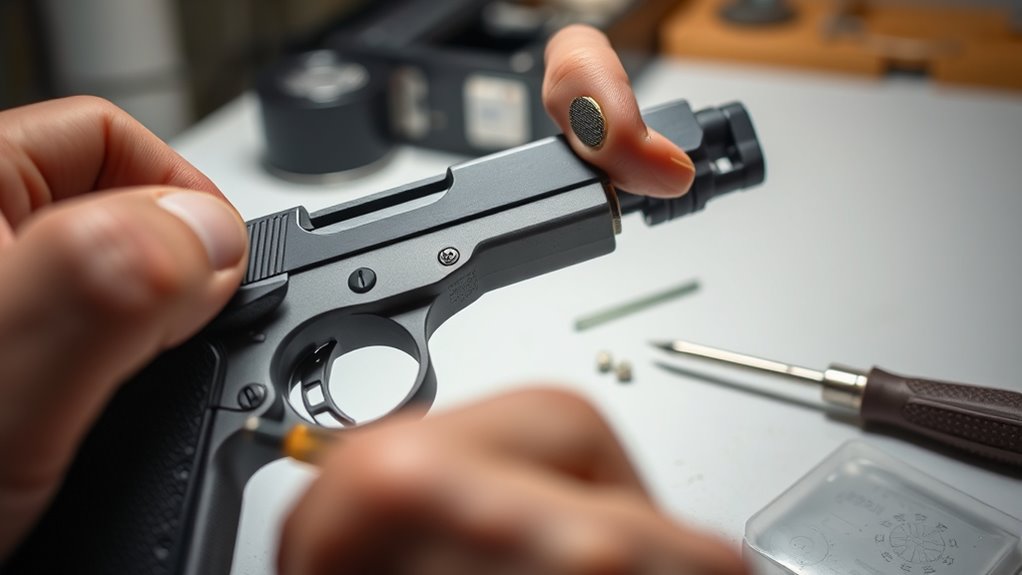
Before you start changing your pistol sights, make sure your firearm is completely safe and unloaded. First, remove the magazine from your pistol. Even if you think it’s already out, double-check to avoid any surprises.
Next, lock the slide back to visually and physically inspect the chamber. Look inside and feel with your finger to confirm there’s no round present. This step is crucial because a loaded chamber can lead to dangerous accidents.
Once you’re certain the pistol is unloaded, place it on a clean, stable surface with good lighting. Keep your workspace clear of distractions and other ammunition. It’s also a good idea to keep the muzzle pointed in a safe direction throughout the process.
Remove Old Pistol Sights From the Slide
Once you’re sure the pistol is unloaded and secure, you can start removing the old sights from the slide. This step requires patience and the right tools to avoid damaging your firearm. Begin by identifying how your sights are attached—either screwed in or drifted into dovetails.
Here’s how to proceed:
- Use a sight pusher tool or a brass punch to gently tap the sights out.
- If screws hold the sights, carefully unscrew them with an appropriate screwdriver.
- Work slowly, applying even pressure to prevent bending or scratching the slide.
- Keep track of any small parts or screws for reuse or disposal.
- Wear safety glasses to protect your eyes from any tiny flying debris.
Taking your time prevents damage and ensures a smooth transition to your new sights. If the sights feel stuck, avoid forcing them—consider consulting a gunsmith for help.
Clean and Prep the Slide for New Pistol Sights
After removing the old sights, you’ll want to thoroughly clean and prep the slide to *guarantee* your new sights fit securely and function properly. Start by wiping down the sight dovetail area with a clean cloth to remove any loose debris or metal shavings left from sight removal.
Next, use a small brush and a solvent like gun cleaner or isopropyl alcohol to scrub the dovetail area; this removes oils, dirt, and residue that might prevent a tight fit. Dry the area completely with a lint-free cloth or compressed air. Inspect the dovetail for any burrs or rough edges—if you find any, gently smooth them with a fine file or sandpaper, being careful not to remove too much material.
Finally, apply a light coat of oil to prevent rust but avoid excess, as it can interfere with the sight installation. Proper prep *ensures* your new sights will align correctly and stay firmly in place.
Install and Adjust Your New Front and Rear Sights
Although installing new pistol sights can seem tricky, you’ll find the process straightforward if you take it step-by-step and use the right tools. Begin by securing your slide on a stable surface to avoid movement. Carefully align the new front sight into its dovetail or mounting slot, and gently tap it in with a brass or nylon punch to prevent damage.
Next, move to the rear sight and position it similarly, ensuring it’s centered and level. After installation, adjust the sights to align properly by:
- Loosening set screws if present
- Sliding sights left or right for windage
- Adjusting front sight height for elevation
- Tightening screws securely without over-torquing
- Double-checking sight alignment using a bore sight or visual reference
These steps will help you install and fine-tune your sights accurately, setting you up for reliable aiming before live-fire testing.
Test Your Pistol and Troubleshoot Common Sight Issues
Now that your sights are installed, it’s important to check your sight alignment to guarantee accuracy. If your shots aren’t hitting where you expect, you might be facing common sight problems like misalignment or loose components.
Let’s look at how to test your pistol and troubleshoot these issues quickly.
Sight Alignment Check
Before you make any adjustments to your pistol sights, you’ll want to perform a sight alignment check to guarantee everything is properly set. This step ensures your shots will be accurate and consistent. Here’s how to do it effectively:
- Hold your pistol at eye level with a proper grip.
- Focus on aligning the front sight squarely between the rear sights.
- Make sure the top of the front sight is level with the rear sight’s top.
- Check for any misalignment caused by lighting or sight wear.
- Dry fire a few times to confirm consistent sight picture before live firing.
Performing this check helps you catch alignment errors early, saving time and improving your shooting precision. It’s a vital step before making any sight adjustments.
Common Sight Problems
Why isn’t your pistol hitting the target where you expect? Common sight problems could be the cause. First, check if your sights are properly aligned—misalignment is the most frequent issue.
If your shots consistently land left or right, your front sight may be off-center. Vertical misses often mean your rear sight needs adjustment. Also, inspect for loose or damaged sights; even slight movement affects accuracy.
Dirty or worn sights can blur your aim, so keep them clean. Test your pistol at a controlled range to identify patterns in your shots. Once you spot the problem, you can adjust or replace your sights accordingly.
Regularly troubleshooting these issues guarantees your pistol performs reliably and hits the mark every time.
Frequently Asked Questions
Can I Change Pistol Sights Without Professional Help?
Yes, you can change pistol sights without professional help if you have the right tools and patience. Just make sure to follow instructions carefully, use proper equipment, and take your time to avoid damaging your pistol.
How Long Does It Typically Take to Change Pistol Sights?
It typically takes you about 30 minutes to an hour to change pistol sights, depending on your experience and tools.
If you’re careful and prepared, the process can be quick and straightforward without needing professional help.
Are There Legal Restrictions on Modifying Pistol Sights?
Yes, you’ll want to watch for legal limits, laws, and local legislation before tweaking your sights. Some states strictly regulate sight swaps, so checking your jurisdiction’s rules can save you serious stress and steer you safely through the process.
What Types of Sights Improve Accuracy Most?
You’ll find that fiber optic and tritium night sights improve accuracy most by offering better visibility in various lighting. Red dot sights also help by providing quick target acquisition, especially for faster shooting and precision.
These types of sights enhance your ability to focus on the target quickly and clearly. Improved visibility means you can make more accurate shots in low light or bright conditions.
Can Changing Sights Affect My Pistol’s Warranty?
Think of your pistol like a finely crafted watch—changing sights can sometimes void your warranty. You’ll want to check your manufacturer’s terms carefully; some allow upgrades, but others might see changes as tampering, risking coverage.
Conclusion
Now that you’ve successfully swapped your sights, savor the satisfaction of sharper shooting. Staying safe, steady, and sure is super simple when you select the right sights and set them securely.
Remember, regular review and routine readjustments keep your pistol performing perfectly. So, stay sharp, stay safe, and shoot smoothly with your newly sighted setup.
Skillful sight switching certainly sparks shooting success! Proper pistol sights adjustment is key to accuracy and confidence on the range.