10 Steps to Make a Hidden Gun Safe
To make a hidden gun safe, start by choosing a secure design that fits your space and conceals well. Selecting the right design ensures your firearm storage remains discreet and accessible. Incorporate keywords like “hidden gun safe,” “secure design,” and “concealed storage” to guide your project from the start.
Gather durable, affordable materials like plywood and strong locks. Build the frame carefully, reinforcing joints and installing your lock.
Next, firmly anchor the safe to a solid spot to enhance security.
Camouflage the safe to blend with your surroundings, making it virtually invisible.
Then maintain it regularly to prevent damage and ensure long-lasting protection.
For added security, consider smart lock upgrades.
Follow these steps, and you’ll find practical tips to tailor your safe perfectly.
Key Takeaways
- Choose a secure, discreet location like a wall cavity or under floorboards for effective concealment of the gun safe.
- Use strong materials such as steel or reinforced plywood sized to fit firearms and blend with surroundings.
- Assemble the safe with precise measurements, secure joints, and install a reliable locking mechanism for safety.
- Anchor the safe firmly to wall studs or floor with heavy-duty bolts to prevent theft or removal.
- Camouflage the safe using matching paint, veneers, or everyday objects to avoid detection by casual observers.
Why Choose a Hidden Gun Safe for Your Home
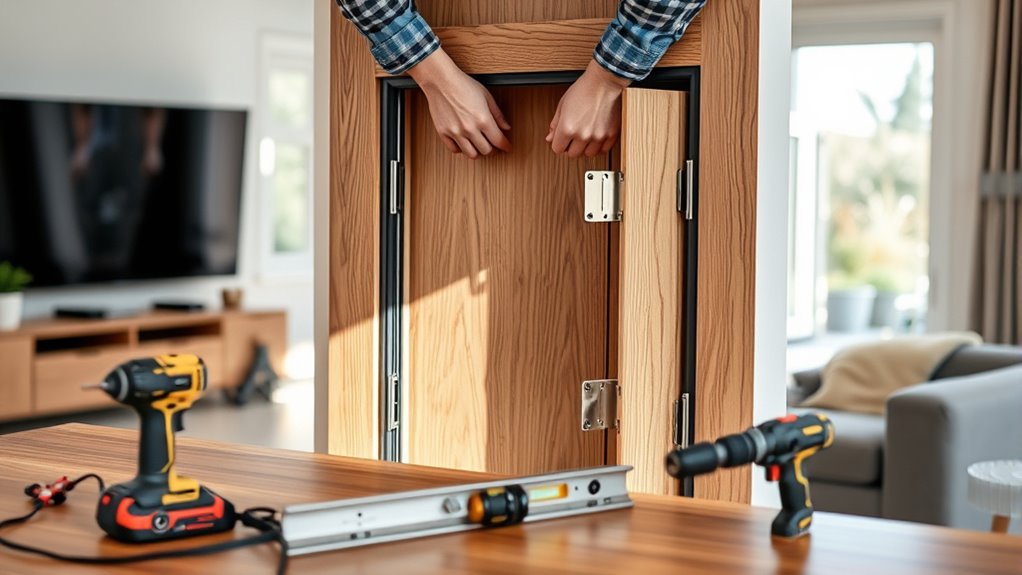
Why should you consider a hidden gun safe for your home? Safety is the main reason. You want your firearms secure from unauthorized access, especially if you have children or visitors.
A hidden safe keeps your guns out of sight, reducing the risk of theft or accidental use. It also gives you peace of mind knowing your weapons are stored responsibly.
Additionally, a hidden gun safe helps maintain your home’s aesthetic. Instead of a bulky, obvious safe that disrupts your décor, you can conceal your firearms in everyday objects or hidden compartments.
This discretion prevents drawing unwanted attention and protects your valuables discreetly.
Choosing a hidden gun safe means you don’t sacrifice quick access when you need it. You can still retrieve your firearm efficiently while keeping it locked away from prying eyes.
Design Your Safe Frame for Security and Concealment
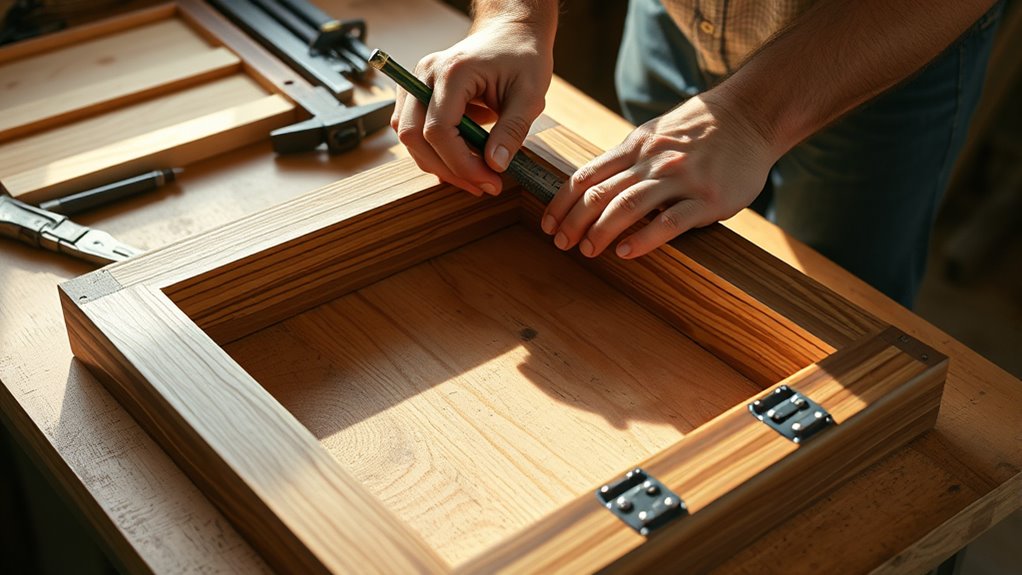
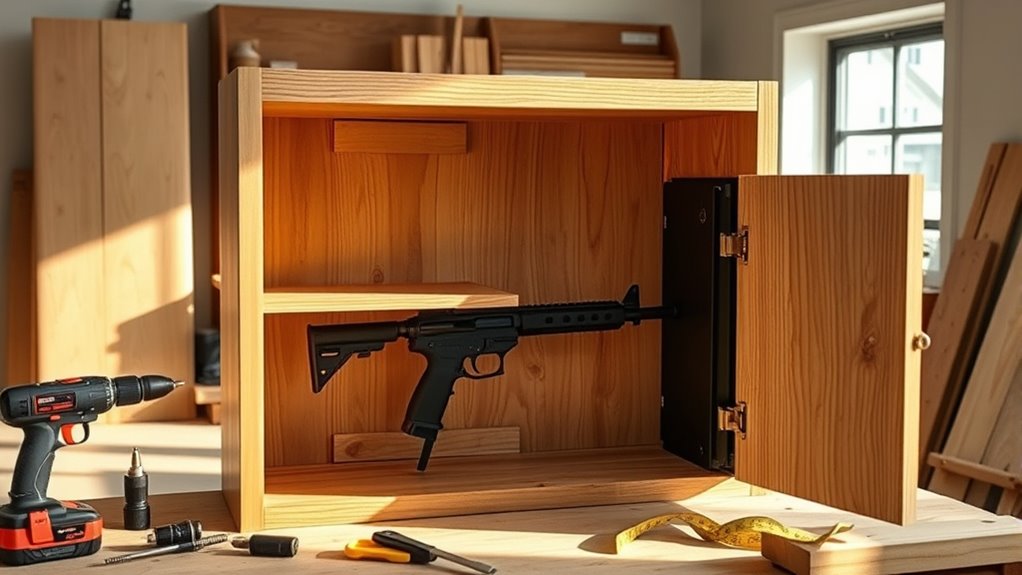
When designing your safe frame, you’ll want to focus on both durability and stealth to guarantee it keeps your firearms secure while remaining out of sight. Start by choosing a size that fits your collection but can easily be concealed in your chosen location. Incorporate strong materials like steel or reinforced plywood to resist tampering and provide lasting protection.
Consider framing it so it blends seamlessly with your home’s structure—such as inside a wall cavity, beneath a floorboard, or behind a false panel. Make sure to design the door or access point with a secure locking mechanism that’s discreet and doesn’t draw attention. Also, think about how the frame will be anchored to prevent removal.
Compact, sturdy, and cleverly camouflaged frames reduce the risk of discovery and theft. By balancing toughness with concealment, you create a safe that’s both practical and hidden, giving you peace of mind.
Gather Affordable Materials for Your Hidden Gun Safe
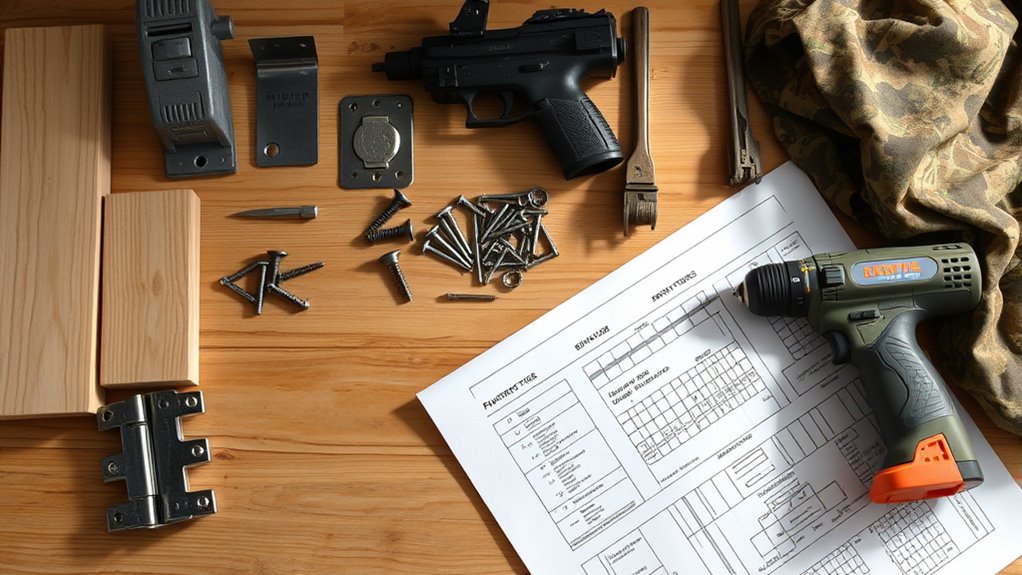
Before you start building, gather affordable materials that offer strength without breaking the bank. Look for plywood or medium-density fiberboard (MDF) for the main structure—they’re sturdy and budget-friendly. You’ll also need screws, nails, and wood glue to hold everything together securely.
Consider using a metal sheet or steel plate if you want extra reinforcement for added security, but keep it minimal to stay within budget. Don’t forget hinges and a reliable lock mechanism; basic cam locks or combination locks can work well and are affordable. For concealment, pick materials that blend with your chosen hiding spot, like matching paint or veneer.
Check local hardware stores or online retailers for deals, and consider recycled or repurposed materials to save money without sacrificing quality. Having all your materials ready before you begin makes the building process smoother and guarantees your hidden gun safe will be both strong and cost-effective.
Build the Safe Box Step-by-Step
Now that you have your materials, it’s time to start building the safe box step-by-step. You’ll begin by selecting the right tools and constructing a strong frame.
Finally, securing a reliable lock mechanism will keep your safe truly hidden and protected.
Selecting Materials and Tools
Choosing the right materials and tools is essential for building a durable and secure hidden gun safe. You’ll want to use strong, solid materials like ¾-inch plywood or metal sheets to guarantee the safe can withstand tampering. Steel is ideal for maximum security, but plywood is easier to work with and can be reinforced.
For tools, have a drill, saw (circular or jigsaw), measuring tape, screwdriver, and clamps on hand. A level and square are helpful to keep everything aligned. Don’t forget safety gear like gloves and eye protection.
Also, select quality screws and hinges that can bear weight and offer durability. Being deliberate with your material and tool choices sets a strong foundation for a safe you can trust.
Constructing the Safe Frame
How do you transform raw materials into a sturdy safe frame? Start by measuring and cutting your plywood or metal sheets according to your safe’s dimensions. Precision here is key to guarantee all parts fit snugly.
Next, assemble the base and sides, using wood screws or welding for metal. Make sure corners are square by using a carpenter’s square or clamp. Attach the back panel securely, reinforcing joints with brackets or glue if needed.
Sand any rough edges to avoid splinters or sharp spots. Finally, add internal supports or dividers to keep your firearms organized and stable. Taking these steps carefully will give you a solid, reliable frame that forms the backbone of your hidden gun safe.
Securing the Lock Mechanism
Where should you start when it comes to securing the lock mechanism for your hidden gun safe? Begin by selecting a high-quality lock that suits your security needs—whether it’s a mechanical combination lock, electronic keypad, or biometric scanner.
Next, carefully measure and mark the exact spot on the safe frame where the lock will be installed. Drill precise holes for mounting, ensuring the lock fits snugly without gaps. Secure the lock using the provided screws or bolts, tightening them firmly to prevent any wobble.
Double-check the lock’s operation several times to confirm smooth engagement and reliable locking. Finally, reinforce the lock’s housing with metal plates or brackets if possible to enhance resistance against tampering. This step is vital for maintaining your safe’s integrity and keeping your firearms secure.
Install a Strong Lock on Your Hidden Gun Safe
Why settle for a weak lock when securing your hidden gun safe? A strong lock is your primary defense, so choose one that’s tough to pick, drill, or bypass. Consider options like biometric locks, electronic keypads, or high-quality mechanical combination locks.
Each offers unique benefits depending on your needs for speed, security, and reliability.
Here’s a quick comparison to help you decide:
| Lock Type | Key Benefits |
|---|---|
| Biometric Lock | Quick access, high security |
| Electronic Keypad | Easy code changes, no keys |
| Mechanical Lock | Durable, no batteries needed |
When installing, guarantee the lock is firmly attached and properly aligned with the safe’s door. Use heavy-duty screws and double-check the functionality before finalizing.
A strong lock not only protects your firearms but also gives you peace of mind knowing your safe is truly secure.
Test Your Hidden Gun Safe for Security and Accessibility
Once you’ve installed a strong lock on your hidden gun safe, the next step is to make certain it performs reliably under real conditions. Start by testing the lock multiple times to confirm it opens and closes smoothly without sticking. Check that the locking mechanism fully engages every time.
Next, assess accessibility—guarantee you can quickly and easily open the safe when needed, especially under stress. Practice unlocking it blindfolded or with one hand to simulate emergency situations. Also, evaluate the safe’s physical security by gently trying to move or pry it to confirm it’s firmly anchored and resistant to tampering.
If your safe is hidden behind a panel or disguised, verify the concealment doesn’t hinder access. Finally, consider the placement’s environment; make sure moisture or debris won’t affect the lock’s function. Testing your hidden gun safe thoroughly ensures your firearms stay secure yet accessible when it matters most.
Camouflage Your Safe to Keep It Well Hidden
Although your safe is secure, it won’t do much good if someone can easily spot it. To keep your hidden gun safe truly concealed, you need to blend it seamlessly into its surroundings. Start by choosing a location that naturally offers cover, like inside a hollowed-out piece of furniture or behind a false panel.
Use materials and colors that match the environment—paint the safe or its cover to mimic nearby walls, floors, or cabinetry. Adding everyday objects around or on top of the safe can also throw off suspicion. For example, books, decorative boxes, or cushions can disguise the safe’s outline.
Avoid obvious hiding spots like under the bed or in the closet, where thieves often look first. Remember, the goal is to make your safe invisible to the casual observer. By camouflaging it thoughtfully, you appreciably reduce the risk of discovery and keep your firearms protected without drawing attention.
Secure Your Hidden Gun Safe to Prevent Theft
How can you guarantee your hidden gun safe stays secure even if someone discovers it? First, anchor your safe firmly to the floor or wall using heavy-duty bolts. This prevents thieves from easily removing it.
Choose a mounting location that offers solid backing, like concrete or studs inside a wall. Next, invest in a high-quality lock system—biometric, combination, or electronic keypad locks provide quick access for you, but pose a *considerably* hurdle for intruders. Avoid simple keys that can be picked or duplicated.
Consider adding additional security layers such as a reinforced steel door or a secondary locking mechanism. Also, think about installing an alarm sensor on your safe that triggers if it’s tampered with. Finally, limit access to your safe’s location and combination to trusted individuals only.
Maintain Your Hidden Gun Safe for Long-Term Protection
To keep your hidden gun safe reliable, you’ll need to clean it regularly, inspect the locks often, and watch for any changes in environmental conditions.
These simple steps help prevent rust, lock malfunctions, and moisture damage.
Staying on top of maintenance guarantees your firearms stay secure and in good condition over time.
Regular Cleaning Routine
Keeping your hidden gun safe clean is essential for guaranteeing it functions properly and protects your firearms over time. Start by wiping down the interior and exterior surfaces regularly with a soft, dry cloth to remove dust and debris. Avoid using harsh chemicals that could damage the safe’s finish or internal components.
Every few months, vacuum the corners and crevices to prevent dirt buildup that might interfere with the locking mechanism or damage your guns. If moisture is a concern, consider placing silica gel packs inside to absorb humidity and prevent rust.
Maintaining a clean safe not only preserves its appearance but also guarantees the longevity of your firearms and the safe’s security features, giving you peace of mind for years to come.
Inspect Locks Frequently
Why should you inspect the locks on your hidden gun safe regularly? Locks are the primary security barrier protecting your firearms. Over time, dust, dirt, or mechanical wear can cause them to malfunction or become less reliable.
By checking locks frequently, you catch issues early before they turn into costly repairs or security risks. Make it a habit to test the lock’s operation, ensuring it opens and closes smoothly without sticking. Lubricate moving parts with a lock-appropriate lubricant to prevent rust and stiffness.
Also, look for signs of tampering or damage that could compromise security. Regular inspection keeps your safe functioning properly and maintains the integrity of your firearm storage. Don’t wait until you need quick access to find the lock won’t cooperate.
Monitor Environmental Conditions
Although your hidden gun safe provides physical security, monitoring environmental conditions inside and around it is essential to preserve your firearms over time. Moisture, temperature fluctuations, and dust can cause rust and damage. You’ll want to keep the interior dry and stable.
Here’s a quick guide to help you maintain the right environment:
| Condition | Recommended Action |
|---|---|
| Humidity | Use silica gel packs or dehumidifiers |
| Temperature | Keep safe in a cool, consistent spot |
| Dust | Clean interior regularly |
| Airflow | Ensure slight ventilation |
| Light Exposure | Avoid direct sunlight |
Regularly checking these factors guarantees your firearms stay in top shape and your investment lasts.
Upgrade Your Hidden Gun Safe With Smart Security Features
Since technology keeps advancing, upgrading your hidden gun safe with smart security features can greatly enhance its protection and convenience. You can install biometric locks that use fingerprint recognition, allowing quick access only to authorized users. Adding a keypad with customizable codes adds another layer of security and makes it easy to change access without replacing hardware.
Integrating your safe with a smartphone app lets you monitor its status remotely, receive alerts if someone tries to tamper with it, and even lock or open it from anywhere. You might also consider installing motion sensors or cameras inside the safe to capture unauthorized access attempts. Some smart safes offer backup power options to guarantee functionality during outages.
Frequently Asked Questions
What Is the Legal Age to Own a Gun Safe?
You don’t need to be a specific age to own a gun safe itself, but laws about gun ownership vary. Usually, you must be 18 or older to legally own firearms, so check your local regulations carefully.
Can a Hidden Safe Protect Against Fire Damage?
A hidden safe can protect against fire damage if it’s specifically rated for fire resistance. You’ll want to check its fire rating to make certain it can withstand high temperatures and protect your valuables during a fire.
How Much Does It Typically Cost to Insure a Gun Safe?
You’ll typically pay around $50 to $200 annually to insure a gun safe, depending on its value, location, and coverage level. Make sure your policy covers theft, fire, and any specific risks you’re concerned about.
Are There Specific Laws About Where Gun Safes Must Be Placed?
You usually won’t find specific laws dictating exactly where gun safes must be placed, but you should keep them secure and inaccessible to unauthorized users.
Always check local regulations, as some areas may have unique storage requirements.
What Is the Best Way to Organize Firearms Inside the Safe?
You should organize firearms by size and type, keeping frequently used ones easily accessible. Use racks or foam inserts to prevent movement, and separate ammunition safely.
Labeling helps you find everything quickly and securely.
Conclusion
By following these steps, you’ll craft a hidden gun safe that’s both secure and discreet—just as you intended. It’s funny how the very act of building something to stay unseen can make you more aware of your home’s safety.
As you finish, you’ll realize that protecting your firearms isn’t just about concealment, but also about peace of mind.
So, go ahead—your hidden safe is ready to guard what matters most. This hidden gun safe will provide secure storage and keep your firearms out of sight, enhancing both safety and discretion in your home.