How to Aim Iron Sights in 7 Easy Steps
To aim iron sights effectively, mastering the fundamentals is key. In this guide, you will learn how to aim iron sights in 7 easy steps that improve accuracy and consistency. Whether you are a beginner or looking to refine your shooting skills, these simple techniques will help you build confidence and precision.
First, find a stable stance with feet shoulder-width apart and your body square to the target.
Next, align the front post evenly within the rear notch, focusing sharply on the front sight while keeping the target slightly blurred.
Control your breathing by exhaling halfway, then hold it steady.
Squeeze the trigger smoothly without jerking.
With regular practice, you’ll build the muscle memory and consistent technique essential for accuracy.
Keep exploring to refine your skills further and become a more proficient marksman.
Key Takeaways
- Align the front post centered and level within the rear sight notch, matching their top edges for accurate aiming.
- Focus your vision sharply on the front sight post, allowing the target and rear sights to appear slightly blurred.
- Adopt a stable shooting stance with feet shoulder-width apart, square shoulders, and a firm but relaxed grip.
- Control your breathing by exhaling halfway and holding it briefly to minimize movement before squeezing the trigger smoothly.
- Practice consistently to build muscle memory, maintain focus under pressure, and improve sight alignment and trigger control.
Learn How Iron Sight Alignment Works
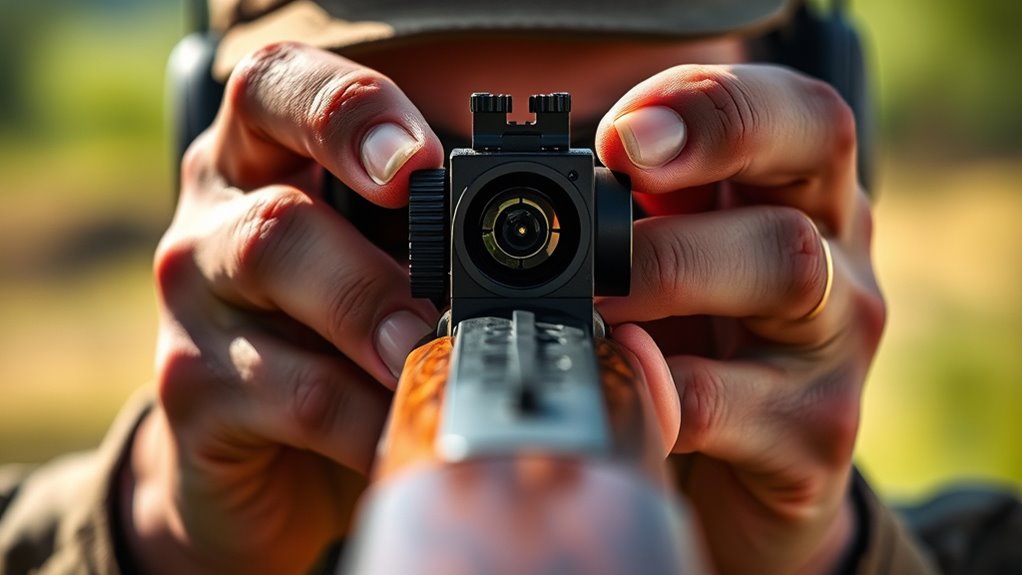
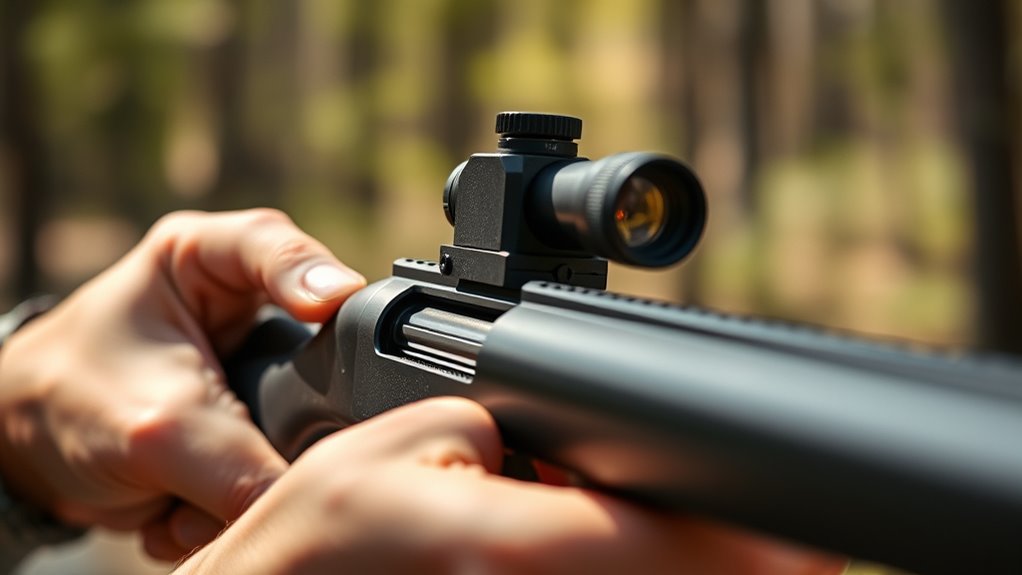
Before you can accurately aim with iron sights, you need to understand how their alignment works. Iron sights consist of a front post and a rear notch. When aiming, you’ll want to line up the top of the front post perfectly with the center of the rear notch.
If the front post is too high, low, or off to the side, your shot won’t hit the intended target. Your focus should always be on the front sight, keeping it sharp and clear, while the rear sight and target appear slightly blurred. This ensures precise alignment.
Remember, the front sight should be centered horizontally and level vertically within the rear notch. Once the sights are aligned, place the aligned sights onto your target. Mastering this sight picture is essential for accuracy because even slight misalignment can cause significant misses.
Understanding this basic principle sets the foundation for effective shooting with iron sights.
Get a Stable Shooting Position for Iron Sights
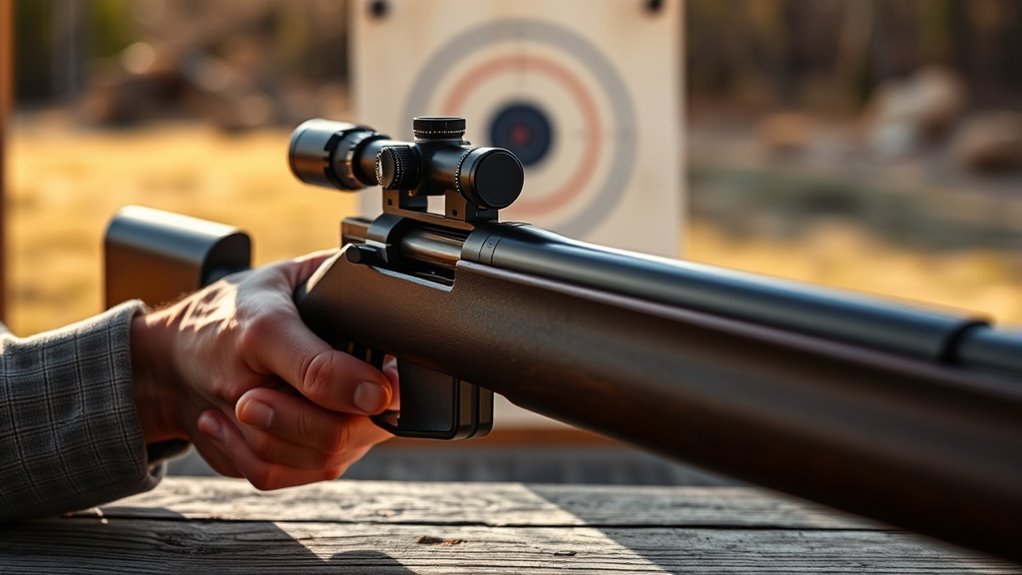
To get accurate shots with iron sights, you need a stable shooting position. Focus on aligning your body properly and keeping your hands steady. These basics will help you maintain control and improve your aim.
Proper Body Alignment
Why does your body alignment matter when aiming iron sights? Because your body acts as the foundation for your shot, proper alignment ensures consistency and accuracy. If you’re off-balance or twisted, it’s harder to maintain a steady sight picture.
To get your alignment right, follow these steps:
- Square your shoulders: Face your target with shoulders level and aligned, so your arms naturally extend forward without strain.
- Align your hips: Position your hips so they’re slightly turned toward the target, allowing a comfortable, natural stance.
- Keep your head upright: Avoid tilting your head; keep it straight to maintain a clear, consistent view through your iron sights.
Proper alignment helps your body support the firearm steadily, making your shots more precise and repeatable.
Steady Hand Placement
With your body properly aligned, the next step is ensuring your hands provide a steady, reliable grip on your firearm. Position your dominant hand firmly around the grip, making sure your fingers wrap comfortably without excessive tension. Your trigger finger should rest naturally along the frame until ready to shoot.
Use your support hand to cradle the firearm’s front, applying consistent pressure to reduce movement. Keep your wrists locked but not rigid, allowing for control without strain. This steady hand placement minimizes shaking and helps maintain sight alignment.
Line Up Your Front and Rear Sights Correctly
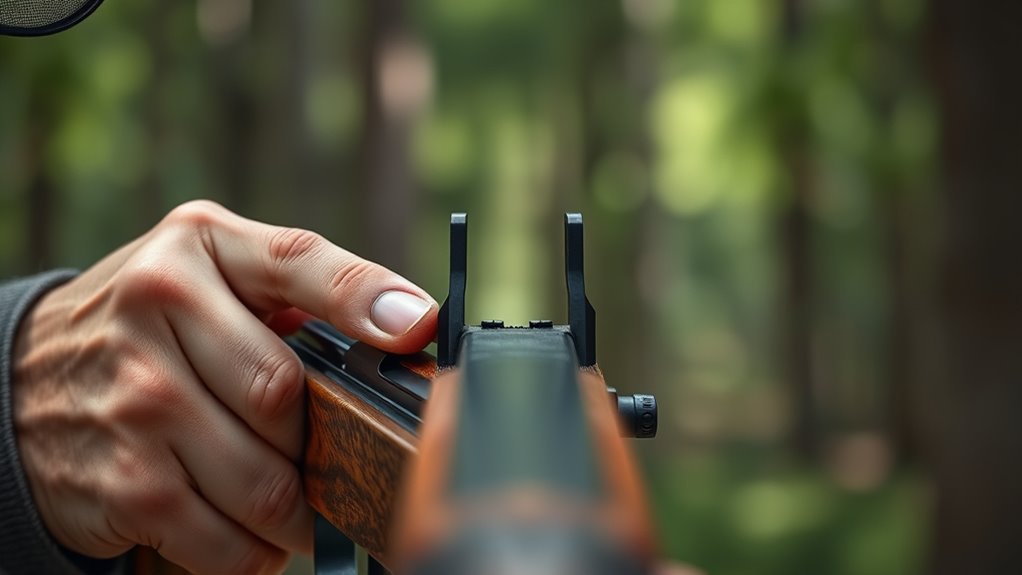
Although lining up your front and rear sights might seem straightforward, it requires careful attention to guarantee accuracy. When aiming, you want to make sure the front sight post is perfectly centered within the rear sight notch. Any misalignment can throw off your shot, so take your time.
Here’s how to line up your sights correctly:
- Align the top of the front sight with the top edges of the rear sight notch, creating a level sight picture.
- Ensure the front sight post is centered horizontally in the rear sight notch, with equal space on both sides.
- Keep your head steady and eyes focused straight on the sights, avoiding tilting or shifting.
Focus on the Front Sight, Not the Target
Once you’ve lined up your front and rear sights, your attention should shift to the front sight itself. This is the key to accurate shooting with iron sights. Instead of focusing on the target, keep your eyes fixed on the front sight post.
It should appear sharp and clear, while the target and rear sights might look slightly blurred. This focus helps you maintain proper alignment and reduces aiming errors. If you try to focus on the target, your front sight will become blurry, making it difficult to shoot precisely.
Concentrate on keeping the front sight steady and centered within the rear sight notch. Your brain will naturally align the target once the front sight is in place. Remember, a clear front sight ensures your shots land where you intend, so train your eyes to prioritize it above all else during aiming.
Control Your Breathing for a Steady Aim
Even the steadiest aim can falter if your breathing isn’t controlled. When you’re aiming down iron sights, your breath can cause slight movements that throw off accuracy. To keep your shot steady, you need to manage your breathing effectively.
Here’s how you can control your breathing for a steady aim:
- Inhale deeply: Take a slow, deep breath to fill your lungs and calm your body.
- Exhale halfway: Slowly breathe out about half of your air, which reduces chest movement while maintaining oxygen flow.
- Hold your breath briefly: Pause your breathing for a moment as you take the shot, but don’t hold it too long—just enough to stabilize your aim.
Practicing this breathing rhythm will minimize movement and help you maintain focus on the front sight. With time, controlling your breath will become natural, making your shots more accurate and consistent.
Squeeze the Trigger Smoothly for Accurate Shots
While steady breathing sets the foundation, how you squeeze the trigger ultimately determines your shot’s accuracy. Instead of jerking or snapping the trigger, you want a smooth, controlled press. Imagine slowly pulling the trigger straight back, without disturbing your sight alignment.
This steady motion prevents the muzzle from shifting and throwing off your aim. You should use the pad of your index finger—the fleshy part just before the first joint—to press the trigger. Avoid using the tip, which can cause uneven pressure.
Keep your grip firm but relaxed, so your hand doesn’t tense up and affect the shot. As you press, maintain focus on the front sight and the target, letting the trigger break naturally.
Practice Aiming With Iron Sights to Build Muscle Memory
To improve your aim with iron sights, you need to practice regularly to build muscle memory. Focus on aligning the sights perfectly each time while keeping a consistent stance. This repetition will make your shots more accurate and instinctive over time.
Repetition Enhances Accuracy
Because mastering iron sights relies heavily on muscle memory, consistent practice is essential for improving your aim. Repetition trains your muscles and mind to work seamlessly, reducing hesitation and increasing precision. The more you practice, the more natural aiming becomes.
To enhance accuracy through repetition, follow these steps:
- Set aside regular practice sessions focusing solely on aiming.
- Use dry-fire drills to reinforce proper sight picture without distractions.
- Gradually increase the difficulty by varying distances and target sizes.
Focus On Sight Alignment
Building muscle memory through repetition sets the stage for focusing on sight alignment, which directly impacts your aim. When you practice, zero in on aligning the front sight perfectly between the rear sights. This alignment guarantees your shots are accurate and consistent.
Keep these key points in mind:
| Focus Area | Tip |
|---|---|
| Front Sight | Center it between rear sights |
| Sight Picture | Keep it clear and sharp |
| Eye Position | Maintain consistent focus |
Practice aiming slowly, making sure the front sight is crisp while the target slightly blurs. Your brain will start to remember this alignment naturally. With time, this focus becomes automatic, improving your precision without extra effort.
Consistent Stance Practice
Although mastering sight alignment is essential, your stance plays an equally important role in consistent aiming. Practicing a consistent stance helps you build muscle memory, making your shots more reliable under pressure.
To develop this, focus on:
- Feet Position: Keep your feet shoulder-width apart for stability. Adjust slightly for comfort but maintain balance.
- Body Posture: Lean slightly forward, keeping your weight distributed evenly. This reduces recoil impact and keeps you steady.
- Grip and Arm Placement: Hold your firearm firmly but not too tight, with elbows slightly bent to absorb movement.
Frequently Asked Questions
What Types of Firearms Commonly Use Iron Sights?
You’ll find iron sights commonly on rifles, shotguns, and handguns, especially older or basic models. They’re simple, reliable, and don’t need batteries, making them perfect for training or backup when optics aren’t available.
How Do Weather Conditions Affect Iron Sight Accuracy?
Fog blurs your vision while bright sunlight casts harsh shadows; weather conditions like rain, wind, and humidity can throw off your iron sight accuracy.
You’ll need to adjust your focus and compensate for environmental changes carefully.
Can Iron Sights Be Used Effectively at Night?
You can’t rely on traditional iron sights effectively at night without proper illumination. Using tritium night sights or attaching a flashlight helps you see the sights clearly, making your aiming more accurate in low-light conditions.
How Do Iron Sights Compare to Red Dot Sights?
Iron sights are like classic watches—reliable but require more skill. You’ll find red dot sights faster and easier for quick target acquisition, especially in low light, while iron sights demand more focus but never run out of batteries.
What Maintenance Do Iron Sights Require for Optimal Use?
You’ll want to keep your iron sights clean and free of debris, regularly check for alignment, and lightly oil moving parts to prevent rust.
Tighten screws as needed to maintain accuracy and avoid loosening during use.
Conclusion
Mastering iron sights can dramatically improve your shooting accuracy. Did you know that shooters who focus on the front sight are up to 50% more accurate than those who don’t? By following these seven steps—aligning sights, steadying your position, controlling breathing, and practicing regularly—you’ll build the muscle memory needed for precise aiming.
Keep practicing, and soon aiming with iron sights will feel natural and reliable every time you take a shot. Remember, consistent practice with iron sights is key to developing your skills. Mastering iron sights will enhance your confidence and accuracy on every shot.