Are Cap Guns Safe?
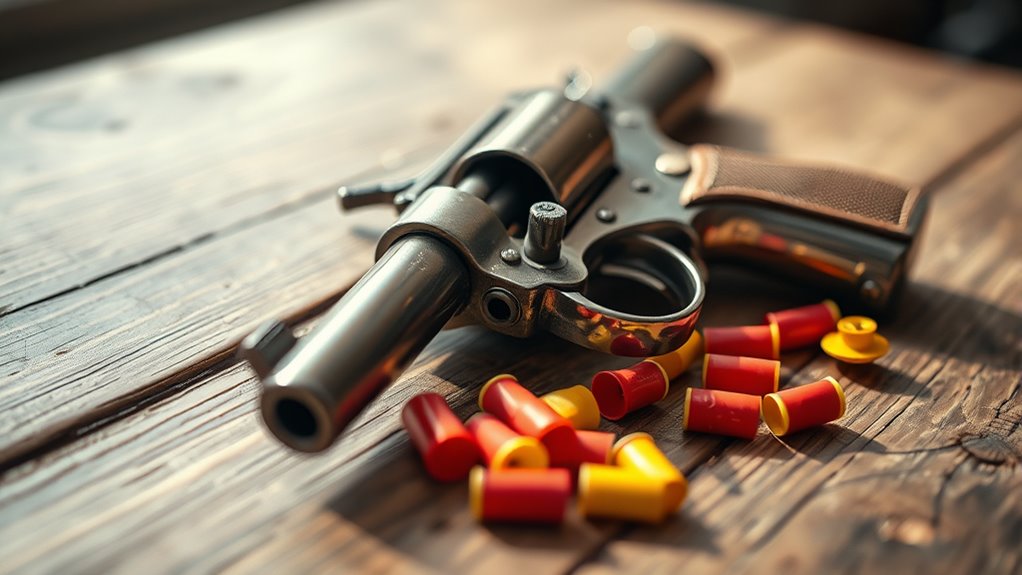
Cap guns can be safe toys when used with proper care and understanding of their risks. These toy guns mimic real firearms by igniting small caps that produce sound and light effects, making playtime exciting. However, because they involve loud noises and small explosions, there are safety concerns to keep in mind.
Sharp parts and sudden sounds can cause injuries if cap guns are not handled carefully. They are generally recommended for children aged six and older, and supervision by an adult is important.
Using the right safety gear can further reduce the risk of accidents.
To keep play fun and injury-free, it’s important to learn how to choose, use, and supervise cap guns wisely. Knowing these safety tips will help ensure a safe experience for children.
Key Takeaways
- Cap guns produce loud noises and flashes but do not fire projectiles, reducing severe injury risk.
- Hearing damage and eye injuries can occur if used improperly or aimed at faces.
- Recommended for children aged six and older with proper supervision and safety education.
- Use only certified cap guns and caps that meet safety standards to avoid harmful chemicals or excessive noise.
- Always follow safe handling practices, including wearing protective gear and never modifying the gun.
What Are Cap Guns and How Do They Work
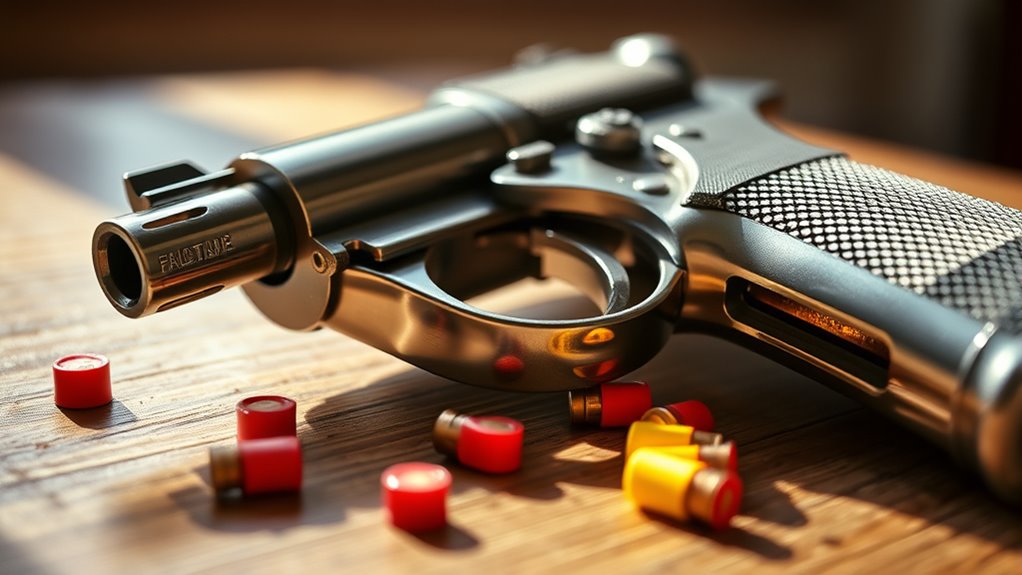
What exactly are cap guns, and how do they work? Cap guns are toy firearms designed to mimic the sound and flash of real guns using small explosive caps. When you pull the trigger or strike the firing mechanism, a tiny percussion cap ignites, creating a popping sound and a brief flash.
These caps are usually made from a small amount of shock-sensitive explosive material, such as a mixture containing silver fulminate. The caps come in strips or rings and are loaded into the toy gun, where each cap aligns with the firing mechanism. When activated, the hammer hits the cap, causing it to detonate safely.
Cap guns come in various styles, often resembling classic revolvers or pistols, but they don’t shoot any projectiles. Their main purpose is to provide a fun and realistic play experience by producing sound and light effects without the dangers of real firearms.
What Safety Risks and Injuries Can Cap Guns Cause?
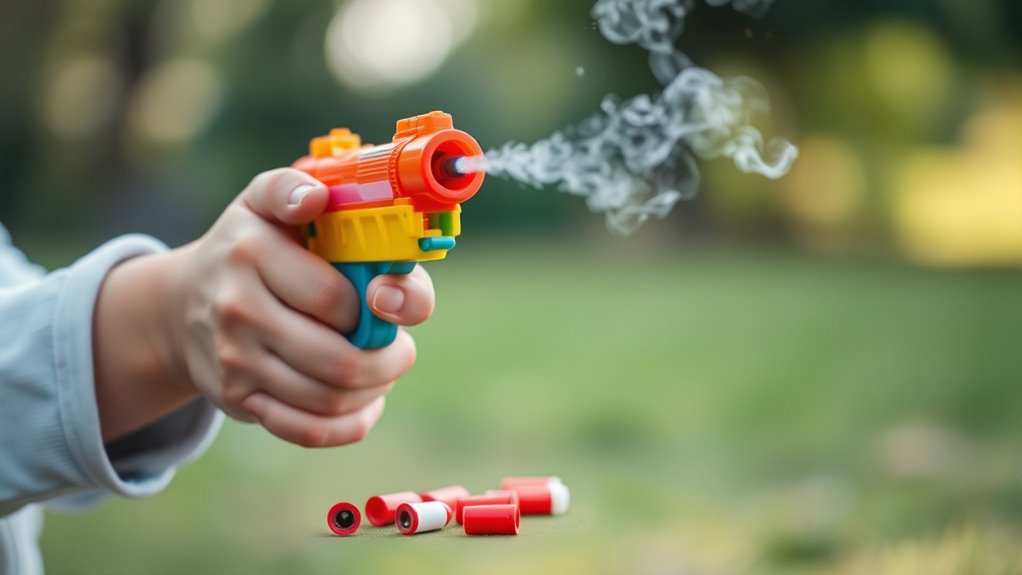
Although cap guns are designed as toys, they can still pose safety risks and cause injuries if not used carefully. You might underestimate the noise produced by the caps, which can lead to hearing damage if fired close to your ears or those of others. The small explosions may startle you, causing accidental falls or bumps.
Additionally, the plastic or metal parts of cap guns can cause bruises or cuts if mishandled or if you accidentally hit someone during play. Caps themselves contain small amounts of explosive material, which might cause burns or minor injuries if misused or swallowed. Furthermore, if you point the cap gun too close to someone’s face, there’s a risk of eye injuries from flying debris or the cap fragments.
To stay safe, always handle your cap gun responsibly, avoid aiming at people’s faces, and use protective gear when necessary. Being cautious helps prevent avoidable accidents and keeps playtime fun.
What Age Is Appropriate for Cap Gun Use?
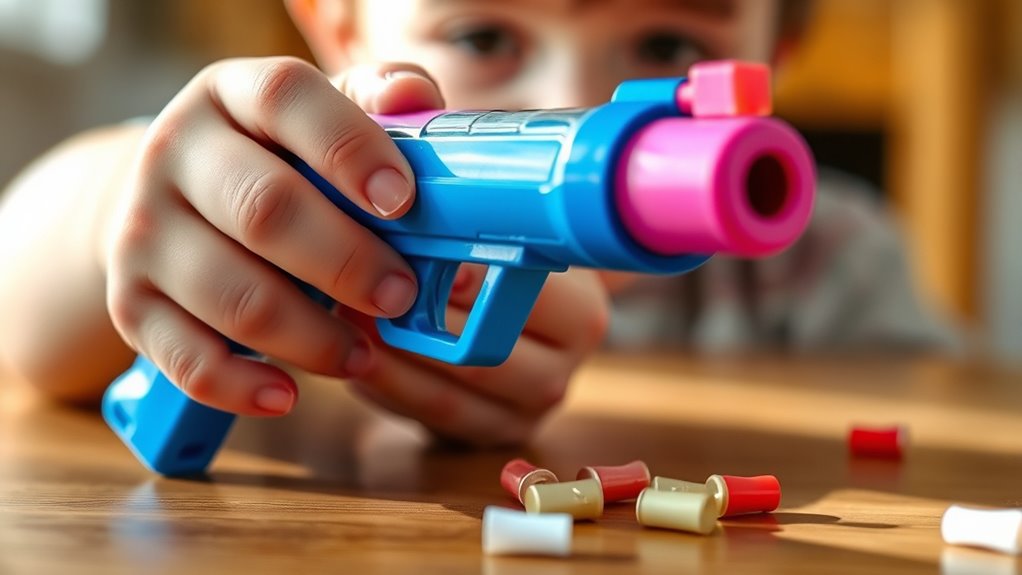
Since cap guns produce loud noises and involve small explosive caps, they’re generally recommended for children aged six and older. At this age, kids typically have better motor skills and can understand basic safety rules, which helps reduce risks during play.
If your child is younger, they might not grasp the potential dangers, like loud sounds startling them or the risk of swallowing small caps.
You should also consider your child’s maturity level. Some six-year-olds may handle cap guns responsibly, while others might need more supervision. Always supervise playtime to ensure children don’t aim at faces or put caps in their mouths.
How to Choose Safe Cap Guns and Caps
When picking cap guns, you’ll want to check that they meet material safety standards to avoid harmful substances. Make sure the caps you use are compatible with your gun to prevent jams or misfires.
Following these guidelines helps keep playtime safe and fun.
Material Safety Standards
Choosing safe cap guns and caps starts with understanding the material safety standards they must meet. When picking a cap gun, look for products made from non-toxic, durable plastics that won’t easily break or splinter. This helps prevent injuries from sharp edges.
Caps should comply with safety regulations like ASTM F963, ensuring the explosive materials inside are controlled and safe for children’s use. Avoid cheap, uncertified caps, as they might contain harmful chemicals or produce excessive noise. Also, check for labels indicating compliance with your country’s safety guidelines.
Cap Compatibility Guidelines
How do you know if a cap gun and its caps will work safely together? Matching them properly is key to avoid misfires or damage.
Here’s how to choose safe cap guns and caps:
- Check size compatibility: Use caps designed specifically for your gun’s chamber size.
- Match brand recommendations: Stick to the manufacturer’s suggested caps to ensure proper fit and function.
- Inspect cap strength: Avoid caps that are too powerful for your gun to prevent breakage or injury.
- Use fresh caps: Old or damp caps might misfire or produce weak noise, affecting safety and enjoyment.
How to Use Cap Guns Safely to Prevent Injuries
To use cap guns safely, you need to handle them carefully and always point them away from people. Wearing protective gear, like safety glasses, can help prevent accidental injuries.
Let’s go over the best ways to keep yourself and others safe while having fun.
Proper Handling Techniques
Although cap guns are designed for fun, you’ll need to handle them carefully to avoid accidents or injuries. Proper handling reduces risks and guarantees everyone enjoys the experience safely.
When using a cap gun, keep these techniques in mind:
- Always point the gun away from people, animals, and fragile objects.
- Never load the cap gun without adult supervision if you’re a child.
- Keep your finger off the trigger until you’re ready to “shoot.”
- Avoid modifying or tampering with the gun’s mechanism to prevent malfunctions.
Protective Gear Use
Since cap guns produce loud noises and small sparks, wearing protective gear is essential to keep yourself safe from potential injuries. Always wear safety goggles to protect your eyes from sparks or debris that might fly out when the cap ignites. Consider ear protection, like foam earplugs, especially if you’re using cap guns repeatedly or in enclosed spaces, to prevent hearing damage.
Gloves can shield your hands from accidental burns or pinching. Make sure your protective gear fits well and is comfortable so you won’t be tempted to remove it while playing. By using appropriate safety equipment, you reduce the risk of injuries and can enjoy cap guns responsibly.
How to Supervise and Educate Kids About Cap Guns
When kids play with cap guns, you need to stay close and set clear rules to keep things safe. Supervision helps you intervene quickly if something seems off. It’s also important to educate children on proper handling and respect for the toy’s potential hazards.
Here’s how you can do that effectively:
- Explain that cap guns are toys, not real weapons, and should never be aimed at people or animals.
- Show them how to load and fire the caps safely, emphasizing never to tamper with or modify the gun.
- Set boundaries for play areas to avoid startling others or causing accidents.
- Teach kids to wear protective gear, like ear protection, during use to prevent hearing damage.
What Injuries Can Happen If Cap Guns Are Used Wrong?
Keeping a close watch and teaching kids about cap gun safety lowers the risk of accidents, but mistakes can still happen. If cap guns are used wrong, you or your child could face injuries like burns, cuts, or eye damage. The small explosive caps create sparks and loud bangs, which can cause burns if they’re placed too close to the skin.
Misfires may also lead to broken or sharp plastic parts that can cause cuts or scratches. One of the most serious risks is eye injury. If the cap gun is aimed too close or fired near someone’s face, debris or sparks could cause painful damage.
Hearing damage is another concern since the noise from caps can be louder than expected, especially in close quarters. By understanding these risks, you can better prevent accidents and keep playtime safe for everyone.
Frequently Asked Questions
Are Cap Guns Legal in All States or Countries?
You’ll find cap gun legality varies by state and country. Some places restrict or ban them due to safety concerns, so you should check local laws before buying or using one to avoid any trouble.
Can Cap Guns Be Modified to Shoot Real Projectiles?
You can’t safely or legally modify cap guns to shoot real projectiles. They’re designed only for noise and harmless fun, so altering them is dangerous, illegal, and could cause serious injury or legal trouble.
Don’t try it.
How Should Cap Gun Caps Be Stored Safely?
You should definitely store cap gun caps like they’re tiny fireworks—away from heat, flames, and curious kids. Keep them in a cool, dry place, sealed tight, so they don’t surprise you with an unexpected bang at breakfast.
Do Cap Guns Make Loud Noises Harmful to Hearing?
Cap guns can produce loud noises that might hurt your hearing, especially if used close to your ears or repeatedly.
It’s best to keep some distance and avoid prolonged exposure to protect your ears from potential damage.
Are There Eco-Friendly or Biodegradable Cap Gun Caps Available?
You won’t believe it, but yes, there are eco-friendly, biodegradable cap gun caps out there! They’re designed to reduce waste and keep your fun earth-friendly, so you don’t have to feel guilty about your playful bangs.
Conclusion
So, are cap guns safe? They can be—if you handle them wisely. Think of cap guns like fire: useful and fun when controlled, but dangerous if left unchecked.
By choosing the right caps, supervising play, and teaching kids how to use them properly, you’re turning a potential hazard into harmless entertainment. Don’t let a moment of carelessness turn joy into injury—stay alert, stay safe, and keep the fun going!
Remember, following safety tips and understanding cap gun safety is key to ensuring that playtime remains enjoyable and risk-free.