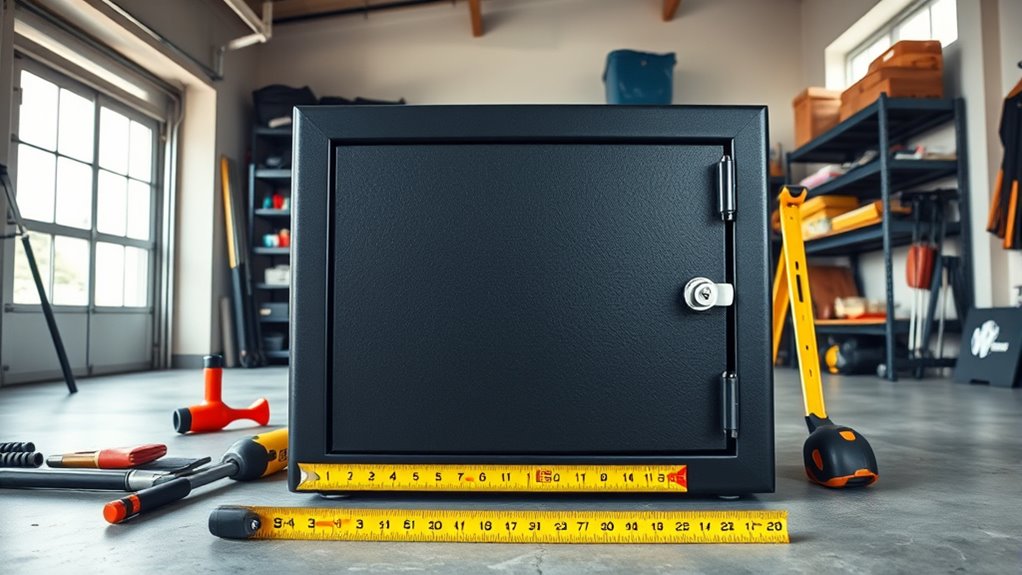
10 Tips for How You Put a Gun Safe in Your Garage
When placing your gun safe in the garage, it’s essential to choose a discreet spot against a solid, windowless wall on a level concrete floor that can support its heavy weight. Proper placement is key for security and longevity, ensuring the safe remains stable and protected from environmental damage.
Securely bolt the safe down to prevent tipping or theft. Avoid areas prone to temperature swings or moisture, which can cause rust or damage to your firearms and ammunition.
Keep pathways clear for easy access in emergencies or regular use.
Use dehumidifiers or heaters inside the safe to control humidity and temperature. Install good lighting in the garage for visibility when accessing your safe.
Organize your firearms and ammo separately inside for added safety and efficiency.
Want to know how to optimize every detail for security and upkeep? Following these tips will help you maximize the safety and durability of your gun safe in the garage.
Key Takeaways
- Place the gun safe against a solid, windowless wall away from windows and external doors to reduce theft risk and environmental fluctuations.
- Securely bolt the safe to a level, sturdy concrete floor using heavy-duty anchors to prevent tipping and unauthorized removal.
- Keep the area around the safe clear with good lighting and ensure the door can fully open without obstruction for easy access.
- Store firearms upright and ammo separately in cool, dry compartments inside the safe, using desiccants to control moisture.
- Install battery-powered LED or motion-sensor lights inside the safe for bright, hands-free illumination during access.
Pick the Best Spot for Your Gun Safe in the Garage
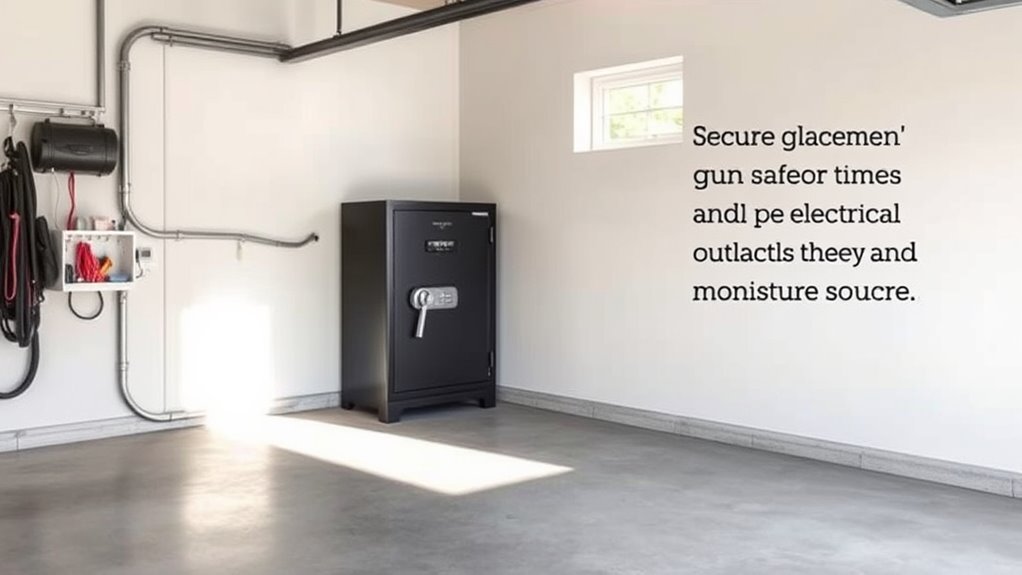
Before you install your gun safe, think carefully about where in your garage it’ll be both secure and accessible. You want to choose a spot that’s out of plain sight to reduce the risk of theft but still easy enough for you to reach when needed. Look for a location that’s dry and stable, avoiding areas prone to moisture or extreme temperature changes, which can damage your firearms.
Consider placing the safe against a solid wall, preferably one without windows, to enhance security and prevent forced entry. You’ll also want to guarantee the floor can support the safe’s weight; concrete floors are ideal. Avoid spots near garage doors or windows since these can be weak points for break-ins.
Finally, think about where you can bolt the safe securely to prevent it from being moved or stolen. Taking the time to pick the right spot now will protect your investment and give you peace of mind.
Plan Easy Access to Your Gun Safe
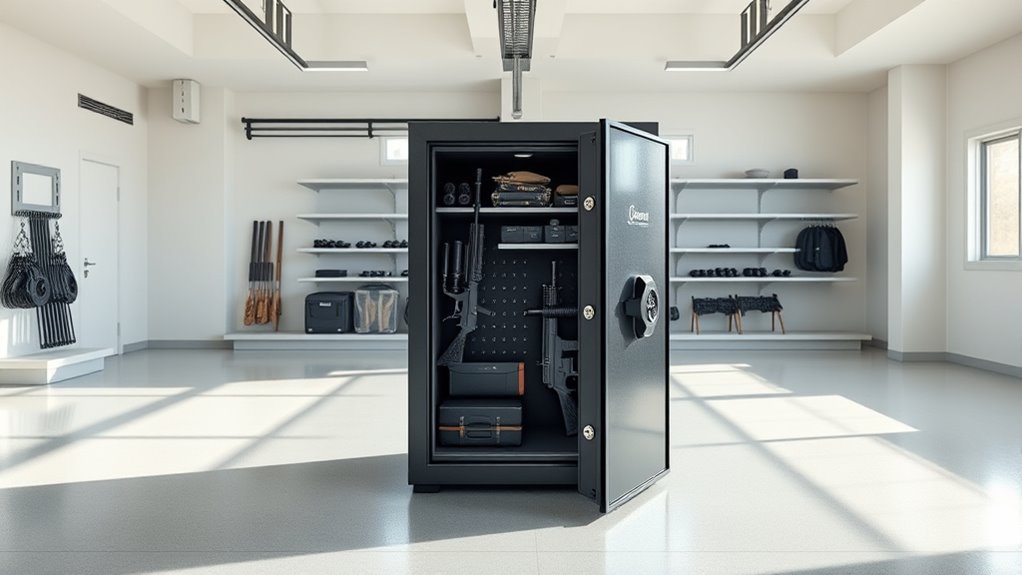
While securing your gun safe is essential, you’ll also want to make sure you can access it quickly and easily when needed. Consider the path you’ll take from your main entry points to the safe—keep it clear of clutter or obstacles. If you’re in a hurry or under stress, you don’t want to be fumbling around or moving things out of the way.
Also, think about lighting; good illumination near the safe is key so you can see the lock clearly at any time of day. Choose a location that allows the safe door to open fully without hitting walls or vehicles. If you have children or unauthorized people nearby, plan how to restrict access while maintaining your own convenience.
Strategically placing the safe near your usual garage entry or exit can save precious seconds. Ultimately, your goal is to balance security with swift, hassle-free access whenever necessary.
Choose Flooring to Support Your Gun Safe
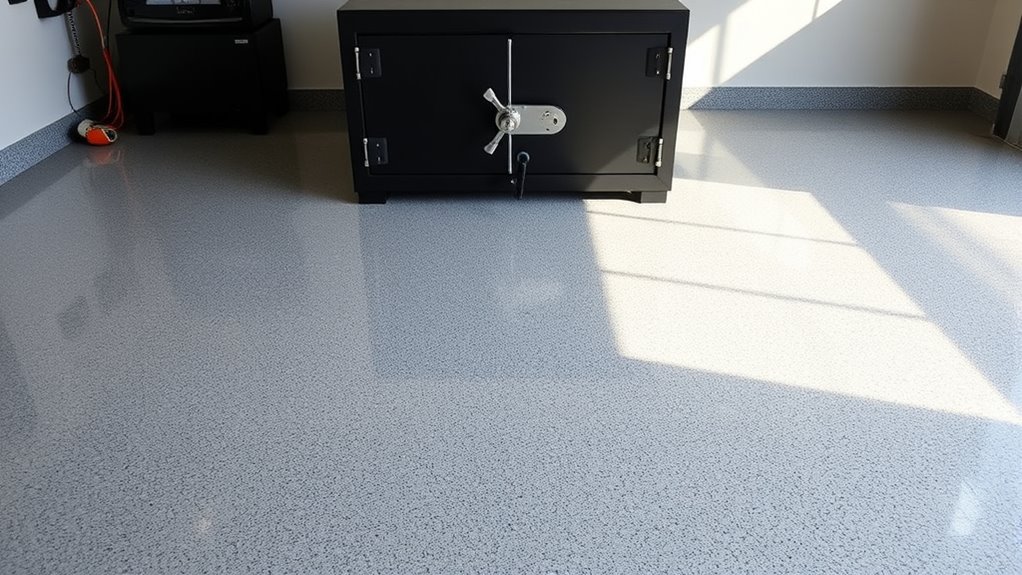
Before setting your gun safe, check the garage floor material to guarantee it can handle the weight. If the flooring feels weak, reinforce it for added support.
Adding a protective floor mat can also prevent damage and keep your safe stable.
Assess Garage Floor Material
One key step in securing your gun safe is understanding the type of flooring in your garage, as it directly affects the safe’s stability and installation. Most garages have concrete floors, which are ideal because they provide a solid, level base. However, if your floor is unfinished dirt or wood, you’ll need to carefully evaluate its strength.
Concrete floors should be free of cracks or uneven spots, as these can compromise the safe’s balance. You can use a level tool to check for flatness. Also, consider moisture levels; damp floors might lead to rust or damage over time.
Knowing your garage floor material helps you plan the best placement and anchoring method for your safe, ensuring it remains secure and functional for years.
Reinforce Weak Flooring
If your garage floor isn’t solid enough to support a gun safe, you’ll need to strengthen it to prevent shifting or damage. Start by inspecting the floor for cracks, uneven spots, or weak concrete. If the slab is too thin or deteriorating, adding a concrete overlay or pouring a new slab section can boost strength.
You can also install a sturdy plywood platform anchored securely to the floor to distribute the safe’s weight evenly. Make sure any reinforcement is level and properly cured before placing the safe. Reinforcing weak flooring ensures your safe stays stable, protects your valuables, and prevents costly repairs.
Taking these steps upfront saves you headaches and keeps your gun safe secure in the long run.
Use Protective Floor Mats
Since your garage floor can take a beating, using protective floor mats is a smart way to shield both the floor and your gun safe. These mats help distribute the safe’s weight evenly, preventing cracks or dents in concrete or weaker surfaces. Plus, they reduce slipping and shifting, keeping your safe stable.
Choose mats made from durable materials like rubber or heavy-duty foam designed to handle heavy loads. Make sure the mat covers the entire footprint of your safe for maximum protection. Also, protective mats can absorb vibrations and minimize noise when opening or closing the safe.
Secure Your Gun Safe Against Theft and Tipping
Although placing your gun safe in the garage offers convenience, you’ll need to take extra steps to secure it against theft and tipping. A safe that’s not properly anchored can be an easy target for burglars or may tip over, causing injury or damage.
Placing your gun safe in the garage is convenient but requires extra measures to prevent theft and tipping.
Here’s how to keep your gun safe secure and stable:
- Bolt it down – Use heavy-duty bolts to anchor your safe to the concrete floor or wall. This prevents thieves from dragging it away and stops tipping.
- Use a security cable – Attach a steel cable to anchor points for an added layer of theft protection.
- Place on a flat surface – Ensure your safe sits level to avoid instability.
- Install motion sensors or alarms – These can alert you if the safe is tampered with, deterring potential thieves.
Taking these steps helps protect your firearms and provides peace of mind.
Avoid Common Installation Mistakes in Your Garage
When installing your gun safe in the garage, you’ll want to steer clear of some common mistakes that can compromise security and functionality. First, don’t ignore the importance of a solid, level surface—placing your safe on uneven ground can cause it to tip or become unstable. Avoid positioning your safe near frequently used garage doors or windows, as this increases vulnerability to break-ins.
Also, don’t forget to securely anchor your safe to the floor or wall to prevent theft or tipping. Skipping this step is a critical error. Be mindful of clearance space; don’t cram your safe into tight corners or block ventilation, which can affect access and usability.
Finally, avoid poor lighting around your safe area—adequate lighting helps you access your safe safely and deters intruders. By sidestepping these mistakes, you’ll guarantee your gun safe remains secure, stable, and functional in your garage.
Protect Your Gun Safe From Moisture and Rust
Keeping your gun safe dry is essential to prevent moisture buildup that can lead to rust and damage. Moisture can sneak in through garage humidity or condensation, so taking proactive steps will protect your investment and your firearms.
Keeping your gun safe dry is crucial to prevent rust and protect your firearms from moisture damage.
Here are four key ways to protect your gun safe from moisture and rust:
- Use a Dehumidifier or Desiccant Packs – Place desiccant packs inside the safe or use a small dehumidifier nearby to absorb excess moisture.
- Seal Garage Cracks and Gaps – Prevent humid air from entering by sealing any openings around doors, windows, and walls near your safe.
- Elevate the Safe Off the Floor – Use a sturdy platform or rubber mat to keep the safe off cold concrete, which attracts moisture.
- Ventilate the Garage Properly – Ensure good airflow to reduce humidity levels, but avoid direct air blowing on the safe.
Following these tips can help maintain a dry environment, keeping your safe and firearms in top condition.
Control Garage Temperature to Preserve Your Firearms
Moisture control goes hand in hand with managing the temperature in your garage to protect your firearms. Extreme heat or cold can damage your guns, causing metal parts to expand, contract, or corrode. To maintain a stable environment, aim to keep your garage temperature between 55°F and 75°F.
If your garage isn’t insulated, consider adding insulation or using a portable heater or fan to regulate temperature fluctuations. Avoid placing your gun safe near windows or external walls where temperature swings happen more frequently. Using a thermostat-controlled heater or dehumidifier helps keep both temperature and humidity levels steady.
Organize Your Gun Safe’s Interior for Efficient Storage
To make the most of your gun safe, start by maximizing vertical space with adjustable shelving. This lets you customize storage to fit both firearms and ammo separately.
Keeping things organized will save you time and protect your gear.
Maximize Vertical Space
One of the smartest ways to organize your gun safe’s interior is by maximizing vertical space. This approach helps you store more efficiently and keeps your firearms and accessories easily accessible.
Try these four tips to make the most of that vertical room:
- Use tall racks or holders designed to fit the height of your safe.
- Hang smaller items like holsters or ammo pouches on hooks attached to the safe’s walls.
- Stack cases or boxes vertically rather than spreading them out.
- Utilize the back of the door for slim storage options such as cleaning kits or manuals.
Use Adjustable Shelving
While organizing your gun safe, adjustable shelving offers the flexibility you need to customize storage based on your collection’s size and shape. You can easily rearrange shelves to fit long rifles, handguns, or accessories without wasting space. This adaptability lets you optimize every inch inside your safe, keeping everything accessible and neatly organized.
Plus, adjustable shelves make it simple to add or remove storage as your collection grows or changes. When choosing shelving, look for sturdy materials that can support the weight of your firearms and gear. Installing adjustable shelving also helps prevent damage by reducing overcrowding and shifting during movement.
Separate Ammo and Firearms
Although keeping your firearms and ammo together might seem convenient, separating them inside your gun safe is essential for safety and organization. This approach reduces risks and helps you quickly find what you need.
To efficiently separate ammo and firearms, consider these tips:
- Use dedicated compartments or lockboxes for ammunition to prevent accidental discharge or damage.
- Store firearms upright in racks or slots to keep them secure and easy to access.
- Label each area clearly, so you never mix ammo with guns during emergencies.
- Keep ammo in a cool, dry spot within the safe to maintain its quality and reliability.
Maintain Your Gun Safe to Combat Garage Humidity and Dust
Because garages often experience fluctuating temperatures and dust buildup, maintaining your gun safe is essential to protect your firearms. First, check the safe’s seal regularly to verify it’s airtight, preventing moisture from seeping in. Use a dehumidifier or desiccant packs inside the safe to absorb excess humidity, especially during humid seasons.
Wipe down your firearms and the interior of the safe periodically with a dry cloth to avoid dust accumulation, which can cause corrosion over time. Avoid storing your safe directly on a concrete floor; instead, place it on a platform or mat to reduce moisture exposure. Also, inspect the locking mechanism and hinges for dust or dirt buildup and clean them gently to keep the safe operating smoothly.
Make Sure Your Gun Safe Has Good Lighting
Keeping your gun safe well-maintained also means making sure you can see clearly inside it. Proper lighting helps you quickly find what you need without fumbling in the dark, which is vital for safety and convenience.
Clear lighting inside your gun safe ensures quick, safe access without fumbling in the dark.
Here are four tips to guarantee your gun safe has good lighting:
- Install LED Strip Lights: They provide bright, even illumination without generating heat, ideal for enclosed spaces.
- Use Motion-Sensor Lights: These turn on automatically when you open the safe, saving energy and ensuring immediate visibility.
- Choose Battery-Powered Options: This avoids wiring complications and keeps lighting functional even during power outages.
- Position Lights Strategically: Place lights at the top or sides of the safe to minimize shadows and highlight all stored items.
Frequently Asked Questions
What Type of Gun Safe Lock Is Most Secure?
You’ll find biometric locks most secure since they use your unique fingerprint, making unauthorized access nearly impossible. They’re faster and more reliable than traditional keys or combination locks, giving you peace of mind for your gun safe security.
How Do I Transport a Heavy Gun Safe Safely?
Moving a gun safe feels like shifting a mountain! You’ll want sturdy dollies, plenty of strong help, and secure strapping.
Take it slow, protect floors, and never attempt it alone—you don’t want disaster on your hands.
Can I Install a Gun Safe Without Professional Help?
Yes, you can install a gun safe without professional help if you have the right tools and follow instructions carefully.
Just make sure it’s securely anchored and placed in a dry, stable spot to guarantee safety and durability.
Are There Legal Requirements for Owning a Gun Safe?
You might think owning a gun safe is just about security, but laws often require it to prevent accidents or theft. Check local regulations because what’s legal in one place could be illegal or insufficient in another.
What Is the Best Way to Insure a Gun Safe?
The best way to insure a gun safe is by adding it to your homeowner’s or renter’s insurance policy as a valuable item. Make sure to document its contents and get an appraisal for accurate coverage.
This ensures that both the safe and its contents are protected under your policy. Regularly update the documentation to reflect any changes in your collection.
Consult with your insurance agent to understand coverage limits and any additional requirements. This will help you avoid surprises in case of a claim.
Conclusion
Think of your gun safe like a sturdy oak tree in a stormy garage—choose the right spot, secure it well, and it’ll stand strong through any challenge. Just like that oak needs good soil and care, your safe needs proper flooring, temperature control, and organization to protect what matters most.
By following these tips, you’re not just installing a safe—you’re building a fortress that keeps your firearms secure and ready when you need them. Proper placement, secure anchoring, and climate considerations are key to ensuring your gun safe remains reliable.
Remember, the right installation transforms your garage space into a secure environment. This approach guarantees that your gun safe offers maximum protection, accessibility, and longevity.