
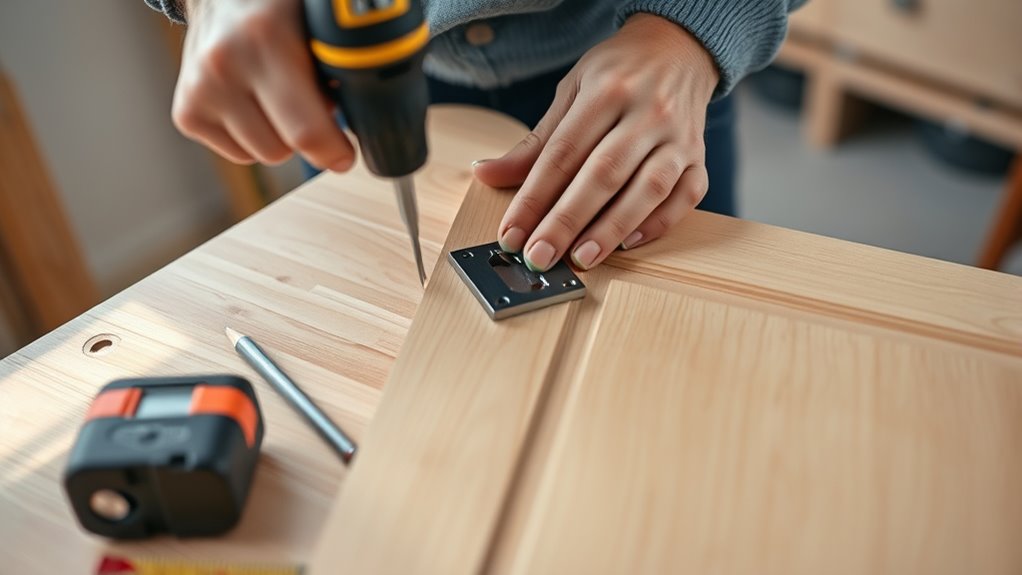
How to Fit a Concealed Hinge in 7 Easy Steps
To fit a concealed hinge in seven easy steps, start by gathering your essential tools and selecting durable, high-quality hinges. Properly fitting a concealed hinge ensures a sleek, professional finish for your cabinet doors.
Measuring and marking the hinge placement about 3-4 inches from the top and bottom edges of the door is crucial for stability and alignment.
Next, drill the cup hole carefully using a 35mm bit, making sure to maintain precision. Attach the hinge cup flush in place to avoid any gaps or misalignment.
Install the mounting plate inside the cabinet frame securely.
Finally, connect the hinge to the mounting plate and adjust for perfect alignment. Take your time with these adjustments to achieve a flawless, smooth operation.
Keep going, and you’ll master every detail for a professional-quality finish.
Key Takeaways
- Measure and mark hinge placement 3-4 inches from the top and bottom edges on the cabinet door.
- Drill a 35mm cup hole at the marked position to the correct depth (usually 12-13mm).
- Insert the hinge cup into the hole and secure it with screws without overtightening.
- Attach the mounting plate inside the cabinet, aligning it properly and securing with screws.
- Adjust the hinge screws for side-to-side, height, and depth alignment for smooth door operation.
What Is a Concealed Hinge and Why Use One?
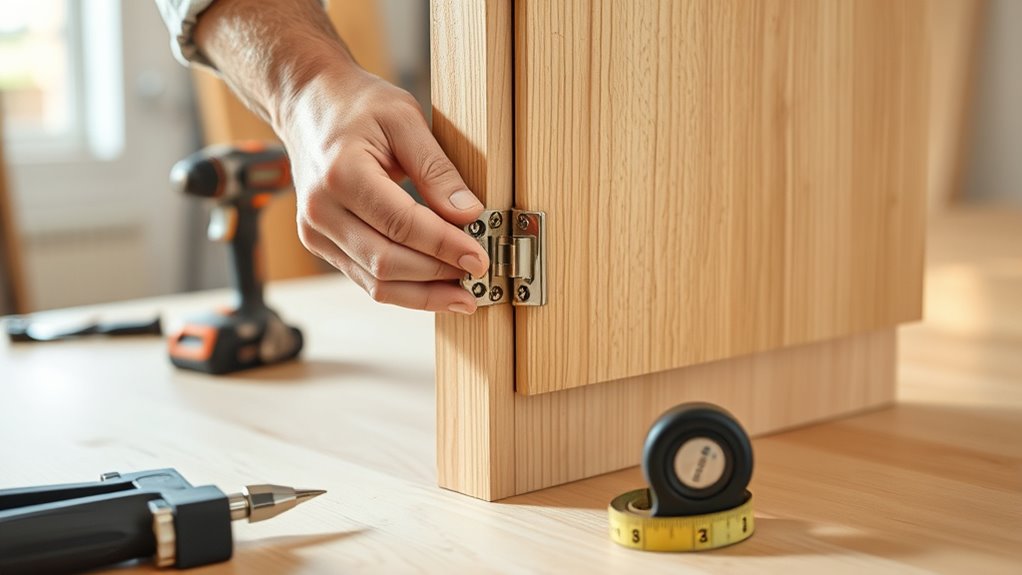
What makes a concealed hinge different from other hinges? Unlike traditional hinges that are visible when a cabinet door is closed, concealed hinges are hidden inside the cabinet, giving your furniture a clean, streamlined look. You’ll appreciate this if you want a modern, minimalist style or simply prefer a neat finish without exposed hardware.
Concealed hinges also offer practical benefits. They allow for easy adjustments—so you can align doors perfectly without hassle. Plus, they provide a soft-close feature in many models, preventing doors from slamming shut and reducing wear over time.
You’ll find that these hinges support full door overlay, inset doors, or partial overlay, making them versatile for various cabinet designs. Using concealed hinges not only enhances aesthetics but also improves functionality, making your cabinets look professional and operate smoothly. Once you get familiar with their advantages, you’ll see why they’re the preferred choice for many DIYers and professionals alike.
Gather Tools and Materials for Concealed Hinge Installation
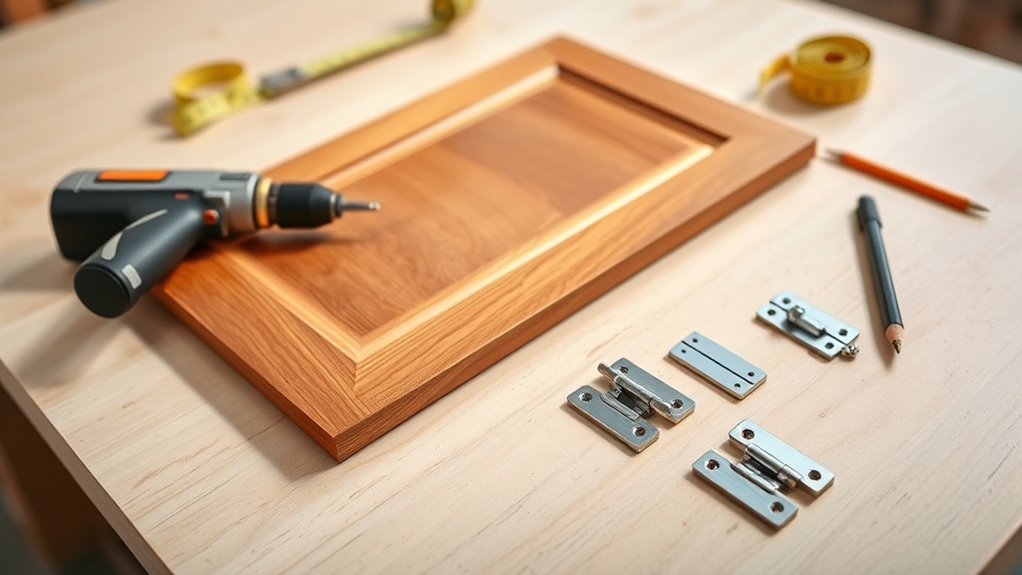
Before you start, make certain you have all the essential tools like a drill, screwdriver, and measuring tape ready. Choosing quality materials, including sturdy hinges and screws, will guarantee a smooth installation and long-lasting results.
With the right gear on hand, you’ll save time and avoid frustration.
Essential Tools Checklist
Wondering what tools you’ll need to fit a concealed hinge smoothly? Having the right tools makes the job quicker and guarantees a perfect fit.
Here’s a checklist of essential tools you should gather before starting:
| Tool | Purpose | Tip |
|---|---|---|
| Drill | Create hinge holes | Use a drill bit for precision |
| Screwdriver | Secure screws | Choose the right head type |
| Measuring Tape | Accurate measurements | Double-check measurements |
| Pencil | Mark drilling spots | Use a sharp pencil for clarity |
| Chisel | Adjust hinge recess if needed | Work carefully to avoid damage |
Make sure each tool is in good condition to avoid complications. Having this kit ready will help you fit your concealed hinge with confidence and accuracy.
Choosing Quality Materials
Gathering the right tools sets you up for success, but choosing quality materials is just as important to guarantee your concealed hinge lasts and functions properly. Start by selecting hinges made from durable metals like stainless steel or brass since they resist rust and wear. Avoid cheap alloys that might bend or break under regular use.
You’ll also need strong screws designed for the material of your cabinet—wood screws for wooden surfaces and metal screws for metal frames. If your cabinet finish is delicate, consider hinges with a smooth, corrosion-resistant coating to protect both the hinge and cabinet. Investing in quality materials ensures smooth door movement, prevents sagging, and reduces maintenance.
Taking this step seriously makes your installation sturdy and reliable for years to come.
Measure and Mark Hinge Placement on the Cabinet Door
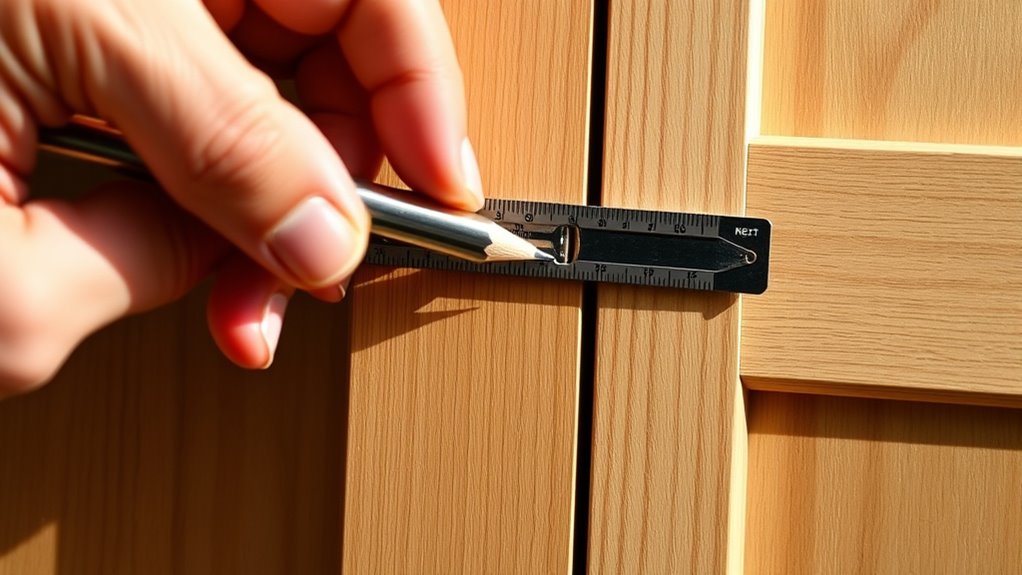
Once you’ve selected the right concealed hinge, you’ll need to measure and mark its placement carefully on the cabinet door to guarantee proper alignment and smooth operation. Accurate placement ensures the door closes flush and the hinge functions correctly.
Careful measurement and marking of concealed hinges guarantee perfect alignment and smooth door operation.
Here’s how to measure and mark hinge placement:
- Measure from the top and bottom edges: Use a ruler or tape measure to mark the recommended distance (usually 3-4 inches) from the top and bottom edges of the door where the hinges will sit.
- Mark the hinge outline: Place the hinge on the door aligning it with your edge marks, then trace around the hinge cup and mounting plate with a pencil.
- Double-check positioning: Verify your marks are level and evenly spaced on both sides of the door to avoid misalignment when mounted.
Taking these steps will set you up for drilling and fitting your concealed hinge perfectly.
Drill the Cup Hole for Your Concealed Hinge
Now it’s time to drill the cup hole for your concealed hinge. Make sure you choose the right drill bit, usually a Forstner bit, for a clean, precise hole.
You’ll also want to carefully measure the depth to avoid drilling too deep or too shallow.
Choosing The Right Drill
Before you start drilling the cup hole for your concealed hinge, you’ll want to choose the right drill to guarantee a clean, accurate fit.
Picking the proper drill bit ensures the hole matches your hinge’s cup perfectly, preventing any wobble or misalignment.
Here’s what to take into account when choosing your drill:
- Drill Bit Type: Use a Forstner bit for smooth, flat-bottomed holes, ideal for concealed hinges.
- Diameter: Match the bit size exactly to the hinge cup diameter, commonly 35mm.
- Drill Power: Opt for a variable-speed drill to control the speed and avoid splintering the wood.
Selecting the right drill setup helps you make precise cuts, making certain your hinge fits securely and your door operates smoothly.
Measuring Cup Hole Depth
Although choosing the right drill bit is essential, accurately measuring the cup hole depth is just as important to guarantee your concealed hinge sits flush and operates smoothly. You’ll want to use a depth gauge or ruler to measure the exact depth needed, usually specified by the hinge manufacturer. Drilling too shallow will prevent the hinge from fitting, while too deep weakens the door.
Here’s a quick reference for common hinge cup hole depths:
| Hinge Type | Cup Diameter (mm) | Typical Depth (mm) |
|---|---|---|
| Standard | 35 | 12-13 |
| Heavy Duty | 40 | 14-15 |
| Soft Close | 35 | 13 |
| Frameless Cabinet | 35 | 11-12 |
Measure carefully to achieve a perfect fit every time.
Attach the Concealed Hinge to the Cabinet Door
Since the hinge is what allows your cabinet door to open and close smoothly, attaching it properly is essential. Here’s how to secure the concealed hinge to the door with accuracy:
Properly attaching the hinge is key to ensuring your cabinet door opens and closes smoothly.
- Align the Hinge Cup: Position the round cup of the hinge into the pre-drilled hole on the cabinet door. Make sure it sits flush without any gaps.
- Insert the Screws: Use a screwdriver to fasten the screws into the screw holes on the hinge cup. Tighten them enough to hold the hinge firmly, but avoid overtightening to prevent damaging the door.
- Check Hinge Movement: Open and close the hinge gently to ensure it moves freely without resistance or wobbling. If needed, loosen the screws slightly and adjust the hinge position, then retighten.
Following these steps ensures your concealed hinge is securely attached and ready for the next installation phase.
Install the Mounting Plate Inside the Cabinet Frame
Once you’ve secured the hinge to the door and checked its movement, the next step is to install the mounting plate inside the cabinet frame. Start by locating the exact spot where the mounting plate will sit, typically on the inner side wall of the cabinet, aligned with your hinge cup. Use a pencil to mark the screw holes through the plate’s holes to guarantee precise placement.
Next, drill pilot holes where you made your marks; this prevents the wood from splitting and makes screwing easier. Position the mounting plate back against the cabinet frame, matching it to the pilot holes. Secure it tightly with screws, ensuring it’s flush and stable.
Double-check that the plate sits straight to avoid future alignment problems. Once installed, the mounting plate will serve as the stable anchor for the concealed hinge to connect to, allowing smooth door operation when you move to the next step.
Connect and Adjust the Concealed Hinge for Perfect Alignment
After installing the mounting plate, you’ll connect the concealed hinge to it and make adjustments to guarantee the door fits perfectly. First, align the hinge arm with the mounting plate and snap or screw it into place securely.
Once connected, you can fine-tune the door’s position with these adjustments:
- Side-to-side adjustment: Use the screw closest to the hinge cup to shift the door left or right, ensuring even gaps between the door and cabinet.
- Height adjustment: Loosen the mounting plate screws slightly to move the door up or down, then retighten for perfect vertical alignment.
- Depth adjustment: Turn the screw on the hinge arm to move the door closer or further from the cabinet frame, helping it sit flush.
Take your time with these tweaks to achieve smooth operation and a clean, professional look. Check the alignment from different angles before final tightening.
Frequently Asked Questions
Can Concealed Hinges Be Used on Glass Cabinet Doors?
Yes, you can use concealed hinges on glass cabinet doors, but you’ll need special hinges designed for glass. They usually clamp onto the glass without drilling, so you won’t risk damaging your door while keeping a clean, modern look.
These hinges provide a sleek appearance by hiding the hardware from view. Make sure to choose hinges that are specifically made for the thickness and type of glass you have. Proper installation is key to ensuring durability and safety.
How Do Concealed Hinges Affect Cabinet Door Weight Limits?
You’ll find concealed hinges usually support lighter doors, so heavier cabinet doors might strain them.
Coincidentally, choosing the right hinge size and type guarantees your doors stay secure without sagging or damage over time.
Are Concealed Hinges Compatible With Soft-Close Mechanisms?
Yes, concealed hinges are compatible with soft-close mechanisms. You’ll find many models come with built-in soft-close features or can be paired with separate soft-close adapters to guarantee smooth, quiet closing without extra effort on your part.
Can I Paint Over Concealed Hinges Without Affecting Functionality?
You can paint over concealed hinges, but you’ve got to be careful. Avoid getting paint inside the moving parts, or it might affect functionality. Masking the hinge before painting helps keep it working smoothly without issues.
What Maintenance Is Required for Concealed Hinges Over Time?
Don’t let things slip through the cracks—regularly clean and lubricate your concealed hinges to keep them smooth. Tighten screws as needed, check alignment, and avoid moisture buildup to guarantee they work like a charm for years.
Conclusion
Now that you know how to fit a concealed hinge in just 7 easy steps, you’re ready to upgrade your cabinets with a sleek, modern look.
Did you know that concealed hinges are used in over 80% of contemporary kitchen designs? Their clean appearance and smooth functionality make them a popular choice.
With your new skills, you’ll enjoy a professional finish that enhances both style and usability in your space.
Give it a try—you’ll love the results of fitting concealed hinges, achieving seamless cabinet doors, and improving kitchen aesthetics and functionality!