How to Wear an Inside Waistband Holster in 7 Easy Steps
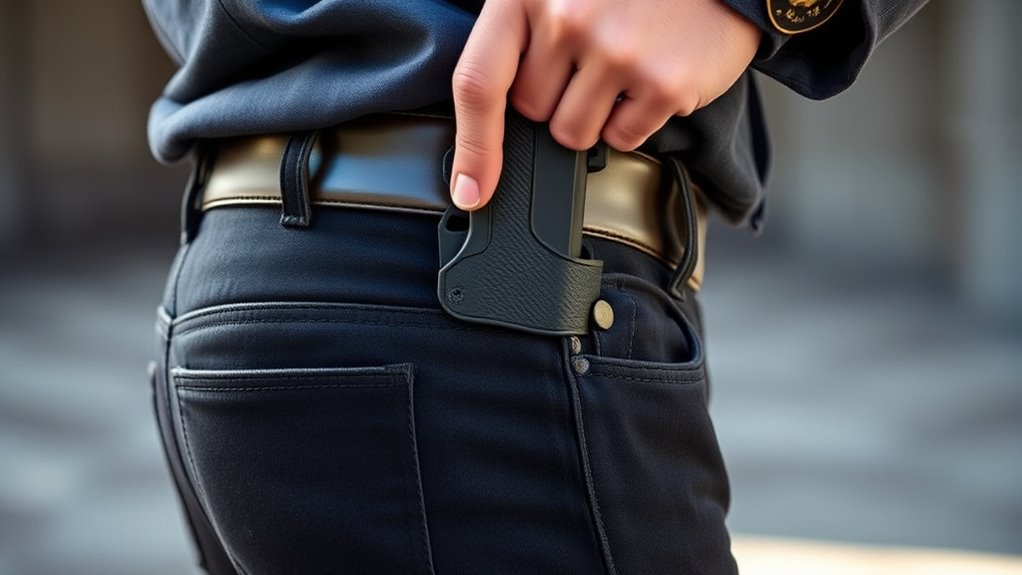
To wear an inside waistband holster comfortably and effectively, start by selecting a holster that fits your firearm securely and matches your activity level. Proper fit and comfort are essential for concealed carry and ease of use.
Positioning the holster correctly ensures both comfort and concealment, so try different spots and angles to find what works best.
Attach the holster firmly to your waistband, making sure it won’t shift during movement. Adjust your clothing to minimize printing and maintain discretion.
Develop a natural grip and draw angle to improve speed and safety.
Practice safe, smooth draws regularly to build confidence and muscle memory.
Maintain your gear for reliability and longevity.
By following these steps, you’ll gain confidence and efficiency with your inside waistband holster in no time.
Key Takeaways
- Choose a holster that fits your firearm securely and prioritizes comfort and concealment for extended wear.
- Position the holster on your waistband (appendix, hip, or behind hip) and adjust cant for natural access and minimal printing.
- Secure the holster firmly with clips or loops to prevent shifting during movement or activity.
- Wear loose or patterned clothing to help conceal the holster and avoid printing through fabric.
- Practice drawing smoothly with a natural grip and maintain your holster and firearm regularly for reliable performance.
Choose the Right Inside Waistband Holster for You
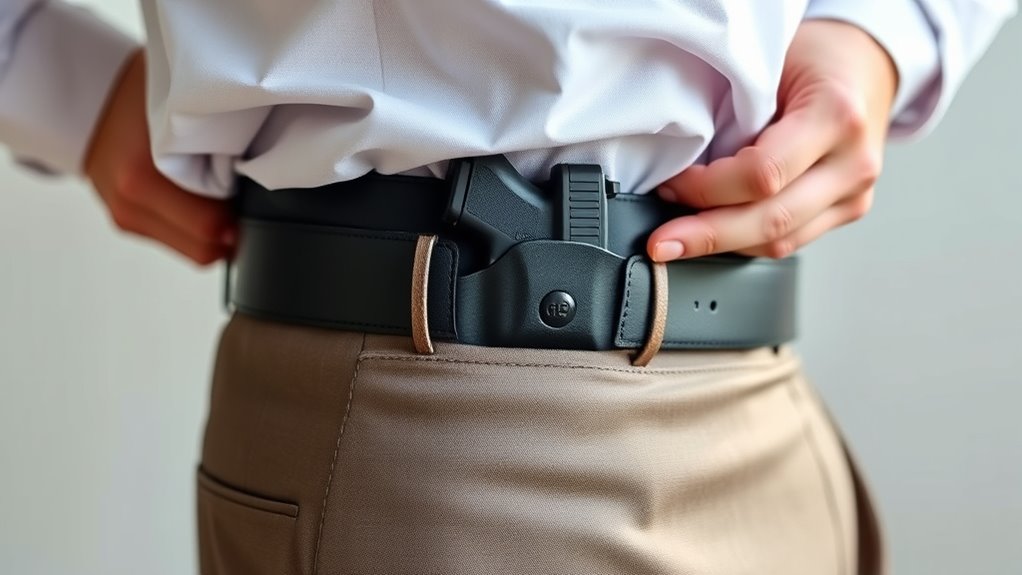
Before you plunge into wearing an inside waistband holster, you need to pick one that fits both your firearm and your lifestyle. First, check compatibility—your holster must securely fit your gun’s size and shape to guarantee safety and ease of draw.
Next, consider material: leather offers comfort and durability, while Kydex provides a rigid, quick-draw option. Think about your daily activities; if you’re active, a sweat-resistant, breathable holster might suit you best. Also, evaluate retention features; some holsters have adjustable tension or thumb breaks for added security.
Comfort is key since you’ll wear it close to your body, so lightweight designs often work better for extended use. Finally, factor in how discreet you want to be; slim-profile holsters help maintain concealment without printing. By focusing on these essentials, you’ll find an inside waistband holster that meets your practical needs and keeps you comfortable throughout the day.
Position Your IWB Holster for Comfort and Concealment
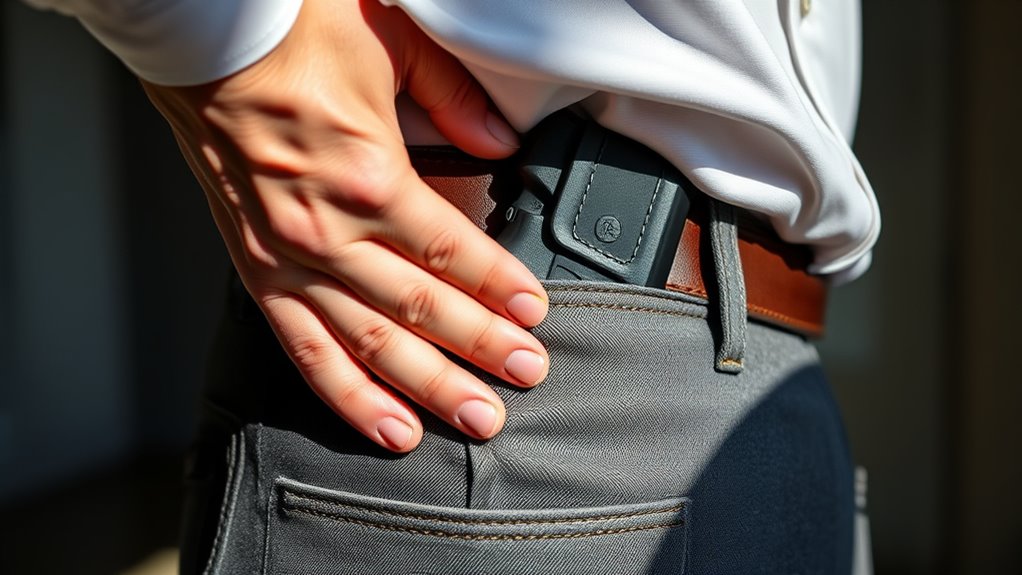
Finding the right spot for your IWB holster is key to staying comfortable while keeping your firearm concealed. You’ll want to experiment with different positions, like the appendix or hip, to see what feels natural and stays hidden.
Optimal Holster Placement
Although placing your inside waistband (IWB) holster might seem straightforward, positioning it for both comfort and concealment takes some careful thought. To find your ideal placement, consider these key points:
- Angle: Adjust the cant of your holster so your grip is easily accessible without printing.
- Height: Position the holster where it won’t dig into your hip or interfere with sitting.
- Location: Common spots include the appendix (front), strong side (hip), or behind the hip (small of back)—each offers different concealment and comfort levels.
- Retention: Make sure your firearm sits securely, reducing movement but allowing a smooth draw.
Experiment with these factors until you find a spot that balances quick access and discreet carry without discomfort throughout your day.
Balancing Comfort With Concealment
When you position your IWB holster, comfort and concealment often pull in different directions, but you don’t have to sacrifice one for the other. Finding the ideal spot means adjusting the holster’s angle and height on your waistband.
Try positioning it slightly forward or backward to reduce printing while keeping it comfortable for sitting and moving.
| Position | Comfort Level | Concealment Quality |
|---|---|---|
| 3 o’clock | High | Moderate |
| 4-5 o’clock | Moderate | High |
| 6 o’clock | Low | High |
Experiment with these positions and tweak cant and ride height until you find a balance where your IWB holster feels natural and stays hidden.
Attach Your Holster Securely to Your Waistband
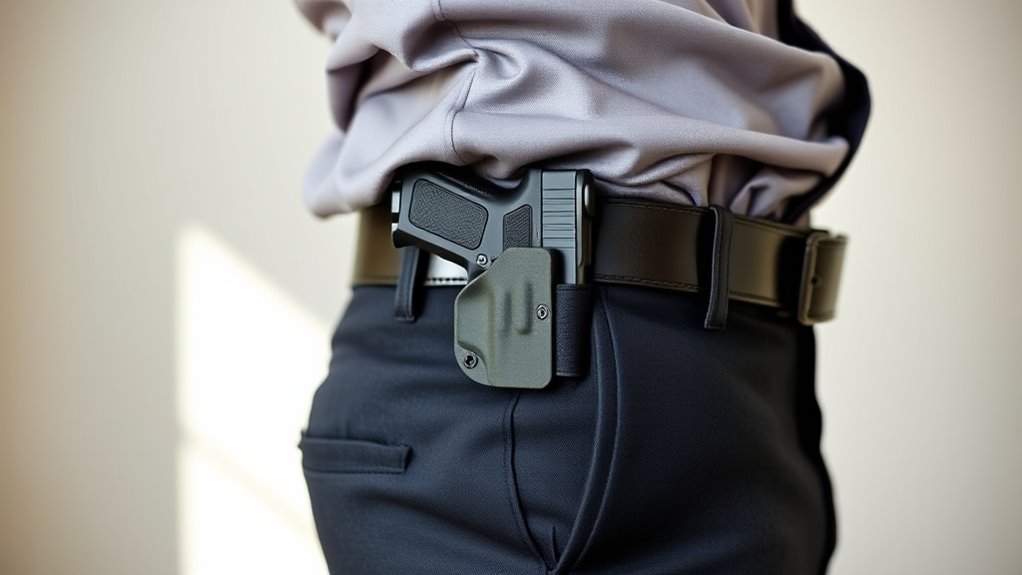
Once you’ve picked the right spot for your IWB holster, you need to make sure it’s firmly attached to your waistband. A secure fit keeps your firearm stable and prevents shifting throughout the day.
Let’s look at how to achieve that solid attachment for both comfort and safety.
Choosing Correct Holster Position
Before you attach your holster, you’ll want to decide where it feels most comfortable and secure on your waistband. The right position affects both accessibility and concealment, so take time to experiment. Consider these factors:
- Strong Side (3-4 o’clock) – Most common for right-handed shooters; easy to reach and draw naturally.
- Behind the Hip (5-7 o’clock) – Offers better concealment but might slow your draw slightly.
- Appendix Carry (12-1 o’clock) – Quick access but requires careful positioning for comfort.
- Cross-Draw (9-10 o’clock) – Good for sitting or driving but less intuitive for most.
Try these spots to find your sweet spot, balancing comfort, draw speed, and concealment before securing your holster.
Ensuring Firm Attachment
Although choosing the right position is essential, securing your holster firmly to your waistband is what keeps it reliable throughout the day. Start by attaching the holster clip or loops tightly so they won’t shift or loosen with movement. Make certain the holster sits flush against your body to prevent any gaps that could cause discomfort or reveal the firearm’s outline.
If your holster has adjustable clips, customize the tension to balance security and ease of draw. Double-check that your belt is sturdy and fits snugly, as a loose belt won’t hold the holster firmly. Finally, perform some natural movements—sitting, bending, walking—to confirm the holster stays in place without shifting or snagging your clothing.
This guarantees both comfort and quick access when you need it most.
Adjust Clothing to Prevent Printing and Enhance Concealment
To keep your inside waistband holster truly hidden, you’ll need to adjust your clothing thoughtfully. Proper concealment depends on how your clothes interact with the holster and your body shape. Here’s how to minimize printing and stay discreet:
Effective concealment requires mindful clothing choices and consideration of how fabric interacts with your holster and body shape.
- Choose looser tops: Opt for shirts or jackets that don’t cling tightly to your torso, allowing fabric to drape naturally over your holster.
- Select thicker or patterned fabrics: These help break up outlines and reduce the chance of your firearm’s shape showing through.
- Wear untucked shirts: Letting your shirt hang over your waistband adds an extra layer to conceal the holster and prevents direct printing.
- Adjust your belt and waistband: Ensure your pants sit comfortably—not too tight—to avoid pushing the holster outward or creating visible bulges.
Develop Your Ideal Grip and Draw Angle for Quick Access
When you carry an inside waistband holster, developing a reliable grip and draw angle is essential for quick, smooth access. Start by positioning your hand above the holster with a natural, relaxed grip. Your fingers should wrap firmly around the grip, while your thumb rests comfortably along the frame, avoiding any awkward tension.
Experiment with slight variations in hand placement until it feels instinctive and secure.
Next, evaluate your draw angle. Ideally, the firearm should come out with an upward, sweeping motion that follows the natural path of your arm. This angle reduces resistance from clothing and prevents snagging.
Adjust the holster’s cant so your wrist and elbow align comfortably during the draw. Remember, your goal is a fluid movement that minimizes delay.
Practice Drawing and Reholstering Safely and Smoothly
Once you’ve nailed your grip and draw angle, it’s time to focus on practicing your draw and reholster techniques safely and smoothly. Mastery here is key to building muscle memory and ensuring quick, confident access without compromising safety.
Follow these steps to practice effectively:
- Use an unloaded firearm or training gun to eliminate risk while practicing at home or the range.
- Slow down your movements initially to monitor your hand placement and ensure your finger stays off the trigger until ready to shoot.
- Practice drawing and reholstering repeatedly, focusing on smooth, controlled motions rather than speed at first.
- Incorporate proper stance and posture, simulating real-life scenarios to build realistic muscle memory.
Keep Your Holster and Firearm Ready With Proper Maintenance
Although practicing your draw is vital, keeping your holster and firearm in top condition guarantees they’re always ready when you need them. Regularly inspect your holster for signs of wear, such as loose stitching or cracks, especially if it’s made of leather or polymer. Clean it according to the manufacturer’s instructions to prevent dirt buildup that can interfere with your draw or reholstering.
For your firearm, routine cleaning after use is essential. Remove residue, dirt, and moisture to avoid malfunctions and corrosion. Use the proper cleaning tools and lubricants recommended for your specific model.
Also, check retention screws and other attachment points on your holster to make sure they remain secure. Don’t forget to periodically practice with your maintained gear to confirm everything functions smoothly. By staying on top of maintenance, you’ll extend the lifespan of your equipment and maintain reliable performance every time you carry inside the waistband.
Frequently Asked Questions
Can I Wear an IWB Holster While Sitting for Long Periods?
Yes, you can wear an IWB holster while sitting for long periods, but it might get uncomfortable. Adjust your holster’s position and choose a slim design to reduce pressure and avoid printing or restricting movement during extended sitting.
Finding the right fit and placement is key to maintaining comfort. Experiment with different angles and positions to see what works best for you.
Additionally, wearing clothing that accommodates the holster can help minimize discomfort. Keep in mind your body type and seating posture when making adjustments.
Are IWB Holsters Suitable for All Firearm Types and Sizes?
IWB holsters aren’t suitable for all firearm types and sizes. You’ll find compact and medium-sized pistols work best, while larger firearms can be uncomfortable or print more, limiting your concealment and comfort options.
How Does Body Type Affect IWB Holster Comfort and Concealment?
Your body type affects IWB holster comfort and concealment because different shapes and sizes influence how the holster sits and prints. You’ll want to choose holsters that fit your waistline and body contours for better comfort and concealment.
Can IWB Holsters Be Worn During Physical Activities or Exercise?
Wearing an IWB holster during exercise is like carrying a loyal shadow—it’s possible but needs careful adjustment. You’ll want a secure fit and breathable material to stay comfortable and avoid print or shifting while you move.
Comfort is key, so choosing the right size and placement can make a big difference. Make sure the holster doesn’t chafe or restrict your movement.
Regularly check that the holster remains firmly in place as you change activities. With proper setup, an IWB holster can be a reliable companion during physical activities.
What Legal Considerations Apply to Carrying an IWB Holster?
You’ll need to know your state’s laws on concealed carry permits and where you can legally carry. Always check local regulations, as restrictions vary widely, and carry responsibly to avoid legal trouble or fines.
Conclusion
Wearing an inside waistband holster properly makes all the difference in comfort and concealment. Did you know that over 60% of concealed carriers report better confidence and quicker draws when using an IWB holster? By choosing the right holster, positioning it well, and practicing your draw, you’ll stay ready and comfortable.
Keep up with regular maintenance to guarantee your gear performs flawlessly every time you carry. Proper care ensures your inside waistband holster remains reliable, safe, and easy to use. You’ve got this!
Remember, mastering how to wear an inside waistband holster not only boosts your confidence but also enhances concealment and accessibility. With the right techniques, your holster will provide comfort and readiness every day.