
How You Can Carry a Concealed Weapon in Massachusetts Legally
To carry a concealed weapon legally in Massachusetts, you must meet specific requirements and follow state regulations carefully. These include being at least 21 years old, having no serious criminal or mental health history, and completing the required state-approved training.
Understanding how to carry a concealed weapon in Massachusetts ensures you remain compliant with the law and carry responsibly.
You’ll need to apply through your local police department, submit all necessary documents, and pass thorough background checks before receiving your license.
Carrying a concealed weapon is limited to certain locations, and your license must be renewed every six years with proof of ongoing compliance.
Following these steps guarantees you stay lawful and informed while carrying. More details are available to help you navigate the process confidently.
Key Takeaways
- You must be at least 21, a Massachusetts resident or have a valid reason, and meet legal eligibility requirements without disqualifying records.
- Apply through local police or Massachusetts State Police, complete background checks, submit documentation, and attend an in-person interview.
- Complete mandatory firearms safety and Massachusetts law training, including live fire exercises, and obtain a certified training certificate.
- Follow carrying restrictions in places like schools, government buildings, and federal properties, and respect private property firearm policies.
- Renew your concealed carry license every six years with updated documents and training proof to maintain legal carrying privileges.
Massachusetts Concealed Carry Eligibility

Wondering if you’re eligible to carry a concealed weapon in Massachusetts? First, you must be at least 21 years old and a Massachusetts resident or have a valid reason to carry in the state. You can’t have any felony convictions or certain serious misdemeanors on your record.
You also must not be subject to any restraining orders related to abuse or violence. Your mental health history matters too; if you’ve been involuntarily committed or adjudicated as mentally incompetent, you’re not eligible. Additionally, you must not be an unlawful user of controlled substances.
Background checks will verify these details, so honesty is vital. If you meet these requirements, you’ll still need to demonstrate a “good reason” to carry concealed in Massachusetts, which could include self-defense or your job. Keep in mind, eligibility is just the start—you must comply with all state laws throughout the process to carry legally.
How to Apply for a Concealed Carry License in Massachusetts
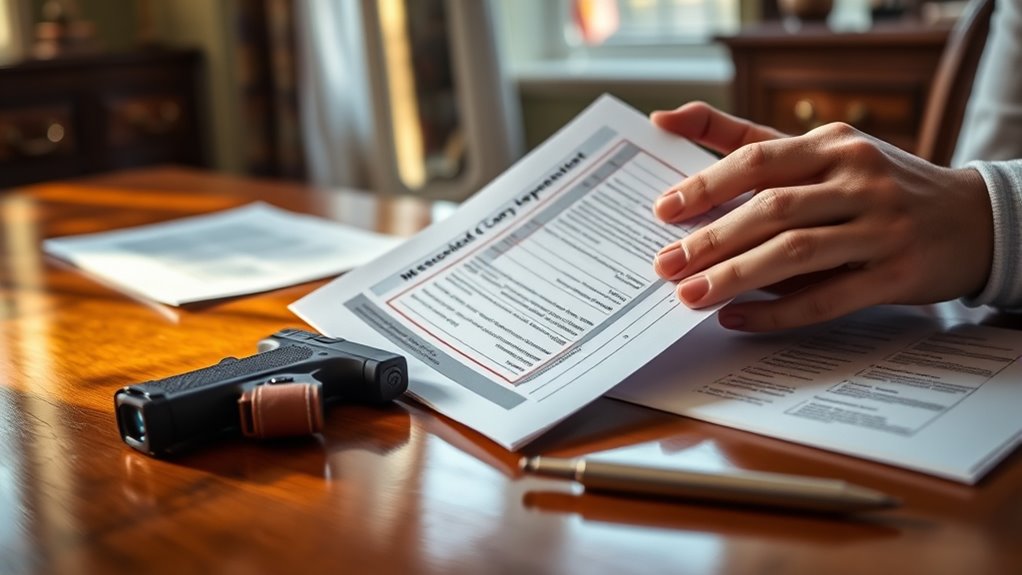
Although the eligibility requirements are strict, applying for a concealed carry license in Massachusetts is a straightforward process if you prepare properly. First, you’ll need to apply through your local police department or the Massachusetts State Police if your town doesn’t have a police department. The application requires you to fill out forms detailing your personal information and reasons for carrying a concealed weapon.
Next, you’ll be required to complete a firearms safety course approved by the state, which covers safe handling and Massachusetts firearm laws. After submitting your application, expect an in-person interview with the licensing authority to discuss your suitability for a license.
Once your application is reviewed and approved, the licensing authority will issue your license. Remember, the entire process can take several weeks to months, so plan accordingly. Staying organized and following each step carefully will improve your chances of securing your concealed carry license without unnecessary delays.
Background Checks and Required Documents for Concealed Carry
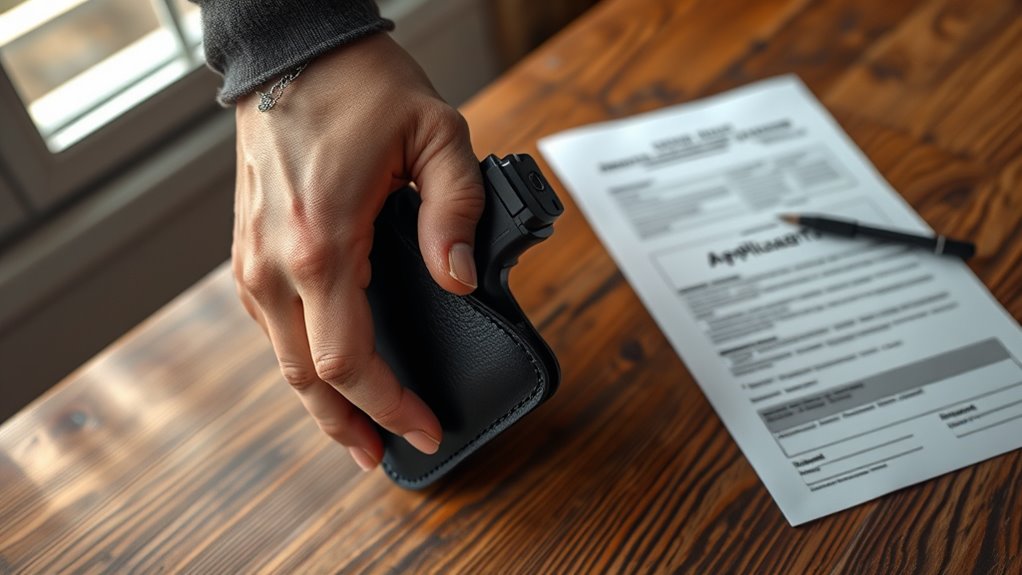
Before you can carry concealed in Massachusetts, you’ll need to pass a thorough background check to verify you’re eligible. You’ll also have to gather specific documents like proof of residency, identification, and your firearms safety course certificate.
Knowing what’s required will help you navigate the process smoothly.
Background Check Process
How do you navigate the background check process when applying for a concealed carry license in Massachusetts? First, your application triggers an extensive review by local and state authorities. This includes checking criminal records, mental health history, and any restraining orders.
The process guarantees only eligible applicants receive permits.
Here’s a quick overview:
| Step | What’s Checked | Purpose |
|---|---|---|
| Local Police Review | Criminal history | Verify no disqualifying offenses |
| State Records Check | Mental health and restraining orders | Ensure safety and compliance |
| FBI NICS Check | National criminal database | Confirm no federal prohibitions |
| Final Approval | All gathered data | Grant or deny the license |
Understanding this helps you prepare and expect thorough scrutiny.
Essential Carry Permit Documents
An essential part of applying for a concealed carry permit in Massachusetts is gathering the right documents to support your background check. You’ll need to provide proof of residency, such as a Massachusetts driver’s license or state ID. Additionally, you must submit a completed application form, a recent passport-sized photo, and fingerprints taken by a certified agency.
Your application should also include references who can vouch for your character and suitability to carry a weapon. Don’t forget to provide any required training certificates, proving you’ve completed a state-approved firearms safety course. These documents guarantee the licensing authority can thoroughly review your background and determine your eligibility to carry concealed.
Being organized and precise with your paperwork speeds up the process and avoids unnecessary delays.
Massachusetts Concealed Carry Training Requirements
While obtaining a Massachusetts concealed carry license, you’ll need to complete specific training requirements designed to guarantee you handle firearms safely and responsibly. The state mandates an all-encompassing course covering firearm safety, laws, and practical shooting skills. This ensures you’re prepared to carry and use a weapon legally.
Here’s a quick overview of the training requirements:
| Requirement | Description | Minimum Hours |
|---|---|---|
| Firearms Safety | Safe handling, storage, and maintenance | 4 hours |
| State Firearm Laws | Understanding Massachusetts laws | 2 hours |
| Live Fire Training | Practical shooting exercises | 2 hours |
This training must be completed with a certified instructor, and you’ll receive a certificate upon finishing. Keep this certificate as proof when applying for your license. Meeting these requirements helps ensure you carry responsibly and within the law.
Where to Carry a Massachusetts Concealed Carry License
Even though having a Massachusetts concealed carry license gives you the legal right to carry a firearm, there are specific places where you’re either restricted or prohibited from doing so. You can generally carry concealed in public areas, including streets, parks, and private properties where the owner allows it. However, certain locations are off-limits regardless of your license.
You’re not allowed to carry in schools, government buildings, courthouses, and places where firearms are explicitly banned by law or posted signs, such as bars or establishments serving alcohol. Additionally, federal properties like post offices and airports have strict no-carry rules. When entering private businesses, always respect their policies—if they prohibit firearms, you must comply.
Also, carrying in places like hospitals or public transportation can be restricted. It’s vital to stay informed about these boundaries to avoid legal trouble and ensure responsible firearm ownership in Massachusetts.
How to Renew and Maintain Your Concealed Carry License
When it’s time to renew your concealed carry license in Massachusetts, you’ll need to complete a renewal application before it expires. You’ll also have to meet ongoing training requirements to keep your skills sharp and stay compliant with state laws.
Staying on top of these steps guarantees your license remains valid and you can carry legally.
Renewal Application Process
Because your concealed carry license in Massachusetts must be renewed every six years, it’s important to start the renewal process before your current license expires. Missing the deadline can cause unnecessary delays or even require you to reapply from scratch.
To renew smoothly, follow these key steps:
- Submit the renewal application form available through your local police department or online portal.
- Provide updated proof of residency and identification.
- Pay the required renewal fee, which varies by municipality.
- Complete a new background check as part of the application.
- Await approval and issuance of your renewed license before carrying concealed again.
Ongoing Training Requirements
Along with completing the renewal application, you’ll need to meet ongoing training requirements to keep your concealed carry license valid in Massachusetts. The state requires you to complete periodic firearms safety training, which typically includes live-fire practice and classroom instruction on current laws and safe handling. This training ensures you stay updated on any legal changes and maintain proficiency.
You must obtain a certificate from a certified instructor as proof. Keep in mind that failing to complete these requirements can result in suspension or revocation of your license. It’s a good idea to schedule your training well before your license expires to avoid any lapses.
Staying diligent with these requirements keeps you compliant and confident in carrying legally.
Frequently Asked Questions
Can I Carry a Concealed Weapon in Massachusetts if I’m Under 21?
No, you can’t carry a concealed weapon in Massachusetts if you’re under 21. The law requires you to be at least 21 to apply for a License to Carry, which is necessary for legal concealed carry.
Are There Restrictions on the Type of Firearm I Can Carry Concealed?
You might be surprised, but yes, there are restrictions on the firearms you can carry concealed. Massachusetts limits certain models, especially assault weapons or large-capacity magazines, so you’ll want to check specific laws before choosing your firearm.
What Are the Penalties for Carrying Without a License in Massachusetts?
If you carry concealed without a license in Massachusetts, you could face criminal charges, including fines, jail time, or both. It’s a serious offense, so you’ll want to avoid carrying without proper authorization.
Can Non-Residents Apply for a Massachusetts Concealed Carry License?
Yes, you can apply for a Massachusetts concealed carry license as a non-resident, but you’ll need to meet all state requirements, including background checks and training.
You must also provide proof of residency or a valid reason for carrying in Massachusetts.
Make sure to fulfill all the necessary criteria to ensure your application is accepted.
How Does Massachusetts Law Handle Concealed Carry in Vehicles?
You can carry a concealed weapon in your vehicle only if you have a valid Massachusetts License to Carry. The weapon must be unloaded and in a locked container or secured in the trunk, separate from ammunition.
Conclusion
Now that you know the ins and outs of carrying concealed in Massachusetts, you’re ready to walk the path like a modern-day Paul Revere—responsibly and within the law. By understanding eligibility, completing your training, and keeping your paperwork in order, you’ll carry not just a weapon, but peace of mind.
Stay vigilant, stay prepared, and remember: with great power comes great responsibility. Your journey to lawful concealed carry in Massachusetts starts here. Mastering the legal requirements and following proper procedures ensures you carry safely and confidently.