
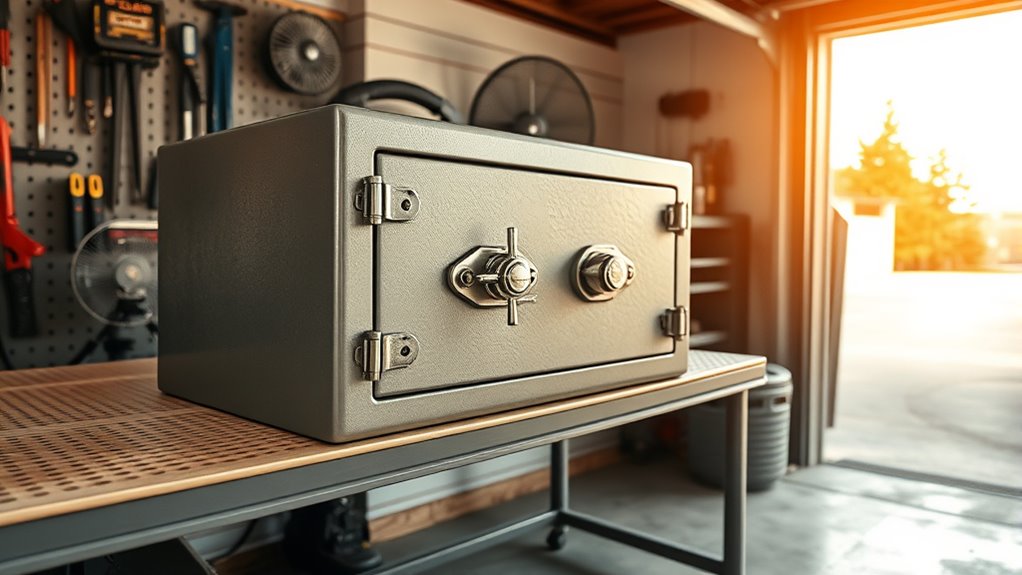
How Is Ammo Stored Safely in a Hot Garage?
To store ammo safely in a hot garage, it is essential to use heat-resistant, airtight containers with rubber gaskets. These containers help keep out moisture and heat, which are the main threats to ammunition integrity.
Adding desiccant packets inside the containers absorbs humidity and further protects the ammo.
Avoid using plastic boxes that can warp or melt under high temperatures. Keep the ammo away from direct sunlight and heat sources to minimize temperature fluctuations.
Regularly monitor temperature and humidity levels in the storage area to prevent degradation.
Conduct routine inspections to catch any signs of damage early. Understanding these steps will help you maintain your ammo’s reliability and safety over time.
Proper storage ensures your ammunition remains effective even in challenging conditions.
Key Takeaways
- Store ammo in heavy-duty, heat-resistant metal or polymer containers with airtight seals and rubber gaskets to control temperature and moisture.
- Use desiccant packets inside storage containers to absorb moisture and prevent corrosion in hot, humid garage conditions.
- Keep ammo containers elevated on shelves away from direct sunlight and heat sources like water heaters or furnaces.
- Monitor garage temperature and humidity regularly, maintaining below 85°F and 30-50% humidity for optimal ammo preservation.
- Inspect ammo monthly for signs of damage or corrosion, and isolate or dispose of any compromised rounds safely.
Why Extreme Heat Damages Your Ammo
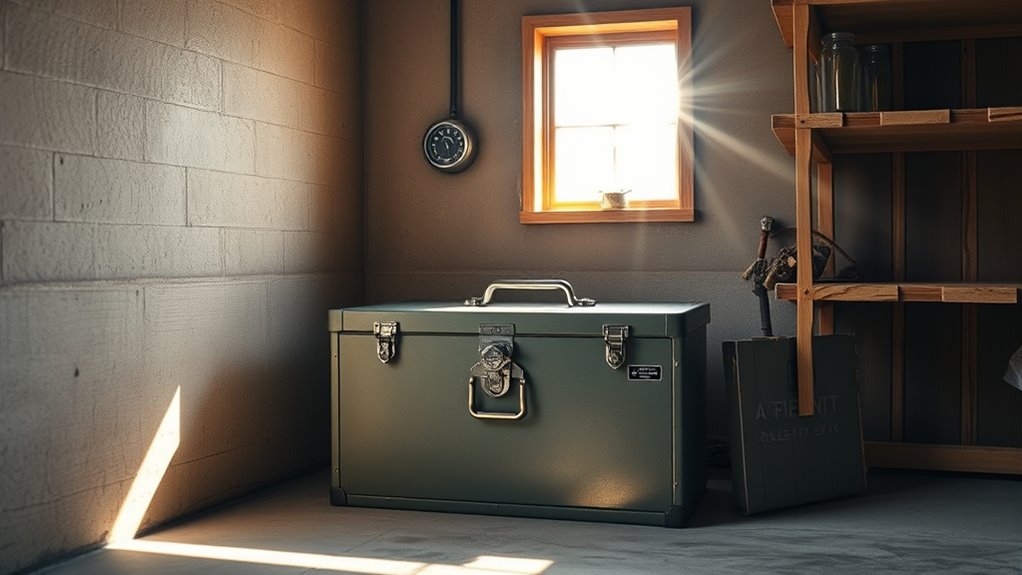
Although ammo is designed to withstand a range of conditions, extreme heat can seriously compromise its reliability and safety. When you expose ammo to high temperatures, the propellant inside can degrade faster, affecting the pressure generated when fired. This could lead to inconsistent performance or even dangerous pressure spikes.
The primers, which ignite the powder, are also heat-sensitive; excessive heat can cause them to become unstable or fail to ignite properly. Additionally, the casing and bullet materials may expand or warp slightly, which can affect how well the round chambers and fires. If you’re storing ammo in a hot garage, the repeated heat cycles can accelerate these issues over time.
You want your ammo to perform predictably every time, so keeping it away from extreme heat is essential. Managing temperature fluctuations will help maintain the structural integrity and function of your ammunition, ensuring safety and reliability when you need it most.
How High Temperatures Affect Ammo Quality
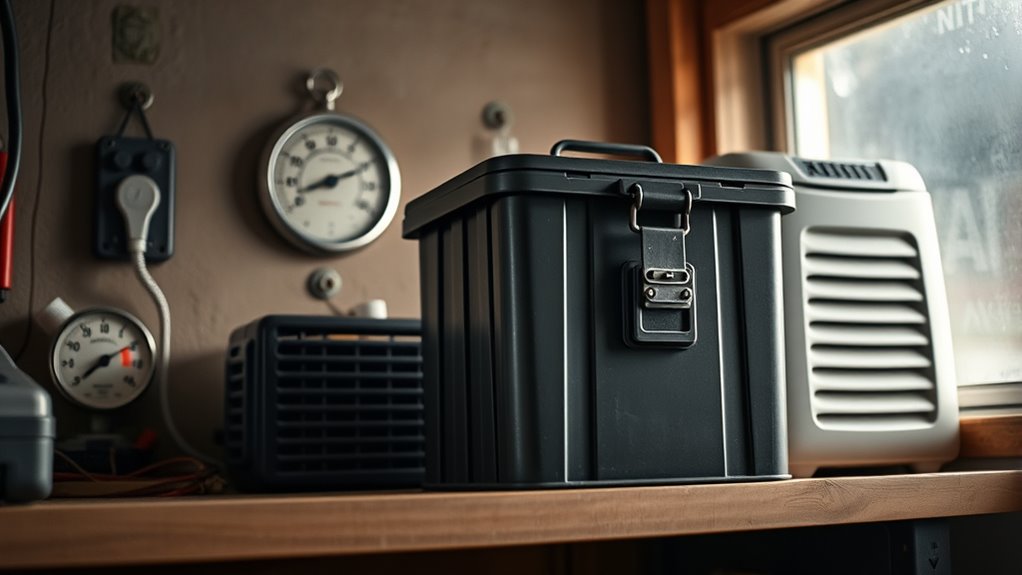
How exactly do high temperatures impact the quality of your ammo? When exposed to heat, the chemical stability of the gunpowder inside the cartridges can degrade. This leads to inconsistent burning rates, which might cause misfires or unpredictable bullet velocity.
Additionally, the primers, which ignite the powder, can become less sensitive or even fail if subjected to prolonged heat. Over time, this reduces your ammo’s reliability.
Prolonged heat can dull primers, leading to decreased sensitivity and unreliable ammunition performance.
The metal casings can also expand and contract with temperature changes, potentially affecting the cartridge’s fit in your firearm’s chamber. Excessive heat may accelerate corrosion, especially if humidity is high, further compromising ammo integrity.
In short, storing ammo in a hot garage without temperature control risks reducing its performance and safety. To keep your rounds dependable, you’ll want to minimize their exposure to high temperatures and maintain a stable environment.
Choosing Ammo Storage Containers for Hot Garages
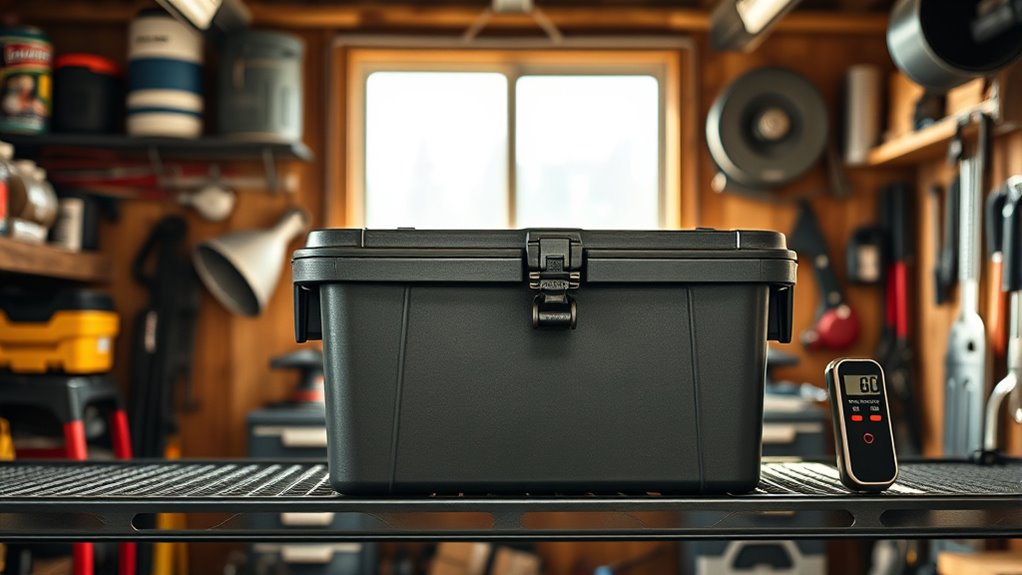
When storing ammo in a hot garage, you’ll want containers that can handle high temperatures without warping or breaking down. Look for storage options with built-in moisture control to prevent rust and corrosion.
Choosing the right container helps keep your ammo safe and reliable over time.
Temperature-Resistant Storage Options
Since garages can often reach high temperatures, especially during summer months, choosing the right ammo storage container is essential to protect your rounds from heat damage. You’ll want containers made from materials that can withstand heat without warping or degrading, like heavy-duty metal or thick, heat-resistant polymer.
Look for containers with insulated walls or reflective coatings to help minimize internal temperature spikes. Avoid plastic boxes that can soften or melt under extreme heat. Some ammo cans come with rubber gaskets and airtight seals, which also help maintain stable temperatures by limiting heat exchange.
Additionally, consider containers designed for extreme environments, often used by military or outdoor enthusiasts, as they’re built to handle tough conditions. By picking temperature-resistant storage options, you’ll keep your ammo safe and reliable even in a hot garage.
Moisture Control Features
Along with managing temperature, controlling moisture levels in your ammo storage is just as important, especially in hot garages where humidity can fluctuate. Excess moisture can cause corrosion and degrade the quality of your ammunition. To combat this, choose storage containers with airtight seals that prevent humidity from seeping in.
Look for ammo boxes or cases made of durable plastic or metal with rubber gaskets. Adding desiccant packets inside the container helps absorb any residual moisture, keeping your ammo dry. You might also consider containers with built-in humidity indicators so you can monitor moisture levels.
Regularly checking and replacing desiccants ensures maximum protection. By focusing on moisture control features, you’ll keep your ammo in reliable condition, no matter how hot or humid your garage gets.
Climate-Controlled Ammo Safes for Heat Protection
When storing ammo in hot environments, a climate-controlled safe can keep temperatures steady to prevent damage. You’ll also benefit from built-in humidity control features that protect against moisture.
Plus, these safes are made from durable materials designed to withstand heat and protect your ammo over time.
Temperature Regulation Benefits
How much does temperature really affect your ammo’s reliability and safety? Extreme heat can degrade gunpowder and primers, leading to misfires or inconsistent performance. When you use a climate-controlled ammo safe, you’re actively protecting your rounds from temperature spikes common in hot garages.
These safes maintain a stable internal environment, preventing heat-related deterioration. That means your ammo stays consistent, reliable, and ready when you need it. Plus, regulating temperature reduces the risk of pressure buildup inside cartridges, which can be dangerous.
Humidity Control Features
Temperature control does more than just protect your ammo from heat damage—it also plays a key role in managing humidity levels. High humidity can cause corrosion and degrade your ammo’s performance, so a climate-controlled safe is essential in a hot garage.
When selecting such a safe, consider these features:
- Built-in Dehumidifiers – Automatically remove moisture from the air inside the safe.
- Sealed Doors and Gaskets – Prevent outside moisture from entering the safe.
- Humidity Sensors – Monitor and display internal humidity for easy assessment.
- Ventilation Systems – Promote air circulation to reduce dampness and mold risk.
Durable Safe Materials
Why does the material of your ammo safe matter so much in a climate-controlled setup? Because it directly affects how well your safe handles heat and moisture. Durable materials like steel or heavy-duty composite resist warping and damage from temperature fluctuations, keeping your ammo secure.
These materials also provide better insulation, helping maintain a stable interior climate. You want a safe that won’t degrade or lose integrity in your hot garage environment. Look for safes with powder-coated finishes or corrosion-resistant treatments to prevent rust.
Why Humidity Control Matters for Ammo
Although many factors affect ammo longevity, controlling humidity is one of the most essential steps you can take to keep your ammunition reliable and safe. Excess moisture can cause corrosion on cartridges and primers, leading to misfires or dangerous malfunctions.
Controlling humidity is vital to prevent corrosion and ensure your ammo remains reliable and safe.
If you don’t manage humidity levels, your ammo’s performance could degrade faster than expected.
Here’s why humidity control matters for your ammo:
- Prevents corrosion: Moisture causes metal parts to rust and degrade.
- Maintains powder stability: Dampness can affect the gunpowder’s burn rate.
- Protects casing integrity: Humidity weakens the brass or steel casing.
- Ensures consistent reliability: Dry ammo performs better and safer.
Best Places in Your Garage to Store Ammo
When storing ammo in your garage, you’ll want to pick a cool, dry corner to keep it safe from moisture and heat. Elevated shelving units are ideal since they keep your ammo off the floor and away from potential water damage.
Let’s explore why these spots work best for ammo storage.
Cool, Dry Corners
Since ammo is sensitive to temperature and moisture, choosing cool, dry corners in your garage is essential for safe storage. These areas help minimize exposure to heat and humidity, which can degrade your ammunition over time.
When picking the right corner, consider these factors:
- Away from direct sunlight – Sunlight increases temperature and moisture levels.
- Near an exterior wall – These spots tend to stay cooler than interior walls.
- Good ventilation – Prevents moisture buildup that can cause corrosion.
- Off the floor – Avoid dampness and potential flooding damage.
Elevated Shelving Units
If you want to keep your ammo safe and accessible, elevated shelving units are one of the best options in your garage. By storing ammo off the floor, you reduce the risk of moisture damage and accidental impacts. Choose shelves made of metal or heavy-duty plastic, as they resist warping in heat and humidity better than wood.
Position the shelves away from direct sunlight and heat sources like water heaters or furnaces. To further protect your ammo, place it in sealed containers or ammo cans on the shelves. This setup keeps your ammunition organized, easy to reach, and less exposed to temperature fluctuations common in a hot garage environment.
Elevated shelving units help maintain your ammo’s integrity and safety over time.
Monitoring Temperature and Humidity in Your Storage Area
Although ammo is built to withstand tough conditions, keeping an eye on temperature and humidity in your storage area is essential to preserve its reliability and safety. Excessive heat can degrade gunpowder, while high humidity can cause corrosion on cartridges.
To maintain the best conditions, consider these steps:
- Use a digital thermometer and hygrometer to monitor temperature and humidity levels regularly.
- Aim to keep the temperature below 85°F and humidity between 30-50% to prevent deterioration.
- Invest in a dehumidifier or moisture-absorbing packets if your garage tends to be damp.
- Guarantee good ventilation to avoid heat buildup and reduce moisture accumulation.
Inspecting Ammo Regularly in Hot Conditions
When storing ammo in hot conditions, you should inspect it regularly to catch any signs of damage early. Heat can accelerate corrosion, degrade the powder, and weaken primers, so frequent checks help ensure your ammo remains safe and reliable. Look for discoloration, rust, or unusual odors, as these can indicate chemical changes.
Also, examine the casing for dents, cracks, or bulges, which might compromise performance or safety. Make it a habit to inspect your ammo monthly, especially during hotter seasons. Handle each round carefully, noting any differences from previous inspections.
Keep a log if you want to track changes over time. Regular inspections let you identify potential issues before they become serious, helping you maintain your ammo’s integrity. Staying proactive with these checks is key when dealing with the challenges of a hot garage environment.
What to Do If Ammo Shows Signs of Heat Damage
Since heat can seriously compromise your ammo’s safety, you’ll want to act quickly once you spot any damage. Heat-damaged ammo can be unstable or misfire, so handling it carefully is vital. Here’s what you should do:
- Stop using the ammo immediately – Don’t attempt to fire or test it.
- Isolate the damaged rounds – Store them separately in a cool, dry place away from other ammo.
- Consult a professional – Contact a local firearms expert or range for advice on disposal or inspection.
- Dispose of damaged ammo safely – Follow local regulations for ammo disposal; never throw it in regular trash.
Best Practices for Long-Term Ammo Storage in Hot Environments
If you plan to store ammo in hot environments, you’ll need to take extra precautions to maintain its integrity and safety. First, keep your ammo in airtight, moisture-resistant containers to prevent humidity from accelerating corrosion. Use desiccant packets inside these containers to control moisture levels.
Store ammo off the floor and away from direct sunlight or heat sources to minimize temperature fluctuations. Ideally, choose insulated or temperature-controlled storage options like a climate-controlled safe or cabinet. Label your ammo with purchase dates so you can rotate stock and avoid long-term storage beyond recommended periods.
Regularly inspect your ammo for signs of damage, such as discoloration or corrosion, and discard any compromised rounds safely. Avoid storing large quantities in one place to reduce risk. By following these best practices, you can safely store your ammo long-term even in hot garages, ensuring it remains reliable and safe for future use.
Frequently Asked Questions
Can Storing Ammo in a Hot Garage Affect Firearm Performance?
Yes, storing ammo in a hot garage can affect firearm performance. Heat may degrade gunpowder and primers, causing misfires or reduced accuracy.
You’ll want to keep ammo in a cool, dry place to guarantee reliability and safety.
Is It Safe to Store Different Types of Ammo Together?
By Jove, you shouldn’t store different types of ammo together! Mixing them can cause confusion or damage.
Keep each caliber separated in labeled containers to stay organized and guarantee safety while handling your ammunition.
How Often Should I Rotate My Ammo Stock in a Hot Environment?
You should rotate your ammo stock every 6 to 12 months in a hot environment to guarantee reliability. Heat accelerates degradation, so using older rounds first helps maintain peak performance and safety over time.
Regular rotation ensures that your ammunition remains effective and reduces the risk of malfunction. Environmental factors like temperature fluctuations can impact the stability of the propellant.
Are There Specific Ammo Brands Better Suited for Hot Storage?
Think of ammo brands like athletes in a sauna—some handle the heat better. Hornady and Federal often perform well in hot storage, thanks to their quality sealing.
You’ll want to pick brands known for durability under stress.
Can Extreme Heat Cause Ammo to Become Unstable or Dangerous?
Yes, extreme heat can make ammo unstable and dangerous by increasing pressure inside the cartridge, risking misfires or explosions.
You should always store ammo in a cool, dry place to keep it safe and reliable.
Conclusion
You might think storing ammo in a hot garage is harmless, but imagine the slow, unseen damage creeping inside each cartridge. Heat warps, humidity corrodes, and time only worsens the threat.
Don’t wait until your ammo fails when you need it most. Take control now—choose the right containers, monitor conditions, and inspect regularly.
Your safety depends on it. Will your ammo be ready when it counts, or will the heat have the final say? Proper ammo storage in a hot garage requires careful attention to temperature, humidity, and protective containers to ensure reliability and safety.