Do Gun Safe Dehumidifiers Work and How to Use Them Effectively
Gun safe dehumidifiers work well to prevent rust and moisture damage in your firearms by controlling humidity inside the safe. These devices are essential for maintaining the longevity and performance of your guns, especially in environments prone to dampness.
Using gun safe dehumidifiers correctly can significantly reduce the risk of corrosion and other moisture-related issues.
To use them effectively, place the dehumidifier off the floor for proper airflow, monitor humidity levels regularly with a hygrometer, and recharge or replace moisture-absorbing materials when needed.
Adjust use seasonally, especially during humid months, for best results.
By following these tips, you’ll keep your firearms in excellent condition and avoid common mistakes that reduce efficiency.
More useful insights are ahead.
Key Takeaways
- Gun safe dehumidifiers effectively prevent rust and corrosion by maintaining optimal humidity levels between 30% and 50%. Proper placement, such as elevating dehumidifiers off the floor, ensures better air circulation and moisture absorption.
- Regularly monitor humidity with a hygrometer and recharge or replace moisture-absorbing materials to maintain efficiency. Choose the right dehumidifier type based on safe size, power availability, and desired maintenance level.
- Adjust dehumidifier use seasonally and avoid overcrowding the safe to optimize performance and protect firearms year-round.
Why Gun Safe Dehumidifiers Matter for Your Firearms
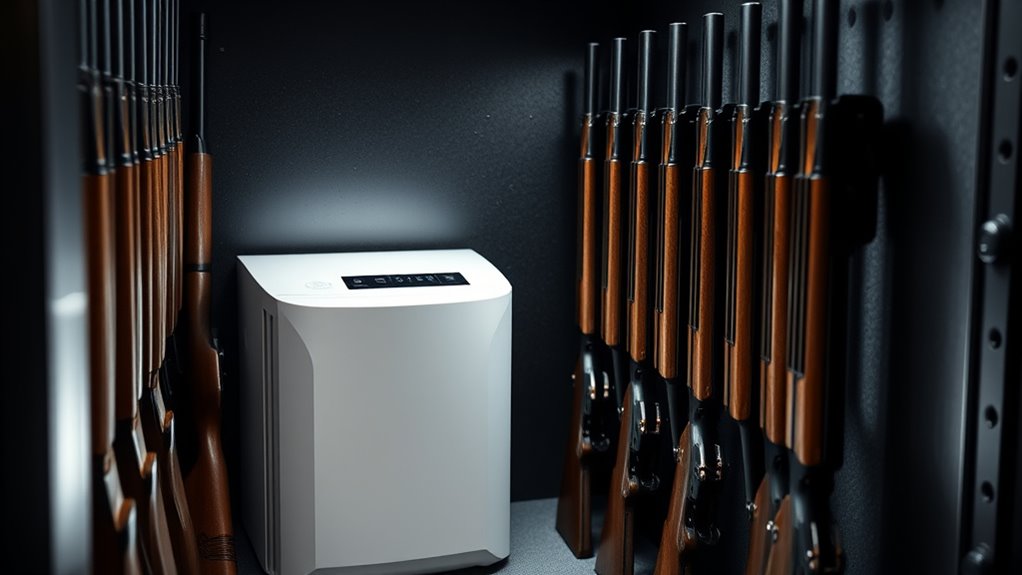
Although you might not think about it often, moisture inside your gun safe can seriously damage your firearms over time. When humidity builds up, it creates an environment where rust and corrosion thrive, which can degrade metal parts and affect your gun’s performance.
Even small amounts of moisture can lead to pitting on barrels or weakening of springs, compromising safety and reliability. You want your firearms to stay in peak condition, ready to function when you need them most. Using a gun safe dehumidifier helps you control the internal climate and prevent moisture accumulation.
It’s not just about protecting your guns but also preserving their value. Without proper humidity control, you risk costly repairs or replacements down the line. So, taking steps to reduce moisture inside your safe isn’t just smart—it’s essential for maintaining your firearms’ longevity and performance.
Types of Gun Safe Dehumidifiers: Pros and Cons

When choosing a gun safe dehumidifier, you’ll find several types available, each with its own advantages and drawbacks. Desiccant dehumidifiers use moisture-absorbing materials like silica gel. They’re affordable, silent, and don’t require power, but you’ll need to replace or recharge them regularly.
Electric dehumidifiers actively remove moisture by drawing in air and condensing water. They’re efficient and low-maintenance but need a power source and can be noisier.
Another type is the rechargeable dehumidifier, combining desiccant material with a built-in heater to dry itself when plugged in. These are convenient but usually pricier upfront. Finally, some gun safes come with built-in dehumidifiers, offering tailored performance but limiting your options and sometimes increasing cost.
Understanding these types helps you weigh convenience, cost, and effectiveness without overwhelming your safe’s environment. Each has its place depending on your setup and how much effort you want to put into maintenance.
How to Choose the Right Gun Safe Dehumidifier
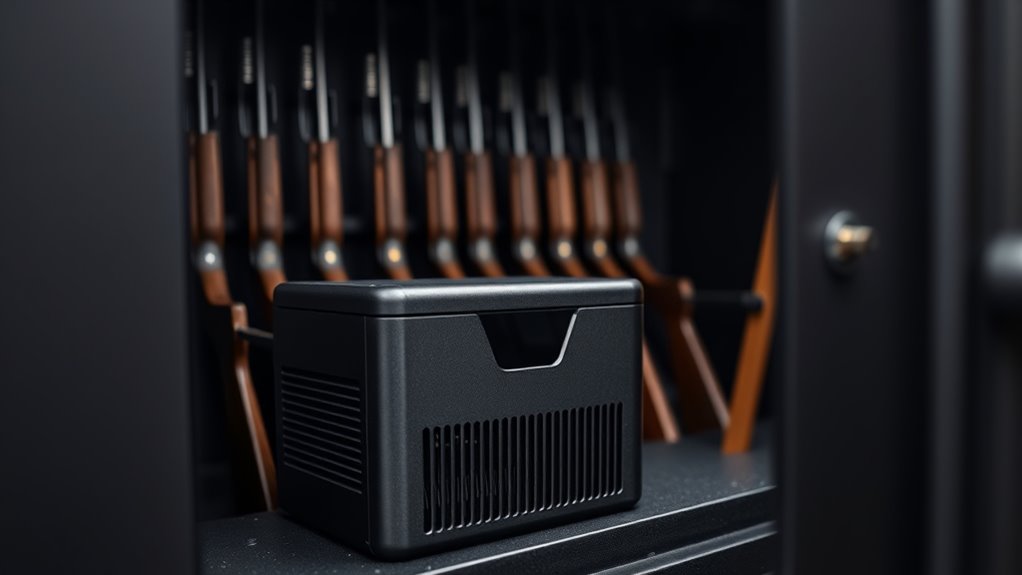
To pick the right gun safe dehumidifier, you’ll want to think about its capacity and size to match your safe. Think about the power source—whether you prefer plug-in, battery, or rechargeable options.
Also, pay attention to moisture control features to keep your firearms in top condition.
Capacity and Size
Since gun safes come in various sizes, choosing a dehumidifier with the right capacity is essential to guarantee effective moisture control. You’ll want a unit that matches your safe’s volume—too small, and it won’t remove enough moisture; too large, and it might be wasteful or even cause over-drying. Measure your safe’s interior cubic feet to find a dehumidifier rated for that space.
For smaller safes, compact units or desiccant packs often suffice. Larger safes need more powerful units with higher moisture absorption rates. Also, consider how often you open the safe, as frequent access introduces humidity, requiring a higher capacity.
Picking the right size ensures your firearms stay rust-free without you having to constantly check or replace the dehumidifier.
Power Source Options
How do you decide which power source suits your gun safe dehumidifier best? You’ll mainly choose between battery-powered and plug-in models. Battery-powered dehumidifiers offer portability and work during power outages, which is great if your safe isn’t near an outlet.
However, you’ll need to replace or recharge batteries regularly. Plug-in units provide continuous operation without worrying about battery life but require a nearby power source. Some models combine both, letting you switch between power options for flexibility.
Consider your safe’s location and how often you check it. If your safe is in a remote or hard-to-reach spot, battery power might be more convenient. Otherwise, a plug-in dehumidifier guarantees consistent moisture control without interruptions.
Your choice impacts convenience and effectiveness, so weigh these factors carefully.
Moisture Control Features
When selecting a gun safe dehumidifier, you’ll want to focus on moisture control features that match your safe’s specific needs. These features help maintain the right humidity level, preventing rust and mold effectively. Consider these four key factors:
- Adjustable Humidity Settings – Lets you set precise moisture levels, ideal for different climates and storage conditions.
- Automatic Shutoff – Prevents over-drying and conserves energy by turning off when desired humidity is reached.
- Continuous Drain Option – Useful if you don’t want to manually empty water reservoirs often.
- Humidity Indicator – Displays current moisture levels so you can monitor conditions without guesswork.
Choosing a dehumidifier with these features ensures your guns stay protected and your safe environment stays ideal.
Maintain Proper Humidity Levels in Your Gun Safe
To keep your guns in top condition, you’ll want to maintain the ideal humidity range inside your safe—usually between 30% and 50%. It’s important to monitor these levels regularly to prevent rust and damage. Using a reliable hygrometer can help you stay on track.
Ideal Humidity Range
Maintaining the right humidity level in your gun safe is essential for protecting your firearms from rust and corrosion. Ideally, you want to keep the relative humidity between 35% and 50%. Here’s why this range works best:
- Below 35% – Too dry, which can cause wooden stocks to crack and metal parts to become brittle.
- 35% to 50% – Perfect balance to prevent rust while preserving wood integrity.
- Above 50% – Excess moisture encourages rust, mold, and mildew growth.
- Consistent levels – Fluctuations stress materials and increase corrosion risk.
Keeping your gun safe within this ideal humidity range helps guarantee your firearms stay in top condition, ready whenever you need them.
Monitoring Humidity Levels
How can you assure your gun safe stays within the ideal humidity range? The key is consistent monitoring. Using a reliable hygrometer inside your safe lets you track humidity levels in real time.
Digital hygrometers with clear displays are especially helpful, allowing you to quickly spot any spikes or drops. Check the readings regularly, ideally daily or weekly, so you can adjust your dehumidifier settings as needed. If you notice humidity creeping above 50%, it’s time to boost your dehumidifier’s output or add more moisture-absorbing packets.
Conversely, if humidity falls too low, consider reducing dehumidification to prevent drying out gun oils. Keeping an eye on humidity ensures your firearms stay rust-free and in top condition. Monitoring isn’t a one-time task—it’s ongoing maintenance.
Set Up Your Gun Safe Dehumidifier Correctly
Wondering where to start when setting up your gun safe dehumidifier? It’s simpler than you might think. Getting it right guarantees your firearms stay rust-free and in top condition.
Setting up your gun safe dehumidifier correctly guarantees your firearms remain rust-free and in excellent condition.
Here’s how to set it up correctly:
- Choose the Right Spot: Place the dehumidifier off the floor, preferably on a shelf or mounted, to allow even air circulation inside the safe.
- Read the Instructions: Different models have specific setup steps. Following the manufacturer’s guidelines ensures optimal performance.
- Check Power Source: If it’s electric, make sure you have a nearby outlet or use a long, safe extension cord designed for your environment.
- Calibrate Humidity Settings: Set the dehumidifier to maintain a relative humidity of around 40-50%, which is ideal for preventing corrosion without over-drying.
Common Mistakes to Avoid When Using Gun Safe Dehumidifiers
Although using a gun safe dehumidifier seems straightforward, many people make avoidable mistakes that reduce its effectiveness. First, don’t forget to check the humidity levels regularly. If you assume the dehumidifier is working without monitoring, you risk moisture buildup.
Also, avoid placing the dehumidifier directly on the safe’s floor; elevated placement ensures better air circulation and efficiency. Another common mistake is neglecting to recharge or replace the dehumidifier’s moisture-absorbing materials on time, which leads to saturation and failure. Avoid overcrowding your safe, as blocking airflow around the dehumidifier limits its ability to absorb moisture.
Additionally, don’t use a dehumidifier that’s too small for your gun safe; it won’t keep humidity at ideal levels. FINALLY, never ignore the manufacturer’s instructions—they’re designed to help you get the best results. Steering clear of these mistakes will help your dehumidifier protect your firearms effectively.
How to Troubleshoot Gun Safe Dehumidifier Problems
Even with proper use, gun safe dehumidifiers can sometimes run into issues that affect their performance. When you notice problems, don’t panic—there are straightforward ways to troubleshoot.
- Check Power Supply: Ensure the dehumidifier is plugged in and the outlet is working. Sometimes a loose connection or tripped breaker is the culprit.
- Inspect the Desiccant or Moisture Packs: If you’re using silica gel or similar packs, they might be saturated and need recharging or replacement.
- Examine the Safe’s Seal: A compromised door seal can let moisture in, making the dehumidifier work harder or appear ineffective.
- Clean the Unit: Dust and debris can block vents or sensors, reducing efficiency. Regularly wipe down and clean your dehumidifier according to the manufacturer’s instructions.
Following these steps will help you quickly identify and fix common issues, keeping your gun safe dry and secure.
Seasonal Tips to Use Your Gun Safe Dehumidifier Year-Round
Since humidity levels change with the seasons, adjusting how you use your gun safe dehumidifier can boost its effectiveness and protect your firearms year-round. In the humid summer months, you’ll want to run your dehumidifier continuously or check it more frequently to guarantee moisture doesn’t build up. Keep an eye on the moisture indicator or reservoir and empty it regularly.
During cooler, drier winter months, you can reduce the dehumidifier’s runtime or switch to a lower setting because excessive dryness can also be harmful. Spring and fall often bring fluctuating humidity, so monitor your safe closely and adjust usage as needed. Also, consider the location of your safe—if it’s in a basement or garage, seasonal changes might be more extreme, requiring more attention.
More Ways to Prevent Rust in Your Gun Safe
Adjusting your gun safe dehumidifier with the seasons is a great start, but there are additional steps you can take to keep rust at bay. Here are four effective ways to boost your gun safe’s rust prevention:
Adjust your gun safe dehumidifier seasonally and follow key steps to enhance rust prevention.
- Clean Your Firearms Regularly – Dirt and moisture trapped on your guns can accelerate rust. Wipe them down with a quality gun oil or rust inhibitor after each use.
- Use Silica Gel Packs – Place silica gel packs inside your safe to absorb excess moisture. Remember to replace or recharge them periodically.
- Maintain Proper Ventilation – Avoid sealing your safe in a damp room. Ensure good airflow around the safe to reduce humidity buildup.
- Inspect and Reapply Protective Coatings – Check your guns and safe interiors for worn finishes. Reapply protective oils or rust-resistant coatings as needed to sustain a strong barrier.
Combining these methods with your dehumidifier will help you keep your firearms rust-free and in top condition.
Frequently Asked Questions
Can Gun Safe Dehumidifiers Damage Electronic Firearm Components?
No, gun safe dehumidifiers won’t damage electronic firearm components if used properly. You just need to avoid excessive moisture removal or overheating, ensuring the dehumidifier maintains safe humidity levels to protect both your electronics and firearms.
Proper use is key to preventing any potential harm. Maintaining balanced humidity helps preserve the integrity of your firearm’s electronic parts.
How Often Should Desiccant Packs Be Replaced in a Gun Safe?
You should replace desiccant packs every 1 to 3 months, depending on humidity levels and pack size.
If they’re saturated or no longer changing color (if indicator type), it’s time to refresh them for effective moisture control.
Are Rechargeable Dehumidifiers Cost-Effective for Long-Term Use?
Like investing in a trusty shield, rechargeable dehumidifiers are cost-effective long-term.
You’ll save on constant replacements and power bills, making them a smart, eco-friendly choice to keep your gun safe dry and secure.
Can Placing a Dehumidifier Inside the Safe Void the Warranty?
It usually won’t void your safe’s warranty, but you should check the manufacturer’s guidelines first. Using approved dehumidifiers inside is typically fine, but unauthorized modifications or damage caused by devices might affect coverage.
Do Gun Safe Dehumidifiers Consume a Lot of Electricity?
Think of a small nightlight quietly glowing in your safe. Gun safe dehumidifiers use very little electricity, so you won’t see a spike in your bill.
They work steadily, keeping moisture away without draining power.
Conclusion
Think of your gun safe as a fortress, and the dehumidifier as its silent guardian, standing between your firearms and the creeping rust.
By choosing the right dehumidifier and using it properly, you’re not just controlling moisture—you’re preserving your legacy and peace of mind.
Keep this guardian vigilant year-round, and your collection will stay as sharp and reliable as the day it was forged.
To protect what matters, consistent use of gun safe dehumidifiers is essential.
Effective moisture control can prevent corrosion and extend the life of your firearms.
Investing in a quality dehumidifier ensures your gun safe remains a secure and dry environment for your valuable collection.