Are Ammo Boxes Waterproof?
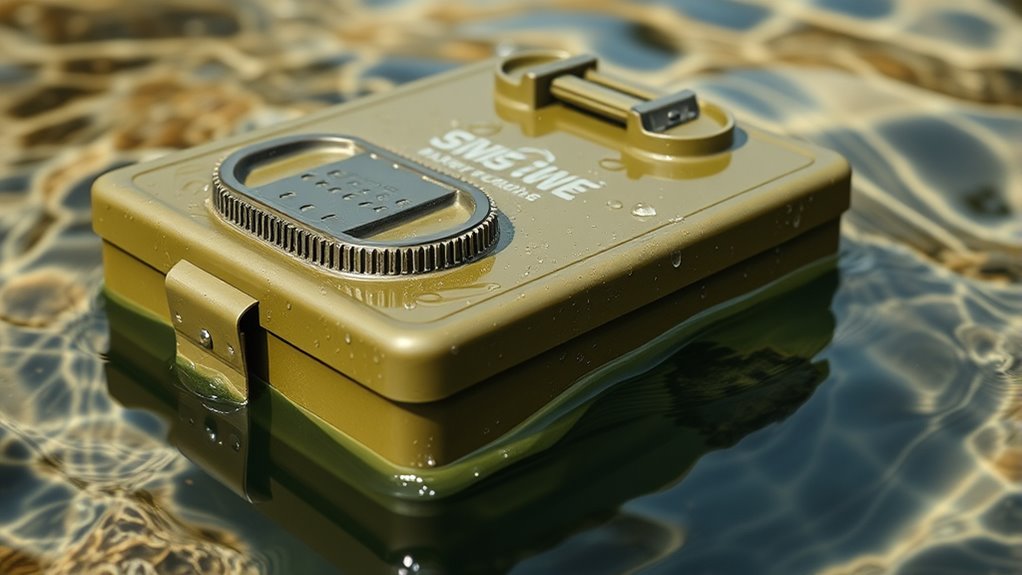
Ammo boxes generally offer good splash and rain protection but aren’t fully waterproof, especially in heavy rain or if submerged. Understanding whether ammo boxes are waterproof is crucial for protecting your ammunition from moisture damage. Proper sealing and material choice play significant roles in moisture resistance.
If the seals or gaskets are worn or latches aren’t properly secured, moisture can seep in, risking rust and corrosion. Plastic ammo boxes usually resist water better than metal ones, which may need extra care to avoid rust.
Regular maintenance helps ensure the box remains effective against moisture.
If you want to understand how to test, enhance, and choose the right ammo box for moisture protection, keep exploring. Knowing these details can help you safeguard your ammo in various weather conditions and prolong its lifespan.
Key Takeaways
- Most standard ammo boxes offer rain and splash protection but are not fully waterproof or airtight. Rubber gaskets improve water resistance but can degrade, allowing moisture ingress over time. Plastic ammo boxes are naturally waterproof and rust-resistant, unlike metal boxes prone to corrosion.
- Heavy rain or submersion can cause leaks, so extra waterproofing measures are recommended for outdoor use. Testing via water submersion and gasket inspection helps verify an ammo box’s water resistance.
Are Ammo Boxes Truly Waterproof Against Moisture?
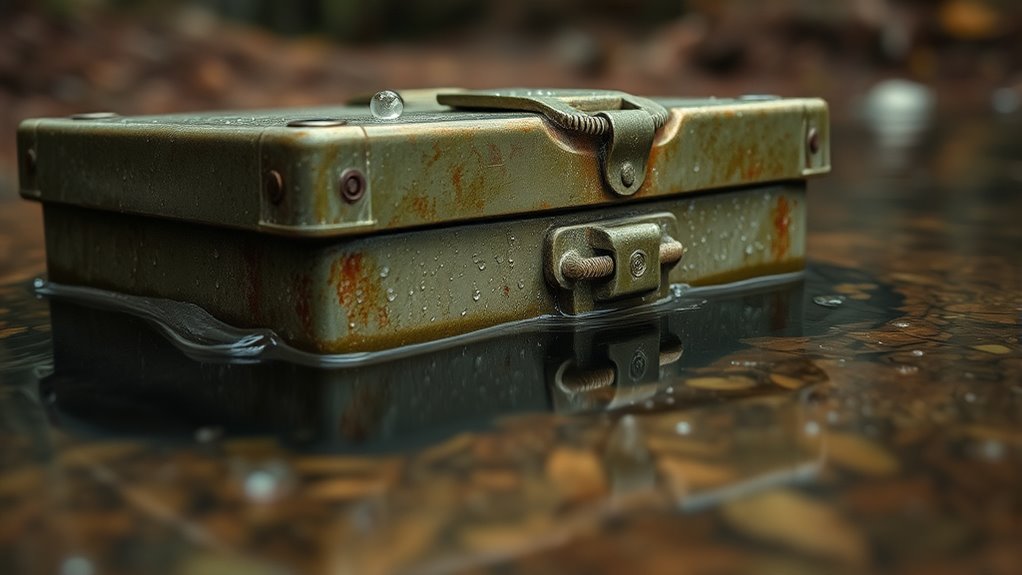
Although ammo boxes are designed to protect their contents, you might wonder if they’re truly waterproof against moisture. The truth is, most standard ammo boxes offer good protection from rain and splashes but aren’t completely airtight or waterproof.
If you leave your box exposed to heavy rain or submerged in water, moisture can eventually seep inside through small gaps or worn seals. Over time, this can lead to rust or corrosion on your ammunition.
You’ll find that many ammo boxes feature rubber gaskets or seals around the lid, which help block out some moisture. However, these seals can degrade, and if the box’s latch isn’t fully secure, water might still get in.
What Makes an Ammo Box Water-Resistant?
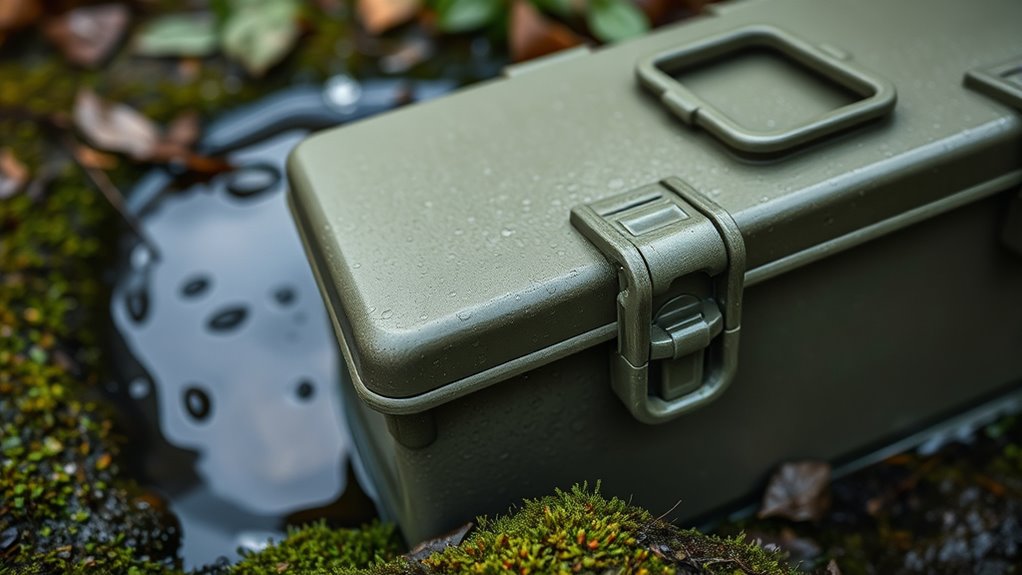
You’ll find that the material an ammo box is made from plays a big role in keeping water out. The design of the seal and gasket also helps prevent moisture from sneaking in.
Plus, corrosion-resistant features protect both the box and its contents over time.
Material Composition Impact
The materials used to make an ammo box play a big role in how water-resistant it is. Different materials offer varying levels of protection against moisture. Steel ammo boxes are common and provide solid resistance but can rust if the paint or coating gets damaged.
Plastic boxes, on the other hand, are naturally resistant to water and won’t rust, but they might crack under extreme conditions. Aluminum boxes are lightweight and corrosion-resistant but may not be as durable.
| Material | Water Resistance Level |
|---|---|
| Steel | Moderate |
| Plastic | High |
| Aluminum | Moderate-High |
| Wood | Low |
| Composite | High |
Choosing the right material helps guarantee your ammo stays dry and safe.
Seal and Gasket Design
Material choice sets the stage for water resistance, but it’s the seal and gasket design that really keeps moisture out of an ammo box. When you’re looking for a water-resistant box, focus on these key elements:
- Rubber Gaskets: A high-quality rubber gasket fits snugly around the lid, creating a tight barrier that blocks water from seeping in.
- Compression Seal: The lid should press firmly against the gasket when closed, ensuring a consistent seal across the entire edge.
- Design Fit: The lid and box must align perfectly, with no gaps or uneven surfaces that could compromise the seal.
Corrosion Resistance Features
Although a tight seal keeps water out, corrosion resistance is what guarantees your ammo box stays durable over time. Manufacturers often coat metal boxes with protective layers like powder coating or enamel paint to prevent rust. Some ammo boxes use stainless steel or aluminum, which naturally resist corrosion better than regular steel.
You’ll also find boxes treated with anti-corrosive primers or even specialized coatings designed for harsh environments. These features ensure that even if moisture sneaks in or condensation forms, the metal won’t degrade quickly. When choosing an ammo box, check for corrosion-resistant materials and coatings, especially if you plan to store it in damp conditions.
This way, you can trust your box to protect your ammo for years without rust compromising its integrity.
Plastic vs. Metal Ammo Boxes: Which Protects Better From Moisture?
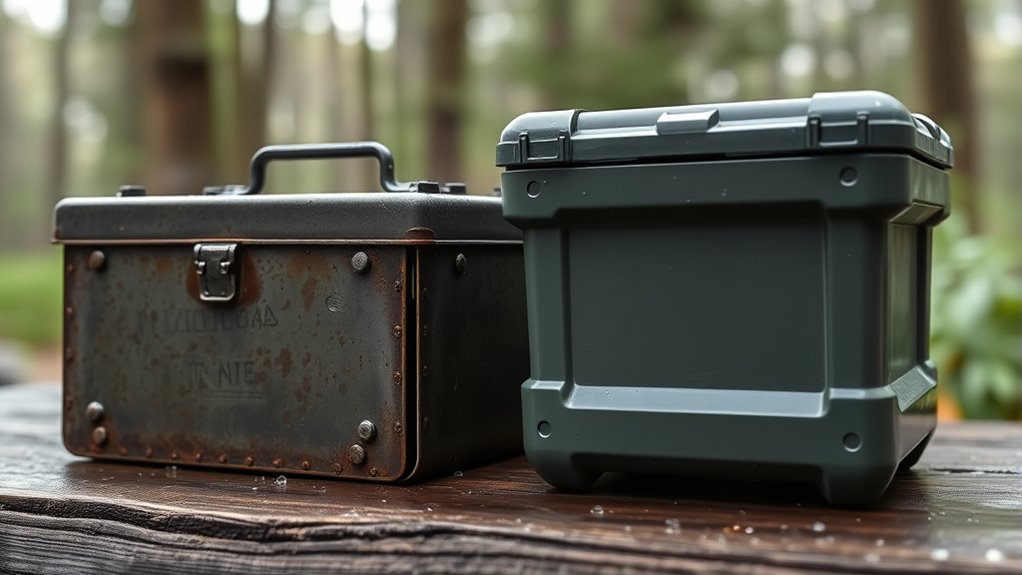
When choosing between plastic and metal ammo boxes, you’ll want to think about how each handles moisture and corrosion. Plastic boxes resist rust and often keep water out better, but metal boxes offer greater overall durability.
Let’s compare how these materials protect your ammo from moisture over time.
Moisture Resistance Comparison
If you’re deciding between plastic and metal ammo boxes, understanding how each handles moisture is essential. Both materials offer moisture resistance, but they do it differently. Here’s a quick comparison to help you choose:
- Plastic Ammo Boxes: They’re naturally resistant to water since plastic doesn’t absorb moisture. Most come with rubber seals, enhancing their watertight abilities. However, they can trap humidity inside if not properly ventilated.
- Metal Ammo Boxes: These often have tighter seals and sturdy construction, blocking external moisture effectively. Still, metal can sweat or collect condensation inside, which might affect your ammo.
- Sealing Mechanism: Regardless of material, the quality of the seal is vital. A well-sealed box prevents moisture better than the material alone.
Knowing these points helps you pick the best moisture protection for your ammo storage.
Durability Against Corrosion
Since corrosion directly impacts how well your ammo stays protected over time, understanding the durability differences between plastic and metal ammo boxes is essential. Plastic ammo boxes naturally resist corrosion because they don’t contain metal parts that can rust, making them ideal if you’re worried about moisture damage.
On the other hand, metal ammo boxes, often made from steel or aluminum, are more prone to rust when exposed to humidity or water unless they have a protective coating or are properly maintained. If you choose metal, you’ll need to regularly inspect and treat any signs of rust to keep your ammo safe.
How to Test Your Ammo Box’s Waterproof Seal
Although many ammo boxes claim to be waterproof, you’ll want to verify their seal yourself to guarantee your gear stays dry. Testing your ammo box’s waterproof seal is simple and can save you from future damage. Here’s how to do it:
- Visual Inspection: Check the gasket or rubber seal for cracks, gaps, or debris. A clean, intact seal is essential for waterproofing.
- Water Submersion Test: Close the box tightly and submerge it in a bucket of water for about 10 minutes. Look for any bubbles escaping—this indicates air (and water) can get in.
- Dry Inside Check: After submersion, open the box and inspect the interior for any moisture or dampness.
If your box passes these steps, you can trust its waterproof seal. If not, consider replacing the gasket or upgrading to a higher-quality box to protect your ammo better.
Best Ammo Storage Practices to Keep Your Ammo Dry
When you want to keep your ammo dry, proper storage is key to preserving its reliability and lifespan. Start by choosing a sturdy ammo box with a good seal. Store your ammo in a cool, dry place away from humidity and temperature extremes.
Using silica gel packs inside the box helps absorb moisture. Avoid storing ammo directly on concrete floors, as they can transfer moisture. Regularly inspect your ammo for signs of corrosion or damage.
Here’s a quick storage checklist to help you keep ammo dry:
| Storage Tip | Why It Matters | How to Implement |
|---|---|---|
| Quality Ammo Box | Prevents moisture ingress | Use sealed metal/plastic boxes |
| Cool, Dry Location | Limits condensation | Store away from heat/humidity |
| Silica Gel Packs | Absorbs moisture | Replace regularly |
| Off Concrete Floors | Stops moisture transfer | Use shelves or pallets |
| Regular Inspection | Detects early issues | Check ammo every few months |
When Should You Add Extra Waterproofing to Ammo Boxes?
Keeping your ammo dry with proper storage is a great start, but there are times you might want to add extra waterproofing to your ammo boxes. Even the best boxes can face challenges in extreme conditions or prolonged exposure to moisture. You should consider extra waterproofing when:
Proper storage keeps ammo dry, but extra waterproofing is essential in harsh or prolonged moisture conditions.
- Storing Ammo Outdoors: If your ammo boxes will be outside or in an unprotected area, extra sealing helps prevent rain or humidity from seeping in.
- Extended Storage Periods: Over months or years, seals can degrade. Adding waterproofing gives you peace of mind that moisture won’t damage your ammo.
- Transporting in Wet Environments: When moving ammo through rain, snow, or muddy terrain, extra waterproofing minimizes the risk of water intrusion during transit.
Adding waterproof liners, silicone sealants, or desiccant packs can boost protection. This extra step is a smart precaution to keep your ammo reliable and ready whenever you need it.
Top Ammo Boxes With the Best Water Protection
Since protecting your ammo from moisture is essential, choosing a box with excellent water resistance is a smart move. You’ll want to regard ammo boxes built with durable materials like heavy-gauge steel or high-grade polymer, both offering strong barriers against water intrusion.
Look for models featuring rubber gaskets or seals around the lid, which create a tight, waterproof closure to keep humidity and rain out.
Brands like MTM, Plano, and Pelican are known for producing top-tier ammo boxes with reliable water protection. For example, Pelican’s cases often come with IP67-rated waterproofing, meaning they can withstand full submersion.
MTM’s ammo cans feature tight-sealing lids and corrosion-resistant finishes, perfect for damp conditions. Plano’s ammo boxes combine rugged construction with sealed lids, making them a dependable choice if you’re storing ammo outdoors or in humid environments.
Frequently Asked Questions
Can Ammo Boxes Protect Against Corrosion From Saltwater?
You can protect ammo boxes from corrosion caused by saltwater, but you’ll need to add extra seals and use corrosion-resistant coatings. Without these, saltwater can still cause rust, so don’t rely on standard boxes alone.
Are Ammo Boxes Safe for Long-Term Ammo Storage Outdoors?
You shouldn’t rely on ammo boxes alone for long-term outdoor ammo storage. Moisture and temperature changes can cause corrosion inside. Use desiccants, check seals regularly, and consider additional waterproof containers to keep your ammo safe.
How Do Temperature Changes Affect Ammo Box Seals?
Like a breath held too long, temperature changes cause ammo box seals to expand and contract, making them less effective.
You’ll notice seals cracking or warping, so it’s smart to check and replace them regularly for airtight protection.
Can Ammo Boxes Prevent Damage From Physical Impacts?
Yes, ammo boxes can prevent damage from physical impacts because they’re made of sturdy metal or heavy-duty plastic. Just remember, they’re designed to protect contents from shocks, but extreme impacts might still cause some damage inside.
Are There Eco-Friendly Ammo Box Options Available?
Yes, you can find eco-friendly ammo boxes made from recycled materials or biodegradable plastics. They’re designed to reduce environmental impact while still offering durability, so you don’t have to sacrifice quality for sustainability.
Conclusion
While ammo boxes aren’t exactly little underwater vaults, they do offer a solid shield against everyday moisture. You can think of them as trusty guardians that keep your ammo safe from the occasional damp surprise.
To really lock in that dryness, adding a bit of extra protection never hurts. With a little care and the right box, you’ll keep your ammo in tip-top shape, ready whenever you need it—rain or shine.
In conclusion, while ammo boxes provide good moisture resistance, they are not completely waterproof. Using additional sealing methods can enhance protection against water damage. Proper maintenance and the right ammo box are key to keeping your ammunition safe and dry.