How Do You Carry a Concealed Weapon in MA Step by Step?
To carry a concealed weapon in Massachusetts, you must first meet specific eligibility requirements. These include being at least 21 years old, fulfilling residency criteria, and having no disqualifying criminal or mental health history. Understanding how to carry a concealed weapon in MA is essential for legal compliance and personal safety.
Next, complete a state-approved firearms safety course.
Then, submit a detailed application, including fingerprints and photos, to your local police or State Police.
You will need to pass a thorough background check as part of the approval process.
Once your application is approved, carry your License to Carry at all times.
Be sure to follow all location restrictions carefully.
Keep reading to learn important legal details and steps to take if any issues arise.
Key Takeaways
- Complete a state-approved firearms safety course and obtain the training certificate.
- Submit a License to Carry (LTC) application with fingerprints, photo, and required documents to your local police or Massachusetts State Police.
- Undergo background checks and fingerprinting as part of the application review process.
- Receive approval and your LTC, allowing you to carry a concealed weapon legally in Massachusetts.
- Always adhere to legal restrictions on where you can carry, respecting private property and prohibited areas.
How To Apply For A Massachusetts Concealed Carry License (LTC)
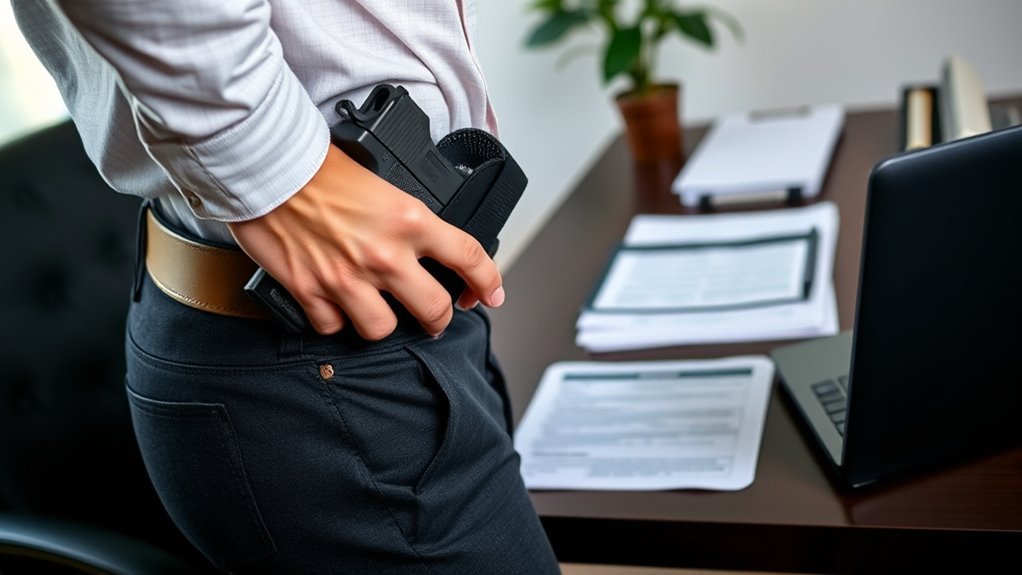
Wondering how to apply for a Massachusetts Concealed Carry License (LTC)? First, you’ll need to submit an application through your local police department or the Massachusetts State Police if you don’t have a local police force. The application requires you to provide personal information, fingerprints, and a photograph.
To apply for a Massachusetts Concealed Carry License, submit your application with personal info, fingerprints, and a photo.
You’ll also need to complete a firearms safety course approved by the state, which covers handling, storage, and Massachusetts gun laws.
Once your application is submitted, the police will conduct background checks, including criminal, mental health, and domestic violence records. You’ll be required to pay a fee, which varies depending on your municipality. The licensing authority then has up to 40 days to make a decision after receiving your completed application.
If approved, you’ll receive your LTC, allowing you to carry a concealed weapon legally. Keep in mind, you must renew your license every six years to keep it valid.
Eligibility To Carry A Concealed Weapon In Massachusetts
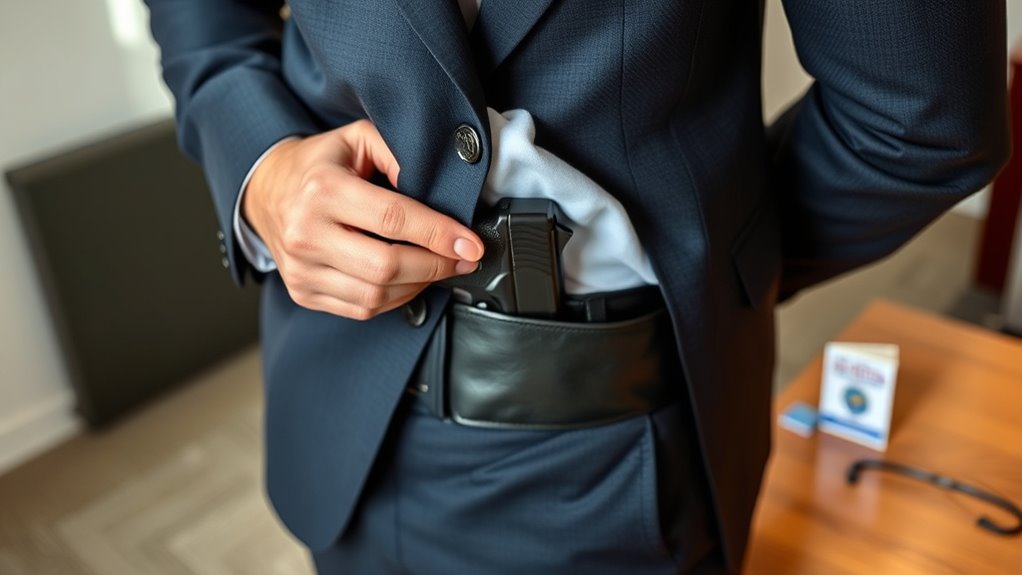
What qualifies you to carry a concealed weapon in Massachusetts? To be eligible, you must meet specific legal criteria. You need to be at least 21 years old, have no felony convictions, and not be subject to any restraining orders.
Additionally, you must be a Massachusetts resident or spend a significant amount of time in the state. Mental health is also considered; you cannot have been involuntarily committed or found mentally incompetent.
Here’s a quick overview of key eligibility requirements:
| Requirement | Description | Notes |
|---|---|---|
| Age | 21 years or older | No exceptions |
| Criminal Record | No felony convictions | Misdemeanors reviewed |
| Residency | MA resident or frequent visitor | Proof might be required |
| Mental Health | No involuntary commitment | Must be mentally competent |
| Legal Restrictions | No restraining orders or prohibitions | Federal and state laws apply |
Meeting these guarantees you can legally carry a concealed weapon in Massachusetts.
Documents You’ll Need To Apply For A Concealed Carry License

To apply for a concealed carry license in Massachusetts, you’ll need to gather some important documents. Make sure you have valid identification, proof of residency, and certificates from your firearm safety training.
These are essential to meet the state’s requirements and complete your application.
Valid Identification Requirements
Before you apply for a concealed carry license in Massachusetts, you’ll need to gather valid identification documents that prove your identity and residency. The most common form is a government-issued photo ID, like a driver’s license or state ID card. If you don’t have either, a valid passport or military ID can also work.
Make sure the ID is current and not expired. These documents help verify who you are and are essential for your application to be processed without delays. Keep in mind, photocopies usually aren’t accepted, so bring the original documents with you.
Having the proper identification ready guarantees your application moves smoothly through the system, setting you up for the next steps in obtaining your license.
Proof Of Residency
Once you have your valid identification ready, the next step is proving your residency in Massachusetts. You’ll need to provide documentation that clearly shows you live in the state.
Here are four common types of proof you can use:
- A current utility bill (electric, water, gas) with your name and address
- A lease or rental agreement valid at the time of application
- A recent bank or credit card statement showing your MA address
- A Massachusetts driver’s license or state ID displaying your current residence
Make sure the documents are recent—usually within the last 60 days—and match the address on your application. Having these proofs ready will help smooth the application process for your concealed carry license.
Firearm Safety Training Certificates
Although having a valid ID and proof of residency are essential, you’ll also need to provide firearm safety training certificates when applying for a concealed carry license in Massachusetts. These certificates prove you’ve completed a state-approved course covering safe handling, storage, and proper use of firearms. The training guarantees you understand legal responsibilities and safety precautions.
Without this documentation, your application won’t be accepted.
Here’s a quick overview of what to expect:
| Certificate Type | Description |
|---|---|
| Basic Firearm Safety Course | Introductory training on firearm basics |
| Massachusetts Approved Course | State-recognized certification |
| Hunter Safety Course | Focus on hunting laws and safety |
| NRA Safety Course | National Rifle Association certification |
Make sure your certificate is up-to-date and from a recognized instructor.
Where To Submit Your Concealed Carry License Application
You’ll need to submit your concealed carry license application to the right place to get started. In Massachusetts, this usually means your local police department or the Massachusetts State Police.
There’s also an online application portal that can simplify the process depending on your location.
Local Police Department
Before submitting your concealed carry license application, you’ll need to identify the correct local police department to handle your paperwork. This step is essential because the local police chief or department is responsible for processing and approving your application.
Here’s what you should do:
- Determine your city or town’s police department jurisdiction.
- Visit the official website or call the department to confirm they process concealed carry licenses.
- Obtain application forms and instructions directly from the department.
- Schedule any required appointments for fingerprinting or interviews.
Massachusetts State Police
Since the Massachusetts State Police oversees concealed carry license applications in certain areas, you’ll need to submit your paperwork directly to their licensing unit if your local police department doesn’t handle this process. This usually applies if you live in towns without a local police force or certain state-controlled areas.
Knowing where and how to submit your application is vital for a smooth process.
Here’s where to send your application:
| Contact Detail | Information |
|---|---|
| Licensing Unit Address | Massachusetts State Police, 470 Worcester Rd, Framingham, MA 01701 |
| Phone Number | (508) 820-2300 |
| Office Hours | Monday-Friday, 8:30 AM – 4:30 PM |
| Mailing Instructions | Send completed forms with required fees and documents via certified mail |
Make sure to follow these details carefully to avoid delays.
Online Application Portal
Although many applicants still submit paperwork by mail, you can now use the Online Application Portal to apply for your concealed carry license in Massachusetts. This digital option streamlines the process and helps you track your application status easily. Here’s how to use it:
- Visit the Massachusetts State Police website and locate the Concealed Carry License section.
- Create an account or log in if you already have one.
- Fill out the application form completely, upload required documents, and pay the application fee online.
- Submit your application and keep an eye on your email for any updates or requests for additional info.
Using the portal saves time and reduces paperwork hassles, making your application process smoother.
What The Background Check And Fingerprinting Involve
When you apply for a concealed weapon license in Massachusetts, you’ll need to undergo a thorough background check and fingerprinting process. This step guarantees you meet all legal qualifications and have no disqualifying criminal history or restraining orders. You’ll be fingerprinted at a designated location, often a police station or authorized fingerprinting service.
These prints are then submitted to the Massachusetts State Police and the FBI for review. The background check covers your criminal record, mental health history, and any other factors that could affect your eligibility. It’s important to provide accurate information during this process, as discrepancies can delay or deny your application.
Once your fingerprints are processed, the authorities will complete their investigation, which usually takes a few weeks. Passing this stage is vital before moving forward with your license approval. Make sure to keep track of any communications from the licensing authority during this time.
Completing The Required Firearms Safety Course
After your background check and fingerprinting clear, the next step is completing the required firearms safety course. This course guarantees you understand how to handle a firearm safely and responsibly, which is essential before carrying a concealed weapon in Massachusetts.
Here’s what you need to do:
- Find an approved instructor or training program – The course must be certified by the Massachusetts Police Standards and Training Council.
- Complete the classroom and live-fire training – You’ll learn about firearm operation, safety rules, and proper handling techniques.
- Pass the written and practical exams – These tests confirm your knowledge and ability to use a firearm safely.
- Obtain a certificate of completion – This document is mandatory for your license application.
Make sure to keep your certificate safe, as you’ll need it when you apply for your license to carry a concealed weapon in Massachusetts.
Legal Requirements For Carrying A Concealed Weapon In Massachusetts
Since carrying a concealed weapon in Massachusetts involves strict rules, you’ll need to meet several legal requirements before you can do so lawfully. First, you must be at least 21 years old and a resident or have a valid reason for non-resident licensing. You’ll need to submit a completed application to the Massachusetts Firearms Records Bureau, including fingerprints and a recent photograph.
The application requires you to provide a valid reason for carrying a concealed weapon, such as self-defense or employment-related needs. Background checks are mandatory, ensuring you have no felony convictions or restraining orders. Additionally, you must not be prohibited from owning firearms under state or federal law.
Once approved, you’ll receive your License to Carry (LTC), which you must carry whenever you have your concealed weapon. Remember, fulfilling these legal requirements is essential to avoid penalties and carry your concealed weapon responsibly in Massachusetts.
Places You Can And Cannot Carry A Concealed Weapon In Massachusetts
Meeting all the legal requirements to carry a concealed weapon in Massachusetts is just the first step. Knowing where you can and cannot carry is equally important to avoid legal trouble. Here’s a quick rundown of key places:
- Allowed: You can carry concealed weapons in public spaces like streets, parks, and your vehicle (with proper permit).
- Prohibited: Schools and school grounds strictly forbid carrying any firearm, even with a license.
- Restricted: Government buildings often have signs banning firearms, so you must comply and leave your weapon behind or secured.
- No Guns Allowed: Private property owners can prohibit firearms on their premises, so always respect posted signs or verbal requests.
Keep these in mind to carry your concealed weapon responsibly and legally throughout Massachusetts.
If Your Concealed Carry License Is Denied Or Revoked
If your concealed carry license is denied or revoked, it’s important to understand your rights and the steps you can take next. First, you’ll receive a written notice explaining the denial or revocation. You have the right to request a hearing within 30 days to challenge the decision.
It’s essential to gather any supporting evidence or documentation that can strengthen your case. During the hearing, you can present your arguments and clarify any misunderstandings. If the hearing doesn’t resolve the issue in your favor, you may be able to appeal the decision to a higher court.
Meanwhile, you must refrain from carrying a concealed weapon until your license is reinstated or approved. Staying informed about the reasons for denial or revocation helps you address any legal or procedural issues effectively. Consulting with an attorney familiar with Massachusetts gun laws can also guide you through this process.
Frequently Asked Questions
What Types of Firearms Are Allowed for Concealed Carry in Massachusetts?
You can carry most handguns legally registered in Massachusetts for concealed carry, but they must comply with state safety standards. Assault weapons and large-capacity magazines are generally prohibited, so make sure your firearm meets all legal requirements.
Always verify that your firearm adheres to the specific regulations set by the state to avoid any legal issues.
How Do I Renew My Massachusetts Concealed Carry License?
You’ll need to renew your Massachusetts concealed carry license every six years. Did you know about 70% of applicants successfully renew online?
Just submit your renewal application through the state’s portal before your license expires to stay compliant.
Can I Carry a Concealed Weapon While Traveling Outside Massachusetts?
You can carry a concealed weapon outside Massachusetts only if you comply with that state’s laws and have the appropriate permits. Always research local regulations beforehand, as laws vary widely and violating them can lead to serious legal trouble.
Make sure to understand the specific requirements and restrictions of the state you are traveling to.
Failure to do so can result in severe penalties, including fines and imprisonment. Stay informed to ensure you remain compliant.
What Are the Penalties for Carrying Without a License in Massachusetts?
“Better safe than sorry” applies here. If you carry without a license in Massachusetts, you could face criminal charges, fines, and even jail time.
It’s not worth risking your freedom by skipping legal steps.
Are There Any Restrictions on Concealed Carry for Non-Residents?
Yes, as a non-resident, you must have a valid license from your home state that Massachusetts recognizes. You can’t carry concealed here without it, and you’ll need to follow all Massachusetts laws and restrictions while carrying.
Conclusion
So, you want to stroll around Massachusetts packing heat like a secret agent? Just remember, it’s not as simple as slipping a banana in your pocket. You’ll need to jump through hoops: paperwork, background checks, safety courses, and knowing where you’re allowed to carry without causing a scene.
But hey, if you love bureaucracy as much as freedom, you’re in for a treat. Good luck—may your paperwork be swift and your holster discreet!
Carrying a concealed weapon in MA requires patience and preparation. Follow the step-by-step process carefully to stay compliant with Massachusetts firearm laws and ensure a safe experience while carrying concealed.