Are Gun Safes Tax Deductible?
You can deduct a gun safe on your taxes if it is used mainly for business purposes or as part of a legitimate home security system. This is especially true when the safe is required by insurance policies or legal regulations.
Personal use typically does not qualify for a deduction unless it is connected to specific needs such as medical reasons.
To claim the deduction, thorough documentation is essential. This includes keeping receipts, proof of purchase, and evidence showing the purpose of the safe.
Understanding these details can help you maximize your tax benefits while avoiding common pitfalls. Being well-informed ensures you comply with tax laws and receive the proper deductions for your gun safe.
Key Takeaways
- Gun safes are tax deductible only if primarily used for business or security purposes, not for personal use alone.
- Deduction eligibility depends on the safe contributing to overall property security or meeting legal or insurance requirements.
- Business-related gun safes can be depreciated and include installation costs as deductible expenses.
- Proper documentation, including receipts and usage records, is essential to support deduction claims.
- Consulting a tax professional ensures correct filing, maximizes deductions, and complies with IRS regulations.
When Can You Deduct a Gun Safe on Your Taxes?
Although most personal expenses aren’t tax-deductible, you can deduct the cost of a gun safe if it qualifies as a necessary business expense or is required for certain legal or insurance purposes. For example, if you’re a licensed firearms dealer or work in a profession that mandates secure storage of firearms, the safe’s cost may be deductible as a business expense. You’ll need to prove that the gun safe is essential to your work or compliance with regulations.
Additionally, if your insurance policy specifically requires a gun safe to protect firearms for coverage eligibility, you might justify the deduction. Keep careful records, including receipts and documentation showing the safe’s necessity for business or legal reasons. Personal use alone typically won’t qualify.
Consult a tax professional to see if your situation meets IRS criteria and to ensure you’re following the right procedures for claiming this deduction accurately on your tax return.
Gun Safe Tax Deductions: Home Security and Business Use
If you use a gun safe to enhance your home security, you might qualify for certain tax deductions.
Similarly, if your gun safe is part of a business setup, there could be additional tax benefits available.
Let’s explore how these deductions work for both personal and business use.
Home Security Expense Deductions
When you invest in a gun safe for your home, you might be able to claim it as a tax deduction under home security expenses. The IRS sometimes allows deductions for security enhancements that protect your property and family. Here’s what you should consider:
- Eligibility: The gun safe must be part of a larger home security system or contribute to overall security.
- Medical Necessity: If recommended for medical reasons (e.g., mental health concerns), deductions may be more straightforward.
- Itemized Deductions: You’ll need to itemize your deductions instead of taking the standard deduction.
- Documentation: Keep receipts and any professional recommendations to support your claim in case of an audit.
Check with a tax advisor to confirm if your specific situation qualifies.
Business Use Tax Benefits
How can you leverage a gun safe for tax benefits beyond home security? If you use a gun safe as part of your business—say, in a licensed firearms dealership or a security company—you might qualify for tax deductions. The IRS generally allows deductions on business expenses that are ordinary and necessary, so purchasing a gun safe to secure firearms or valuable equipment can count.
To claim this, you’ll need to prove the safe is used exclusively for business purposes. Keep detailed records and receipts to support your deduction. Remember, if the safe serves both personal and business use, you can only deduct the portion related to your business.
Consulting a tax professional is a smart move to ensure you maximize these benefits without risking compliance issues.
IRS Tax Rules for Gun Safe Deductions
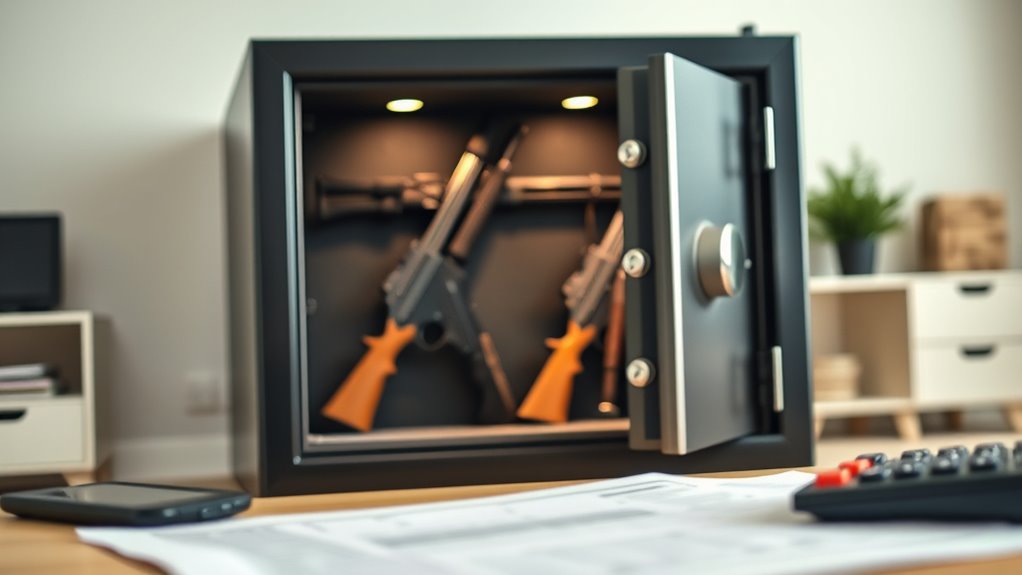
To qualify for a tax deduction, your gun safe must meet specific IRS criteria related to deductible expenses. You’ll also need to keep detailed documentation, like receipts and proof of business use, to support your claim.
Understanding these rules helps guarantee you file correctly and avoid issues during an audit.
Deductible Expenses Criteria
Although gun safes offer undeniable security benefits, not all expenses related to their purchase are automatically tax deductible. To qualify, you need to meet specific IRS criteria. Here’s what you should consider:
- Business Use: The gun safe must be used primarily for business purposes, such as securing firearms used in your job.
- Security Requirement: It should be necessary to protect valuable business property or ensure safety compliance.
- Ordinary and Necessary Expense: The cost must be common and accepted in your line of work.
- Capital vs. Expense: Depending on the cost, you might need to depreciate the safe over time instead of deducting it all at once.
Understanding these points helps you determine if your gun safe purchase can reduce your taxable income.
Documentation Requirements
Since the IRS requires clear proof of your deductible expenses, you’ll need to keep thorough documentation when claiming a gun safe on your taxes. This means holding onto your purchase receipt, showing the date, price, and seller details. If you’re claiming the safe as a business expense, keep records linking the safe to your business activities, like inventory lists or security policies.
Also, maintain any installation invoices or related maintenance receipts, as these might support your deduction. Without proper documentation, the IRS could disallow your claim, leading to penalties or additional taxes. Make sure your records are organized and readily accessible in case of an audit.
Keeping precise paperwork will make the deduction process smoother and protect you from unnecessary tax issues.
How to Document Your Gun Safe Purchase for Taxes
When you buy a gun safe, keeping detailed records is essential for claiming any potential tax deductions. To make sure you have everything in order, follow these steps:
- Keep your receipt – Save the original purchase receipt showing the price, date, and vendor details.
- Note the payment method – Document how you paid, whether by credit card, check, or cash, as proof of transaction.
- Record the purpose – Write a brief note explaining why you bought the safe, especially if it’s for business or security reasons that might qualify for deduction.
- Store warranty and manuals – Keep all related documents, like warranty papers and user manuals, which further validate your purchase.
Common Mistakes That Disqualify Gun Safe Tax Deductions
If you want to claim a tax deduction for your gun safe, you need to avoid some common mistakes that could disqualify you. One major error is failing to prove the safe’s necessity for your specific tax situation, such as using it solely for personal security instead of qualifying purposes like business or medical needs.
Another mistake is neglecting to keep proper documentation—without receipts or proof of purchase, your deduction claim can be denied. Also, don’t forget that the safe must be used exclusively for the qualifying purpose; mixing personal use can lead to disqualification.
Additionally, incorrectly filing your deduction under the wrong category or missing deadlines can cause issues. Finally, assuming all gun safes qualify without checking IRS guidelines is risky. By steering clear of these errors, you improve your chances of successfully claiming a tax deduction for your gun safe.
Tips to Maximize Gun Safe Tax Benefits
Avoiding common mistakes is just the first step to securing a tax deduction for your gun safe. To maximize your tax benefits, you’ll want to be strategic and organized. Here are four solid tips:
Avoiding mistakes is only the beginning; being strategic and organized unlocks the full tax benefits of your gun safe.
- Keep Detailed Records – Save all receipts and documentation that prove the purchase and purpose of the gun safe. This helps when claiming deductions or audits.
- Understand Your Eligibility – Know if your gun safe qualifies under medical, business, or casualty loss deductions. This depends on your specific situation.
- Consult a Tax Professional – A tax expert can guide you on the best way to claim your deduction and avoid pitfalls.
- Combine Deductions When Possible – If you qualify for multiple related deductions (like business expenses and casualty losses), make sure to include all relevant claims.
Frequently Asked Questions About Gun Safe Tax Deductions
Wondering how you can claim a tax deduction for your gun safe? You might ask if all gun safes qualify for deductions. The answer depends on how you use the safe—if it’s for a business, like a security company, it may be deductible as a business expense.
For personal use, deductions are generally limited unless state laws or specific circumstances apply. You may also wonder if installation costs count. Typically, installation fees can be included in the total deductible amount if the safe qualifies.
What about depreciation? If the safe is a business asset, you can likely depreciate its cost over several years. Keep in mind, you’ll need proper documentation, like receipts and proof of business use, to support your claim. If you’re unsure about your situation, consulting a tax professional is a smart move to guarantee you’re following IRS guidelines correctly.
Frequently Asked Questions
What Types of Guns Can Be Stored in a Tax-Deductible Safe?
You can store any type of gun in a tax-deductible safe, including handguns, rifles, and shotguns. Just make sure the safe meets IRS requirements and is used for legitimate business or security purposes to qualify.
Are Biometric Gun Safes Treated Differently for Tax Purposes?
You won’t find biometric gun safes treated differently for tax purposes; they’re generally lumped in with other safes. Notably, 60% of gun owners prefer biometric models for quick access and security.
Can Renters Claim a Gun Safe Deduction on Their Taxes?
You generally can’t claim a gun safe deduction as a renter since it’s a personal expense, not a business one.
Unless it’s required for a business or specific legal reason, it usually isn’t tax-deductible.
Is Insurance Required for Gun Safe Tax Deduction Eligibility?
You don’t have to have insurance to qualify for a gun safe tax deduction. Notably, 70% of firearm thefts happen from unsecured homes, so having insurance and a safe can both protect you financially and legally.
Do State Tax Laws Affect Gun Safe Deductions Differently?
Yes, state tax laws can affect gun safe deductions differently. You’ll want to check your specific state’s rules since some states might allow deductions or credits, while others don’t.
Always consult a tax professional for guidance.
Conclusion
You might think a gun safe isn’t tax deductible since it’s just a personal security item, but if you use it for business or to protect firearms related to your work, you could qualify. Just be sure to keep detailed records and understand IRS rules.
Taking these steps can help you maximize your deductions and avoid common pitfalls. Don’t overlook the potential tax benefits of your gun safe purchase. Proper documentation and compliance are key to making your gun safe tax deductible.