How to Move Gun Safe in 7 Easy Steps
To move your gun safe safely and efficiently, start by emptying and cleaning it thoroughly. Securing all contents and writing down the combination are essential first steps. These precautions help protect both you and your valuables during the move.
Next, gather the right tools like dollies and straps to make transportation easier. Clear a direct path to avoid obstacles and ensure a smooth move. Using proper lifting methods with help will prevent injury and damage.
Carefully transport and position your safe on a sturdy, level spot. Once placed, anchor it securely to keep it stable. Following these steps will make moving your gun safe a safe and manageable process.
Keep following for detailed tips to master the process.
Key Takeaways
- Clear and unload the safe, removing all firearms, ammunition, and loose items before moving.
- Plan the route and gather necessary tools like dollies, straps, and protective gear for safe transport.
- Use proper lifting techniques and moving aids, enlisting help to avoid injury and damage.
- Position the safe on a stable, level surface and secure it with bolts or anchors to prevent shifting.
- Perform a final inspection to ensure the safe is stable, the lock functions properly, and no damage occurred.
Empty and Prepare Your Gun Safe for Moving
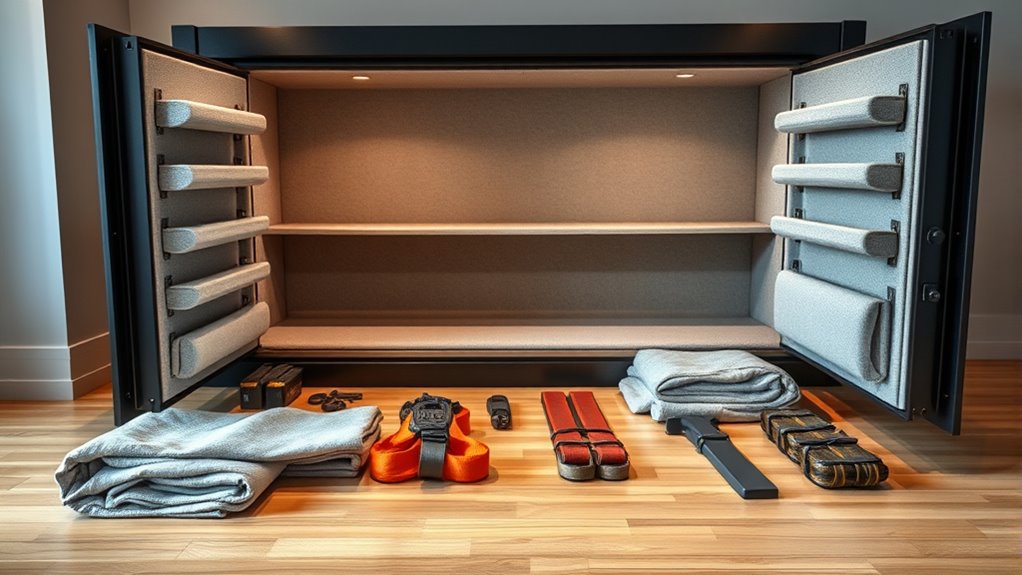
Where do you begin when moving a gun safe? The first step is to empty it completely. Take out all firearms, ammunition, and valuables, then store them securely elsewhere.
This not only lightens the safe’s weight but also guarantees nothing gets damaged or lost during the move. Next, remove any shelves or internal components that can be taken out to prevent shifting inside. Once emptied, clean the interior to avoid dirt or debris falling out while transporting.
Check that the safe is fully locked or securely taped shut to prevent the door from swinging open. If your safe has a combination lock, write down the combination and keep it handy in case you need it after the move. Preparing your gun safe carefully helps make the entire moving process safer and smoother, reducing risks of injury or damage to your valuables.
Gather the Tools and Equipment You’ll Need
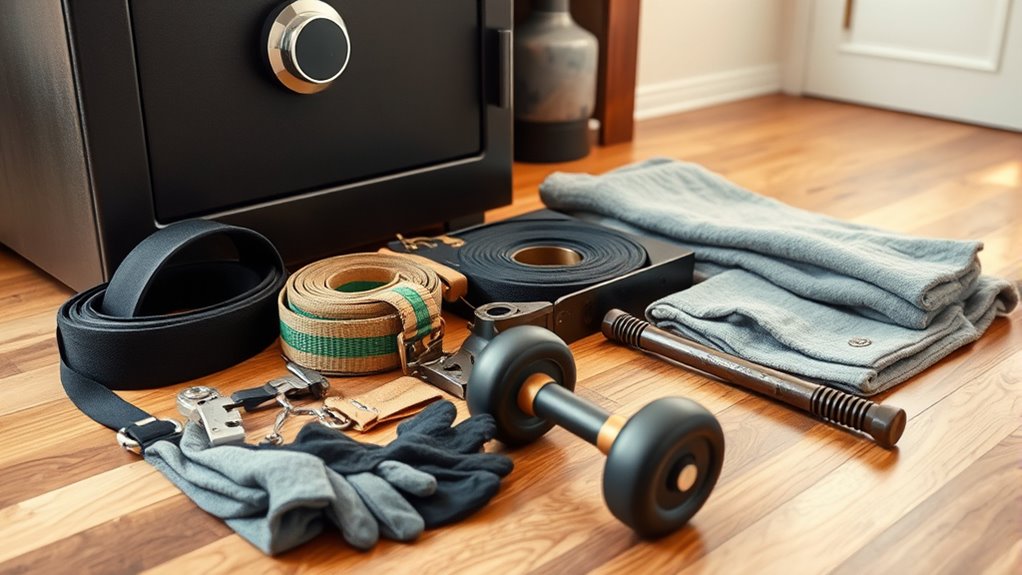
Before you start moving your gun safe, make certain you have all the necessary tools and equipment ready. Having the right gear will make the process smoother and safer, preventing damage to your safe and injury to yourself.
Ensure you have all essential tools ready to move your gun safe safely and efficiently.
Here are the essential items you’ll need:
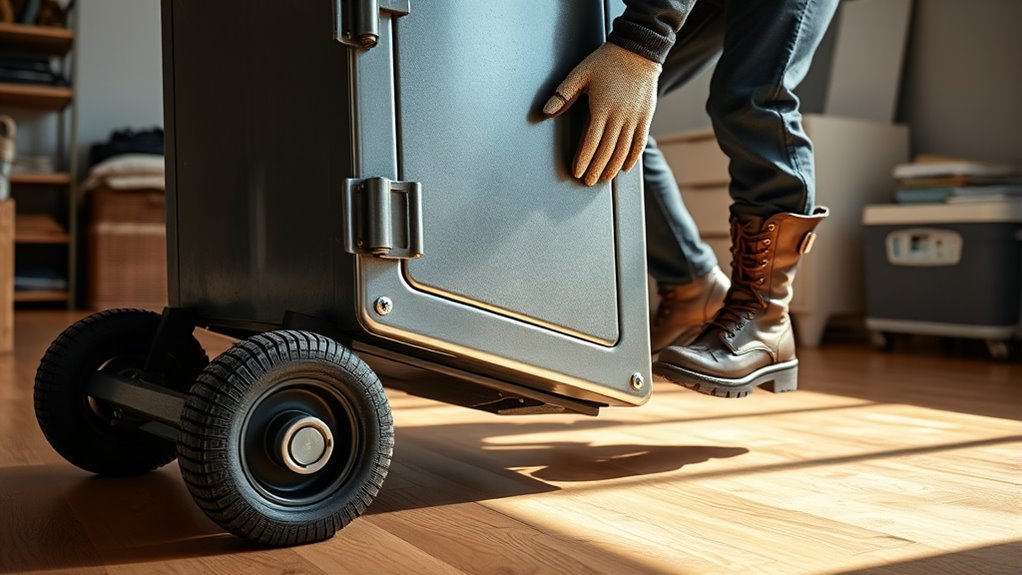
- Dollies and Furniture Straps: A heavy-duty dolly designed for bulky items and sturdy straps will help you lift and transport the safe with better control and less strain.
- Moving Blankets and Padding: Protect your safe and surroundings from scratches and dents by wrapping the safe in thick moving blankets or padding.
- Work Gloves and Steel-Toed Boots: Gloves provide a better grip and protect your hands, while steel-toed boots shield your feet from accidental impacts.
Gathering these tools beforehand ensures you’re prepared for each step, making the move efficient and secure.
Secure Your Gun Safe’s Contents Properly
Since your gun safe contains valuable and potentially dangerous items, securing its contents properly is essential before moving it. Start by removing any loose items like ammunition, accessories, or smaller firearms. Store these separately in a secure box to prevent damage and avoid accidents during the move.
Next, lock or secure the interior shelves and drawers to keep everything tightly in place. If your safe has adjustable shelving, consider removing or fastening them to prevent shifting. You can also use foam padding or blankets inside to cushion your firearms and prevent scratches or dents.
Double-check that all guns are unloaded and the safe’s locking mechanism is engaged to avoid accidental openings. Taking these steps helps protect your valuables, guarantees safety, and prevents damage to your safe or its contents while you’re on the move. Properly securing the contents saves you time and hassle when you reach your new location and unpack.
Clear a Safe Pathway for Moving Your Gun Safe
After securing everything inside your gun safe, the next step is to clear a safe pathway for moving it. This step is vital to avoid accidents and damage to both the safe and your home.
Start by removing obstacles. Clear furniture, rugs, and other items along the route to prevent tripping hazards or blockages. Measure doorways and hallways to ensure the safe will fit through all spaces on the path.
If needed, temporarily remove doors or frames. Check floor condition. Make sure the flooring is sturdy and even to support the weight of the safe without causing damage.
Lift Your Gun Safe Safely to Avoid Injury
When lifting your gun safe, it’s essential to use proper techniques to protect your back and avoid injury. Make sure you bend your knees, keep your back straight, and lift with your legs, not your arms.
Also, consider wearing safety gloves and using lifting straps or other equipment to make the process safer and easier.
Proper Lifting Techniques
How exactly do you lift a heavy gun safe without risking injury? The key lies in using proper lifting techniques that protect your back and joints. First, position yourself close to the safe with your feet shoulder-width apart to maintain balance.
Second, bend at your knees—not your waist—so your legs do the heavy work. Third, keep your back straight and tighten your core muscles before you lift. These steps reduce strain and help you maintain control.
Using Safety Equipment
Mastering proper lifting techniques is a great start, but relying on the right safety equipment is just as important to protect yourself while moving a gun safe. You’ll want gloves for grip and protection, a back brace to support your spine, and sturdy shoes to prevent slips. Using moving straps or a dolly can drastically reduce strain and help control the safe’s weight.
Here’s a quick overview of essential gear:
| Equipment | Purpose | Tip |
|---|---|---|
| Gloves | Improve grip | Choose padded, non-slip ones |
| Back Brace | Support lower back | Wear snugly for best support |
| Sturdy Shoes | Prevent slips | Use closed-toe, non-slip |
| Moving Straps | Distribute weight | Use with a partner |
| Dolly | Easier transport | Secure safe before rolling |
Using these tools helps you lift your gun safe safely and avoid injury.
Transport Your Gun Safe Safely to Its New Spot
Although moving a gun safe can feel intimidating, transporting it safely to its new spot is essential to avoid damage and injury. To make this process smoother, follow these key steps:
Moving a gun safe safely is crucial to prevent damage and injury—plan carefully to make it easier.
- Secure the safe: Before moving, lock the door or use straps to keep it shut. This prevents the door from swinging open and causing injury or damage.
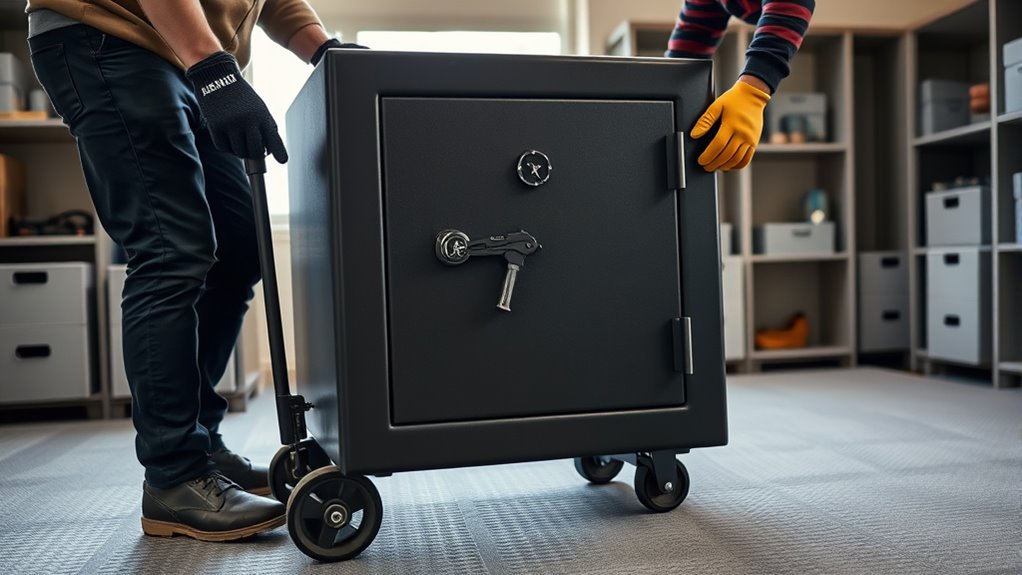
- Use proper lifting tools: Utilize a dolly or heavy-duty straps designed for moving heavy objects. This helps you maintain control and reduces strain on your body.
- Choose a clear path: Plan your route ahead of time, removing any obstacles. Check doorways, stairs, and tight corners to ensure the safe fits through without scraping walls or floors.
Set Up Your Gun Safe in Its New Location
Now that your gun safe is in its new spot, it’s time to pick the best location for it. You’ll want to guarantee it’s both accessible and discreet while keeping it stable.
Securing the safe properly will protect your valuables and prevent any accidents.
Choose Optimal Placement
Before you settle your gun safe in its new spot, think carefully about where it’ll be most secure and accessible. The right placement guarantees quick access while keeping your firearms out of unauthorized hands. Consider these key factors:
- Room Choice: Pick a location with limited foot traffic but easy access for you, like a master bedroom or a home office.
- Environmental Conditions: Avoid damp areas like basements prone to moisture, which can damage your safe and its contents.
- Floor Support: Make sure the floor can handle the safe’s weight to prevent damage or instability.
Choosing the ideal spot balances convenience with security, setting the stage for safely storing your firearms without compromising accessibility or protection.
Secure Safe Positioning
Once you’ve picked the perfect spot for your gun safe, it’s time to secure it firmly in place. Start by leveling the safe using shims or adjustable feet to prevent wobbling. Next, anchor the safe to the floor or wall, depending on your safe’s design and the flooring type.
Use heavy-duty bolts and a drill to fasten it securely, ensuring it can’t be tipped or moved easily. If you have carpet, consider placing a plywood sheet underneath for stability. Also, double-check that the safe’s door opens fully without obstruction.
Finally, test the safe’s locking mechanism to confirm it works smoothly in its new position. Taking these steps will keep your firearms safe and your investment secure.
Frequently Asked Questions
What Is the Best Type of Gun Safe for Home Security?
The best gun safe for home security is a heavy-duty, fireproof, and tamper-resistant one with a reliable locking system. You’ll want something bolted down and solid enough to deter burglars and protect your firearms from damage.
Choosing a safe that combines these features ensures both security and durability. It helps safeguard your guns from theft and environmental hazards.
Additionally, consider the size and storage capacity based on your collection. This will provide adequate space while maintaining compactness for home use.
How Do I Choose the Right Size Gun Safe?
You’ll want a gun safe that fits your collection and future purchases; 60% of gun owners add firearms over time. Measure your guns, consider space for ammo and accessories, and pick a safe that offers room to grow.
Can a Gun Safe Be Waterproof or Fireproof?
Yes, gun safes can be both waterproof and fireproof. You’ll want to look for safes with specific UL ratings to guarantee they protect your firearms and valuables from water damage and high temperatures during emergencies.
These ratings ensure the safe meets industry standards for durability and protection. Choosing a safe with the right certifications gives you peace of mind in case of floods or fires. Always check the product details carefully before making a purchase.
What Maintenance Does a Gun Safe Require?
You’ll want to regularly clean your gun safe’s interior, lubricate the locking mechanism, check the door seal for damage, and guarantee the safe remains dry to prevent rust.
Don’t forget to test the lock function periodically.
Are There Insurance Benefits to Owning a Gun Safe?
Yes, you can often get insurance discounts by owning a gun safe since it reduces theft risk. Just check with your insurer—they might require proof of the safe and specific security features for the benefits to apply.
Owning a gun safe demonstrates responsible firearm storage, which insurers may view favorably. This can lead to lower premiums or special discounts.
However, the exact benefits vary by insurer and policy. Always confirm the requirements beforehand to ensure you qualify for the discounts.
Conclusion
Moving your gun safe might feel like lifting a mountain, but with these simple steps, you’ve got this covered. By preparing properly, gathering the right tools, and taking safety seriously, you’ll avoid headaches and injuries.
Just remember, patience and care are your best allies in this process. Once it’s in place, you’ll feel the relief of knowing your valuables are secure, no matter where life takes you next.
You’re ready! Moving a gun safe safely requires the right approach, and following these steps ensures a smooth transition. With proper preparation and caution, your gun safe will remain protected throughout the move.