
7 Key States That Allow Concealed Carry
You can carry concealed with relative ease in seven key states that allow concealed carry, each offering different rules to fit your needs. Understanding concealed carry laws is essential for responsible firearm owners.
States like Alaska allow permitless concealed carry if you’re 21 or older and legally allowed to have a firearm.
Places like Texas and Florida require permits, safety training, and background checks to carry concealed.
Ohio and Georgia offer permits with reciprocity benefits for travel.
Knowing these laws helps you stay safe and legal.
Keep exploring to get the full picture and ensure you comply with each state’s regulations. Being informed is key to responsible concealed carry.
Key Takeaways
- Alaska allows permitless concealed carry for individuals 21+ who legally possess firearms, with some location restrictions.
- Texas requires a permit, safety training, and background checks for concealed carry, with specific location prohibitions.
- Florida mandates permits with training, fingerprinting, and background checks for eligible applicants 21+, including military exceptions.
- Georgia issues a Weapons Carry License for concealed carry, requiring background checks and local probate court processing.
- Ohio offers a simple permit process with a five-year validity, safety course, and background check, recognizing many out-of-state permits.
Understanding Permitless Concealed Carry States
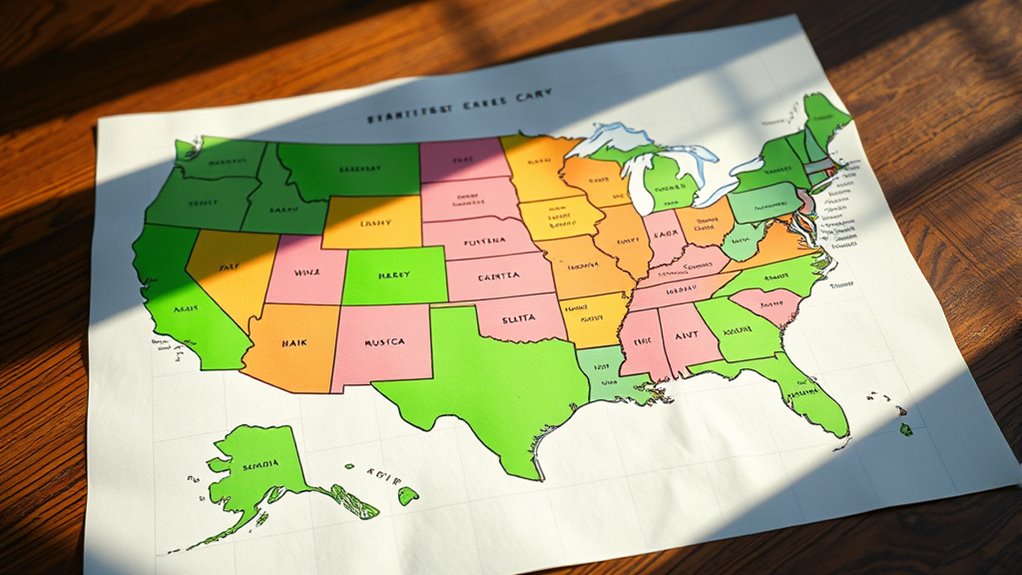
Although many states require a permit to carry a concealed weapon, some have embraced permitless concealed carry, allowing you to carry without any official license. This means you don’t have to jump through bureaucratic hoops to exercise your right to carry. However, it’s essential to remember that permitless carry doesn’t mean unrestricted carry.
You still need to follow specific state laws regarding where and how you can carry your firearm. In these states, you’re generally allowed to carry concealed as long as you’re legally eligible to own a firearm. That usually excludes felons, minors, and people with certain restraining orders.
Also, even if you don’t need a permit, it’s wise to be familiar with local regulations, such as prohibited locations and age requirements. Understanding these nuances helps you stay compliant and carry responsibly without a permit.
Texas Concealed Carry Laws: Balancing Freedom and Safety
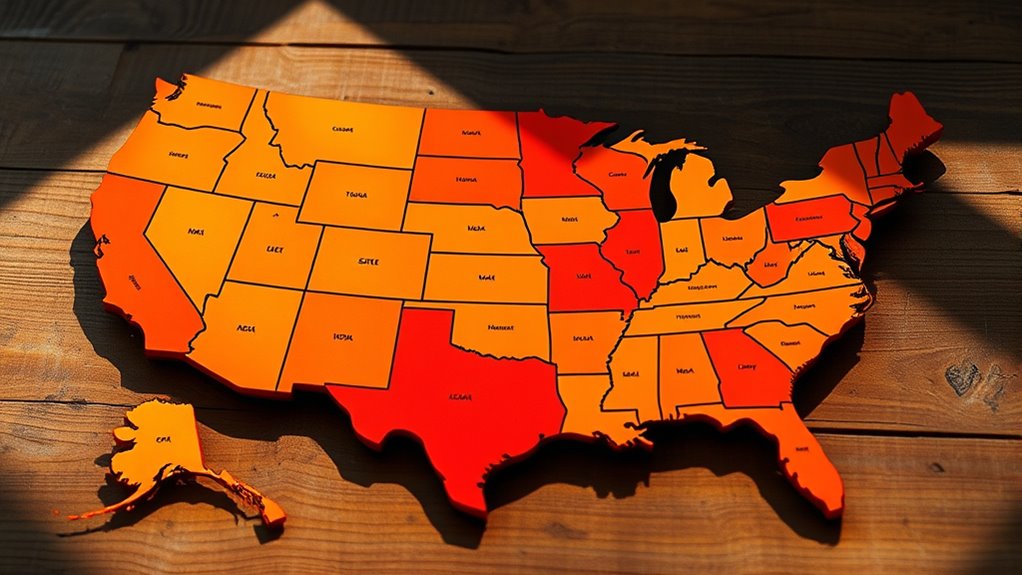
In Texas, you’ll need to understand the permit requirements before carrying concealed. There are specific places where carrying is restricted, so knowing those rules is essential.
Plus, completing safety training helps guarantee you’re prepared and responsible.
Permit Requirements Overview
When you apply for a concealed carry permit in Texas, you’ll need to meet specific requirements designed to balance your right to carry with public safety concerns. The state guarantees applicants are qualified and responsible before granting permission.
Here’s what you’ll need to qualify:
- Be at least 21 years old (18 if in the military).
- Complete a state-approved training course covering gun safety, laws, and handling.
- Pass a background check showing no felony convictions or disqualifying misdemeanors.
- Demonstrate proficiency with a handgun through a shooting test.
Meeting these standards helps Texas maintain a careful balance between individual freedom and community safety.
Carry Restrictions Explained
Texas has several key restrictions on where and how you can carry a concealed handgun to guarantee public safety while respecting your rights. You can’t carry in certain places like schools, bars, or government buildings, even with a permit. Also, you must keep your handgun concealed; openly carrying without a license is generally not allowed.
Understanding these limits helps you avoid legal trouble while exercising your rights responsibly.
| Restricted Location | Why It Matters |
|---|---|
| Schools | Protects children and staff |
| Bars and Taverns | Prevents alcohol-related conflicts |
| Government Buildings | Ensures security and order |
| Private Property | Respect owners’ rules |
Knowing these helps you carry safely and lawfully in Texas.
Safety Training Importance
Few things are as important as proper safety training when you carry a concealed handgun. It guarantees you handle your weapon responsibly and protect yourself and others. In Texas, understanding safety is a legal requirement and a moral obligation.
Here’s why you should prioritize it:
- Learn safe handling techniques to avoid accidental discharge.
- Understand state laws to carry within legal boundaries.
- Develop situational awareness to identify threats early.
- Practice proper storage to keep your firearm secure from unauthorized access.
Florida Concealed Carry Requirements and Permit Details
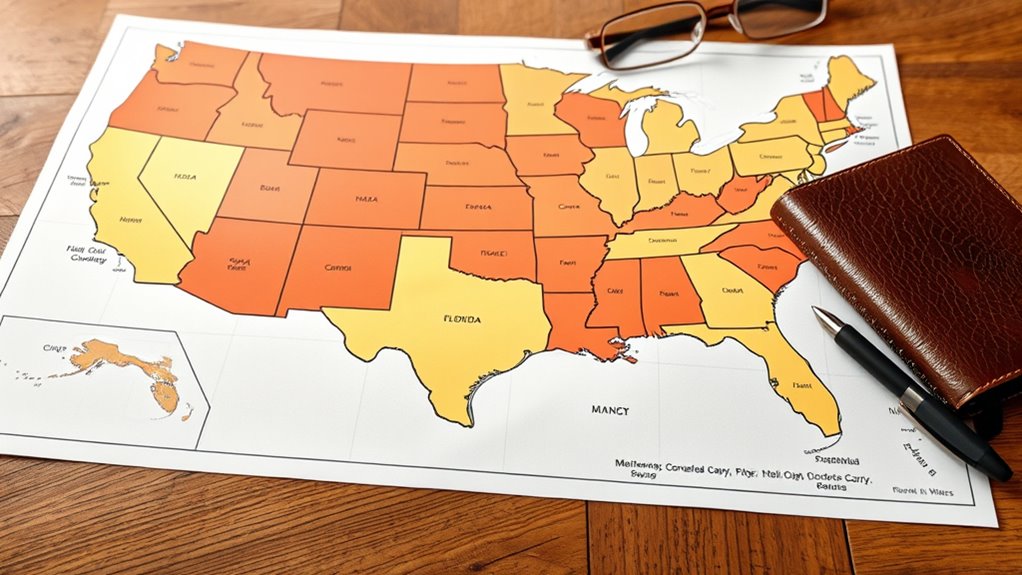
If you’re thinking about getting a concealed carry permit in Florida, you’ll need to meet specific eligibility requirements first. The application process involves a few clear steps, including background checks and fingerprinting.
Let’s go over what you need to qualify and how to complete the application.
Eligibility Criteria Overview
Although Florida is known for its relatively straightforward concealed carry process, you’ll still need to meet specific eligibility criteria before applying for a permit. Understanding these requirements guarantees you’re prepared and eligible right from the start.
Here are the key criteria you must satisfy:
- You must be at least 21 years old (or 18 if in the military).
- You can’t have a felony conviction or certain misdemeanor offenses.
- You need to be a U.S. citizen or a permanent resident.
- You must not have been adjudicated mentally incapacitated or committed to a mental institution.
Meeting these standards is essential before moving forward with your concealed carry permit application in Florida.
Application Process Steps
Before you can carry concealed in Florida, you’ll need to complete a specific application process designed to verify your eligibility and guarantee you understand the responsibilities of carrying a firearm. This process includes submitting an application, providing fingerprints, and completing a firearms training course.
| Step | Description |
|---|---|
| 1. Application | Fill out and submit the official form |
| 2. Fingerprints | Get fingerprinted for background check |
| 3. Training Course | Complete a state-approved firearms course |
| 4. Background Check | Undergo a thorough criminal background check |
| 5. Permit Issuance | Receive your concealed carry permit |
Following these steps ensures you’re legally authorized and prepared to carry concealed in Florida.
Arizona’s Open and Concealed Carry Rules Explained
Wondering how Arizona handles open and concealed carry? In Arizona, you can carry a firearm openly or concealed without a permit if you’re 21 or older and legally allowed to possess a gun. However, there are some important rules to keep in mind:
- No Permit Needed: You don’t need a permit to openly carry or carry concealed if you meet state requirements.
- Restrictions Apply: You can’t carry in certain places like schools, federal buildings, or private property that prohibits firearms.
- Permit Benefits: While not required, obtaining a concealed carry permit can help with reciprocity in other states and may speed up background checks.
- Responsible Carry: Always carry your weapon safely, respecting local laws and private property rights to avoid legal trouble.
Knowing these basics ensures you’re carrying responsibly and within Arizona’s legal framework.
Georgia Concealed Carry Permits and Reciprocity Benefits
If you plan to carry concealed in Georgia, you’ll want to understand how the state’s permit system works and what reciprocity benefits you can expect. Georgia issues a Weapons Carry License (WCL) that allows you to carry concealed firearms legally. To qualify, you must be at least 21 years old, complete a background check, and meet specific eligibility criteria.
The process is straightforward and typically handled at the local probate court. Georgia also honors concealed carry permits from many other states, making it easier for you to carry while traveling. Reciprocity agreements mean your out-of-state permit is recognized, but it’s crucial to verify each state’s current status since these agreements can change.
Keep in mind, even with reciprocity, you must follow Georgia’s specific carry laws, such as prohibited locations and firearm restrictions. Staying informed ensures you carry legally and responsibly across state lines.
Ohio Concealed Carry Laws and State Reciprocity
Ohio offers one of the most straightforward concealed carry permit processes, making it easier for you to legally carry a concealed firearm. To get your permit, you’ll need to meet specific requirements and follow clear steps, ensuring you stay compliant with state laws.
Ohio’s simple concealed carry permit process helps you legally carry with clear requirements and easy steps.
Here’s what you should know about Ohio concealed carry laws and reciprocity:
- You must be at least 21 years old and complete a firearms safety course.
- Applicants undergo a background check to confirm eligibility.
- Ohio recognizes permits from many states, but you should verify before carrying out-of-state.
- Your Ohio permit is valid for five years and must be renewed accordingly.
Alaska’s Unique Permitless Concealed Carry Laws
Although many states require permits for concealed carry, Alaska stands out with its permitless carry laws that let you legally carry a concealed firearm without a permit. If you’re 21 or older and legally allowed to possess a firearm, you can carry it concealed anywhere in the state without jumping through extra hoops. This means no application process, no training requirements, and no fees just to carry concealed.
That said, Alaska still has rules you need to follow. You can’t carry in certain places like schools, federal buildings, or private properties where firearms are prohibited. Also, even though you don’t need a permit to carry in Alaska, getting one can be useful if you plan to carry in other states that recognize Alaska’s permits.
Frequently Asked Questions
How Do Concealed Carry Laws Impact Insurance Policies?
Concealed carry laws can affect your insurance by potentially increasing premiums or limiting coverage if you use a firearm. You’ll want to check your policy carefully and might need additional protection like a firearms liability endorsement.
Can Non-Residents Apply for Concealed Carry Permits?
Yes, you can apply for concealed carry permits as a non-resident in many states—about 35 states allow this.
Just be sure to check each state’s specific requirements and reciprocity agreements before applying.
What Are the Penalties for Carrying Without a Permit?
If you carry without a permit, you could face fines, jail time, or both, depending on the state. Penalties vary widely, so it’s vital you check local laws before carrying concealed firearms.
How Do Concealed Carry Laws Affect Private Property Rights?
Just like a modern-day John Hancock, you hold the power to allow or restrict concealed carry on your private property. Your rights let you decide who can carry firearms, shaping safety and freedom on your land.
Are There Firearm Safety Training Requirements for Permit Holders?
Yes, many states require you to complete firearm safety training before getting a concealed carry permit. The specifics vary, but you’ll often need to learn about safe handling, storage, and local laws to qualify.
These requirements ensure that permit holders are knowledgeable and responsible. Training typically covers proper use and legal considerations.
Always check your state’s regulations to understand the exact training needed. This helps promote safety and compliance among firearm owners.
Conclusion
Now that you know about these key states and their concealed carry laws, you’re probably wondering—what’s the best option for you? Each state offers a unique balance between freedom and safety, but the real question is, how will you navigate these rules to stay protected and responsible?
Before you decide, make sure you fully understand the nuances—because when it comes to concealed carry, one small detail can make all the difference. Understanding concealed carry laws is essential for responsible gun ownership and personal safety.
By staying informed about the concealed carry regulations in these key states, you can make the best decision for your protection and peace of mind.