How to Line Up Iron Sights in 10 Essential Steps
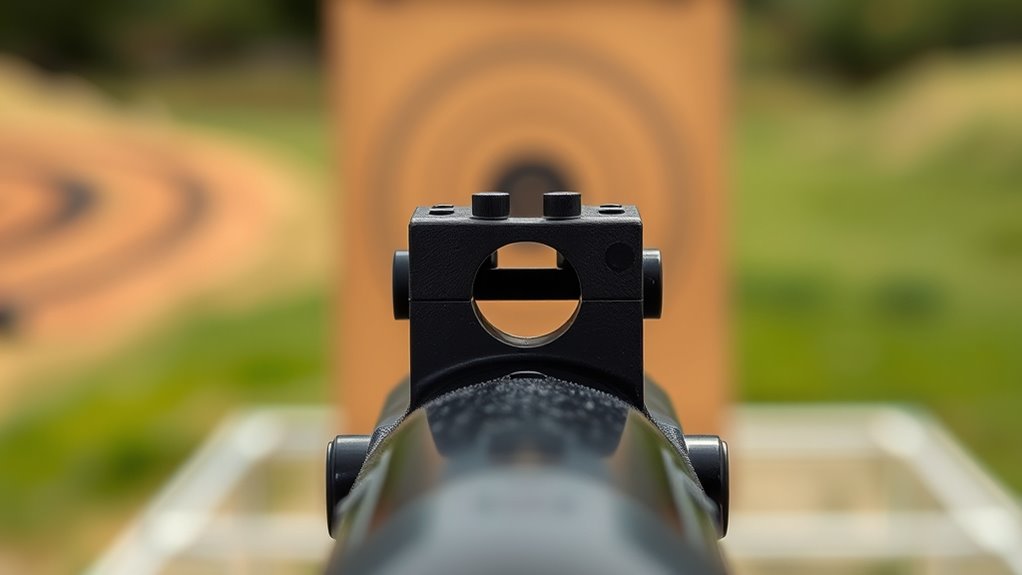
To line up iron sights accurately, understanding the basics of sight alignment and sight picture is crucial. Start by identifying the front and rear sight features, then position your eye about 1.5 to 2.5 inches behind the rear sight.
Proper sight alignment ensures the front sight post is centered evenly between the rear sight notches, with their tops level.
Focus sharply on the front sight while keeping both eyes open for better target awareness. Control your breathing and squeeze the trigger smoothly without jerking to maintain accuracy.
Practicing regularly will build stability and confidence in your shooting skills.
With consistent practice and attention to detail, you can master your aim. There’s more to achieving precision with simple adjustments ahead that will elevate your shooting performance.
Key Takeaways
- Center the front sight post evenly between the two rear sight posts with equal gaps on both sides.
- Align the top of the front sight level with the top of the rear sight notch or aperture.
- Position your eye 1.5 to 2.5 inches behind the rear sight, keeping your head and eye naturally aligned.
- Focus sharply on the front sight while keeping the rear sight and target slightly blurred.
- Maintain a stable stance and grip, control your breathing, and smoothly squeeze the trigger without jerking.
Learn the Fundamentals of Iron Sight Alignment
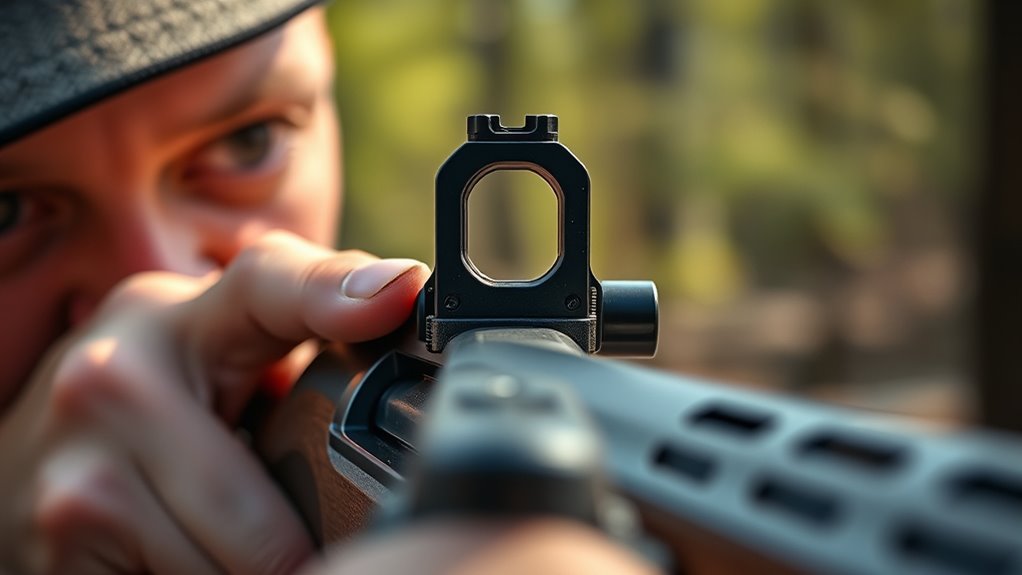
How do you guarantee your shots hit the mark when using iron sights? It all starts with understanding the basics of sight alignment. You need to make sure the front sight post is perfectly centered between the two rear sight posts.
The tops of both sights should be level with each other, creating a straight line. If your front sight is too high, low, or off-center, your shot will stray from the target. Focus your eyes on the front sight rather than the rear sight or target, because the front post is what actually guides your shot.
Keep your sight picture consistent each time you aim. Don’t rush—steady your breathing and maintain a firm grip to avoid shaking. Mastering these fundamentals ensures that every shot is as accurate as possible, building your confidence before moving on to more detailed sight features.
Spot the Front and Rear Sight Features
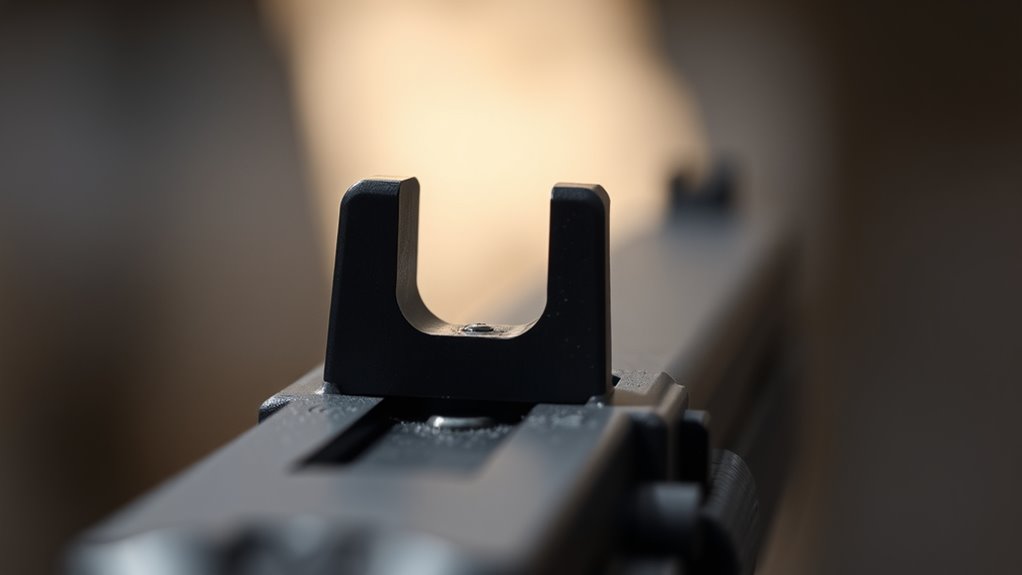
Before you can line up your iron sights accurately, you need to clearly identify the distinct features of both the front and rear sights. The front sight is usually a single post or blade located at the muzzle end of the barrel. It often has a small, colored dot or fiber optic insert to help you quickly spot it.
This front post is the key aiming reference, so recognizing its shape and color is vital.
The rear sight, positioned closer to your eye, generally consists of two vertical posts with a notch or aperture in the middle. This notch frames the front sight when you aim. Some rear sights have adjustable settings for windage and elevation, but your focus should be on locating the notch or aperture clearly.
Position Your Eye Correctly Behind Iron Sights
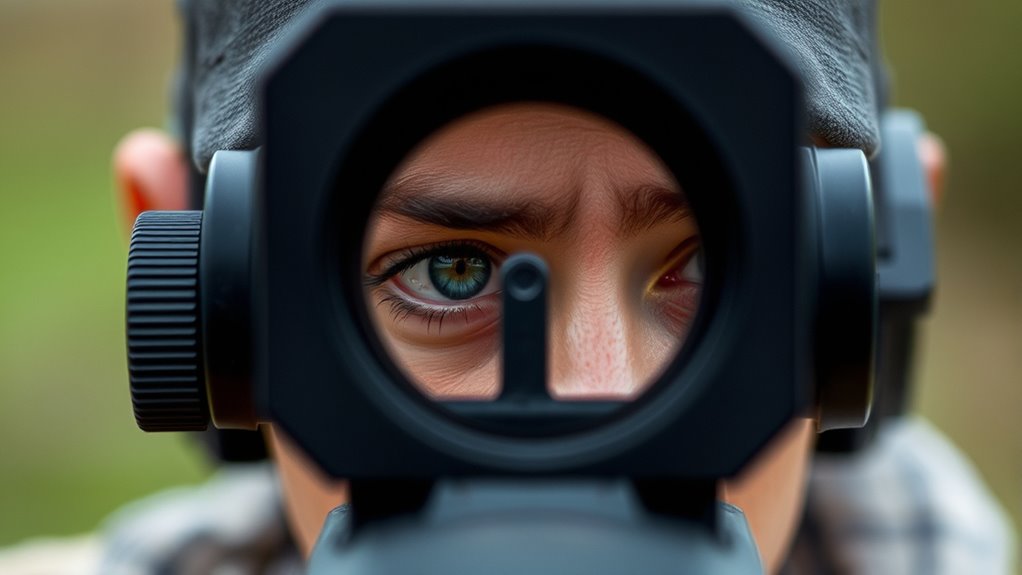
Once you’ve identified the front and rear sights, you need to position your eye so it lines up perfectly with them. To do this, bring the firearm up naturally to your shooting stance, keeping both eyes open if possible for better situational awareness. Your eye should be close enough to the rear sight to see it clearly but not so close that it blurs or distorts the sight picture.
Generally, a distance of about 1.5 to 2.5 inches from your eye to the rear sight works well. Avoid moving your head side to side; instead, move the firearm slightly to align the sights with your eye. This helps maintain a consistent sight picture and reduces strain.
Center the Front Sight Within the Rear Sight Notch
Even though lining up iron sights might seem straightforward, centering the front sight within the rear sight notch takes careful attention. When you look through the rear sight, your goal is to position the front sight precisely in the middle of that notch. If it’s off to the left or right, your shots will stray in the corresponding direction.
To achieve this, focus your eye sharply on the front sight post—the rear sight and target should appear slightly blurred. This helps you maintain proper alignment. Make sure the front sight is evenly spaced from both sides of the rear sight notch, creating equal gaps.
Avoid leaning or tilting your head, as this can skew your perspective. Practicing this will help you develop muscle memory for consistent centering, improving your accuracy. Remember, aligning the front sight properly before moving on to aligning sights at equal height is essential, so take your time mastering this step.
Align Front and Rear Sights at Equal Height
Now that you’ve centered the front sight, make certain the front and rear sights line up at the same height. Proper front sight alignment depends on positioning the rear sight correctly so both sit evenly.
This balance helps ensure your shots hit the target accurately.
Front Sight Alignment
How do you make sure your shots stay accurate? It all starts with proper front sight alignment. Focus your eye on the front sight post, ensuring it’s centered and level with the rear sights.
The front sight should appear sharp and clear, while the target and rear sight stay slightly blurred. This helps you maintain consistent aim.
To get your front sight alignment right:
- Position the front sight post squarely between the rear sight notches
- Keep the top of the front sight level with the rear sight edges
- Concentrate on the front sight, not the target or rear sight
- Maintain equal light on both sides of the front sight post
Mastering this will improve your shot precision considerably.
Rear Sight Positioning
Although the front sight is essential, your shots won’t be accurate without proper rear sight positioning. You need to align the rear sight so its top is level with the front sight’s top. If the rear sight sits too high or too low, your point of impact will shift, causing inconsistent shots.
When aiming, make sure the front sight is centered horizontally within the rear sight notch and both sights are at equal height. This equal height alignment ensures your bullet travels where you intend. Practicing this alignment helps develop muscle memory, making your aim instinctive.
Pay close attention to your sight picture each time you shoot, as even slight misalignment can affect accuracy *considerably*. Rear sight positioning is just as critical as front sight focus.
Keep Your Focus on the Front Sight
When aiming with iron sights, you’ll want to keep your focus sharp on the front sight rather than the target or rear sight. This focus helps guarantee your shot placement is accurate because the front sight is your primary reference point. If your eyes wander to the target or rear sight, your alignment will suffer.
The front sight should appear crisp and clear, while the rear sight and target may blur slightly.
To maintain proper focus on the front sight:
- Position your dominant eye directly behind the front sight for a clear view
- Keep both eyes open to reduce eye strain and improve depth perception
- Practice focusing on the front sight in various lighting conditions
- Use consistent breathing techniques to steady your sight picture
Align Your Sights Properly With the Target
Now that you’re focused on the front sight, it’s essential to align your sights properly with the target. Understanding the sight picture fundamentals will help you position the front and rear sights correctly.
Let’s explore simple techniques to make certain your target stays perfectly aligned for accurate shooting.
Sight Picture Fundamentals
Before you can accurately hit your target, you need to understand how to properly align your iron sights. The “sight picture” is the view you get when your front and rear sights are correctly aligned with the target. To get this right, focus on these fundamentals:
- Keep the front sight post centered and level within the rear sight aperture or notch.
- The top of the front sight should be even with the top of the rear sight.
- Align the sights so the target sits just above the front sight post.
- Maintain a consistent focus on the front sight; the target and rear sight will appear slightly blurred.
Mastering this sight picture ensures your shots will be more accurate and consistent every time you aim.
Target Alignment Techniques
Although aligning your sights might seem straightforward, mastering target alignment techniques is essential for precision shooting. You need to focus on placing the front sight directly on your intended target, ensuring the top of the front sight aligns with the target’s center. Don’t let the front sight float above or dip below the target, as this will throw off your shot.
Keep the rear sight’s notch centered around the front sight, creating a level and even sight picture. Your eyes should naturally focus on the front sight, while the target and rear sight remain slightly blurred. Consistently practicing this alignment helps build muscle memory, making your shots more accurate.
How to Maintain a Stable Sight Picture
How do you keep your sight picture steady while lining up iron sights? It’s essential to minimize movement so your aim stays true. The key is to focus on maintaining a consistent position and reducing any unnecessary motion.
Here are some practical tips to help you maintain a stable sight picture:
- Adopt a solid shooting stance: Keep your feet shoulder-width apart and your body balanced to absorb recoil and limit swaying.
- Use a firm, consistent grip: Hold the firearm firmly but not too tight, allowing for controlled steadiness.
- Keep your head and eye aligned: Position your head so your dominant eye naturally lines up with the sights without strain.
- Focus on the front sight: Concentrate on the front sight post rather than the target or rear sight to maintain clarity and stability.
Control Breathing and Trigger Pull to Stay Steady
To keep your shot steady, you’ll need to control your breathing by timing your breath to reduce movement. Focus on a smooth, consistent trigger pull to avoid jerking the gun off target.
Mastering these techniques will help you maintain accuracy with iron sights.
Breathing Techniques for Stability
Even when your sights are perfectly aligned, your shot can still wobble if your breathing isn’t controlled. To maintain stability, focus on steady, deliberate breathing. Here’s how you can manage your breath for a more precise shot:
- Take a deep breath and slowly exhale halfway, then hold your breath gently.
- Avoid gasping or holding your breath too long, which causes tension.
- Time your shot during the natural respiratory pause after exhaling.
- Keep your chest relaxed to prevent unnecessary movement.
Practicing these breathing techniques helps reduce body sway and steadies your aim. With controlled breathing, you’ll notice your shots become more consistent and accurate, allowing you to trust your iron sights for every shot.
Smooth Trigger Pull Methods
Although controlling your breathing sets the foundation, mastering a smooth trigger pull is just as essential for a steady shot. As you exhale slowly and hold your breath momentarily, focus on gently squeezing the trigger rather than jerking it. The goal is to maintain your sight alignment without any sudden movement.
Use the pad of your index finger, not the joint, applying steady, even pressure straight back. Avoid anticipating the shot; instead, stay relaxed and let the shot surprise you. Practicing this controlled trigger pull helps minimize barrel movement, improving accuracy.
Combine this with proper breathing, and you’ll find your shots grouping tighter, making your iron sight alignment truly effective. Remember, patience and repetition are key to mastering this skill.
Practice Regularly to Improve Your Aim
Since mastering iron sights requires consistency, practicing regularly is essential for improving your aim. Regular practice helps you develop muscle memory, sharpen your focus, and build confidence in lining up your sights accurately.
The more you train, the more natural the process becomes, allowing you to quickly align your sights under different conditions.
To make the most of your practice sessions, consider these tips:
- Set aside dedicated time daily or weekly to focus on sight alignment drills.
- Practice at varying distances to challenge your precision and adaptability.
- Use dry-fire exercises to improve your trigger control without live rounds.
- Track your progress by noting improvements and areas needing adjustment.
Frequently Asked Questions
What Types of Firearms Use Iron Sights?
You’ll find iron sights on pistols, rifles, and shotguns, especially older or military-style firearms. They’re simple, reliable, and don’t rely on batteries, so you’ll often see them on hunting and tactical guns too.
How Do Weather Conditions Affect Iron Sight Accuracy?
Weather conditions like rain, fog, or bright sunlight can make it harder for you to see iron sights clearly, affecting your accuracy. Wind won’t shift your aim, but poor visibility definitely will, so adjust accordingly.
Can Iron Sights Be Used Effectively at Night?
You can’t just use iron sights like a knight with a torch at night—they’re tough to see in darkness. You’ll need a flashlight or night vision to aim effectively when there’s no light to help you line them up.
What Maintenance Is Required for Iron Sights?
You’ll want to regularly clean your iron sights to remove dirt and debris, check for rust or damage, and guarantee screws are tight.
Applying a light oil can prevent corrosion and keep them functioning smoothly for accurate aiming.
Are Iron Sights Legal for Hunting in All States?
No, iron sights aren’t legal for hunting in all states. You’ll need to check local regulations, as some places require specific types of sights or optics. Always verify rules before you head out hunting.
Conclusion
Think of lining up iron sights like tuning a musical instrument—each step, from spotting the sights to steady breathing, is a string that must be perfectly tightened. When you center the front sight and align it smoothly with the rear, you’ve struck the right chord.
Keep practicing this harmony, and your aim will sing true, hitting the target like a well-played melody every time. Stay patient, steady, and in tune.
Mastering how to line up iron sights takes focus and repetition. By following these 10 essential steps, your shooting skills will improve significantly. Remember, precise alignment and steady hold are the keys to consistent accuracy.