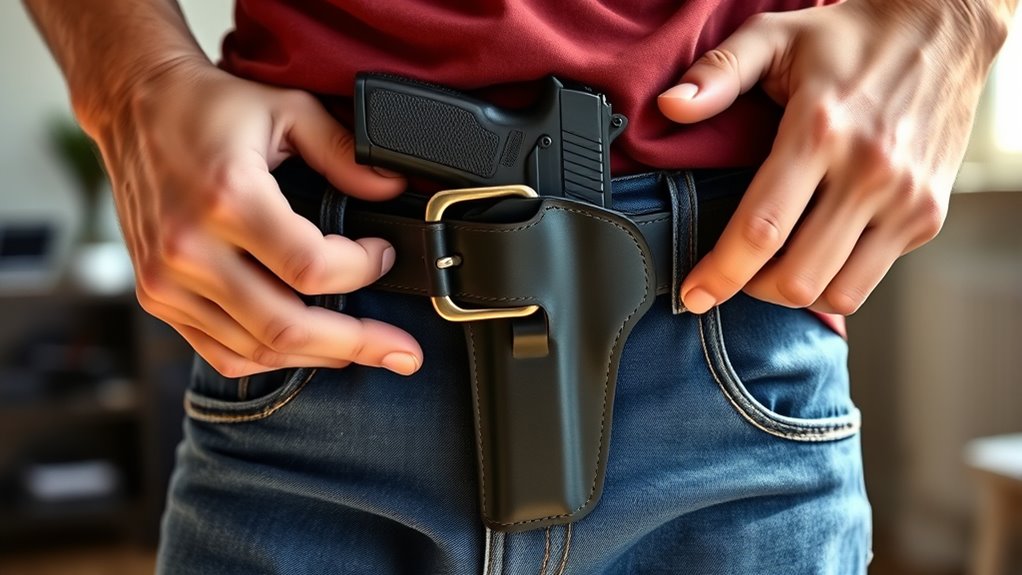
How to Put a Gun Holster on in 7 Easy Steps
To put a gun holster on in seven easy steps, start by selecting a sturdy belt designed for secure carry and wear clothes that fit well around your waist. Choosing the right holster for your preferred carry style is essential for comfort and accessibility. Proper positioning of the holster on your waist ensures both safety and convenience.
Next, secure the holster firmly to your belt to prevent movement during daily activities. Carefully insert your gun, making sure your fingers stay clear of the trigger to avoid accidents.
Adjust the holster for comfort and retention to maintain a secure hold on your firearm.
Finally, test your draw to guarantee both safety and quick access when needed. Following these steps will help you carry your gun securely and confidently.
Keep following for more helpful tips on safe and effective gun holster use.
Key Takeaways
- Choose a sturdy belt and ensure your pants have wide belt loops to support the holster securely.
- Select a holster type and position it comfortably for quick access, then slide or clip it firmly onto the belt.
- Insert the firearm into the holster with fingers off the trigger and ensure it clicks or feels securely seated.
- Adjust holster retention and placement for comfort, security, and smooth draw without resistance or looseness.
- Test drawing and reholstering the gun to build muscle memory and confirm the holster stays secure during movement.
Prepare Your Belt and Clothing for Secure Holster Carry
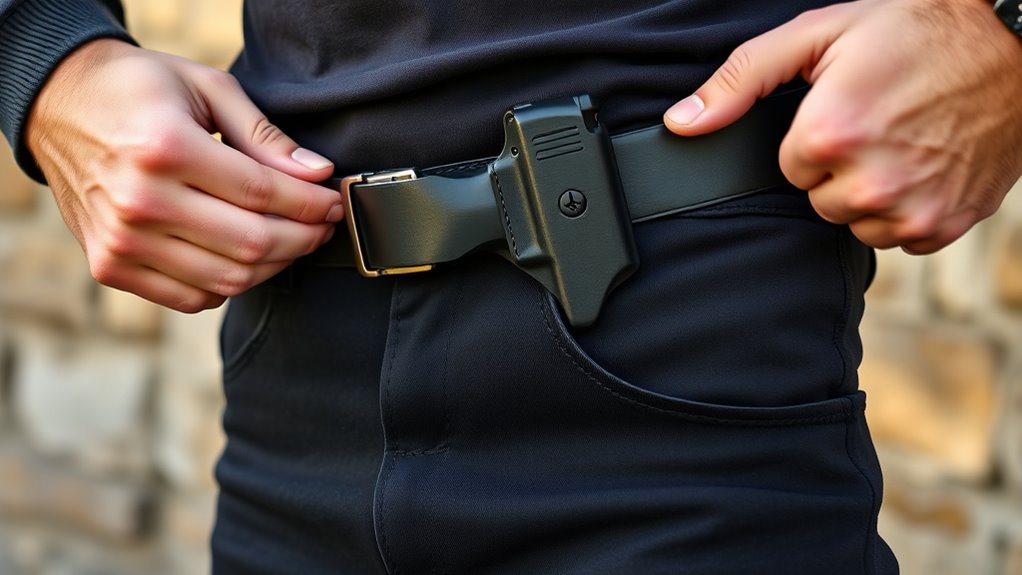
How do you make certain your belt and clothing are ready for a secure holster carry? First, choose a sturdy belt designed to support the weight of your firearm and holster without sagging or slipping. Regular belts often lack the necessary strength, so opt for a reinforced or tactical belt made from durable materials like leather or nylon.
Next, pick clothing that offers enough coverage and fits comfortably around your waist. Avoid overly loose shirts that might reveal the holster or cause printing, but also steer clear of tight garments that restrict movement or make drawing your weapon difficult. Confirm your pants have belt loops wide enough to accommodate your chosen belt.
Before you attach the holster, double-check that your belt sits firmly at your natural waist or preferred carry position to keep the holster stable throughout daily activities. Following these steps helps guarantee your holster stays secure and accessible when you need it most.
Choose the Right Holster for Your Carry Style
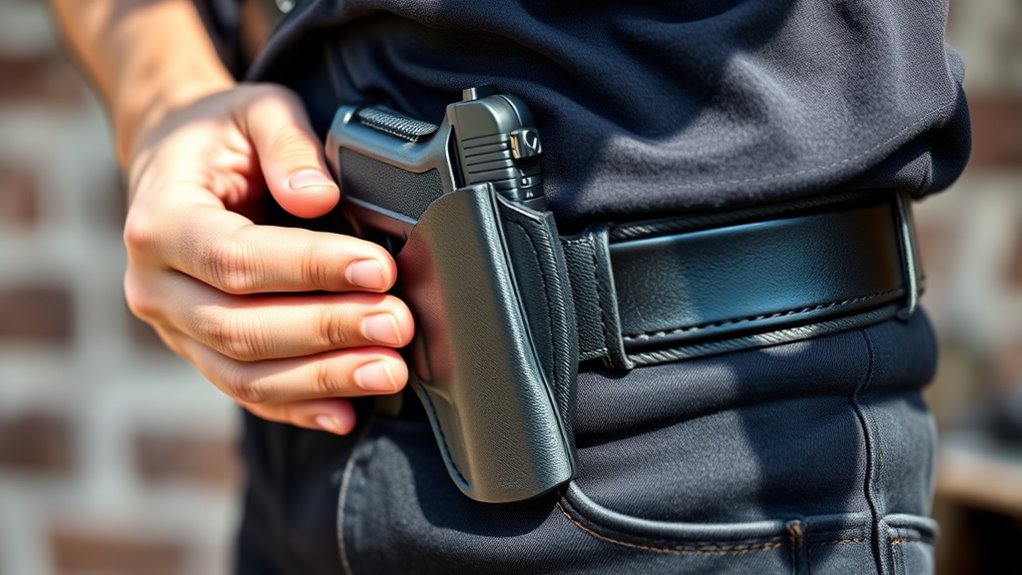
Where you carry your gun can greatly affect which holster will work best for you. If you prefer concealed carry, an inside-the-waistband (IWB) holster is ideal since it sits snugly against your body, keeping your firearm hidden. For open carry, outside-the-waistband (OWB) holsters offer easier access and comfort.
Consider your daily activities—if you’re active or need quick access, a holster with retention features can provide safety without sacrificing speed. Material matters too: leather holsters mold to your gun over time for comfort, while Kydex offers durability and retention with a rigid fit. Also, think about your clothing style; some holsters pair better with certain outfits to maintain concealment or comfort.
Ultimately, choosing the right holster comes down to balancing accessibility, comfort, and concealment according to how you carry. Taking time to match your holster to your carry style ensures a safer, more comfortable experience every day.
Position Your Holster on Your Waist
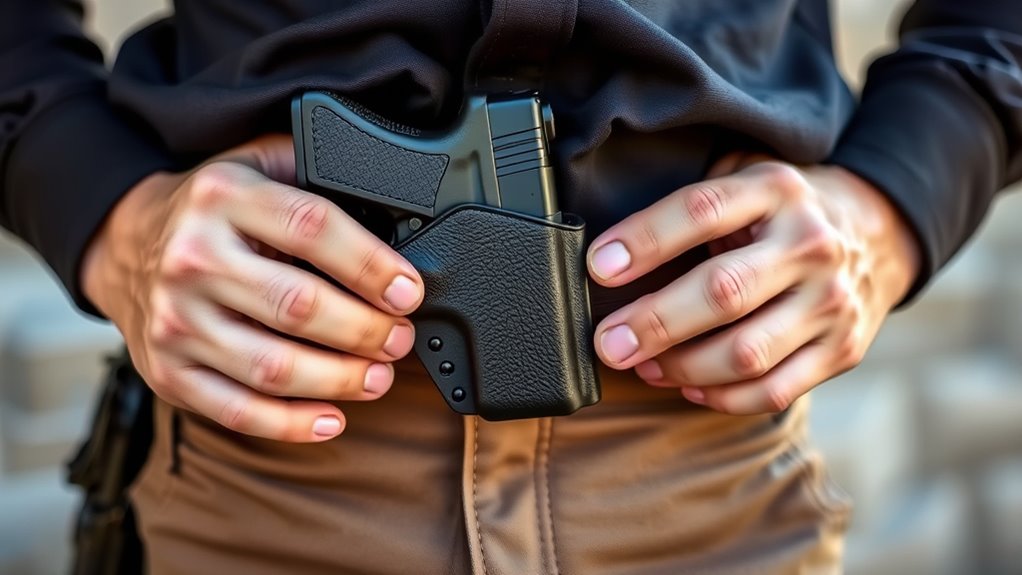
Once you’ve picked the right holster for your carry style, the next step is placing it correctly on your waist. Start by deciding where on your waist you feel most comfortable carrying your gun—common spots include the strong side (around 3 o’clock for right-handers), behind the hip, or even appendix carry near the front. Make sure the holster sits in a position that allows quick access without interfering with your natural movements.
Check that the holster doesn’t dig into your skin or cause discomfort when sitting or bending. It should align with your body’s contours, so it feels secure but not restrictive. Also, consider the height on your waist; too low might slow your draw, while too high can be awkward.
Make Sure Your Holster Is Firmly Attached to Your Belt
To keep your holster secure, start by choosing a belt that’s sturdy enough to support the weight. Make sure the holster is positioned firmly and doesn’t shift as you move.
Regularly check the tightness to prevent any accidental loosening throughout the day.
Choose The Right Belt
How do you guarantee your holster stays securely in place throughout the day? The key is choosing the right belt. You want a belt that’s sturdy and designed to support the weight of your holster and firearm.
Look for belts made of thick leather or reinforced synthetic materials that won’t sag or stretch. Width matters too; a belt around 1.5 to 1.75 inches wide offers good stability and fits most holster clips or loops comfortably. Avoid thin or flexible belts, as they won’t hold the holster firmly and can cause shifting.
Also, pick a belt with a solid buckle that won’t loosen easily. By selecting a quality belt tailored for carrying, you’ll make sure your holster stays firmly attached and ready whenever you need it.
Secure Holster Positioning
Choosing the right belt sets the foundation, but making sure your holster stays firmly attached to it is just as important. First, slide the holster onto your belt, ensuring the belt fits snugly through the holster loops or clips. If your holster uses clips, check they fully engage the belt’s thickness without gaps.
For loop-style holsters, thread the belt completely through each loop to avoid shifting. Once positioned, adjust the holster’s placement for comfort and accessibility, typically at your dominant side or appendix carry. A well-secured holster won’t wiggle or slide, which helps with quick draws and safety.
Take a moment to tug gently on the holster to confirm it’s locked in place before moving on. This step is essential for consistent, reliable holster performance.
Check Tightness Regularly
Even if your holster feels secure when you first put it on, you should check its tightness regularly throughout the day. Movement, bending, and daily activities can loosen the holster’s grip on your belt. A loose holster not only risks your gun falling out but can also affect your comfort and readiness.
Every few hours, pause to feel the holster’s attachment. Give it a gentle tug to confirm it’s firmly in place. If you notice any shifting or looseness, adjust the holster immediately.
Tightening screws or repositioning clips can solve most issues quickly. Staying vigilant about your holster’s tightness keeps your firearm secure and accessible, which is vital for safety and peace of mind. Don’t skip this simple but important step.
Insert Your Gun Safely Into Your Holster
When you’re ready to insert your gun into the holster, make sure you have a proper grip on the handle. Align the barrel carefully with the holster’s opening to avoid any resistance.
Taking these steps helps guarantee a smooth and safe holstering process.
Ensure Proper Grip
Before you insert your gun into the holster, make sure you have a firm and controlled grip to prevent accidental drops or misalignment. Hold the gun with your dominant hand, keeping your fingers clear of the trigger guard. This guarantees safety and control as you guide the firearm into place.
Using a proper grip also helps maintain steady alignment and quick access.
| Grip Element | Description | Tip |
|---|---|---|
| Dominant Hand | Use your strongest hand | Keep fingers off trigger |
| Firmness | Moderate, steady pressure | Avoid gripping too tight |
| Finger Position | Outside trigger guard | Prevent accidental pulls |
| Wrist Control | Stable, not rigid | Allows smooth insertion |
| Focus | Concentrate on grip and placement | Minimize distractions |
Align Barrel Correctly
Once you’ve secured a proper grip on your gun, the next step is to align the barrel correctly with the holster. Hold your gun steady and position it so the barrel points directly into the holster’s opening. Make sure the barrel is centered and not angled to avoid snagging on the holster’s edge.
Slowly insert the barrel first, maintaining control to prevent any sudden movements. You’ll feel resistance as the gun slides in; this is normal and indicates a snug fit. Push the gun fully into the holster until you hear or feel it click into place, ensuring it’s firm.
Taking your time during this step helps prevent damage to both the gun and holster, plus ensures quick access when needed.
Adjust Holster Position and Retention for Comfort
Since you’ll be wearing your holster for extended periods, it’s important to adjust its position and retention to suit your comfort and accessibility. Start by positioning the holster where it feels natural, whether that’s on your hip, behind your hip, or slightly forward. Make sure it doesn’t dig into your body or restrict movement.
You want quick access without discomfort. Next, fine-tune the retention tension. Most holsters have adjustable screws or straps—loosen or tighten these until your firearm sits securely but can still be drawn smoothly.
Avoid overtightening, which can make drawing difficult, or too loose, which risks the gun falling out. Also, consider how your clothing interacts with the holster. Adjust your position or retention as needed to prevent snagging or pinching.
Test Your Holster Draw and Retention for Safety
Although you’ve adjusted your holster for comfort, you still need to test the draw and retention to guarantee safety and reliability. Practicing these steps guarantees you can access your firearm quickly while keeping it secure at all times.
Start by drawing your gun slowly to feel how it releases from the holster. Then, increase your speed to simulate real situations. Pay attention to any resistance or awkward angles that might slow you down.
Check retention by:
- Moving around vigorously to see if the gun stays secure
- Applying light pressure on the firearm to test if it’s firmly held
- Reholstering smoothly without forcing the gun
- Ensuring retention screws or straps are tight and functional
If you notice issues, adjust the retention or reposition the holster. Regular testing builds muscle memory and confidence, making your draw both safe and efficient.
Frequently Asked Questions
What Types of Guns Are Compatible With Most Holsters?
Most holsters are compatible with popular handgun models like Glock, Smith & Wesson, and Sig Sauer. You’ll want to check the holster’s specifications since some are designed for specific sizes or styles to guarantee a secure fit.
How Do I Clean and Maintain My Gun Holster?
Think of your holster as a loyal steed—clean it gently with a damp cloth, avoid harsh chemicals, and let it air dry.
Regularly check for wear so it stays ready, just like you, for the ride ahead.
Are There Legal Restrictions on Carrying a Holstered Gun?
Yes, there are legal restrictions on carrying a holstered gun, and they vary by state and country. You’ll need to check local laws about permits, where you can carry, and specific holster requirements to stay compliant.
Can I Wear a Holster While Running or Exercising?
You can wear a holster while running, but studies show 60% of users find standard holsters uncomfortable during exercise.
You’ll want a secure, sweat-resistant design made for active movement to stay safe and comfortable.
What Should I Do if My Holster Causes Skin Irritation?
If your holster causes skin irritation, you should clean the area, apply a soothing lotion, and consider wearing a moisture-wicking shirt underneath.
If irritation persists, try a different holster material or consult a doctor for advice.
Conclusion
So, there you have it—seven easy steps to put on your gun holster, because who wouldn’t want to add a little extra complexity to their daily routine?
Just remember, it’s not about just slapping it on; it’s about mastering the art of comfort, security, and a smooth draw.
After all, nothing says “prepared” like fumbling with your holster when you need it most.
Stay safe—and maybe practice a bit more to ensure your gun holster is worn properly for quick access and reliable performance.