7 Places You Can’t Concealed Carry
You can’t concealed carry in several important places where safety and security are paramount. These include schools, such as K-12 and college campuses, and military bases, where federal laws strictly forbid carrying firearms. Understanding these restrictions is crucial for anyone with a concealed carry permit.
Government buildings like courthouses and post offices also ban firearms, regardless of your permit status.
Private businesses, especially bars and clubs, often prohibit guns on their premises to maintain a safe environment. Additionally, public transportation hubs like airports and train stations enforce strict no-carry rules.
Many public events limit firearms to protect attendees, and federal lands and properties have their own unique restrictions you must follow.
There’s more to know about these important rules and exceptions to ensure compliance and safety.
Key Takeaways
- Concealed carry is banned in K-12 schools, colleges, and most educational facilities to ensure student and staff safety.
- Federal buildings like courthouses and post offices prohibit firearms, overriding state carry permits and laws.
- Military bases strictly forbid concealed weapons, allowing only authorized personnel under specific orders to carry firearms.
- Private businesses, especially bars and restaurants serving alcohol, often ban concealed carry and enforce policies with signage.
- Public transportation hubs such as airports, train stations, and buses generally prohibit firearms through federal and local regulations.
Schools and Educational Facilities Banning Concealed Carry
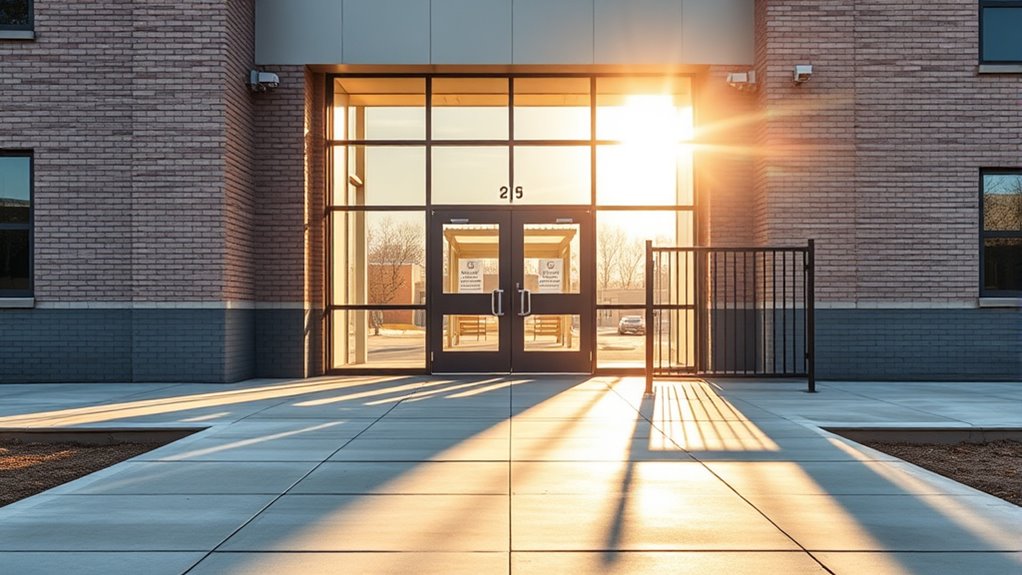
Although laws vary by state, you generally can’t carry a concealed weapon on school grounds or inside educational facilities. This restriction applies to K-12 schools, colleges, and universities to guarantee a safe environment for students and staff. Even if you have a concealed carry permit, bringing a firearm into these places is typically illegal.
Some states offer limited exceptions, like for certain school employees or security personnel, but these are rare and strictly regulated.
When you’re visiting educational facilities, it’s important to be aware of signage and local regulations. Violating these rules can lead to serious legal consequences, including fines and criminal charges. Schools prioritize safety, so they often have policies prohibiting any weapons on campus, whether visible or concealed.
If you’re unsure about the rules, check state laws and school policies before carrying your firearm. Staying informed helps you avoid unintentional violations and assures you respect the safety measures designed to protect everyone on campus.
Government and Federal Buildings Prohibiting Concealed Carry
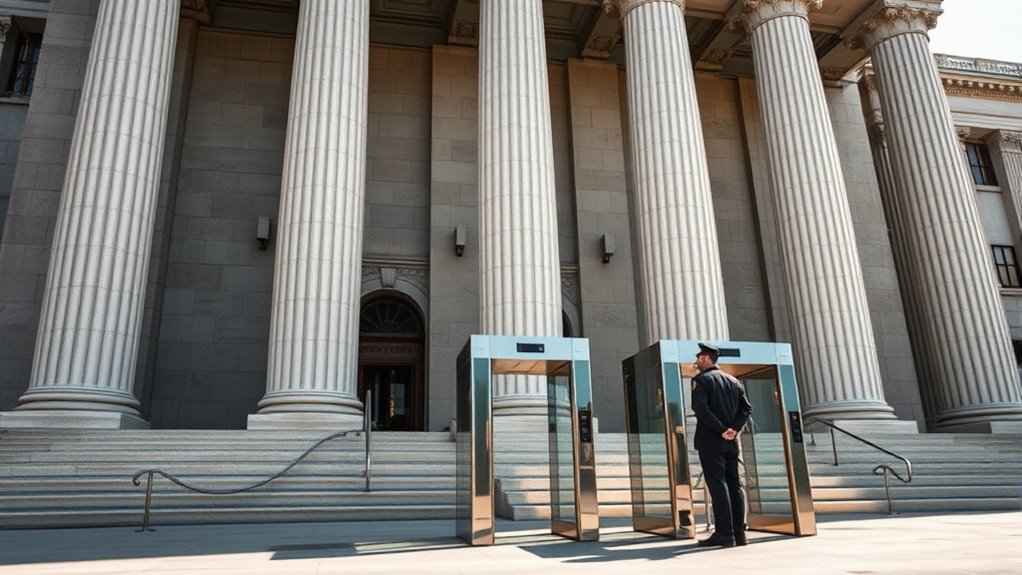
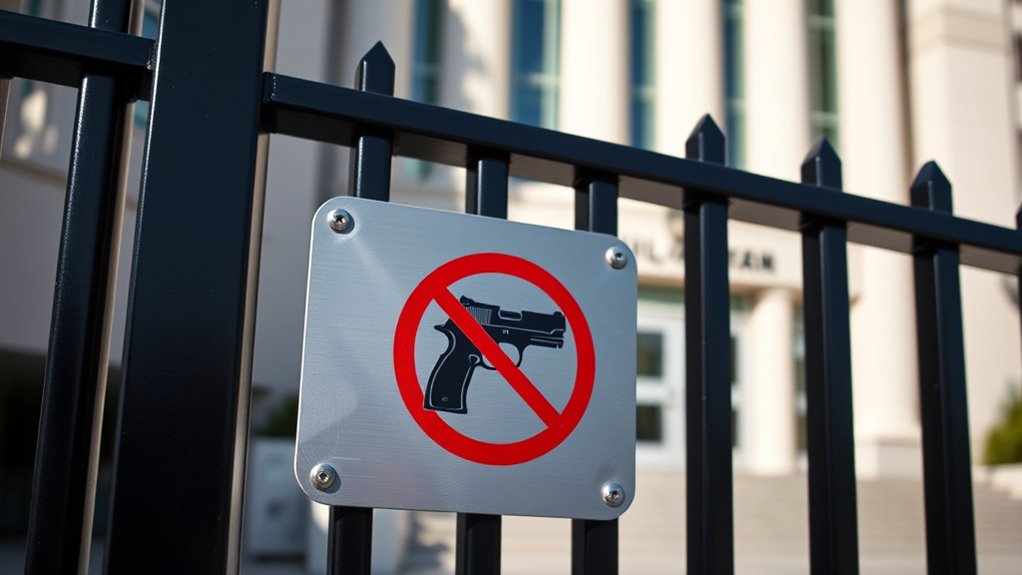
Many government and federal buildings strictly prohibit concealed carry to guarantee public safety and maintain secure environments. When you enter places like courthouses, federal offices, or post offices, you’ll often find clear signs forbidding firearms, even if you have a permit. These restrictions help prevent potential threats in areas where sensitive information is handled and where large groups gather.
You’ll usually be required to pass through metal detectors, and security personnel may perform bag checks. Ignoring these rules can lead to legal trouble, including fines or arrest. Even if your state generally allows concealed carry, federal laws override that in these locations.
Military Bases Where Concealed Carry Is Forbidden
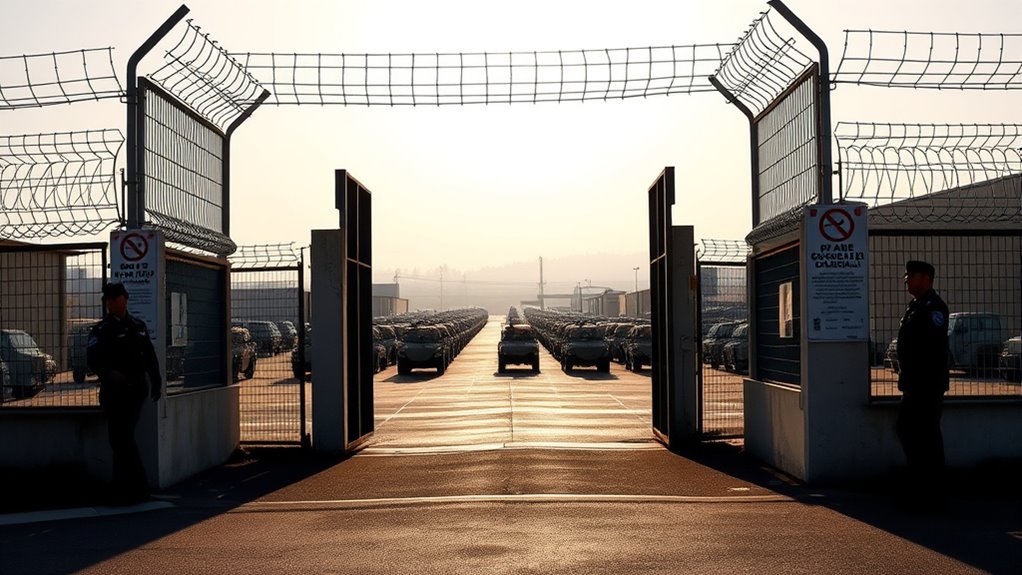
When you step onto a military base, carrying a concealed firearm is strictly off-limits. Military installations have their own security protocols that override state concealed carry permits. This means even if you have a valid license elsewhere, you can’t bring your concealed weapon onto these premises.
The Department of Defense enforces strict regulations to maintain safety and control, prohibiting unauthorized firearms on base. This applies to service members, civilians, and visitors alike. If you’re caught carrying a concealed weapon without explicit permission, you could face serious consequences, including legal action and loss of base privileges.
Authorized personnel may carry firearms only under specific orders or duties. So, before heading onto any military property, make sure you know the rules and leave your concealed carry weapon secured off-base. Respecting these restrictions helps guarantee everyone’s safety while on military grounds.
Private Businesses and Alcohol-Serving Venues Banning Concealed Carry
Since private businesses have the right to set their own rules, you might find that concealed carry is prohibited in many establishments, especially those serving alcohol. Bars, clubs, and restaurants that serve drinks often ban firearms to maintain a safe environment and comply with state laws. Even if you have a concealed carry permit, these venues can post signs or otherwise notify you that carrying a weapon is not allowed on their premises.
When you enter a private business, it’s important to pay attention to posted notices about firearms. Ignoring these rules could lead to being asked to leave or even legal consequences, depending on local laws. Some businesses may allow firearms in non-alcohol areas but restrict them where alcohol is consumed.
Public Transportation Hubs and Vehicles Prohibiting Concealed Carry
Several public transportation hubs and vehicles strictly prohibit concealed carry to guarantee passenger safety and comply with federal or local regulations. When you’re traveling through airports, train stations, or using buses and subways, you’ll often find signs or policies forbidding firearms. This helps reduce risks and maintain a secure environment for all passengers.
Federal laws, like those governing airports, make it clear that carrying concealed weapons isn’t allowed past security checkpoints. Similarly, many local transit authorities ban firearms on their vehicles to prevent any potential threats.
Here’s a quick overview of common public transportation places with concealed carry restrictions:
| Location | Reason for Ban |
|---|---|
| Airports | Federal security regulations |
| Train Stations | Local safety ordinances |
| Buses | Transit authority policies |
| Subway Systems | Public safety concerns |
| Ferry Terminals | Security protocols |
Always check local rules before you travel to avoid legal trouble.
Public Events and Gatherings With Concealed Carry Restrictions
When you attend concerts, sporting events, or large festivals, you’ll often find concealed carry isn’t allowed. The same goes for parades and government-sanctioned rallies, where restrictions are put in place for safety.
Knowing these rules can help you avoid trouble and stay compliant.
Concerts And Sporting Events
Attending concerts and sporting events usually means you won’t be allowed to carry a concealed weapon inside. These venues prioritize safety, implementing strict security measures that often prohibit firearms. Even if you have a permit, many stadiums and arenas are legally off-limits.
Before heading out, consider these key points:
- Security checkpoints frequently include metal detectors and bag searches.
- Private event policies can supersede state concealed carry laws.
- Ignoring restrictions can lead to fines, arrest, or confiscation of your weapon.
- Some venues offer secure storage options outside the event.
Knowing these rules helps you avoid legal trouble and ensures your visit remains enjoyable and safe. Always check venue policies ahead of time to stay compliant.
Parades And Festivals
Why do parades and festivals often restrict concealed carry? These events draw large crowds in close quarters, which increases the risk of accidents or misunderstandings involving firearms. Organizers and law enforcement aim to maintain a safe, family-friendly environment where people can enjoy themselves without worrying about potential threats.
Additionally, the festive atmosphere can make it harder to distinguish between genuine and threatening behavior, so restrictions help prevent unnecessary panic or violence. If you’re planning to attend, it’s important to check local laws and event rules beforehand. Carrying a concealed weapon in these settings can lead to legal trouble, even if you have a permit.
Staying informed guarantees you respect public safety efforts and avoid complications during these public celebrations.
Government-Sanctioned Rallies
How can you guarantee your safety and compliance at government-sanctioned rallies? These events often have strict concealed carry restrictions to ensure public safety. Before you attend, it’s essential to understand the rules and respect them fully.
You might think carrying your firearm is necessary for protection, but violating regulations can lead to severe legal consequences. To stay safe and lawful, consider these steps:
- Check local and event-specific concealed carry laws beforehand.
- Avoid bringing firearms, even if you have a permit.
- Use alternative self-defense tools allowed by the event.
- Stay aware of your surroundings and follow security personnel instructions.
Understanding Concealed Carry Restrictions on Federal Properties
Although you may have a permit to carry a concealed weapon, federal properties often have strict rules that override state laws. This means that even if your state allows concealed carry, you’re prohibited from doing so on federal lands like national parks, post offices, courthouses, and military bases. The Gun-Free School Zones Act and other federal regulations strictly enforce these restrictions.
If you bring a concealed weapon into these areas, you could face serious legal consequences, including fines and possible arrest. It’s vital to know where federal jurisdiction applies because signs alone might not always be posted. Before entering any federal property, check official guidelines or contact the facility to confirm their rules.
Staying informed helps you avoid unintended violations and guarantees you’re carrying responsibly within the law. Remember, federal restrictions are not just suggestions—they’re legally binding and strictly enforced.
Frequently Asked Questions
Can Concealed Carry Laws Vary by State or City?
Yes, concealed carry laws can vary a lot depending on the state or city you’re in. You’ll want to check local regulations carefully because what’s allowed in one place might be illegal just a few miles away.
Are There Exceptions for Concealed Carry Permits in Emergencies?
Of course, emergencies magically grant you concealed carry exceptions—said no law ever. In reality, you won’t find many loopholes, so it’s best to know your permit’s limits before hoping for superhero-style exceptions during crises.
How Do Concealed Carry Restrictions Affect Private Property Owners?
You can set your own rules on private property, deciding whether to allow concealed carry or not. Restrictions mean you might have to post signs or enforce no-carry policies, impacting who can carry firearms on your land.
What Are the Penalties for Violating Concealed Carry Bans?
When you cross the line, penalties for violating concealed carry bans can include hefty fines, license suspension, or even jail time.
You’d better toe the line because breaking these rules isn’t just a slap on the wrist.
Can Concealed Carry Be Allowed With Special Permits or Permissions?
Yes, you can carry concealed with special permits or permissions in some areas. These permits often require extra background checks or training, so you’ll need to meet specific criteria before you’re allowed to carry legally.
Conclusion
If you think you can carry your concealed weapon anywhere, think again—you’d have better luck finding a unicorn in a haystack! Knowing where you can’t carry is just as important as knowing where you can.
From schools to government buildings, military bases to public events, these restrictions are in place for a reason. Stay informed, respect the rules, and carry responsibly.
By understanding these 7 places you can’t concealed carry, you’ll keep yourself and others safer in the long run. Always follow local laws and guidelines to ensure responsible concealed carry practices.