What Are Tritium Sights and How to Use Them
Tritium sights are specialized aiming devices that use tiny vials filled with radioactive tritium gas to provide a continuous glow without needing any external light source. This makes them ideal for low-light or nighttime shooting conditions.
With tritium sights, you can quickly and accurately acquire your target by aligning the glowing front and rear sights.
These sights are designed to be tough and durable, ensuring reliable performance in various environments. However, they require regular maintenance checks to maintain their brightness and overall functionality.
If you want to sharpen your shooting skills and keep your tritium sights in top shape, there is plenty more to learn about their use and care.
Key Takeaways
- Tritium sights use radioactive tritium gas to provide a self-illuminating glow for visibility in low-light conditions.
- The glow results from tritium’s beta particles exciting a phosphorescent coating inside the sight.
- Proper aiming involves aligning the glowing front and rear sights to maintain a consistent sight picture.
- Regular maintenance and inspection ensure the sights remain bright and undamaged for accurate use.
- Tritium sights enhance target acquisition in darkness and are safe when used and disposed of properly.
What Are Tritium Sights and How They Work
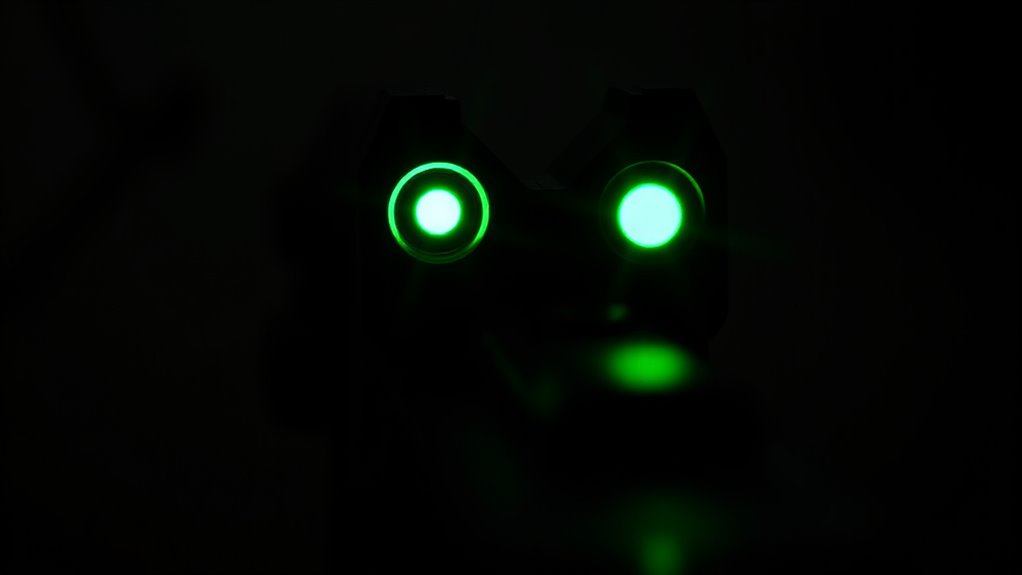
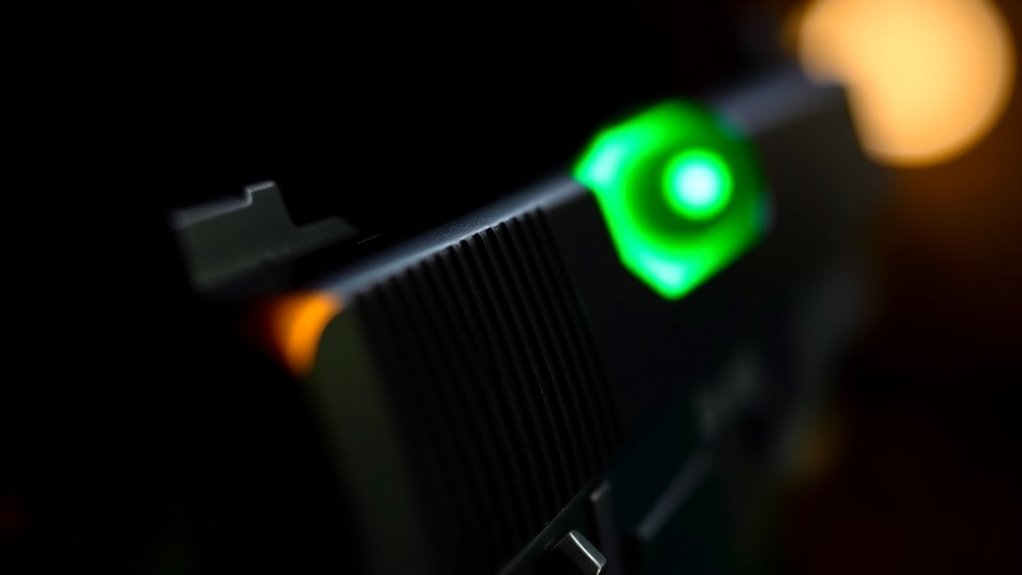
Although you might not realize it at first, tritium sights are an essential tool for low-light shooting. They use tiny glass vials filled with tritium gas, a radioactive isotope that constantly emits electrons. These electrons react with a phosphorescent coating inside the vial, causing it to glow without needing any external power source or light.
This means you’ll always have a visible aiming point, even in complete darkness. The glow is subtle but bright enough to quickly align your sights when light is scarce. Unlike traditional sights that rely on ambient light or batteries, tritium sights maintain their brightness for years—typically 10 to 12 years before they gradually dim.
You don’t have to worry about turning them on or off; they’re always ready when you need them. This makes them especially useful for self-defense, tactical, or hunting situations where low-light precision is essential.
How to Choose the Best Tritium Sights
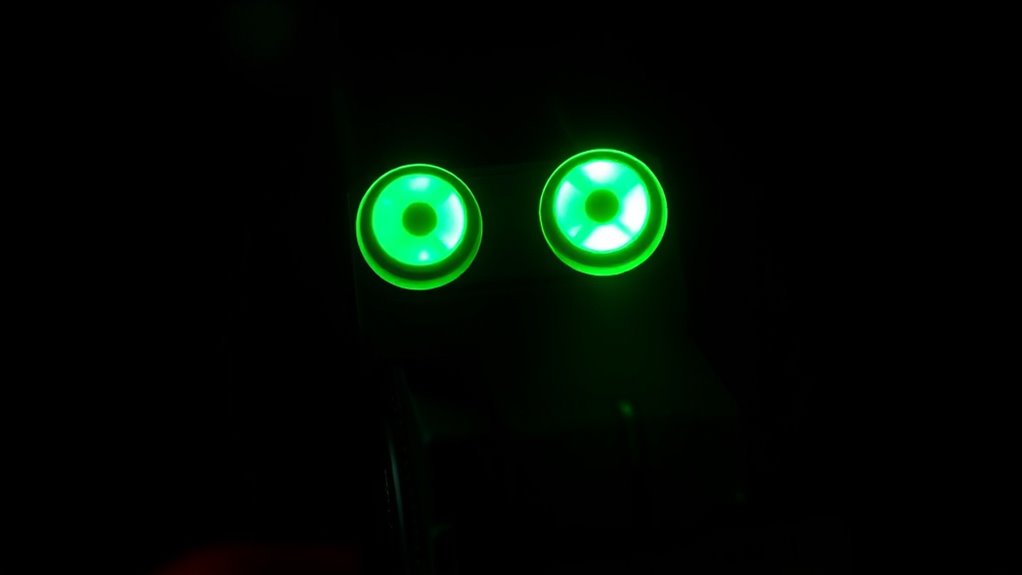
When choosing tritium sights, you’ll want to focus on material durability to guarantee they withstand tough conditions. Brightness is key for quick target acquisition, so consider how visible the sights are in various lighting.
Also, pay attention to the size of the tritium inserts, as it affects both visibility and sight profile.
Material Durability
Since you’ll rely on your tritium sights in critical moments, their material durability is a key factor to take into account. You want sights made from robust materials like stainless steel or high-grade aluminum to withstand impacts, rough handling, and weather conditions. These metals resist corrosion and wear, ensuring your sights stay functional over time.
Avoid cheap plastic components that can crack or degrade quickly. Also, look for sights with a solid construction that won’t loosen or break under recoil. Proper sealing is important too, as it protects the tritium vial from moisture and dust.
Brightness And Size
Durability guarantees your tritium sights stay functional, but brightness and size play a big role in how quickly and accurately you can acquire your target. When choosing tritium sights, pick a brightness level that matches your typical lighting conditions. Too dim, and you’ll struggle in low light; too bright, and it might overwhelm your vision during the day.
Size matters, too—larger sights are easier to see and faster to align, but they can block part of your target or feel bulky. Smaller sights offer precision but might slow down target acquisition. Consider your shooting style and environment to find the right balance.
Ultimately, you want sights that let you quickly line up your shot without distractions or delays, ensuring consistent accuracy every time.
How to Aim With Tritium Sights
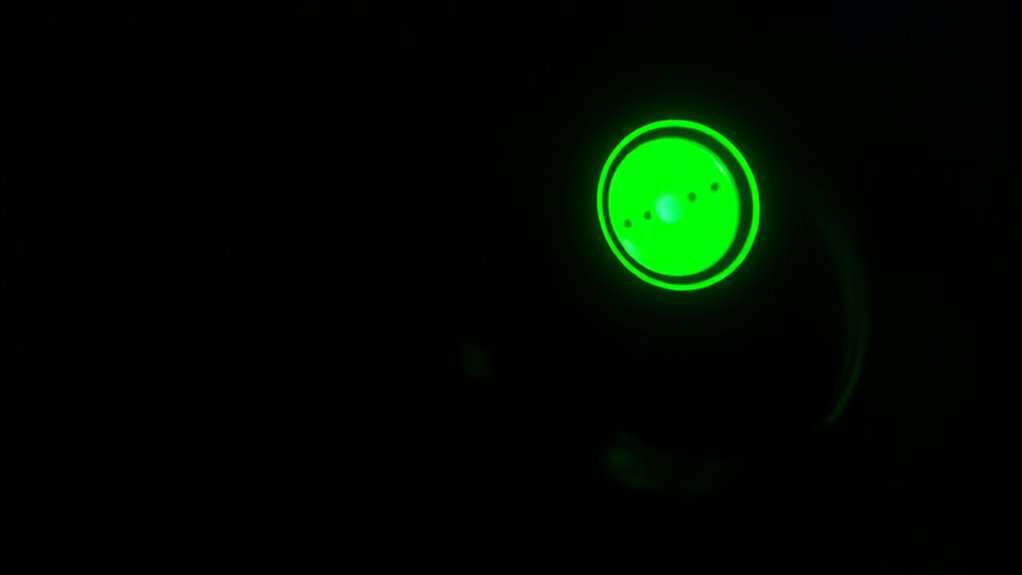
To aim with tritium sights, you’ll need to align the front and rear sights perfectly. Take advantage of their glow in low light to maintain a clear sight picture. Consistency in your sight alignment will improve your accuracy every time.
Align Front And Rear
When aiming with tritium sights, you’ll want to align the glowing front dot precisely within the rear sight’s notch. Focus on keeping the front dot centered and level with the two rear dots or the edges of the notch, depending on your sight style. This alignment ensures your shot is on target.
Don’t let the front dot sit too high, low, or off-center, as that will cause your shot to veer off. Keep both eyes open if possible for better situational awareness, but if you close one, maintain the alignment carefully. Remember, the key is consistent alignment every time you aim—it’s the foundation of accuracy with tritium sights before you even consider environmental factors or shooting conditions.
Utilize Low Light Advantage
How do tritium sights give you an edge in low light? They glow without batteries, making your target alignment quick and natural when visibility drops. When you’re in dim conditions, rely on the illuminated front dot to guide your aim.
The glow helps you focus on the front sight, vital for accuracy, while the rear sights stay visible but less bright. Don’t waste time searching for your sights in the dark; tritium’s steady glow lets you acquire your target faster. Keep your eyes relaxed and let the glowing dots draw your attention.
This advantage means you can maintain precise shooting even when lighting isn’t ideal, giving you confidence and control in low-light situations.
Maintain Consistent Sight Picture
Although tritium sights make it easier to see your target in low light, maintaining a consistent sight picture is key to accurate shooting. You want to align your front and rear sights so the tritium dots form a straight line, ensuring the target sits just above the front sight. This helps reduce aiming errors, especially when visibility is limited.
| Element | Purpose | Tip |
|---|---|---|
| Front Sight | Primary aiming point | Center the tritium dot |
| Rear Sight | Aligns with front sight | Keep dots level and spaced |
| Target Alignment | Position relative to sights | Place target just above front sight |
Practice this alignment regularly, so your muscle memory develops and your shots stay consistent every time.
Common Mistakes to Avoid When Using Tritium Sights
Since tritium sights rely on low-light visibility, it’s easy to make mistakes that reduce their effectiveness. To get the most out of them, avoid these common pitfalls:
- Ignoring Sight Alignment: Don’t assume the glow alone guarantees accuracy. You still need to properly align your front and rear sights to hit your target.
- Overreliance in Bright Conditions: Tritium sights shine in low light, but in daylight, they can be harder to see. Don’t rely solely on them when ambient light is strong.
- Neglecting Regular Checks: Tritium has a half-life and will dim over time. If you don’t regularly inspect your sights, you might find them too faint when you need them most.
Benefits of Tritium Sights in Low Light
Avoiding common mistakes with tritium sights sets you up to fully benefit from their unique advantages in low-light situations. When the ambient light drops, traditional sights can become nearly invisible, but tritium sights glow without needing any battery or external light source. This means you’ll always have a clear aiming point, even in total darkness.
You won’t have to fumble for a flashlight or struggle to align your sights, which can be critical in emergencies. Tritium’s self-luminous properties improve reaction time and accuracy by allowing you to acquire your target quickly and confidently. Since they don’t rely on batteries, you won’t worry about your sights failing when you need them most.
Plus, they provide consistent brightness for years, so you can trust your sights to perform night after night. In low-light conditions, tritium sights give you the edge to shoot accurately and safely when visibility is limited.
How to Care for Your Tritium Sights
When you want your tritium sights to perform reliably over time, proper care is essential. These sights are delicate, and neglect can reduce their effectiveness or damage the tritium vials inside. To keep your sights in top shape, follow these key steps:
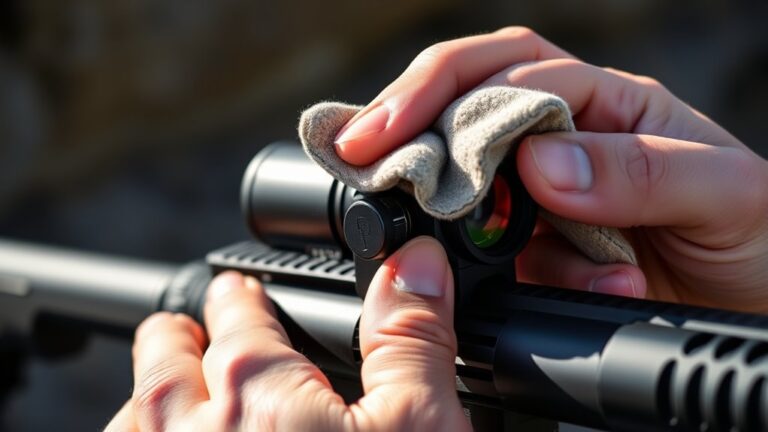
- Clean Gently – Use a soft cloth or microfiber wipe to remove dirt and fingerprints. Avoid harsh chemicals or abrasive materials that could scratch or degrade the sight’s surface.
- Protect from Impacts – Tritium vials are sealed but fragile. Handle your firearm carefully and avoid dropping or knocking it against hard surfaces to prevent cracking or leaking.
- Store Properly – Keep your firearm in a cool, dry place away from excessive heat or sunlight, as extreme conditions can shorten the lifespan of the tritium’s glow.
Frequently Asked Questions
Are Tritium Sights Safe to Carry on Airplanes?
Yes, you can carry tritium sights on airplanes since the radioactive material is sealed and low-risk. Still, check TSA and airline rules beforehand to avoid issues, as regulations might vary depending on your destination.
Always verify specific guidelines to ensure compliance with safety protocols. This helps prevent any unexpected delays or confiscations during your travel.
Being informed about the rules for your destination can make your journey smoother. Carrying tritium sights responsibly is key to hassle-free air travel.
How Long Do Tritium Sights Last Before Needing Replacement?
Tritium sights usually last around 10 to 12 years before they dim enough to need replacement. Just like a fading sunset, their glow slowly weakens, so you’ll want to swap them out when visibility drops noticeably.
Can Tritium Sights Be Used on Archery Equipment?
Yes, you can use tritium sights on archery equipment, especially for low-light conditions. They help you aim better at dawn or dusk, but make sure the sights are securely mounted and compatible with your bow’s design.
Do Tritium Sights Affect Firearm Resale Value?
Tritium sights can be a shining jewel or a hidden weight on your firearm’s resale value. If buyers appreciate night visibility, you’ll boost appeal; if not, it might narrow your market and lower offers slightly.
Are Tritium Sights Legal in All States or Countries?
Tritium sights aren’t legal everywhere. You’ll find most U.S. states allow them, but some have restrictions.
Internationally, laws vary widely, so you’ll want to check local regulations before buying or using tritium sights.
Conclusion
Now that you know how tritium sights light your way in the dark, you’re ready to aim with confidence even when shadows fall. Think of them as your trusty night watch, silently glowing to guide your shot.
By choosing the right sights, practicing your aim, and caring for them well, you’ll turn low-light challenges into clear opportunities. Don’t let the darkness hold you back—let your tritium sights be the spark that leads you true.
Using tritium sights effectively means understanding their glow and trusting their guidance. With proper use, these night sights enhance your shooting accuracy and reliability in any lighting condition. Embrace the advantage that tritium night sights provide and make every shot count.