How to Break in a Leather Holster in 7 Easy Steps
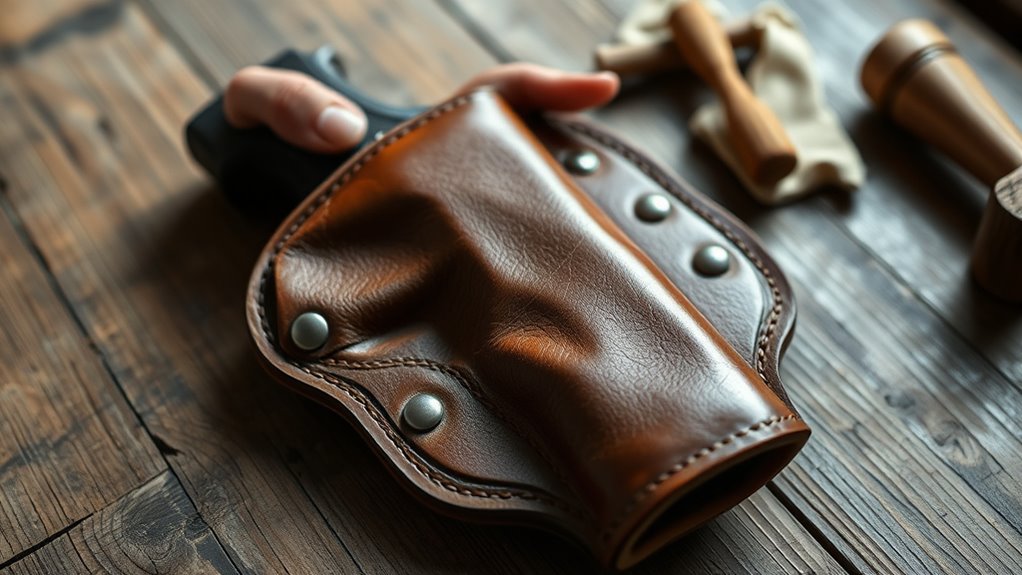
To break in your leather holster effectively, follow these seven easy steps to ensure a perfect fit and long-lasting durability. Properly breaking in your leather holster is essential for comfort, secure retention, and maintaining its quality over time.
Start by checking the fit to guarantee your firearm slides in snugly without being too tight.
Next, soften the leather gently using warm, damp cloths, then mold it around your gun for a tailored fit.
Adjust retention screws as needed to balance ease of draw with secure hold.
Carry the holster daily to speed up shaping and help it conform naturally to your body.
Regularly condition the leather to keep it flexible and prevent cracking.
Avoid common mistakes like using excess moisture or heat, which can damage the holster’s durability.
Follow these steps to achieve a perfect, long-lasting fit for your leather holster.
Key Takeaways
- Check holster fit by inserting the firearm snugly and ensuring secure retention without excessive force.
- Soften leather using warm, damp compresses for 5-10 minutes, then air dry away from direct heat.
- Mold the holster around the firearm by gently pressing and holding it in place while the leather is pliable.
- Carry the holster with the firearm daily to speed up molding and improve comfort and retention.
- Regularly condition the leather with a quality conditioner to maintain flexibility and prevent cracking or stiffness.
Check Your Holster Fit Before Breaking It In
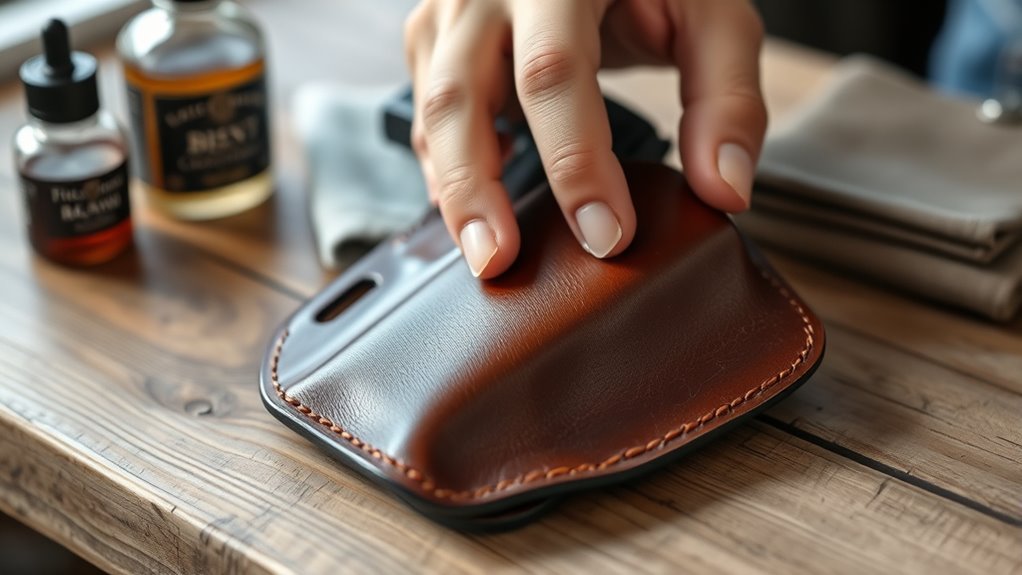
Before you begin breaking in your leather holster, you’ll want to make certain it fits your firearm perfectly. A good fit ensures your gun stays secure without being too tight or too loose. Start by inserting your firearm into the holster; it should slide in snugly but not require excessive force.
If it feels too tight, you risk damaging the leather or making it difficult to draw quickly. If it’s too loose, your firearm might shift or fall out. Check the retention by gently shaking the holster while the gun is inside—your firearm should stay put.
Also, inspect the holster for any sharp edges or rough spots that might scratch your gun. If you notice any issues, address them before proceeding. Confirming the fit now will save you frustration later, making the breaking-in process smoother and ensuring your holster offers both comfort and reliability every time you carry.
Soften Your Leather Holster With Gentle Heat and Moisture
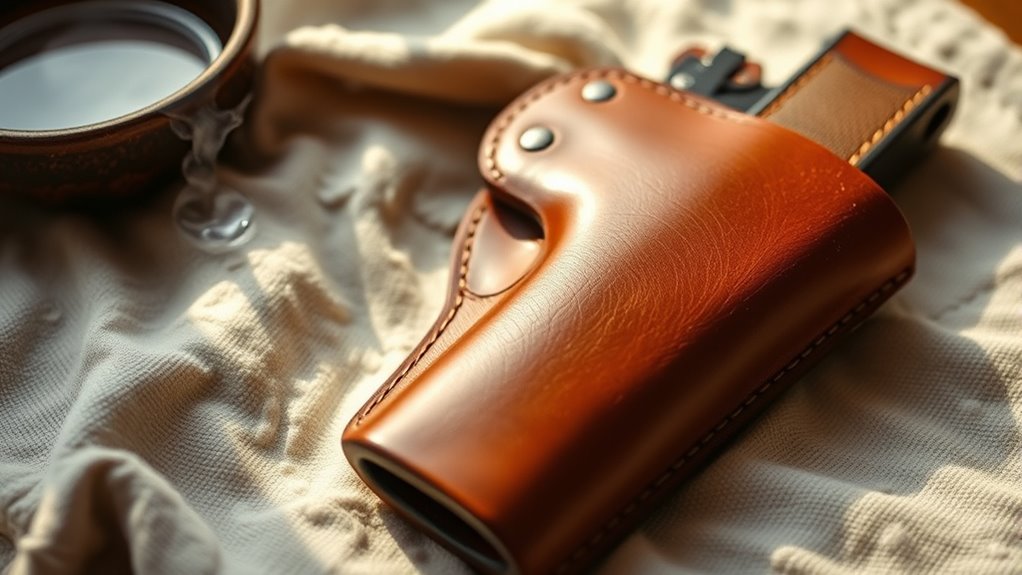
To soften your leather holster, you can use warm compresses carefully to avoid overheating the material. Applying a leather conditioner helps maintain flexibility without causing damage, but be sure not to soak the leather.
Too much moisture can harm the holster, so always use these methods sparingly.
Applying Warm Compresses Safely
When you apply warm compresses to your leather holster, you’ll gently soften the material without risking damage. Start by soaking a clean cloth in warm water—make sure it’s not too hot to avoid drying out or warping the leather. Wring out excess water, then place the cloth on the holster for about 5 to 10 minutes.
Repeat as needed, allowing the warmth and moisture to relax the leather fibers. Avoid soaking the holster completely; too much moisture can weaken stitching or cause staining. After each compress, let the holster air dry naturally away from direct heat or sunlight.
This careful method helps you break in your holster evenly, preserving its durability while making it more comfortable to use.
Using Leather Conditioner Properly
Although applying warm compresses helps soften your leather holster, using a quality leather conditioner is essential to maintain its suppleness and protect it from drying out. Start by choosing a conditioner designed specifically for leather—avoid oils or waxes that can clog the pores. Apply a small amount evenly with a soft cloth, working it gently into the leather in circular motions.
Let the conditioner absorb naturally, and don’t rush the process. This adds moisture back to the leather, making it more flexible and comfortable to use. Condition your holster every few weeks during the break-in period, but don’t overdo it.
Proper conditioning combined with gentle heat and moisture will guarantee your leather holster softens evenly without losing strength or shape.
Avoiding Excessive Moisture Damage
Maintaining the right balance of moisture is key to softening your leather holster without damaging it. Too much moisture can warp or weaken the leather, while too little won’t allow it to flex properly. To avoid excessive moisture damage, follow these tips:
- Use a damp cloth instead of soaking the leather.
- Apply gentle heat like a hairdryer on low to help moisture penetrate.
- Let the holster air dry naturally, away from direct sunlight or heaters.
- Avoid submerging the holster in water or using harsh chemicals.
Mold Your Holster Around Your Firearm for a Perfect Fit
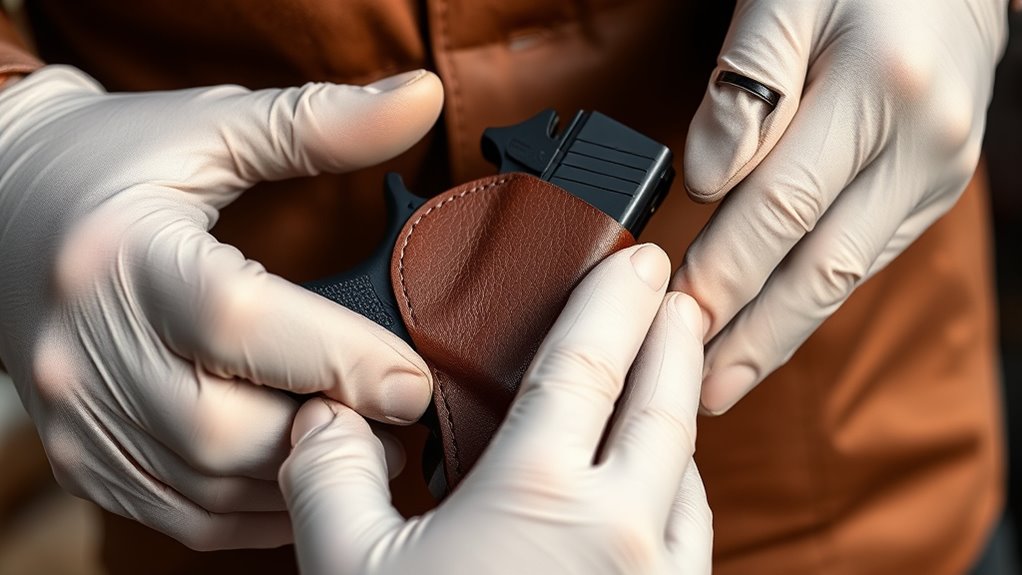
To get the perfect fit, you’ll need to shape your leather holster around your firearm carefully. Start by slightly dampening the leather—not soaking it—to make it more pliable. Insert your firearm gently, then press the holster firmly around its contours.
Begin by lightly dampening your leather holster, then mold it snugly around your firearm’s shape for a perfect fit.
You can use your hands to mold the leather, focusing on areas that feel loose or misshapen. Hold the firearm in place for several minutes, allowing the leather to begin adapting to the shape. Repeat this process a few times, letting the leather dry partially between sessions to retain the molded form.
Be mindful not to overstretch the leather, as it can lose structural integrity. This step guarantees your firearm seats securely, preventing unnecessary movement without making the draw difficult. Over time, the holster will conform more naturally, improving comfort and function.
Patience here pays off, setting a solid foundation before moving on to retention adjustments.
Fine-Tune Retention After Initial Break-In
Now that your holster has softened and molded, it’s time to fine-tune retention for a secure yet smooth draw. You can adjust retention screws, test the fit regularly, and try retention modifiers to get it just right.
These small tweaks guarantee your firearm stays put without making it hard to draw when you need it.
Adjusting Retention Screws
Once you’ve completed the initial break-in, you’ll want to focus on adjusting the retention screws to fine-tune how securely your firearm sits in the holster. These screws control the tension, so getting them right is key for both safety and quick access.
Here’s how to adjust them effectively:
- Use a screwdriver that fits perfectly to avoid stripping the screws.
- Turn screws clockwise to increase retention, ensuring the gun doesn’t move too freely.
- Turn screws counterclockwise to loosen retention if the draw feels too stiff.
- Make small adjustments, then test the fit by inserting and removing your firearm.
Testing Holster Fit
Although you’ve adjusted the retention screws, testing the holster fit with your firearm is essential to guarantee both comfort and security. Insert and remove your gun several times to check how snug the fit feels.
Pay attention to any resistance or looseness. If needed, adjust the leather by wearing the holster or applying light heat to soften it. Use this table to track your observations and actions during testing:
| Test Number | Fit Feeling | Action Taken |
|---|---|---|
| 1 | Slightly tight | Loosened screws a bit |
| 2 | Comfortable | No change |
| 3 | Too loose | Tightened screws |
| 4 | Perfect fit | Tested draw speed |
| 5 | Comfortable & secure | Final check done |
Repeat until the holster feels just right.
Using Retention Modifiers
After you’ve broken in your leather holster and achieved a comfortable fit, you’ll want to fine-tune the retention to guarantee your firearm stays secure without making draws difficult. Retention modifiers help you adjust this balance, ensuring safety and quick access. Here’s what you can do:
- Tighten or loosen screws: Many holsters have adjustable screws near the trigger guard area to control grip pressure.
- Add or remove retention straps: Some models include straps or thumb breaks that can be adjusted or removed for comfort and security.
- Use leather conditioners sparingly: Over-softening can reduce retention, so apply conditioners cautiously.
- Apply heat and mold selectively: Warm the holster with a hairdryer to reshape retention areas if needed.
These tweaks help you customize your holster’s hold perfectly after breaking it in.
Carry Your Holster Daily to Speed Up Breaking It In
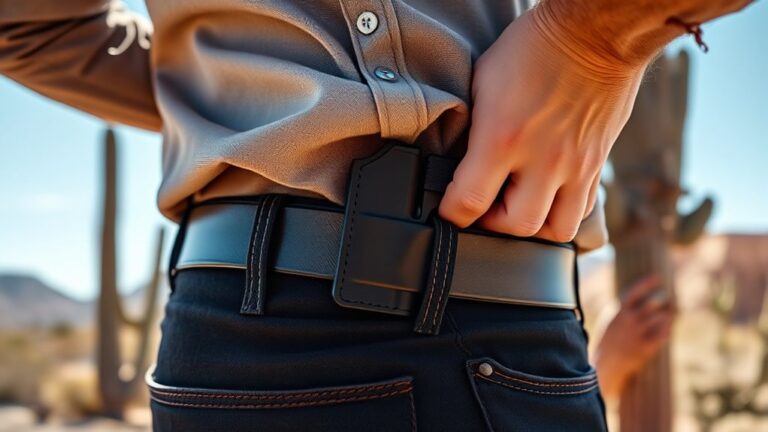
When you carry your leather holster every day, you’ll notice it molding to your body much faster. Daily use helps the leather soften and conform to your natural movements, making it more comfortable and secure. Don’t just let it sit on a shelf—wear it during your regular activities to encourage the leather to break in evenly and quickly.
Make sure to carry your holster with your firearm inside, as this shapes the leather around your specific gun. The more consistent your carry time, the better the holster adapts to your body’s contours and your draw style.
If you switch holsters often or leave it unused, the breaking-in process slows down significantly.
Condition Your Leather Holster to Keep It Flexible and Durable
To keep your leather holster flexible and durable, you’ll need to condition it regularly. Leather can dry out and become stiff, which makes carrying uncomfortable and shortens its lifespan. Conditioning helps maintain softness and prevents cracking.
Here’s how to do it right:
- Choose a high-quality leather conditioner designed for holsters or saddlery.
- Apply a small amount with a soft cloth, rubbing gently in circular motions.
- Let the conditioner absorb fully; don’t rush the drying process.
- Wipe off any excess to avoid a sticky residue.
Conditioning every few months, or more often if you carry daily, keeps your holster supple. It also helps repel moisture and dirt, protecting the leather from damage. Remember, a well-conditioned holster molds better to your firearm, improving retention and comfort.
Avoid Common Mistakes That Damage Leather Holsters
Conditioning your leather holster helps keep it flexible and durable, but even the best care can be undone by some common mistakes. To protect your holster, avoid exposing it to excessive moisture, extreme heat, or harsh chemicals.
Over-tightening retention screws can also warp the leather. Below is a quick guide to help you steer clear of damaging habits:
| Mistake | Why It’s Harmful | How to Avoid |
|---|---|---|
| Overexposure to Water | Causes leather to swell, crack | Dry holster promptly; avoid soaking |
| Using Harsh Cleaners | Removes natural oils, weakens | Use leather-specific cleaners |
| Excessive Heat | Dries and hardens leather | Air-dry naturally, avoid heat sources |
| Over-tightening Screws | Deforms leather shape | Adjust screws gently |
| Neglecting Conditioning | Leads to dryness, brittleness | Apply conditioner regularly |
Frequently Asked Questions
Can I Use Oil-Based Products to Condition My Leather Holster?
You shouldn’t use oil-based products on your leather holster because they can soften the leather too much and cause damage.
Instead, use leather conditioners made specifically for holsters to keep it supple and durable without ruining it.
How Long Does the Break-In Process Usually Take?
The break-in process usually takes about 1 to 2 weeks with regular use.
You’ll notice the leather softening and molding to your firearm, making it more comfortable and secure as time goes on.
Is It Safe to Use a Leather Holster in Extreme Weather?
About 70% of leather holsters can withstand extreme weather if properly cared for. You shouldn’t worry too much but do avoid prolonged exposure to moisture or heat, or your holster might crack or warp over time.
Can Synthetic Holsters Be Broken in Like Leather Ones?
No, synthetic holsters don’t really need breaking in like leather ones do. They’re usually more rigid and maintain their shape, so you can use them right away without worrying about softening or molding to your firearm.
How Do I Repair Scratches on My Leather Holster?
You can repair scratches by gently rubbing leather conditioner or mink oil into the scratched area. For deeper scratches, try a leather repair kit or use a matching leather dye to blend the marks before conditioning it well.
Conclusion
Breaking in your leather holster properly can extend its life by up to 50%, making daily carry more comfortable and secure. By checking the fit, using gentle heat and moisture, and molding it around your firearm, you’ll guarantee a perfect shape.
Don’t forget to condition it regularly and avoid common mistakes that can damage the leather. With these simple steps, your holster will quickly become a reliable, flexible part of your everyday carry gear.
Following these leather holster break-in steps ensures durability and comfort. Proper maintenance and careful molding are key to maximizing your holster’s lifespan. Incorporating these tips will make your leather holster a dependable accessory for daily carry.