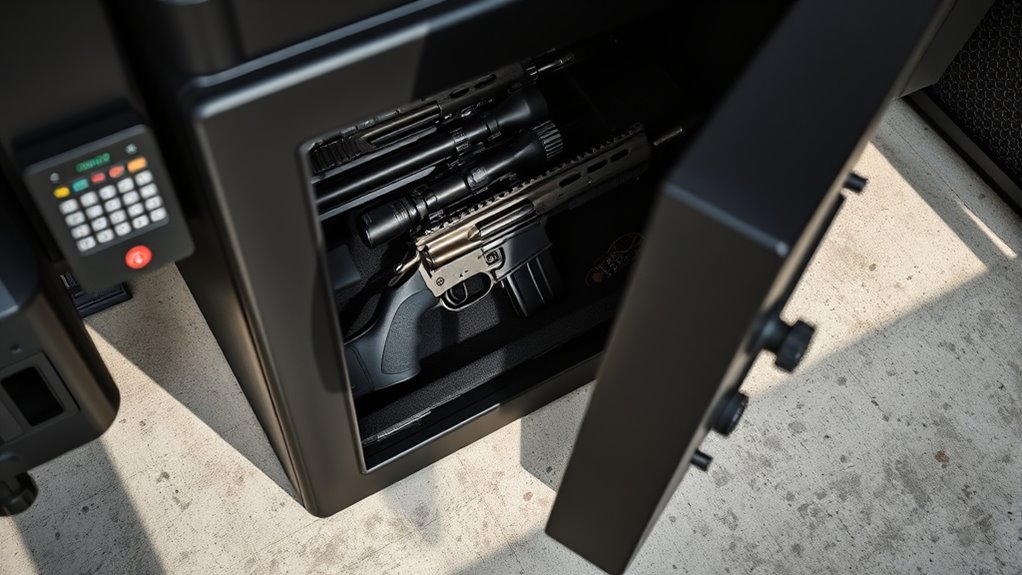
7 Essential Tips to Secure a Gun Safe
To secure your gun safe effectively, choose a discreet, climate-controlled location that is away from windows and high-traffic areas. Proper placement helps protect your firearms from environmental damage and reduces the risk of theft.
Anchor the safe firmly to the floor or wall using heavy-duty hardware to prevent it from being moved or stolen.
Selecting a reliable locking mechanism is crucial—options include mechanical, electronic, or biometric locks.
Control access by regularly updating codes or biometric data to ensure only authorized users can open the safe.
Enhance security further by installing cameras or alarms near the safe.
Maintain your gun safe by testing locks periodically and cleaning its parts often to ensure smooth operation.
Keep these essential tips in mind, and you’ll discover even more ways to boost your safe’s protection.
Key Takeaways
- Choose a discreet, climate-controlled location away from windows and exterior walls to prevent theft and damage.
- Securely anchor the safe to a solid surface using heavy-duty bolts or lag screws to prevent removal.
- Select a reliable lock type—mechanical, electronic, or biometric—based on security needs and ease of access.
- Regularly inspect and maintain locking mechanisms, hinges, and bolts to ensure smooth, tamper-free operation.
- Enhance security with alarms, cameras, and layered protection while updating lock technology and access controls periodically.
Pick the Best Location for Your Gun Safe
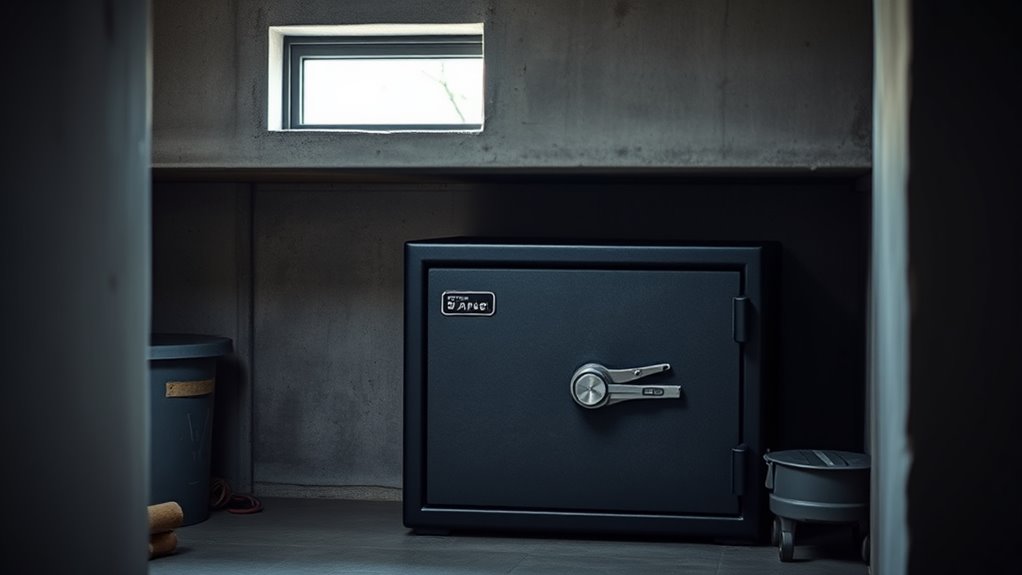
When choosing where to place your gun safe, consider both security and accessibility. You want a spot that’s discreet enough to keep unwanted eyes away but still easy for you to reach when needed. Avoid areas near windows or exterior walls since these are more vulnerable to break-ins.
Instead, opt for an interior room or a closet with a sturdy door. Also, think about the environment—avoid damp basements or places prone to moisture, which could damage your firearms. Temperature fluctuations matter too, so a climate-controlled area is ideal.
Make sure the location won’t obstruct emergency exits or daily movement; you don’t want your safe to become a tripping hazard. Finally, consider who else has access to the room. It’s best if it’s a private space with limited traffic, reducing the risk of unauthorized access.
Anchor Your Gun Safe to Prevent Theft
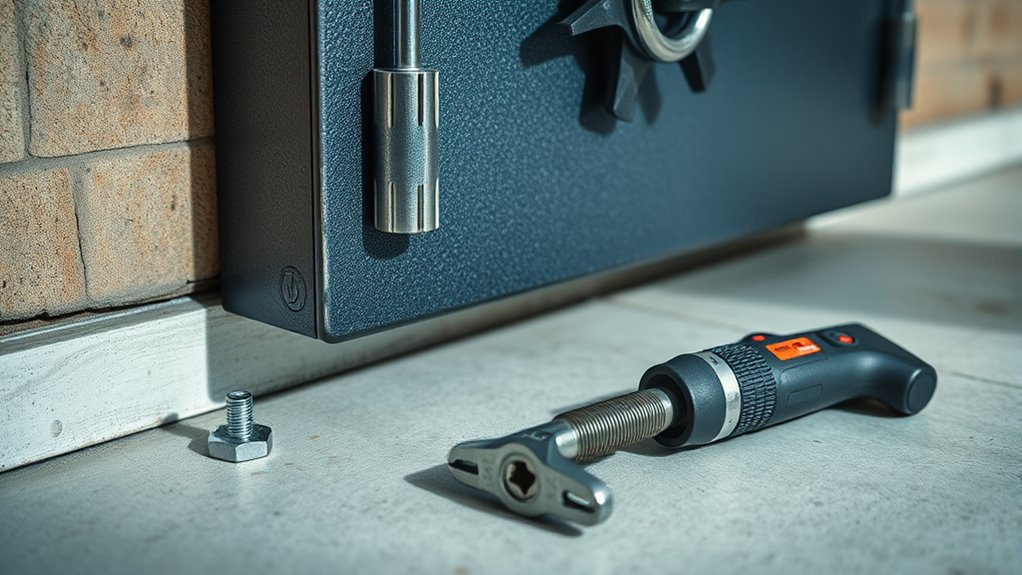
To keep your gun safe secure, you’ll want to choose the right anchor that fits your floor type and safe model. Proper installation is key—make sure you follow best practices to guarantee it’s firmly attached.
This step can make all the difference in preventing theft.
Choosing the Right Anchor
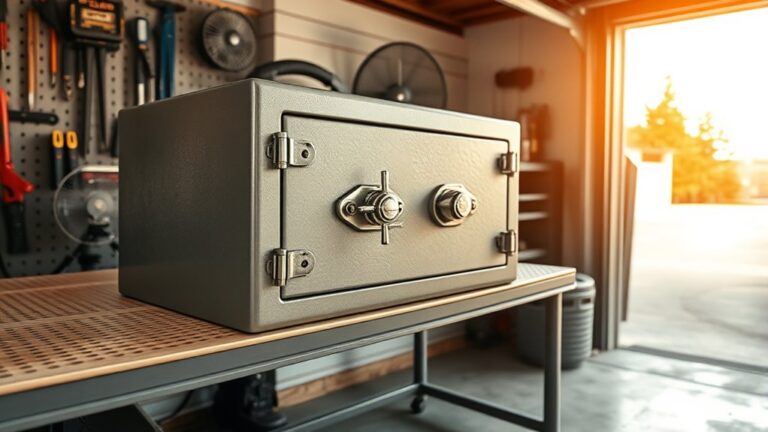
Where should you anchor your gun safe to guarantee it stays put? You’ll want to pick an anchor that matches both the safe’s weight and the floor material. For concrete floors, heavy-duty expansion bolts or wedge anchors work best—they offer strong resistance against prying or lifting.
If your floor is wood, lag bolts into solid joists provide a secure hold. Avoid anchors that rely solely on adhesives or lightweight screws, as they’re easy to defeat. Also, consider the anchor’s size and material; hardened steel anchors resist cutting and tampering better than standard ones.
Choosing the right anchor guarantees your gun safe remains firmly in place, deterring thieves from hauling it away. Prioritize quality anchors that suit your environment to maximize security.
Installation Best Practices
Although selecting the right anchor is essential, proper installation guarantees your gun safe stays put and resists theft attempts. You want to secure your safe to a solid, immovable surface like concrete or heavy wood. Use heavy-duty bolts and make sure you drill deep enough for maximum grip.
Avoid shortcuts; a poorly installed safe is an easy target. Double-check tightness regularly to maintain security.
| Feelings | Why It Matters |
|---|---|
| Peace of Mind | Knowing your firearms are safe |
| Confidence | Safe stays where you placed it |
| Relief | Protection against theft |
| Responsibility | Keeping family secure |
| Empowerment | Taking control of safety |
Follow these steps, and you’ll rest easy knowing your valuables are truly protected.
Choose the Best Locking Mechanism for Your Gun Safe
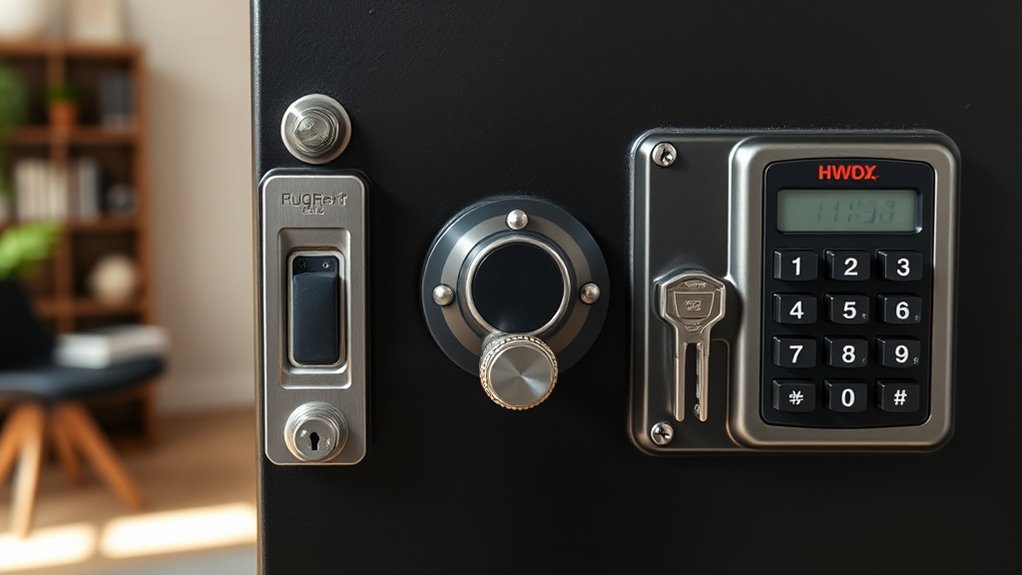
Because your gun safe’s locking mechanism is its primary defense, choosing the right one is essential for both security and convenience. You want a lock that’s reliable, quick to access in emergencies, and resistant to tampering.
Here are three popular locking options to contemplate:
- Mechanical Dial Lock – Durable and doesn’t rely on batteries, but can be slower to open and requires memorizing the combination.
- Electronic Keypad Lock – Offers fast access with customizable codes; however, it needs battery power, so keep spares handy to avoid lockouts.
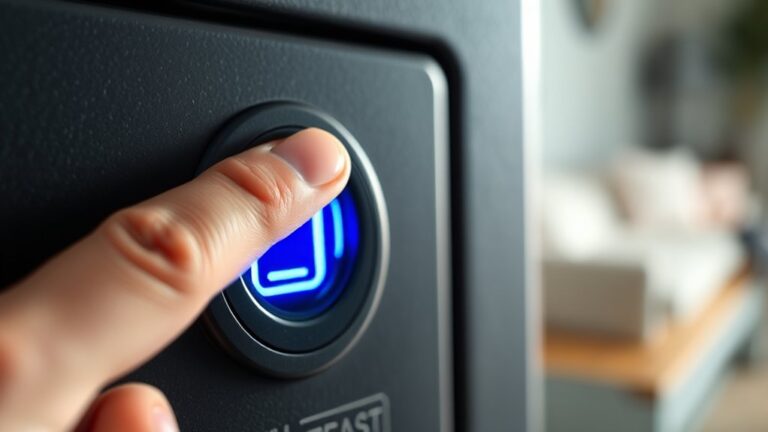
- Biometric Lock – Uses fingerprint recognition for quick, personalized access. It’s secure and convenient but may be more expensive and sensitive to dirt or moisture.
Pick the mechanism that fits your lifestyle and security needs best. Remember, the right lock isn’t just about keeping intruders out but also ensuring you can get to your firearms quickly when it matters most.
Manage Who Can Access Your Gun Safe
You need to clearly identify who’s authorized to access your gun safe to keep it secure. Using effective access control methods helps guarantee only trusted individuals can open it.
Let’s look at how to manage these controls properly.
Authorized User Identification
How can you be sure only the right people get access to your gun safe? Identifying authorized users is key to keeping your firearms secure. You want to clearly define who’s allowed and maintain control over that list.
Here’s how to manage authorized user identification effectively:
- Create a user list: Write down every person who should have access, including family members or trusted individuals. Keep this list updated.
- Verify identities: Confirm each user’s identity before granting access, ensuring they’re trustworthy and responsible.
- Communicate expectations: Let authorized users know the importance of security and their role in preventing unauthorized access.
Access Control Methods
Once you’ve identified who should have access to your gun safe, the next step is deciding how they’ll gain entry. You’ll want a method that balances security with convenience. Mechanical locks, electronic keypads, and biometric scanners are common options.
Each offers different levels of protection and ease of use depending on your needs.
| Method | Security Level | Ease of Use |
|---|---|---|
| Mechanical Lock | High | Moderate |
| Electronic Keypad | Moderate to High | Easy |
| Biometric Scanner | Very High | Very Easy |
Choose a method that fits your lifestyle and the sensitivity of your firearms. Remember, controlling access means not only selecting who can enter but also how smoothly authorized users can do so.
Add Extra Security Around Your Gun Safe
Although a sturdy gun safe is your first line of defense, adding extra security measures around it can considerably reduce the risk of unauthorized access. You want to create multiple obstacles for anyone trying to break in, making your safe less tempting and more challenging to compromise.
A strong gun safe is essential, but layered security makes unauthorized access far less likely.
Here are three effective ways to boost security around your gun safe:
- Anchor the Safe: Bolt your safe to the floor or wall. This prevents thieves from easily carrying it away.
- Install Surveillance: Use security cameras or motion sensors near the safe’s location. They act as deterrents and provide evidence if someone tries to tamper with it.
- Use Concealment: Hide your safe behind furniture or inside closets. Out of sight means out of mind, reducing the chance of it being targeted.
Maintain and Clean Your Gun Safe Regularly
Adding extra security measures around your gun safe helps protect it from external threats, but keeping the safe itself in top condition is just as important. Regular maintenance and cleaning prevent rust, dust buildup, and mechanical issues that could compromise your safe’s integrity. Start by wiping down the exterior and interior with a soft, dry cloth to remove dust and moisture.
Avoid harsh chemicals that might damage the finish or internal components. Check the locking mechanism frequently for smooth operation—lubricate moving parts with a silicone-based lubricant if needed, but don’t overdo it. Inspect the door seals to ensure they remain intact and replace them if worn out, maintaining the safe’s environmental protection.
Keeping your gun safe clean and well-maintained not only extends its lifespan but ensures it functions properly when you need it most. Make it a habit to perform these simple tasks every few months to keep your firearms secure and ready.
Test and Update Your Gun Safe’s Security Regularly
Because security threats and technology evolve, you should regularly test and update your gun safe’s protection to stay ahead. Neglecting this can leave your firearms vulnerable to new break-in methods or outdated locking mechanisms.
Here’s how to keep your gun safe’s security current:
- Test the Lock Mechanism – Ensure the keypad, combination dial, or biometric reader works smoothly. Regularly verify that the locking bolts engage fully and the door seals tightly.
- Update Access Codes or Biometrics – Change combinations or reprogram fingerprints periodically. This prevents unauthorized access from those who might have learned old codes.
- Inspect for Wear and Damage – Look for signs of tampering or mechanical wear. Replace worn parts immediately to maintain maximum security.
Frequently Asked Questions
How Do Environmental Factors Affect the Longevity of a Gun Safe?
Environmental factors like humidity, temperature, and moisture can cause rust and damage to your gun safe over time. You’ll want to control these conditions to keep your safe durable and protect your firearms properly.
Can a Gun Safe Protect Against Fire and Water Damage?
You’d think a gun safe could survive a volcanic eruption, right? Well, a quality fireproof and waterproof safe can protect your guns from fire and water damage, but no safe is absolutely indestructible against extreme disasters.
What Is the Average Lifespan of Gun Safe Locking Mechanisms?
You can expect gun safe locking mechanisms to last around 10 to 20 years, depending on usage and maintenance. Regular lubrication and avoiding forced entry attempts will help keep your lock functioning smoothly for years.
Proper care not only extends the lifespan but also ensures reliable security. Neglecting maintenance can lead to wear and potential lock failure. Always follow the manufacturer’s guidelines for upkeep.
Are Biometric Locks More Reliable Than Traditional Key Locks?
You’ll find biometric locks are generally more reliable than traditional keys since they reduce unauthorized access by up to 90%. They quickly recognize your fingerprint, so you won’t fumble with keys or worry about lost copies.
How Often Should You Replace the Batteries in Electronic Locks?
You should replace the batteries in electronic locks every 6 to 12 months, or sooner if you notice slow response or low battery alerts.
Regular checks guarantee your lock stays reliable and avoids getting stuck unexpectedly.
Conclusion
Securing your gun safe isn’t just about locking it up—it’s about peace of mind. While some say a hidden safe alone keeps thieves away, the truth is, layering your security works best. By choosing the right spot, anchoring it, and regularly testing your locks, you’re creating a fortress.
So, don’t just rely on one method—combine them. Use multiple strategies like strong locks, secure placement, and proper anchoring. You’ll thank yourself later when your valuables stay exactly where they should, ensuring the best gun safe security.