How Do You Reload Ammo in 7 Essential Steps?
To reload ammo safely and efficiently, it’s important to follow seven essential steps. These steps include gathering your materials, inspecting brass, resizing, depriming, measuring powder, seating primers, and properly seating bullets. Reloading ammo requires precision and attention to detail to ensure reliable and accurate rounds.
To begin, gather all your materials and equipment, including brass cases, primers, powder, and bullets. Next, inspect and clean your used brass to guarantee safety. Then, resize and deprime the cases.
Carefully measure and add the correct powder charge, seat primers securely, and properly seat and crimp the bullets.
Finally, inspect and test your finished rounds for reliability. Follow these steps closely, and you’ll soon handle the process with confidence and precision.
Key Takeaways
- Gather all necessary materials, including brass cases, primers, powder, bullets, reloading press, dies, and safety gear.
- Inspect and clean brass cases thoroughly, discarding any damaged or corroded cases.
- Resize and deprime cases using a resizing die and reloading press to restore original dimensions and remove spent primers.
- Measure and add the correct powder charge precisely, following load data and using a reliable scale or powder dispenser.
- Seat primers and bullets properly, apply crimp, inspect the finished rounds, and test for reliable function in the firearm.
Gather Your Ammo Reloading Materials and Equipment
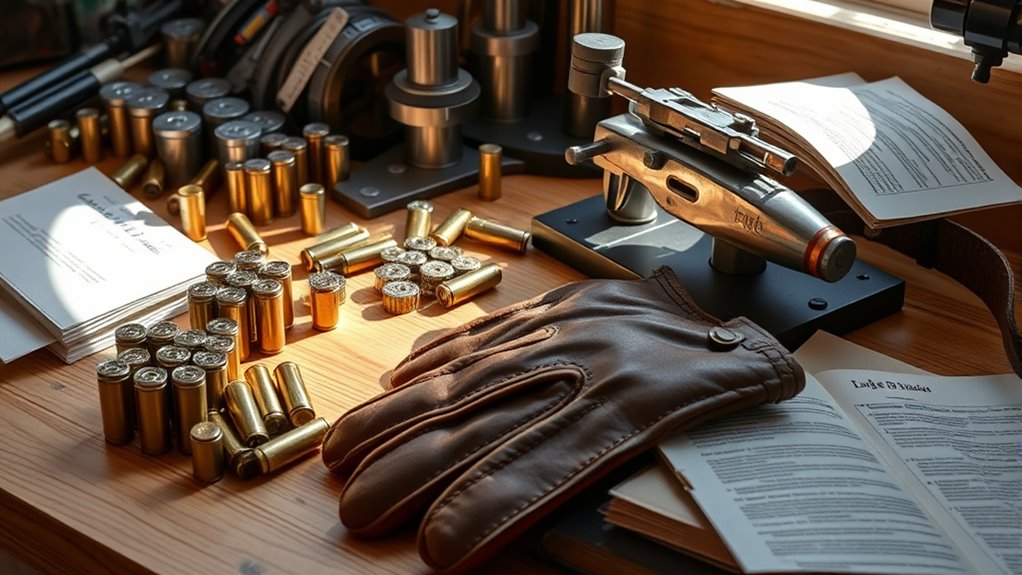
Before you start reloading ammo, you’ll need to gather all the essential materials and equipment. This means assembling your components: quality brass cases, primers, powder, and bullets suited for your firearm. Each must be compatible to guarantee safety and reliability.
Gather all compatible components—brass, primers, powder, and bullets—before starting to ensure safety and reliability.
Next, you’ll require the right tools—a scale for measuring powder charges accurately, a reloading press, and dies specific to your cartridge type. Don’t forget a powder measure or dispenser to control charges precisely. A case tray or holder helps keep things organized during the process.
Safety gear, like eye protection and gloves, is also vital. Having a reliable reloading manual nearby will guide you through load data and procedures, preventing mistakes. By preparing these items before you begin, you’ll streamline your workflow and avoid interruptions during reloading.
Taking time now to gather everything sets you up for a smooth, efficient, and safe reloading experience.
Inspect and Clean Your Used Brass Cases
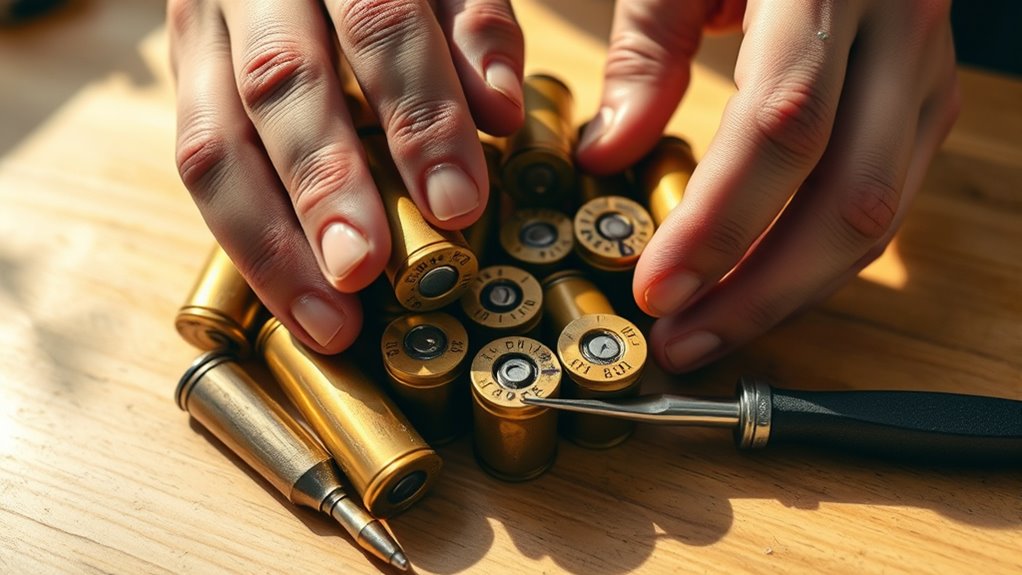
Once you’ve gathered all your materials, you’ll want to carefully inspect each used brass case for damage or defects that could affect safety and performance. Look for cracks, dents, or signs of corrosion. Discard any cases that show serious damage.
Next, clean the brass to remove dirt, residue, and powder fouling. You can use a tumbler with cleaning media or ultrasonic cleaners to make this process efficient and thorough.
Here’s a quick checklist to visualize the inspection and cleaning process:
| Inspection Step | What to Look For | Action Needed |
|---|---|---|
| Visual Check | Cracks, dents, corrosion | Discard damaged cases |
| Primer Pocket | Residue, deformation | Clean thoroughly |
| Case Exterior | Dirt, powder residue | Tumble or ultrasonic cleaning |
Taking time here ensures your reloaded ammo is safe, reliable, and performs well. Skipping this step could lead to malfunctions or worse, so be meticulous.
Resize and Deprime Your Brass Cases
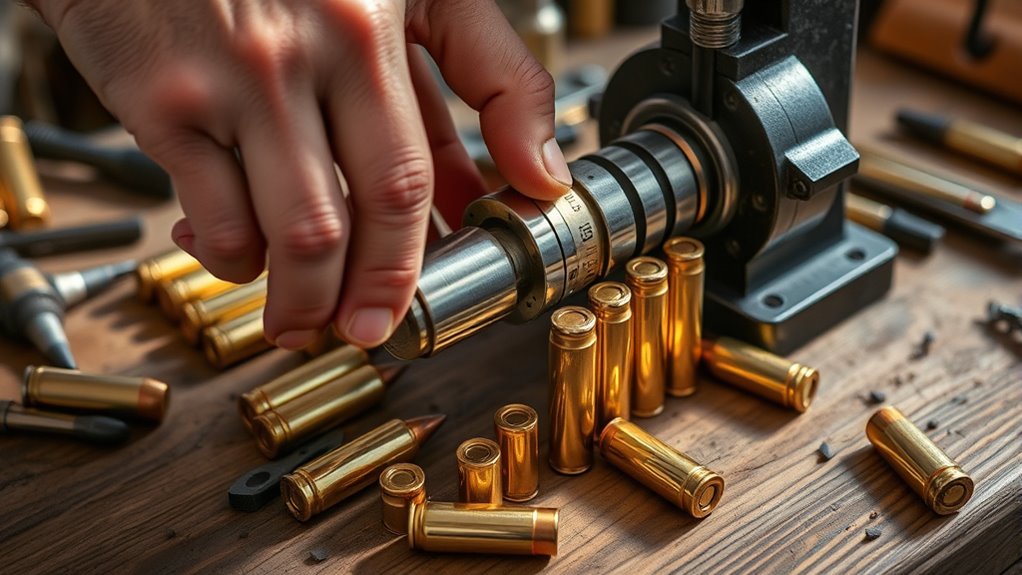
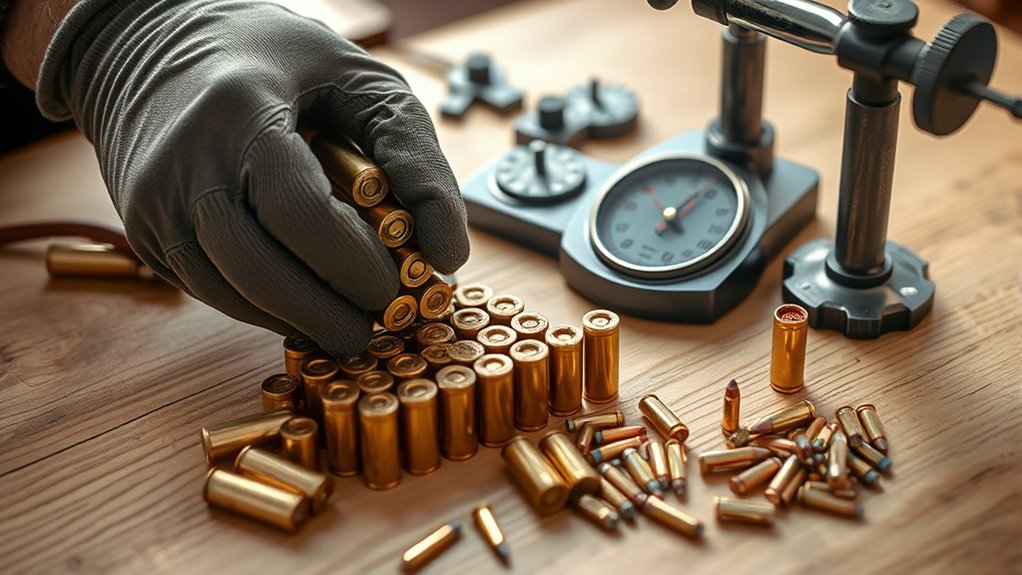
After inspecting and cleaning your brass, you’ll need to resize and deprime each case to guarantee they fit properly in your firearm and are ready for new primers. Resizing restores the brass to its original dimensions, which is essential because firing expands the case, making it harder to chamber the next round. You’ll use a resizing die in a reloading press for this step.
Insert the case into the die and carefully operate the press to resize it. Simultaneously, the depriming pin in the die removes the spent primer from the case head. This is important because you want a clean, empty primer pocket before seating a new primer.
After resizing and depriming, check each case for any damage or signs of excessive wear that might affect safety or performance. Once this step is complete, your brass is properly prepared for the next stages in reloading.
Measure and Add the Correct Powder Charge
Now that your brass is ready, you’ll need to choose the right powder type for your load. It’s essential to measure each charge accurately to guarantee safety and performance.
Using a reliable scale or powder measure will help you avoid mistakes.
Selecting Powder Type
How do you choose the right powder type for your reloads? Start by considering the caliber and bullet weight since different powders burn at different rates, affecting velocity and pressure. Using a powder that’s too fast or slow for your cartridge can lead to inconsistent performance or safety issues.
Always consult reliable reloading manuals to find recommended powders for your specific load.
Here’s a quick overview to guide your selection:
| Caliber | Powder Type | Burn Rate |
|---|---|---|
| .223 Rem | Hodgdon CFE 223 | Fast |
| .308 Win | IMR 4064 | Medium |
| .45 ACP | Alliant Unique | Slow |
Matching powder type to your cartridge guarantees *ideal* accuracy and safety.
Ensuring Accurate Measurement
Choosing the right powder is only part of the process; measuring the exact charge is equally important for consistent and safe reloads. You’ll want to use a reliable scale, preferably a digital one, to guarantee precision. Always double-check the weight before adding powder to your cases.
Even a small variation can affect performance or safety. When measuring, tare your scale properly and use a clean, dry container. Avoid distractions and work in a well-lit area to prevent mistakes.
Follow the load data closely—never exceed recommended charges. If you’re new, it’s wise to measure each charge individually rather than using a powder measure for multiple rounds at once. Taking these precautions helps you maintain accuracy and keeps your reloads reliable every time.
Seat Primers Securely to Prevent Misfires
Why is seating primers securely so important? If primers aren’t positioned properly, you risk misfires or inconsistent ignition, which can be dangerous and ruin your shooting experience.
When you seat primers, make sure they sit flush or just slightly below the case head. This ensures reliable contact with the firing pin and consistent ignition.
Use a proper priming tool that applies even pressure to avoid crushing or damaging the primer. Don’t try to force primers in; if they don’t seat easily, check for debris or damage.
Also, avoid over-seating primers, as pushing them too deep can cause light strikes or misfires.
Seat and Crimp Bullets Properly
Once you’ve secured the primers, the next essential step is to seat and crimp the bullets properly to guarantee consistent accuracy and safety. You’ll need a seating die adjusted to place the bullet at the correct overall cartridge length, making certain it fits your firearm’s chamber without issues. Seating the bullet too deep or too shallow can affect pressure and velocity, so precise measurement is key.
After seating, use the crimping function on your die to apply a firm but controlled crimp around the bullet. This holds it securely in place, preventing movement during handling and firing. Different cartridges require different crimp types—roll crimp for straight-walled cases and taper crimp for bottlenecked cases—so check your load data carefully.
Proper seating and crimping reduce the risk of misfires, improve consistency, and guarantee your reloads perform reliably shot after shot. Take your time adjusting the dies for each caliber to maintain safe and accurate ammunition.
Inspect and Test Finished Ammo for Reliability
Before you use your reloaded ammo in the field, it’s essential to inspect and test each round to guarantee reliability and safety. Start by visually checking each cartridge for defects like dents, cracks, or inconsistent crimps. Make sure the primers are seated properly and the overall length matches your specifications.
Any irregularities could lead to malfunctions or dangerous pressure issues. Next, conduct a function test by cycling a few rounds through your firearm without firing. This helps identify feeding or extraction problems.
After that, fire a small batch at the range, closely observing for signs of squib loads, misfires, or unusual recoil. Measure groupings to evaluate accuracy and consistency. If any rounds fail these tests, set them aside and analyze what went wrong before proceeding.
Frequently Asked Questions
What Safety Precautions Should I Take While Reloading Ammo?
You should always wear safety glasses, work in a well-ventilated area, keep powder away from flames. Double-check powder charges, and never mix different powders.
Stay focused, avoid distractions, and store components safely when you’re done.
How Do I Choose the Right Powder for My Cartridge?
You’ll want to pick powder based on your cartridge type, bullet weight, and desired velocity. Always consult reputable reloading manuals to find recommended powders and charge weights to guarantee safety and peak performance.
Can I Reuse Primers or Should I Always Use New Ones?
Why risk your safety? You shouldn’t reuse primers—they’re designed for one-time use only.
Using new primers guarantees reliable ignition and prevents misfires or dangerous malfunctions.
Always prioritize safety by choosing fresh primers every time you reload.
What Tools Are Essential for Beginners in Ammo Reloading?
You’ll need a quality reloading press, dies for your caliber, a reliable scale, a powder measure, a priming tool, calipers, and a case tumbler.
These essential tools will help you reload safely and accurately.
How Do Environmental Factors Affect the Reloading Process?
You’ll notice humidity can swell primers or powder, affecting performance—over 60% humidity can cause misfires. Temperature shifts also change powder burn rates, so you’ll want to reload in controlled environments for consistent, safe ammo.
Maintaining stable environmental conditions is key to reliable reloading. High humidity and temperature fluctuations can compromise the integrity of your components. This can lead to variations in ammunition performance and potential safety hazards.
Conclusion
Reloading ammo is like assembling a puzzle—each step fits perfectly to create a reliable round. By gathering your materials, cleaning and resizing brass, measuring powder, seating primers, seating bullets, and carefully crimping them, you guarantee safety and performance.
Always inspect your finished ammo thoroughly to avoid surprises. With practice, these steps become second nature, giving you confidence and control over your shooting experience every time you reload. Mastering how to reload ammo in 7 essential steps ensures precision, safety, and improved shooting results.