7 Tips to Put a Gun Safe Upstairs Safely
If you’re putting a gun safe upstairs, it’s crucial to balance security with your available space by choosing the right size and type. Ensuring the floor can support the weight is essential to prevent structural damage. Reinforcing joists may be necessary for added stability and safety.
Select a low-traffic, climate-controlled location away from exterior walls to protect your firearms from moisture and temperature fluctuations. Controlling moisture inside the safe helps preserve your guns and prevent rust.
Secure the safe firmly to avoid tipping hazards, and consider professional installation to guarantee proper stability. Following these steps ensures your gun safe is both safe and durable.
Keep exploring to uncover more tips and best practices for safely installing a gun safe upstairs.
Key Takeaways
- Verify the floor’s weight capacity and reinforce joists or add support beams if needed to safely hold the gun safe’s weight.
- Place the safe near load-bearing walls to better distribute weight and enhance structural support.
- Use a thick plywood base under the safe to evenly spread its load across the floor.
- Anchor the safe securely to floor joists or wall studs with heavy-duty bolts and install anti-tip brackets for stability.
- Choose a low-traffic, climate-controlled interior location away from moisture and temperature fluctuations to protect firearms.
Choose the Right Gun Safe Size and Type
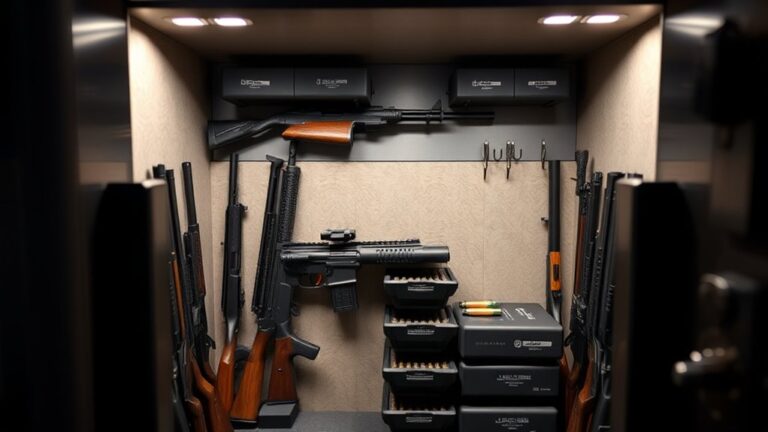
When choosing the right gun safe size and type for upstairs, you’ll want to balance security with practicality. Think about how many firearms you need to store and whether you want room for future additions. A compact safe might fit better in tighter spaces, but make sure it’s still secure enough to deter theft.
Consider the safe’s weight, too; heavier models often offer better protection but can be tricky to move upstairs. Opt for a model with solid steel construction and reliable locking mechanisms—digital or biometric locks can add convenience without compromising safety. Also, if you’re storing other valuables, look for safes with fire-resistant features.
Check Your Floor’s Weight Capacity Upstairs
Before installing a heavy gun safe upstairs, you’ll need to make sure your floor can support the weight. Most residential floors are designed to hold about 40 pounds per square foot, but gun safes can easily exceed that, especially when fully loaded. Start by checking your home’s building plans or consult a structural engineer if you’re unsure.
They can assess the floor joists and subfloor to confirm if they can handle the safe’s weight without risk. If the floor isn’t strong enough, you might need to reinforce it by adding support beams or sistering joists. This ensures the safe won’t cause sagging or structural damage over time.
Keep in mind, placing the safe near a load-bearing wall can also help distribute weight more effectively. Confirming your floor’s weight capacity upfront keeps your gun safe secure and protects your home’s integrity.
Find the Best Location Upstairs for Your Gun Safe
You’ll want to pick a spot upstairs that can handle the weight without any issues. Look for a low-traffic area to keep your safe discreet and undisturbed. Also, consider the room’s climate to prevent any damage to your firearms over time.
Assess Structural Support
Although placing a gun safe upstairs can save space and improve accessibility, it’s essential to make certain the floor can support its weight. Gun safes are heavy, especially when loaded, so you need to evaluate the structural integrity of the floor. Check the floor joists beneath the area you’re considering; they should be strong and close together to handle the load.
If you’re unsure, consult a structural engineer or contractor to assess the strength of the floor and recommend reinforcements if necessary. Avoid placing the safe near weak spots like floor vents or hollow areas. Ensuring proper support prevents damage to your home and keeps the safe secure.
Taking these steps upfront will save you headaches and costly repairs down the line.
Choose Low-Traffic Area
Where’s the best spot upstairs to keep your gun safe out of the way yet accessible? Choosing a low-traffic area helps maintain security and reduces accidental bumps or disturbances.
Here’s how to find that ideal spot:
- Pick a corner or closet away from main walkways to avoid frequent foot traffic.
- Avoid placing it near noisy appliances or areas where vibrations are common.
- Make sure it’s not in a spot where kids or visitors frequently pass by.
- Choose a discreet location that doesn’t draw attention or create temptation.
Consider Climate Control
Since guns and ammunition are sensitive to temperature and humidity, you should carefully consider climate control when choosing an upstairs spot for your safe. Avoid placing your safe in areas prone to extreme temperature fluctuations, like near windows, vents, or uninsulated exterior walls.
Instead, pick a room with consistent climate conditions, such as an interior closet or a finished basement with regulated heating and cooling. Using a dehumidifier or moisture absorber inside the safe can also help prevent rust and corrosion. Proper ventilation around the safe is important to reduce moisture buildup.
Reinforce the Floor to Support a Heavy Gun Safe
If you’re planning to install a heavy gun safe upstairs, you’ll need to make certain the floor can handle the extra weight. A standard floor might not support the concentrated load of a bulky safe, risking damage or safety issues.
Here’s how to reinforce it properly:
- Assess the Floor Joists: Identify the size, spacing, and condition of the joists supporting your floor.
- Add Support Beams: Install additional beams or sister joists alongside existing ones to distribute the weight more evenly.
- Use a Plywood Base: Place a thick plywood sheet under the safe to spread the load across a larger area.
- Consult a Structural Engineer: For heavy safes, professional advice ensures your reinforcement is safe and up to code.
Reinforcing your floor this way prevents sagging or structural damage, keeping your valuable safe secure upstairs without worry.
Control Ventilation and Moisture Around Your Safe
Although a sturdy floor is essential, controlling ventilation and moisture around your gun safe is just as important to protect your firearms and valuables from rust and damage. You’ll want to place your safe in a room with good airflow to prevent dampness buildup. Using a dehumidifier nearby can effectively reduce humidity levels, especially in basements or poorly ventilated areas.
Avoid placing your safe directly against exterior walls where temperature fluctuations and moisture are more common. Consider adding moisture-absorbing products like silica gel packs or specially designed safe dehumidifiers inside the safe to keep the interior dry. Regularly check these moisture control devices and replace them as needed.
Also, guarantee the room temperature stays consistent, since drastic changes can encourage condensation inside the safe. By managing ventilation and moisture carefully, you’ll extend the lifespan of your firearms and keep them in ideal condition without risking corrosion or mold damage.
Secure the Safe Against Tipping and Movement
To keep your gun safe secure upstairs, you’ll need to prevent it from tipping or shifting during everyday use or emergencies. Stability is key to both safety and protecting your valuables. Here’s how you can secure your safe effectively:
- Anchor to the Floor or Wall: Use heavy-duty bolts to fasten the safe to floor joists or wall studs, ensuring it won’t move under pressure.
- Use Anti-Tip Brackets: These brackets add extra support to keep the safe upright, especially useful on uneven surfaces.
- Place on a Level Surface: Check with a level tool to avoid any tilt that could encourage tipping.
- Add Non-Slip Pads: Position rubber or silicone pads beneath the safe to reduce sliding on hardwood or tile floors.
Consider Professional Installation for Safety and Stability
When you want to guarantee your gun safe is installed securely and functions properly, hiring a professional installer can make all the difference. Professionals have the experience and tools to assess your upstairs floor’s structure, ensuring it can support the safe’s weight without damage or instability. They’ll know how to properly anchor the safe to prevent tipping or unauthorized removal, which is critical for both safety and security.
Plus, a professional installer can help you navigate any building codes or regulations that apply to your home, avoiding costly mistakes. They’ll also save you time and frustration by handling the heavy lifting and precise measurements, so you don’t have to worry about damaging your floors or the safe.
Frequently Asked Questions
How Often Should I Inspect My Gun Safe for Maintenance?
You should inspect your gun safe at least twice a year to guarantee the locking mechanism, hinges, and interior are in good shape. Regular checks help prevent rust, mechanical issues, and keep your firearms secure and safe.
Performing these inspections consistently ensures your safe remains reliable. It also helps identify any potential problems early on. This proactive approach extends the lifespan of your safe.
What Is the Best Lock Type for a Gun Safe Upstairs?
You’ll want an electronic keypad lock—because who doesn’t love punching in a code while dodging stairs? It’s quick, secure, and won’t have you fumbling with keys or combinations when you’re half-asleep or rushing upstairs.
Can I Use a Dehumidifier Inside a Gun Safe?
Yes, you can use a dehumidifier inside your gun safe to prevent moisture and rust. Just pick a small, safe model designed for confined spaces, and regularly check it.
Doing this will help keep your firearms protected and dry.
How Do I Childproof a Gun Safe Effectively?
Imagine a castle guarding its treasure; you need strong locks, hidden codes, and alarms.
To childproof your gun safe, use biometric locks, secure it to the floor, and keep the combination private—
don’t let curiosity unseal danger.
Are There Insurance Benefits for Having a Gun Safe?
Yes, you can often get insurance discounts for having a gun safe because it reduces theft risk. Make sure your safe meets your insurer’s requirements, and keep documentation handy to prove you have proper security in place.
Conclusion
When putting a gun safe upstairs, you’ll want to cover all your bases to keep it secure and stable. From choosing the right size to reinforcing your floor and controlling moisture, each step matters.
Don’t forget to anchor your safe properly and consider professional help if needed. With these tips, you’ll be able to keep your firearms safe without losing sleep over potential damage.
After all, it’s better to be safe than sorry when it comes to gun safe installation upstairs and ensuring the safety of your valuables.