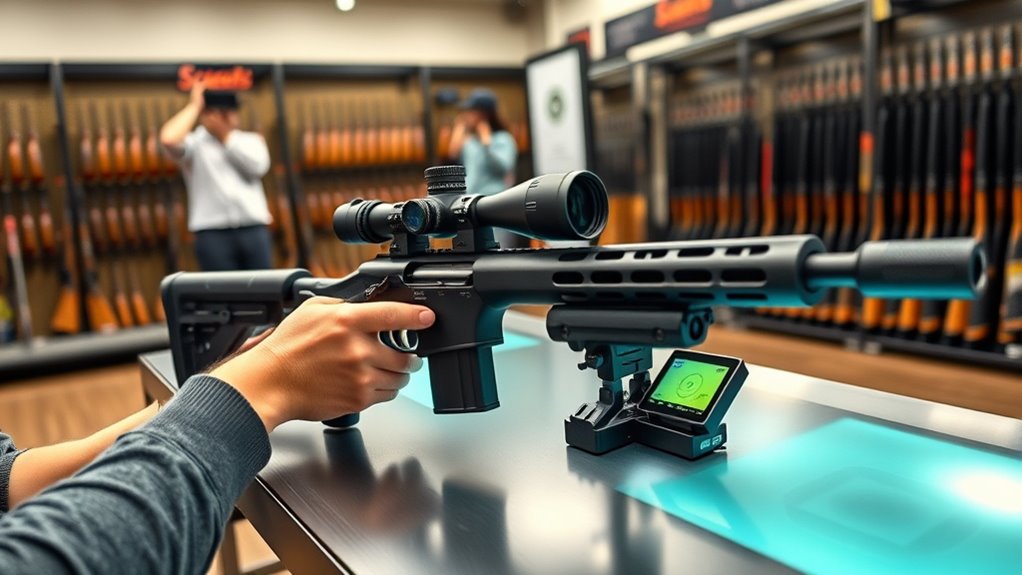
How Does Scheels Sight Guns Step by Step
At Scheels, sighting guns is a precise process that ensures your firearm is accurately aligned for better shooting performance. The first step involves safely unloading and securing your firearm to prevent any accidents.
Next, set up a target at your preferred zeroing distance, commonly 25 or 100 yards, with stable and clear lighting conditions for optimal visibility.
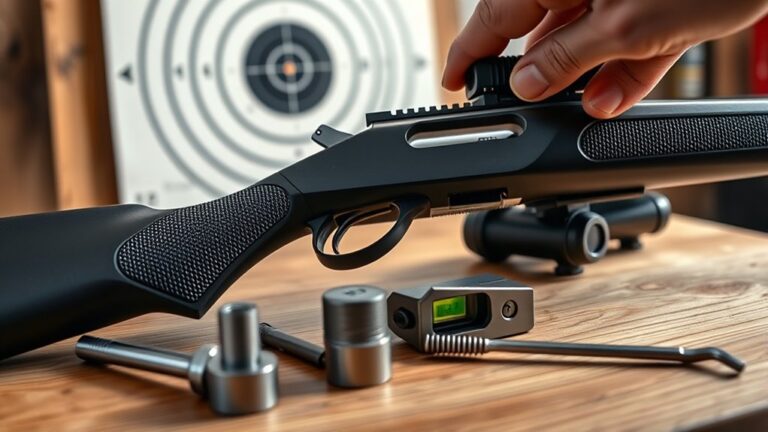
Use helpful tools like laser bore sighters and gun rests to keep your firearm steady throughout the process.
Align your sights by centering the front sight within the rear notch carefully. Then, make small adjustments to elevation and windage to fine-tune your aim.
Consistent practice is key to improving accuracy over time. Keep working on your technique, and you’ll discover additional tips to maintain long-term precision and confidence in your shooting skills.
Key Takeaways
- Ensure the rifle is unloaded, cleaned, and securely rested before beginning sight adjustments.
- Focus clearly on the front sight post through the rear sight and center it within the notch.
- Adjust elevation and windage screws incrementally to align the point of aim with the point of impact.
- Use a properly set target at your desired zeroing distance, typically 25 or 100 yards, for consistent shot placement.
- Regularly clean, inspect, and maintain sights to preserve accuracy and reliability during sighting sessions.
Gun Sighting Basics: What You Need to Know
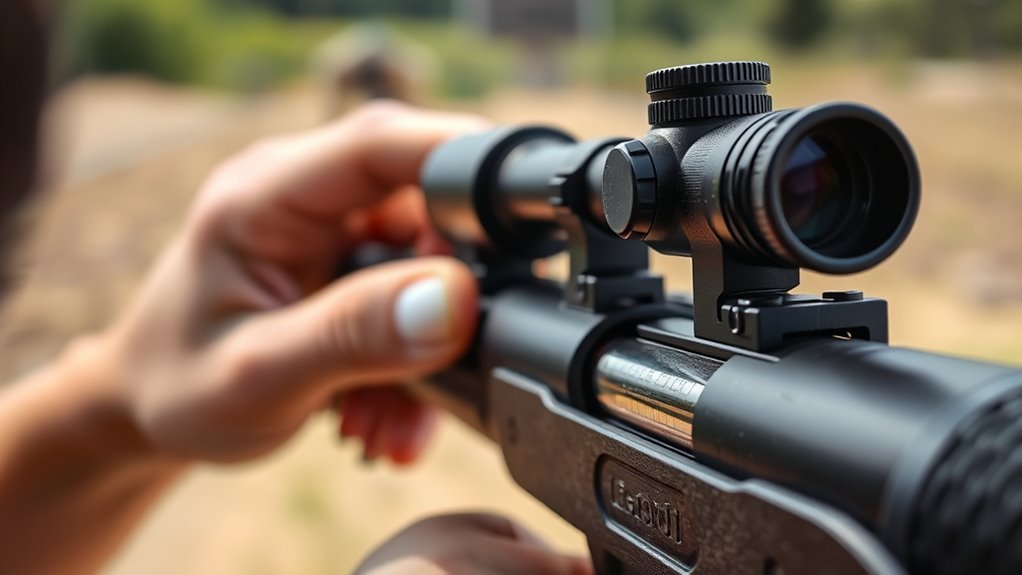
Before you start adjusting your sights, it’s important to understand the basics of gun sighting. Essentially, sighting aligns your gun’s sights with the target to improve accuracy. You’ll be working with two main components: the front sight and the rear sight.
Understanding gun sighting basics is crucial before adjusting your sights for improved accuracy.
When properly sighted, the front sight should be centered within the rear sight notch and level with its top. This alignment ensures your bullet hits where you aim.
You’ll also encounter terms like “zeroing,” which means setting your sights so the point of aim matches the point of impact at a specific distance. Keep in mind that factors like distance, bullet drop, and wind can affect your shot, so understanding sight adjustments—elevation for up and down, windage for left and right—is key.
Knowing these fundamentals prepares you to make precise adjustments and ultimately improve your shooting accuracy.
How to Safely Prepare Your Gun for Sighting
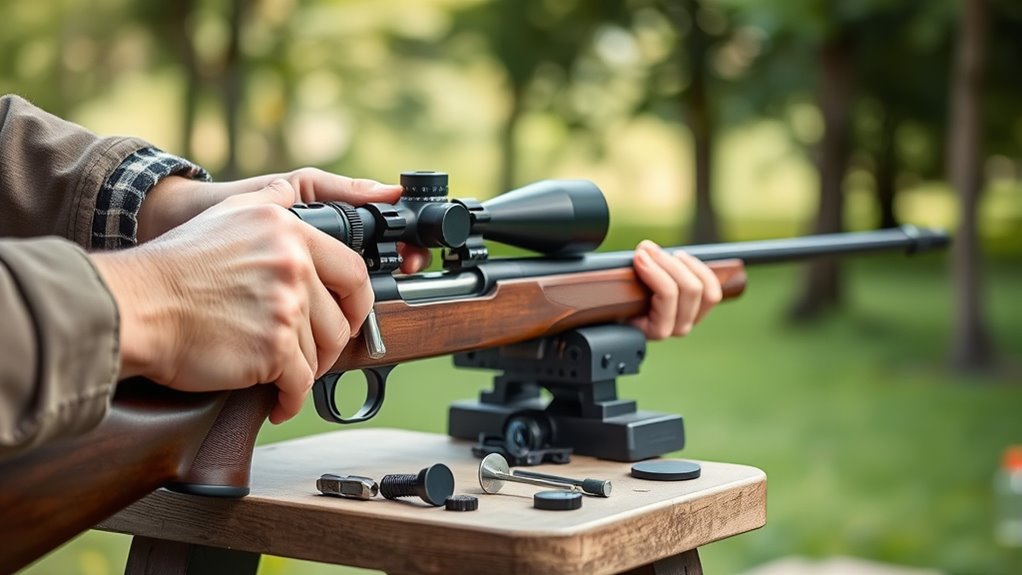
Before you begin sighting your gun, make sure it’s completely unloaded to prevent accidents. You’ll also want to wear the right safety gear to protect yourself during the process.
Finally, clear the shooting area thoroughly so you have a safe and distraction-free environment.
Ensure Firearm Is Unloaded
Although it might seem obvious, making certain your firearm is completely unloaded is the most important step before you begin sighting. You never want to risk an accidental discharge during this process.
Here’s how to ensure your gun is unloaded safely:
- Point the firearm in a safe direction at all times.
- Remove the magazine or ammunition source.
- Open the action and visually inspect the chamber to confirm it’s empty.
- Physically check the chamber with your finger or a tool to be absolutely sure no rounds remain.
Taking these careful steps every time prevents accidents and lets you focus on accurate sighting without worry. Safety always comes first when handling firearms.
Select Appropriate Safety Gear
Why is selecting the right safety gear essential when preparing your gun for sighting? It protects you from potential hazards like accidental discharges, flying debris, and loud noises. First, always wear safety glasses to shield your eyes from any unexpected particles or gases that might escape during firing.
Next, use hearing protection—earplugs or earmuffs—to prevent hearing damage caused by the gunshot’s loud report. Additionally, consider wearing gloves to maintain a firm grip and protect your hands from heat or sharp edges. Selecting appropriate clothing, like long sleeves and closed-toe shoes, adds another layer of protection.
Clear Shooting Area Thoroughly
Since ensuring safety is your top priority, you’ll need to clear the shooting area thoroughly before sighting your gun. This step prevents accidents and distractions, making your session smooth and secure.
Here’s how to do it effectively:
- Inspect the area for any people, pets, or obstructions.
- Remove any flammable materials or objects that could cause ricochets.
- Confirm a safe backstop is in place to catch bullets.
- Make sure the target is positioned correctly and clearly visible.
Essential Tools for Sighting Your Gun at Scheels
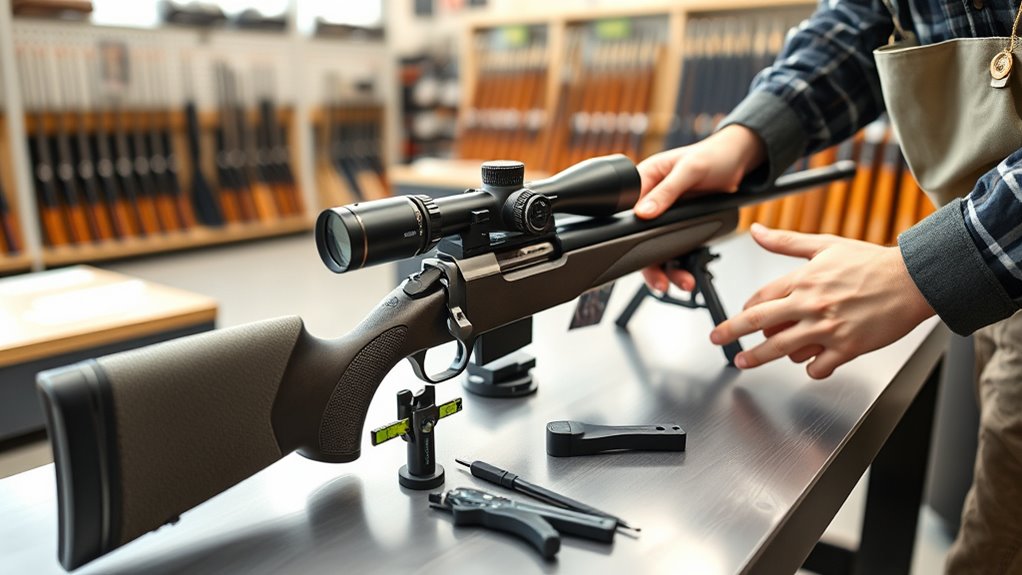
Before you start sighting your gun at Scheels, you’ll need the right equipment to get accurate results. This includes specific sighting tools and calibration devices designed to fine-tune your aim.
Knowing what tools to use will make the process smoother and more effective.
Gun Sighting Equipment
What tools do you need to get your gun perfectly sighted at Scheels? Having the right equipment guarantees accuracy and efficiency during the sighting process. Scheels provides access to essential tools that help you align your sights properly.
Here are four key items you’ll use:
- Target Stands – Hold your targets steady at various distances for precise aiming.
- Laser Bore Sighters – Assist in aligning your sights with the barrel before live firing.
- Sighting Scopes – Magnify your target, making adjustments easier and more accurate.
- Gun Rests or Sandbags – Stabilize your firearm to reduce movement during sighting.
Using this equipment, you’ll be able to zero in your gun confidently, ensuring your shots hit exactly where you want.
Calibration Tools Needed
Although having the right equipment is essential, you’ll also need specific calibration tools to fine-tune your gun’s accuracy at Scheels. First, a reliable bore sight helps align your scope with the barrel before live firing, saving time and ammo. You’ll also want a stable shooting rest or bench to keep your gun steady during adjustments.
Don’t forget a quality set of Allen wrenches or screwdrivers for scope mounts and turret adjustments. A target with clear markings is vital for evaluating shot placement, and a spotting scope or binoculars will help you see your shots without walking downrange repeatedly.
Finally, bringing a wind meter can be useful for outdoor ranges to account for environmental factors affecting your shot. These tools guarantee precise calibration every time.
How to Set Up Your Target for Accurate Zeroing
When you’re setting up your target for accurate zeroing, positioning it correctly is vital to getting reliable results. You want to guarantee your shots land consistently where you expect, so follow these key steps:
- Choose the Right Distance – Set your target at the exact range you plan to zero your firearm, typically 25 or 100 yards. This provides a true baseline for adjustments.
- Use a Stable Backdrop – Place the target against a secure, non-reflective backdrop to clearly see your bullet holes and prevent distractions.
- Center the Target at Eye Level – Align the target so the bullseye sits at your natural sight height to mimic real shooting conditions.
- Ensure Proper Lighting – Position the target in an area with consistent lighting, avoiding shadows or glare that could obscure your aim point.
With these steps, you’re ready to gather accurate data for zeroing your gun confidently.
How to Adjust Your Rifle Sights Step by Step
Now that your target is set, it’s time to prepare your rifle for sight adjustments. You’ll start by properly aligning the front sight, then make precise changes to the rear sight.
Following these steps will help guarantee your shots hit exactly where you want.
Preparing Your Rifle Properly
Before you start adjusting your rifle sights, you’ll want to make sure your rifle is properly secured and clean. This guarantees accuracy and safety during the process.
Here’s how to prepare your rifle properly:
- Unload the Rifle: Always double-check that your rifle is unloaded to prevent accidents.
- Clean the Barrel and Sights: Use a cleaning rod and solvent to remove any debris or residue that might affect sight alignment.
- Secure the Rifle in a Stable Rest: Place your rifle in a gun vise or sandbags to keep it steady while adjusting.
- Check for Loose Parts: Tighten any screws or mounts on your rifle to prevent movement during sight adjustments.
Following these steps will set you up for a smooth and accurate sight adjustment.
Aligning The Front Sight
Although aligning the front sight might seem straightforward, it’s essential to do it carefully to guarantee your shots hit their mark. Start by positioning yourself in a stable shooting stance and look through the rear sight to focus on the front sight post. The front sight should be centered perfectly, with equal light visible on both sides.
Adjust the height of the front sight so the top is level with the target’s bullseye. Make small, deliberate movements to avoid overcorrecting. Remember, the front sight is where your bullet will travel, so precision here is critical.
Take your time to verify the front sight is clear and sharply focused before moving on. This alignment lays the foundation for accurate shooting every time.
Adjusting The Rear Sight
Once your front sight is properly aligned, the next step is to adjust the rear sight to fine-tune your aim. This step guarantees your shots hit exactly where you want. Here’s how to do it:
- Identify the adjustment screws – Locate the windage (left/right) and elevation (up/down) screws on the rear sight.
- Make small adjustments – Turn the windage screw to shift your point of impact left or right, and the elevation screw to move it up or down.
- Test your shots – Fire a few rounds at your target to see how the adjustments affect your grouping.
- Repeat as needed – Continue tweaking until your shots consistently hit the bullseye.
Adjusting the rear sight is key to precise shooting.
How to Sight Your Shotgun for Better Accuracy
If you want to improve your shooting, learning how to properly sight your shotgun is essential. Start by understanding that shotguns usually don’t have traditional sights like rifles. Instead, many rely on a bead sight or fiber optic bead at the muzzle’s tip.
To sight your shotgun, first verify it’s unloaded and safely positioned. Next, pick a target about 20 yards away—this distance works well for most shotgun shooting. Align the bead with your target, focusing your eye on the bead while keeping the target in view.
You want the bead to sit just slightly above or directly on your point of impact, depending on your ammo and shooting style. Fire a few test shots and note where your pellets hit. Adjust your point of aim accordingly—move the bead slightly left, right, up, or down to dial in better accuracy.
Repeat this process until your shots consistently hit near your intended target.
Using Scheels’ Shooting Range Tips to Improve Aim
When you head to Scheels’ shooting range, you’ll find expert tips that can help sharpen your aim quickly. They focus on building solid fundamentals and offer practical advice tailored to your skill level.
To make the most of your session, keep these key tips in mind:
- Consistent Stance – Position your feet shoulder-width apart for stability and balance.
- Proper Grip – Hold your gun firmly but not too tight to reduce recoil impact.
- Controlled Breathing – Take slow, deep breaths and shoot during natural respiratory pauses.
- Focus on Sight Alignment – Align your front and rear sights carefully and maintain focus on the front sight.
Troubleshooting Common Sight Alignment Issues
Mastering your stance, grip, breathing, and sight alignment sets a strong foundation, but even with these basics in place, you might still encounter sight alignment problems. If your shots consistently veer off target, first check your sights for any obvious misalignment or damage. Make sure the front and rear sights are properly centered and level.
If your shots hit low or high, adjust the elevation screws accordingly. For shots consistently left or right, tweak the windage adjustments. Keep in mind that inconsistent sight picture often stems from unsteady grip or flinching—focus on maintaining a relaxed grip and smooth trigger pull.
Also, verify that your eyes are correctly aligned with the sights each time; any head tilt can throw off your aim. If problems persist, take time to practice slow, deliberate aiming to retrain your muscle memory. Troubleshooting sight alignment is about patience and fine-tuning both your equipment and technique.
How to Maintain Your Gun Sights for Consistent Performance
Although precise sight alignment is crucial, maintaining your gun sights regularly guarantees they stay reliable and accurate over time. Neglecting upkeep can lead to rust, misalignment, or impaired visibility, affecting your shooting performance.
To keep your sights in top shape, follow these essential steps:
- Clean regularly: Use a soft brush and cloth to remove dirt, dust, and debris from your sights after each use.
- Inspect for damage: Check for cracks, loose screws, or worn parts that could affect sight stability.
- Lubricate carefully: Apply a light, gun-safe lubricant to moving parts to prevent rust without affecting sight clarity.
- Store properly: Keep your firearm in a dry, secure case to avoid moisture buildup and accidental knocks.
Scheels Experts’ Guide to Advanced Gun Sighting Techniques
Since precision is key to effective shooting, Scheels experts recommend advanced sighting techniques that can elevate your accuracy beyond basic alignment. First, mastering the concept of “follow-through” is essential; maintain your sight picture and trigger control even after the shot breaks. This reduces flinching and improves consistency.
Next, consider using adjustable sights to fine-tune windage and elevation based on your shooting environment. Don’t overlook the benefits of practicing with varying light conditions—this trains your eyes to quickly acquire your target. Additionally, Scheels experts suggest incorporating dry-fire drills to refine sight alignment without live ammunition, which helps build muscle memory.
Finally, understanding your firearm’s ballistics and compensating for bullet drop or drift guarantees your sights are truly zeroed for real-world scenarios. By integrating these advanced techniques, you’ll enhance your shooting precision and confidence, making every shot count.
Frequently Asked Questions
Does Scheels Offer Gun Sighting Services for All Firearm Types?
Scheels usually offers gun sighting services for most common firearm types, but you might want to check with your local store since availability can vary.
They’ll guide you on which firearms they can service.
Can I Purchase Gun Sighting Equipment Online From Scheels?
Yes, you can purchase gun sighting equipment online from Scheels. They offer a variety of sighting tools and accessories you’ll find convenient for your firearm needs.
All are accessible through their website for easy shopping.
What Are the Store Hours for Scheels’ Shooting Range?
Scheels’ shooting range is typically open from 10 AM to 8 PM on weekdays and 10 AM to 6 PM on weekends.
Did you know over 50,000 shooters visit annually? Check your local store for exact hours!
Does Scheels Provide Training Classes on Gun Sighting?
Yes, Scheels offers training classes on gun sighting to help you improve your skills.
You’ll get hands-on instruction from experts, ensuring you know how to properly sight your firearm for better accuracy and safety.
Are There Any Age Restrictions for Using Scheels’ Shooting Range?
Like a guardian at the gates, Scheels requires you to be at least 10 years old to use their shooting range.
If you’re younger, you’ll need adult supervision to safely step into the arena of marksmanship.
Conclusion
Sighting your gun at Scheels sets the stage for sharp shooting success. By safely setting up, steadily sighting, and staying savvy with Scheels’ expert tips, you’ll swiftly see significant improvement. Consistent care keeps your sights sharp and steady, so your shots stay spot-on.
Remember, steady sighting skills stem from smart steps and steadfast practice. Stay sharp, stay safe, and savor the satisfying precision only proper preparation and practice provide. With Scheels sight guns step by step guidance, you’ll develop the confidence and accuracy every shooter strives for.