How to Get a Permit to Carry a Concealed Weapon in 10 Essential Steps
To get a permit to carry a concealed weapon, first check if your state allows concealed carry and confirm you meet all eligibility requirements. Understanding the concealed carry laws and regulations in your state is essential before proceeding.
Next, gather all necessary documents, complete any required firearms training, and fill out your application accurately. Submit your application along with the required fees, and prepare to pass fingerprinting and background checks.
After submission, track your application’s progress carefully. Once approved, make sure to follow all post-approval rules and renew your permit on time to remain compliant. Keep going to discover the detailed steps that guarantee you do it right.
Key Takeaways
- Verify your state’s eligibility requirements and concealed carry laws before applying.
- Complete a state-approved firearms training course and gather all required documents.
- Submit your application with all necessary forms, fingerprints, and fees correctly.
- Track your application’s status online or through the issuing agency during processing.
- After approval, carry your permit responsibly and renew it before expiration with updated information.
Check Your State’s Eligibility for a Concealed Carry Permit
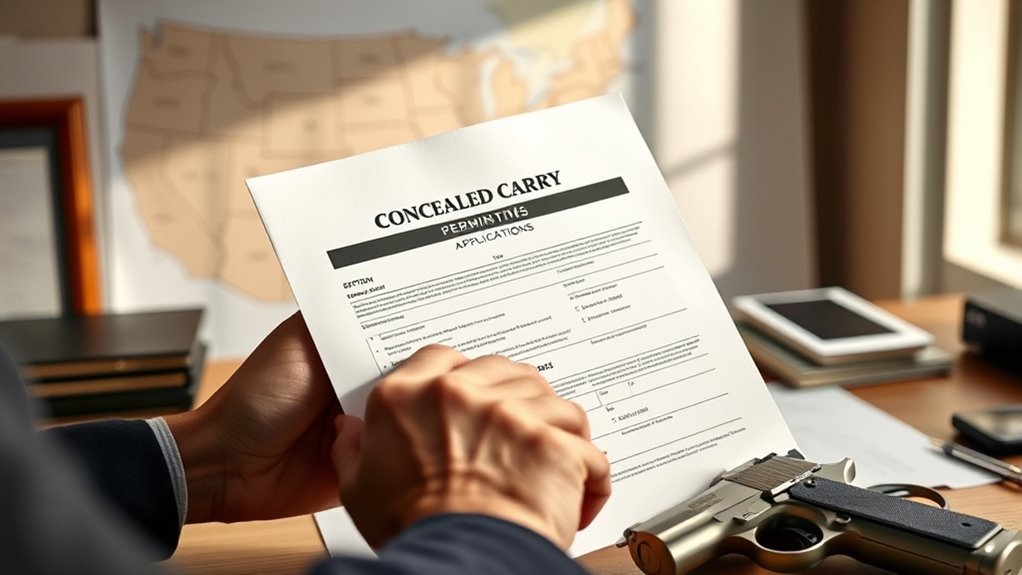
Before applying for a concealed carry permit, you need to check if your state allows residents to obtain one and what specific requirements you must meet. Each state has its own laws governing concealed carry permits, so you can’t assume the rules are the same everywhere. Some states have “shall-issue” policies, meaning they must grant a permit if you meet basic qualifications, while others have “may-issue” policies, giving authorities more discretion.
You’ll want to confirm age requirements, residency status, and any criminal history restrictions. Some states require you to complete firearms training or pass a background check. Additionally, some states won’t issue permits to individuals with certain mental health conditions or restraining orders.
Checking your state’s official government website or contacting your local law enforcement agency is the best way to get accurate, up-to-date information. This step assures you know whether you qualify before moving forward with your application.
Gather Required Documents for Your Permit Application

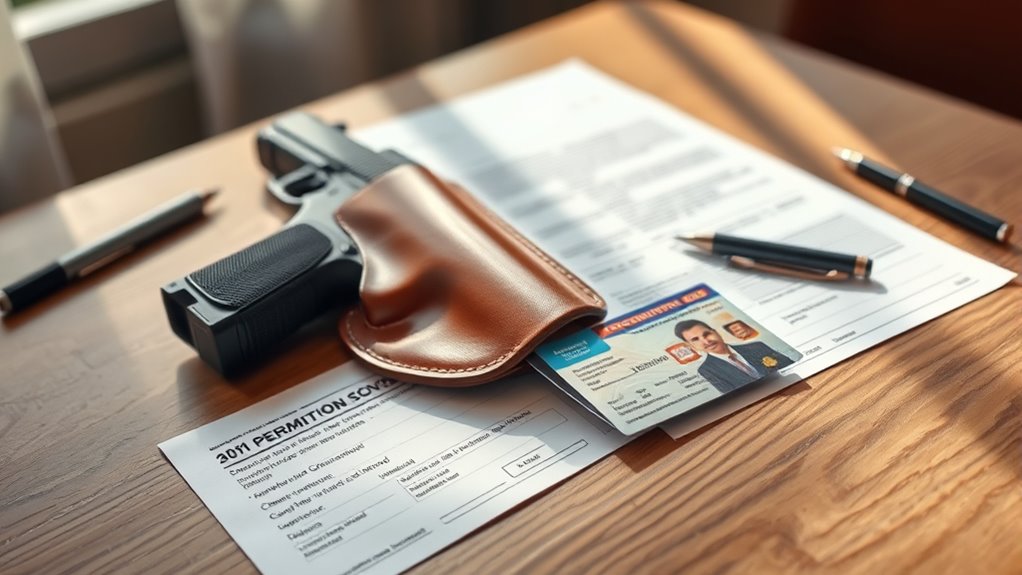
Once you know you’re eligible, you’ll need to gather all the required documents for your permit application. These typically include proof of identity, residency, and any background checks or fingerprints. Having everything ready helps avoid delays.
Requirements vary by state, so double-check your local regulations.
Here’s a quick overview of commonly requested documents:
| Document Type | Purpose | Tips |
|---|---|---|
| Valid Photo ID | Proves your identity | Driver’s license or passport |
| Proof of Residency | Confirms you live in the state | Utility bill or lease agreement |
| Background Check | Ensures no disqualifying crimes | Usually done through the state |
| Fingerprint Card | Verifies your identity | Taken at authorized locations |
| Application Form | Official permit request | Fill out completely and accurately |
Gather these carefully, and keep copies for your records. This prep makes the next steps smoother and faster.
Complete the Mandatory Concealed Carry Training Course

After gathering your documents, the next step is completing the mandatory concealed carry training course required by your state. This course is designed to teach you essential safety practices, firearm handling, and legal responsibilities tied to carrying a concealed weapon. You’ll learn how to properly store, carry, and use your firearm, as well as when it’s legally appropriate to do so.
Most states offer these courses through certified instructors or licensed shooting ranges. The training typically combines classroom instruction with practical shooting exercises to ensure you understand both theory and application. Be sure to choose a course recognized by your state’s licensing authority, as only approved training will qualify you for the permit.
Upon completion, you’ll receive a certificate or proof of training, which is a critical component of your permit application. Keep this document safe, as you’ll need to submit it along with your other materials. Completing this course not only meets legal requirements but also boosts your confidence in responsible gun ownership.
Fill Out Your Concealed Carry Permit Application Correctly
Although the paperwork might seem straightforward, filling out your concealed carry permit application correctly is essential to avoid delays or denials. Take your time to read each question carefully and answer honestly. Double-check all personal information like your full name, address, and date of birth to guarantee accuracy.
Carefully and honestly complete your concealed carry permit application to prevent delays and ensure accuracy.
Mistakes or inconsistencies can cause processing setbacks or even lead to rejection. Make certain to provide all required documentation listed in the application instructions. This might include copies of your training certificate, identification, or fingerprints.
If a section doesn’t apply to you, don’t leave it blank; write “N/A” instead. Also, watch for signature requirements—your application won’t be valid without your signature in all necessary places. If you’re unsure about any part of the form, don’t hesitate to seek guidance from the issuing authority or a legal expert.
Properly completing your application sets a strong foundation for obtaining your concealed carry permit smoothly.
Submit Your Application to the Licensing Authority
Once you’ve gathered all the required documents, it’s time to submit your application to the licensing authority. You can usually apply in person, by mail, or online, depending on your state’s options.
Keep in mind the processing time so you know when to expect your permit.
Required Documentation Checklist
Before you submit your application for a permit to carry a concealed weapon, you’ll need to gather specific documents required by the licensing authority. Having these ready will smooth the process and prevent delays. Typically, the checklist includes:
- A completed application form with your personal details
- Proof of residency, like a utility bill or driver’s license
- A valid government-issued photo ID
- Documentation of any required firearms safety training or certification
Make sure each document is current and legible. Double-check the licensing authority’s official website for any additional or state-specific requirements. Being thorough now saves you from having to resubmit or wait longer for your permit approval.
Keep all originals and copies organized for easy access during your submission.
Application Submission Methods
When you’re ready to submit your application for a permit to carry a concealed weapon, you’ll find several methods available depending on your state’s licensing authority. Most states allow you to submit your application online through their official website, which is often the fastest and most convenient option.
If online submission isn’t available or preferred, you can usually mail your application along with the required documents and fees to the designated address. Some states also require or offer in-person submission at a sheriff’s office, police department, or licensing bureau.
Make sure to carefully follow the instructions provided by your licensing authority to avoid delays or rejection. Double-check that your application is complete and includes all necessary forms before submitting by any method.
Processing Time Expectations
Although processing times can vary widely by state and workload, you should generally expect to wait several weeks after submitting your application for a permit to carry a concealed weapon. This waiting period allows licensing authorities to conduct background checks, verify your information, and complete any required interviews or fingerprinting.
To help you prepare, here’s what you might experience during the processing:
- Background checks that can reveal criminal history or red flags
- Verification of residency and identity documents
- Possible interviews or additional documentation requests
- Notification of approval, denial, or need for further steps
Keep in mind that delays can happen, especially if your application is incomplete or if the authority is overwhelmed. Staying patient and responsive guarantees smoother processing.
Pay All Fees for Your Concealed Carry Permit
Since processing your concealed carry permit involves several administrative steps, you’ll need to pay all required fees promptly to avoid delays. These fees cover application processing, fingerprinting, and sometimes training verification. Not paying on time could hold up your permit approval.
Make sure you check your state’s official website or contact the issuing authority for the exact amounts.
Here’s a simple breakdown of typical fees you might encounter:
| Fee Type | Typical Cost Range | When to Pay |
|---|---|---|
| Application Fee | $50 – $150 | At submission |
| Fingerprinting | $10 – $50 | During background check |
| Training Fee | $0 – $100 | Before or with application |
| Permit Issuance | $25 – $75 | Upon approval |
| Renewal Fee | $25 – $100 | At renewal |
Paying these fees accurately and on time guarantees your application progresses smoothly without unnecessary hold-ups.
Pass Background Checks and Fingerprinting
You’ll need to pass a thorough background check to guarantee you meet all legal requirements. This process includes submitting your fingerprints, which helps verify your identity and check for any disqualifying records.
Understanding what’s involved can help you prepare and avoid delays in your permit application.
Background Check Requirements
How do authorities guarantee that only eligible individuals receive a permit to carry a concealed weapon? They rely heavily on thorough background check requirements. When you apply, your criminal history, mental health records, and other relevant databases are scrutinized.
This helps verify you don’t have disqualifying factors such as felony convictions or restraining orders. Specifically, background checks typically include:
- Searching national and state criminal databases
- Verifying you’re not on any terrorist watchlists
- Reviewing any history of substance abuse or mental health issues
- Confirming your residency and identity through official records
Meeting these requirements is vital since failing the background check means your application will be denied. Passing confirms you’re trustworthy and legally permitted to carry concealed.
Fingerprinting Process Details
After passing the background checks, the next step involves fingerprinting, which serves as another layer of identity verification and criminal history review. You’ll typically visit a designated law enforcement office or an authorized fingerprinting center. Make sure to bring a valid ID and any required paperwork.
The process is quick: your fingerprints are taken digitally or on ink cards, depending on your location. These prints are then submitted to the state and federal databases to guarantee there are no disqualifying records. Fingerprinting fees may apply, so check beforehand.
Once completed, your application moves forward in the review process. Remember, accurate fingerprinting is vital—errors can delay your permit approval. Following these steps carefully helps you stay on track toward obtaining your concealed carry permit.
Understand the Waiting Period and How to Track Your Application
While waiting for your concealed carry permit, it’s important to understand the typical processing time, which can vary by state or county. Some places might take a few weeks, while others could take several months. Knowing what to expect helps ease any anxiety during this period.
You can usually track your application status online or by contacting the issuing agency directly. Keep in mind these tips:
- Check the official state or county website for updates
- Use your application or receipt number to log in
- Sign up for email or text notifications if available
- Call the permit office during business hours for specific questions
Being proactive and patient will help you stay informed without unnecessary stress. Remember, the waiting period guarantees thorough background checks and compliance with all legal requirements.
Know the Legal Requirements for Concealed Carry After Approval
Once you’ve received your concealed carry permit, you’ll need to follow specific legal requirements to carry responsibly and avoid penalties. First, always carry your permit and a valid photo ID whenever you have your weapon on you. You must also understand where you’re allowed to carry; many places like schools, government buildings, and private properties prohibit firearms, even with a permit.
Be aware of local laws regarding brandishing or displaying your weapon—it should remain concealed unless in self-defense. Regularly check for any updates to state and local regulations, as laws can change. Additionally, you’re responsible for safely securing your firearm, especially when transporting it in a vehicle.
How to Renew Your Concealed Carry Permit and Stay Compliant
When it’s time to renew your concealed carry permit, you’ll need to follow a specific process to stay compliant with the law. This includes submitting renewal applications on time and meeting any updated requirements.
Maintaining track of these steps ensures your permit remains valid without any legal issues.
Renewal Process Overview
How do you keep your concealed carry permit valid without any hassle? The renewal process is straightforward when you know the steps. Usually, you’ll need to start well before your permit expires to avoid any lapse.
Here’s what to expect:
- Submit a renewal application through your state’s licensing authority.
- Provide updated personal information or background checks if required.
- Complete any mandatory refresher training or firearms safety courses.
- Pay the applicable renewal fee to process your application.
Make sure you maintain track of your permit’s expiration date and gather all necessary documents ahead of time. Staying organized and proactive ensures your permit remains current, letting you carry with confidence and peace of mind.
Compliance Requirements
Although renewing your concealed carry permit might seem straightforward, staying compliant requires careful attention to specific legal and procedural details. You’ll need to submit your renewal application before your permit expires, often within a designated window to avoid penalties. Make certain to complete any required continuing education or refresher courses, as some states mandate these for renewal.
Staying updated on changes in firearm laws is vital since noncompliance can lead to permit revocation. Keep your contact information current with the issuing authority to receive important notices. Additionally, you must avoid any criminal activity or behavior that could disqualify you from holding a permit.
Frequently Asked Questions
Can I Carry My Concealed Weapon in Other States With My Permit?
You can carry your concealed weapon in some states, but not all. Each state has its own laws and reciprocity agreements, so you’ll need to check if your permit is recognized where you’re traveling before carrying concealed.
What Types of Firearms Are Allowed for Concealed Carry?
You can usually carry handguns like pistols or revolvers for concealed carry, but it depends on your state’s laws. Some states might allow certain compact firearms, while others restrict specific models or features.
Are There Restrictions on Where I Can Carry a Concealed Weapon?
Yes, you can’t carry a concealed weapon in certain places like schools, government buildings, or private properties that prohibit firearms. Always check local laws, as restrictions vary and some locations require explicit permission.
Be aware of specific rules for each area, as some places have stricter regulations. If you’re unsure, it’s best to seek guidance from local authorities or legal experts. Following these rules helps ensure your safety and compliance with the law.
How Do I Handle Concealed Carry in Private Properties or Businesses?
You need to respect private property rules—owners can prohibit concealed carry. Always look for posted signs or ask permission. If they’re against it, you must comply or leave, even if you have a permit.
What Should I Do if My Concealed Carry Permit Is Lost or Stolen?
If your concealed carry permit is lost or stolen, you should report it to your local law enforcement immediately.
Then, apply for a replacement permit through the issuing agency, providing necessary identification and any required fees.
Conclusion
Now that you’ve followed these essential steps, getting your concealed carry permit is as straightforward as sending a telegram back in the day. Stay patient through the waiting period, keep your documents organized like a trusty pocket watch, and always stay informed about legal updates.
By doing so, you’ll be ready to carry responsibly and confidently. Remember, staying compliant with concealed carry laws isn’t just smart—it’s your key to peace of mind on the go.
Obtaining a permit to carry a concealed weapon ensures you are prepared, protected, and legally covered wherever you carry.