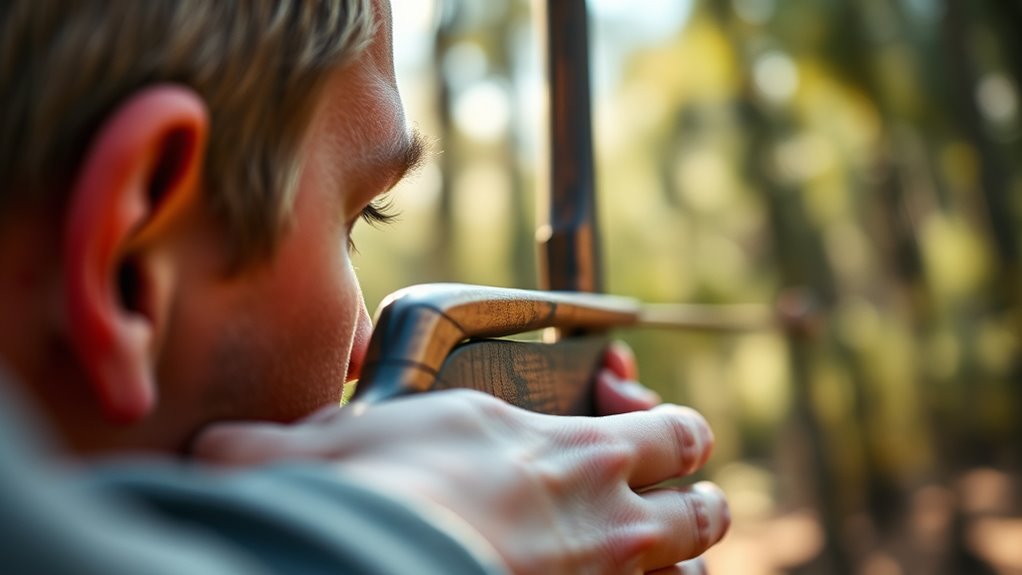
How to Set Your Initial Goal When You Sight Your Bow
When you sight your bow for the first time, it’s important to set an initial goal that focuses on consistent accuracy at about 20 yards. This approach helps you develop a reliable foundation without overwhelming yourself.
Don’t stress about hitting perfect bullseyes right away; instead, aim for tight groupings to build confidence and skill.
Make small sight adjustments and carefully observe how your arrows land. Starting at a realistic distance that matches your current skill level prevents frustration and encourages steady improvement.
Track your shots and progress regularly to fine-tune your aim effectively.
By setting a clear, simple goal during your initial sighting, you create a solid baseline for your archery journey. If you want to sharpen your skills further, there’s more useful guidance ahead.
Key Takeaways
- Set a clear first goal focused on consistent accuracy at about 20 yards rather than perfect bullseyes.
- Aim for tight groupings by making small sight pin adjustments and observing arrow impact changes.
- Prioritize learning how sight changes affect shots over immediate shooting perfection.
- Choose a realistic starting distance that matches your skill level, typically 10-15 yards for beginners.
- Track your shots and sight adjustments to identify patterns and improve accuracy systematically.
Set Your First Bow Sight Goal: A Simple Guide
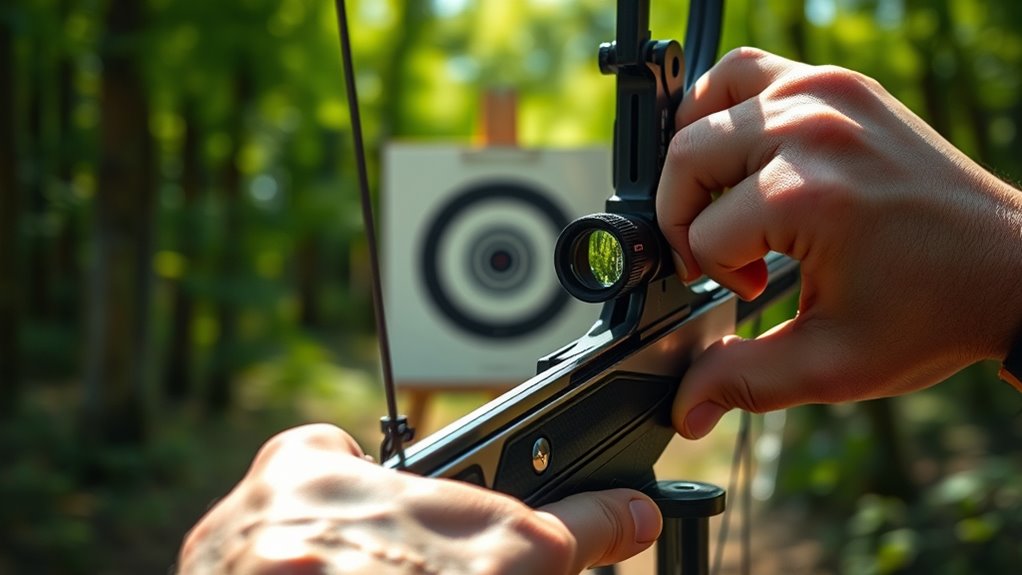
Before you begin adjusting your bow sight, it’s important to set a clear and simple initial goal. Your first bow sight goal should focus on achieving consistent accuracy at a manageable distance—usually around 20 yards. This distance allows you to understand your bow’s behavior and sight settings without overwhelming variables like wind or extreme range.
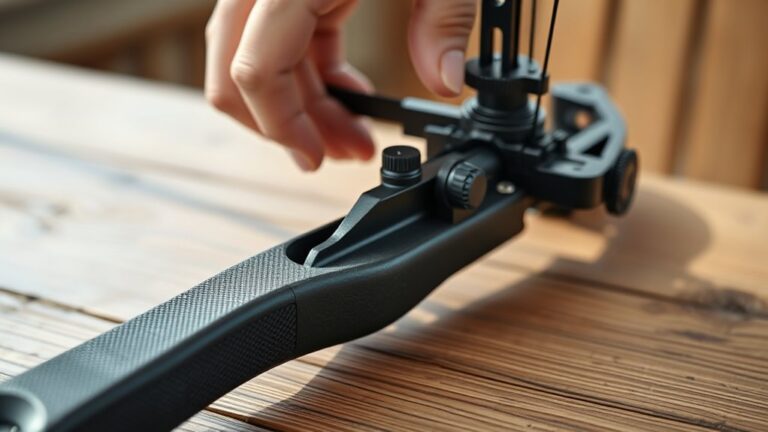
Start by aiming for tight groupings on the target. Consistency is more valuable than hitting the bullseye every time. Concentrate on making small adjustments to your sight pins and note how each change affects your shot placement.
Your goal isn’t perfection immediately but learning the relationship between sight adjustments and arrow impact.
Assess Your Bow Skills Before Setting Goals
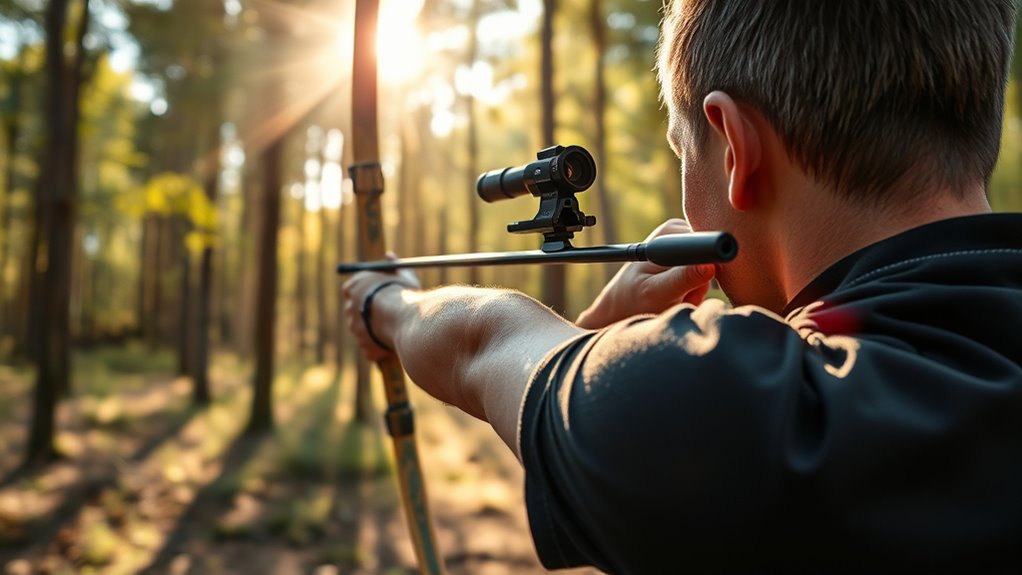
Once you’ve set your initial bow sight goal, it’s helpful to take a moment and honestly evaluate your current bow skills. Knowing your strengths and weaknesses guarantees you set goals that challenge you without causing frustration. Start by considering your accuracy, consistency, and comfort with your equipment.
Be realistic—overestimating can lead to discouragement, while underestimating might slow your progress.
Here’s a quick way to assess your skills:
| Skill Aspect | Self-Assessment Tips |
|---|---|
| Accuracy | How often do your arrows hit the target? |
| Consistency | Can you replicate your shots reliably? |
| Equipment Comfort | Are you at ease handling your bow? |
| Focus | How well do you maintain concentration? |
| Shot Execution | Is your form steady and smooth? |
Use this assessment to tailor your goals, ensuring they fit your current skill level and push you to improve effectively.
Choose a Realistic Starting Distance for Your Shots
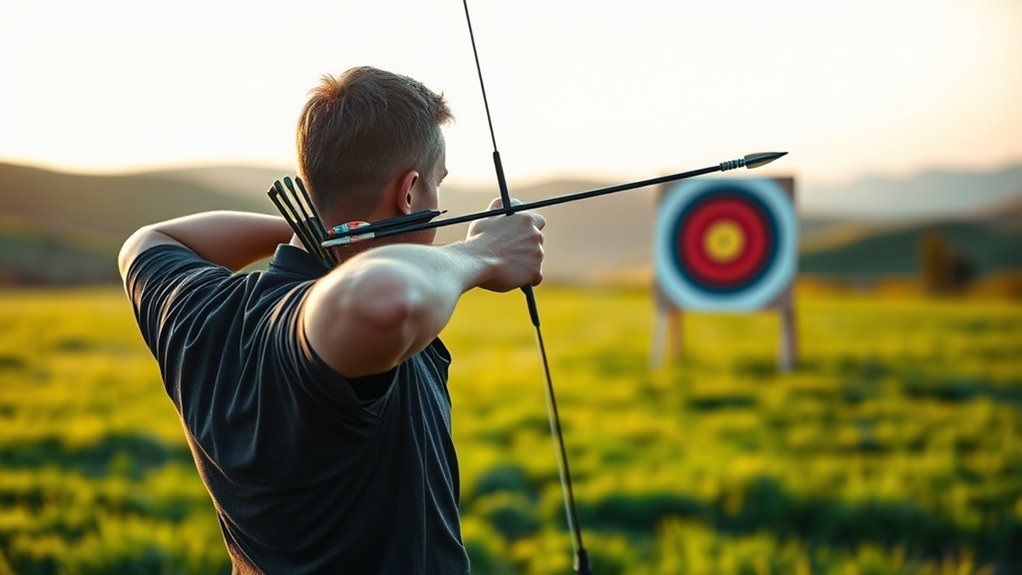
How far should you start shooting when setting your initial goal? Begin with a distance that matches your current skill level to build confidence and accuracy. If you’re new to bow shooting, starting at 10 to 15 yards is practical.
This range allows you to focus on form, aim, and consistency without the frustration of missed shots caused by excessive distance. As you improve, gradually increase your shooting distance in manageable increments, such as 5 yards at a time. This approach helps you adjust your sight settings steadily, making each step realistic and achievable.
Avoid starting too far, which can lead to discouragement and sloppy habits. Remember, the goal is steady progress; setting a realistic starting distance lets you develop precision while preventing unnecessary frustration. By choosing a sensible distance, you set yourself up for success and make your initial goal both challenging and attainable.
Pick Target Types That Help You Practice Your Bow Sight
Although choosing the right target might seem simple, it’s essential for effectively practicing your bow sight. You want targets that provide clear aiming points and offer consistent feedback on your accuracy. Start with standard bullseye targets that have distinct scoring rings; they help you see exactly where your arrows land relative to the center.
This precision allows you to make informed adjustments to your sight. Once you’re comfortable, incorporate 3D animal targets or silhouette targets. These simulate real hunting scenarios and challenge you to estimate distances and angles, sharpening your practical skills.
Avoid overly complex or abstract targets early on, as they can confuse your sight alignment and slow progress. Remember, the key is to pick targets that match your current skill level while pushing you just enough to improve your sighting consistency. This targeted practice builds confidence and accuracy as you set your initial goals.
Track Your Progress to Improve Your Bow Sight Accuracy
To improve your bow sight accuracy, you need to consistently track your progress during practice sessions. Start by recording key details like the distance, target type, number of shots, and where each arrow lands. This will help you identify patterns, whether your shots are grouping well or drifting consistently to one side.
Use a notebook or a mobile app to log this information after every practice. Review your data regularly to spot trends and make informed adjustments to your bow sight. For instance, if your arrows consistently hit low and left, you know where to fine-tune your settings.
Tracking also motivates you by showing how your skills improve over time, keeping you focused on your goals. Ultimately, systematic progress tracking turns each practice into valuable feedback. It ensures you’re not just shooting arrows but refining your aim efficiently and steadily improving your bow sight accuracy.
Overcome Common Challenges When Setting Bow Sight Goals
When setting your bow sight goals, it’s important to pick targets that are realistic for your current skill level. You’ll also need to account for environmental factors like wind and light that can affect your shots.
Finally, focus on making consistent adjustments to improve your accuracy over time.
Identifying Realistic Targets
How do you choose targets that match your current skill level without setting yourself up for frustration? Start by evaluating your accuracy and consistency during practice. Pick targets that challenge you but aren’t so difficult that you miss repeatedly.
For example, if you’re new, aim for larger targets at closer distances. As your skill improves, gradually move to smaller or farther targets. Avoid jumping too quickly to tougher shots, which can harm your confidence.
Be honest about where you stand and set incremental goals that push you just enough. Remember, realistic targets keep you motivated and help you track progress effectively. By aligning your goals with your actual ability, you build a solid foundation for future improvement without unnecessary setbacks.
Managing Environmental Variables
Once you’ve set targets that match your skill level, the next step is dealing with factors beyond your control—like wind, lighting, and terrain. Wind can push your arrow off course, so always take a moment to feel its direction and strength before shooting. Lighting affects how clearly you see your target, so adjust your stance or sight to reduce glare or shadows.
Terrain influences your footing and line of sight; uneven ground can throw off your balance, so find stable positions whenever possible. Being aware of these variables helps you set realistic goals without getting frustrated. Instead of aiming for perfect shots every time, factor in these conditions as part of your learning curve to improve steadily in varying environments.
Adjusting for Consistency
Although setting your initial goal is essential, you’ll quickly realize that maintaining consistency presents its own set of challenges.
To adapt for consistency, focus on the fundamentals that influence your shooting accuracy every time you draw your bow.
- Anchor Point: Always use the same anchor point on your face to guarantee your sight picture doesn’t change between shots.
- Draw Length: Keep your draw length consistent; even slight variations can throw off your shot.
- Release Technique: Practice a smooth, controlled release to minimize movement and maintain alignment.
Frequently Asked Questions
What Type of Bow Is Best for Beginners?
You’ll want a recurve bow if you’re just starting out—it’s simple, lightweight, and easier to handle.
Compound bows can be tricky and expensive, so starting with a recurve helps you build solid fundamentals first.
How Often Should I Replace My Bow Sight?
You shouldn’t wait for a telegram to know—it’s best to replace your bow sight every 1-2 years or when it shows wear, damage, or inconsistent accuracy.
Regular checks keep your aim sharp and reliable in the field.
Can Weather Conditions Affect Bow Sight Accuracy?
Yes, weather can affect your bow sight accuracy. Wind can push your arrow off course, while rain or fog might obscure your sight picture. Temperature changes can also impact your bow’s performance, so always adjust accordingly.
What Accessories Improve Bow Sight Performance?
You’ll want stabilizers to steady your aim, lens covers to protect your sight, and fiber optic pins for bright, clear targeting.
Using a light, a rangefinder, and a peep sight will also boost your bow sight performance.
Is It Necessary to Use a Bow Sight for Hunting?
You don’t have to use a bow sight for hunting, but it definitely helps improve accuracy and consistency. If you’re comfortable shooting instinctively, you can skip it, but most hunters find sights boost their confidence and success.
Conclusion
So, you’ve decided to set your initial bow sight goal—brilliant choice! Just remember, you’re not training to be a superhero archer overnight. Assess your skills, pick a reasonable distance, and don’t expect to split arrows on your first try.
Track your progress unless you enjoy blaming the wind, and embrace challenges like a pro who’s still figuring out which end of the arrow goes forward.
Happy aiming, future Robin Hood! Setting your initial goal when you sight your bow is the first step toward becoming a skilled archer.