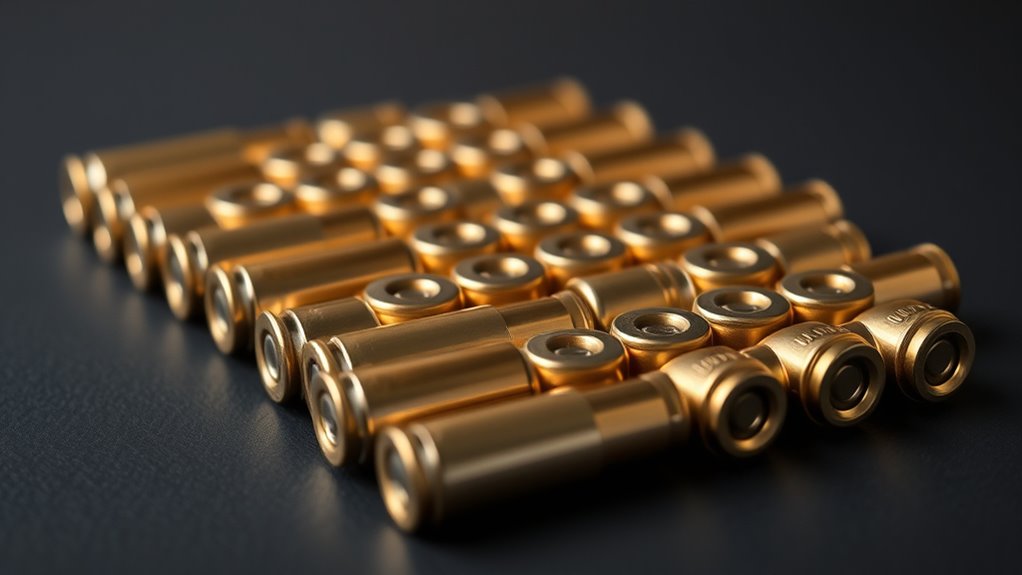
Which Term Describes Ammo Items Containing No Energetic Components?
You’re dealing with inert ammo when handling ammunition that contains no explosive or propellant components. Inert ammo refers specifically to rounds that have no energetic components, making them safe for handling without the risk of firing or explosion.
This type of ammunition is ideal for training, demonstrations, and collecting.
Inert ammo isn’t capable of firing or causing an explosion because it lacks primer powder and energetic material. You’ll often spot inert rounds by special markings or a lightweight feel that set them apart from live ammunition.
Understanding how to identify inert ammo is crucial for safety and legal compliance.
These rounds are commonly used in safe training environments and educational demonstrations. Collectors also value inert ammo for its non-hazardous nature.
There’s more to explore regarding identification, legal aspects, and practical uses of inert ammunition.
Key Takeaways
- Ammo items without explosive or propellant components are called inert ammunition or dummy rounds.
- Inert ammo contains no primer, powder, or energetic materials, preventing firing or explosion.
- These rounds are made of solid metal or plastic to replicate live ammo’s weight and size.
- Inert ammo is used for training, handling practice, demonstrations, and safe firearm testing.
- They are visually marked or modified to distinguish them clearly from live ammunition.
What Is Inert Ammo?
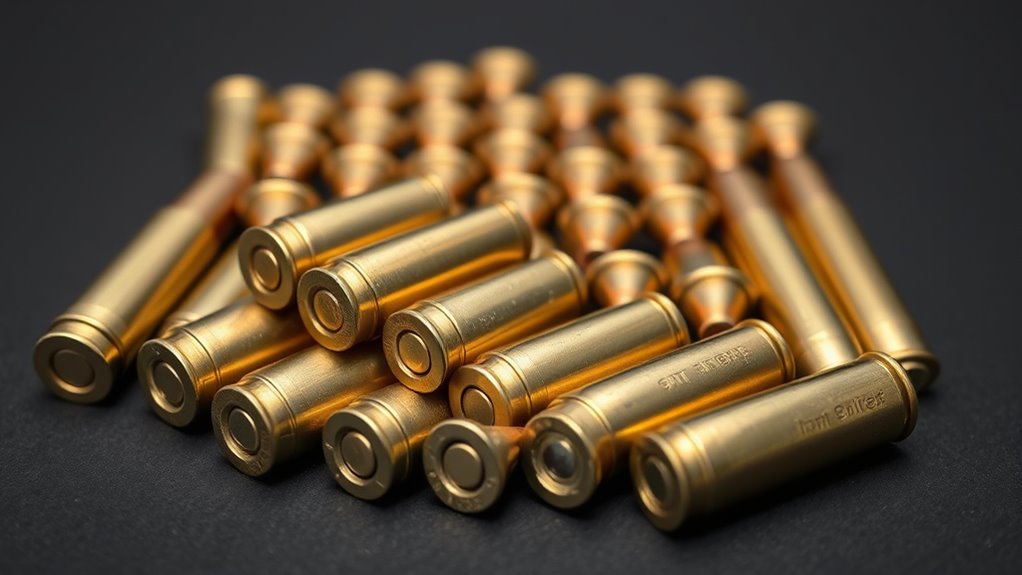
What exactly is inert ammo, and why might you encounter it? Inert ammo refers to ammunition that contains no explosive or propellant components, making it completely safe to handle. You might come across inert rounds during training exercises, demonstrations, or when collecting ammunition.
Inert ammo is safe, non-explosive ammunition used for training, demonstrations, and collecting.
Because they lack any energetic materials, inert rounds won’t fire or explode, allowing you to familiarize yourself with the weight, dimensions, and appearance of real bullets without risk.
When dealing with inert ammo, you’ll notice it often looks very similar to live rounds, but with clear markings or modifications indicating its inert status. This lets you practice loading, unloading, or identifying ammunition safely. Whether you’re in law enforcement, military, or a firearms enthusiast, inert ammo is a valuable tool for hands-on learning and safety.
It provides a realistic experience while eliminating the dangers associated with live rounds, making it ideal for controlled, non-combat environments.
How Is Inert Ammo Different From Live and Blank Rounds?
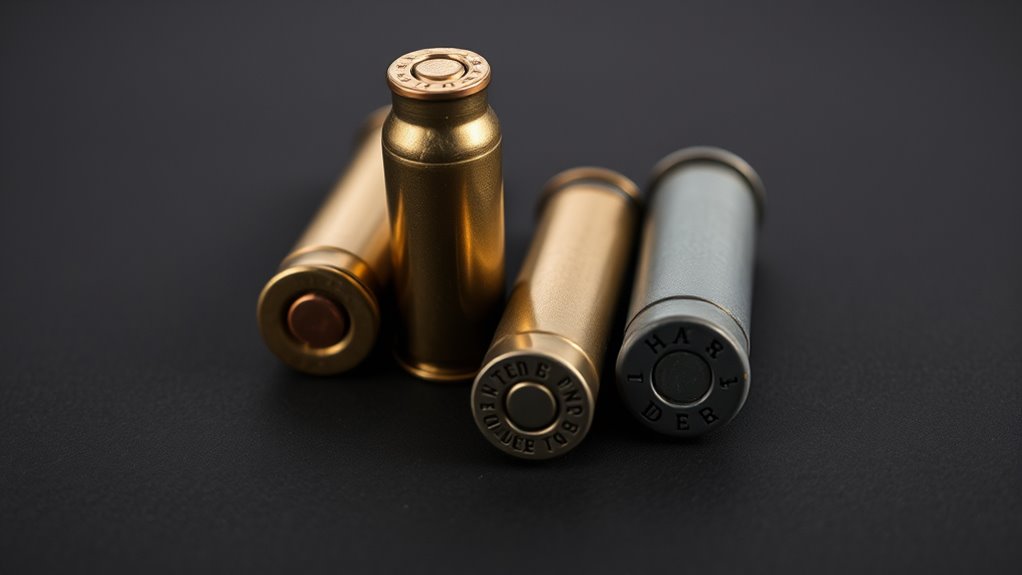
You might wonder how inert ammo stacks up against live and blank rounds. The key differences lie in their composition—live rounds contain energetic components, blanks have gunpowder but no bullet, while inert rounds lack any explosive material.
Understanding these distinctions helps you see why each type serves different practical purposes.
Composition Differences Explained
Although inert ammo looks similar to live and blank rounds, its internal makeup is fundamentally different. When you examine inert rounds, you’ll find they lack any propellant powder and primer compounds, which are essential in live ammunition for ignition and firing.
Blank rounds, on the other hand, contain powder but no bullet, allowing gas to escape and simulate firing noise. Inert ammo is often made with solid materials like metal or plastic to replicate the weight and feel of real rounds, but without any energetic components. This distinction means inert rounds won’t fire or generate pressure.
Understanding these composition differences helps you identify inert ammo quickly and safely, especially in training or display settings where live or blank rounds might pose risks.
Practical Uses Compared
Since inert ammo contains no energetic components, its uses differ considerably from live and blank rounds. You’ll find inert rounds ideal for training and safety demonstrations because they replicate the weight and feel of real ammo without the risks. Unlike live rounds, inert ammo won’t fire, making it perfect when you want to practice loading, handling, or clearing jams.
Blank rounds, on the other hand, produce noise and muzzle flash but no projectile, so they’re used for ceremonial purposes or simulated combat scenarios. If you’re focused on safe, realistic drills, inert ammo is your go-to. It lets you familiarize yourself with firearms without worrying about accidental discharge, unlike live rounds, and without the loud noise or flash that blanks produce.
Common Types of Inert Ammo
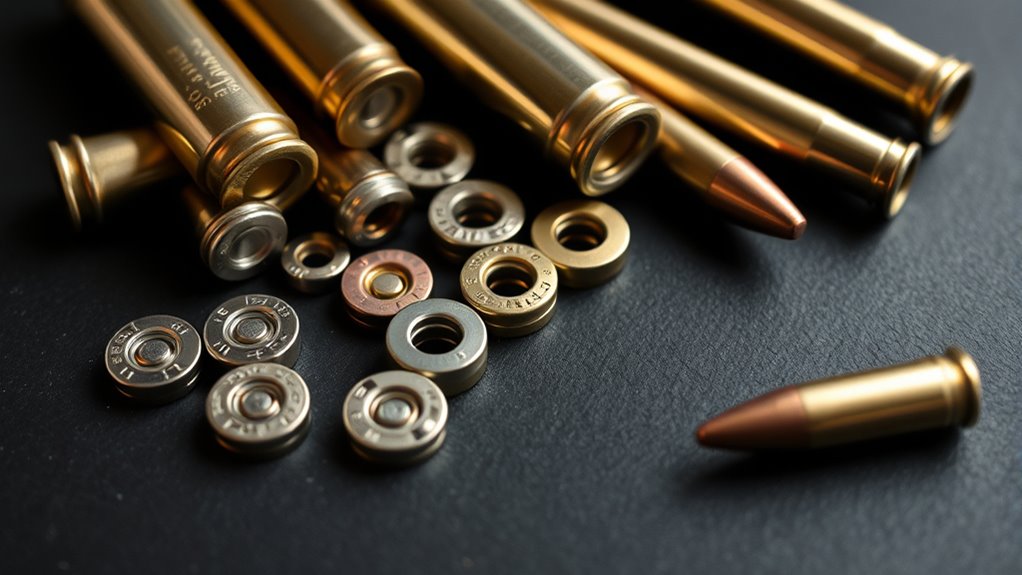
You’ll often come across training ammunition variants designed without any energetic components for safe practice. Replica rounds also play a key role, mimicking real ammo in appearance but posing no risk.
Understanding these common types helps you identify inert ammo easily.
Training Ammunition Variants
When you’re learning the basics of firearm handling or refining your skills, training ammunition variants provide a safe and effective way to practice. These rounds contain no energetic components, so you can focus on technique without the risks associated with live ammo.
You’ll find several common types designed specifically for training purposes.
- Dry fire cartridges: These simulate the weight and feel of live rounds but don’t fire any projectile or primer, allowing safe trigger practice.
- Snap caps: Designed to protect the firing pin during dry firing, they also help you practice loading and unloading.
- Blanks: Contain powder but no bullet, useful for realistic noise and recoil training without a projectile.
Using these variants helps improve your skills while minimizing risk and expense.
Replica Rounds Overview
Beyond training ammo, replica rounds offer another way to handle ammunition safely. These rounds look like real cartridges but contain no powder, primer, or projectile, making them completely inert. You’ll find them useful for dry-fire practice, weapon function checks, or display purposes without any risk of accidental discharge.
Common types include snap caps and dummy rounds. Snap caps often have a cushioned primer area to protect your firing pin during dry firing, while dummy rounds mimic the weight and dimensions of live ammo, helping you get familiar with loading and handling.
Using replica rounds can boost your confidence and safety when working with firearms, especially if you want realistic practice without energetic components involved. They’re a crucial tool for responsible gun owners and instructors alike.
How to Identify Inert Ammo at Home and in the Field
Although inert ammo lacks energetic components, it can still look very similar to live rounds, so you’ll need to know what to check for to identify it confidently at home or in the field. Start by examining the primer area; inert rounds often have a crimped, sealed, or drilled primer instead of a live one.
Next, look for clear markings or color codes—many inert rounds have bright or unique colors on the casing or tip that distinguish them from live ammo. Finally, consider the weight and feel; inert rounds can be lighter or have a different balance due to the absence of powder and primer.
- Check the primer for crimping, sealing, or holes
- Look for distinct color markings or painted tips
- Assess weight and balance compared to known live rounds
Why Inert Ammo Matters for Training and Safety
Since inert ammo contains no energetic components, it lets you train safely without the risks linked to live rounds. This means you can practice loading, unloading, and handling firearms with confidence, knowing there’s no chance of accidental discharge. It’s especially important when teaching new shooters or conducting drills that require repetitive actions.
Using inert ammo reduces anxiety and distractions, helping you focus on proper technique and safety protocols.
Here’s a quick comparison of inert ammo benefits versus live rounds:
| Aspect | Inert Ammo |
|---|---|
| Safety Risk | None |
| Training Focus | Skill development |
| Cost | Generally lower |
| Handling Practice | Realistic without danger |
Practical Uses of Inert Ammo Beyond Training and Safety
While inert ammo is well-known for training, you might be surprised by its other practical uses. Beyond helping you safely practice firearm handling, inert rounds serve various roles that enhance your shooting experience and firearm maintenance. For example, they’re perfect for testing the mechanical function of firearms without the risk of discharge, ensuring your gun cycles properly.
You can also use them for display or collection purposes since they look authentic but don’t pose any danger. Finally, they’re valuable in demonstrations or educational settings, allowing you to show how ammo works without any safety concerns.
Some practical uses include:
- Function testing: Verify cycling and feeding of a firearm without live rounds.
- Display and collection: Showcase realistic ammo safely in collections or exhibits.
- Educational demonstrations: Teach firearm mechanics or safety without risk.
Inert ammo provides versatile, safe options beyond just training scenarios.
What You Need to Know About Inert Ammo Laws
Understanding the laws surrounding inert ammo is essential if you plan to buy, sell, or use these items. Inert ammo, containing no explosive powder or primers, is generally not classified as live ammunition under most legal frameworks. However, regulations can vary by state or country, so you need to check local laws before acquiring or transporting these items.
Some places may require permits or have restrictions on possession, especially if the inert rounds closely resemble live ammo. You also need to be aware that while inert ammo isn’t considered a firearm component, using it in certain contexts—like in public or near restricted areas—might still draw legal scrutiny. If you’re selling inert ammo, you must guarantee it’s clearly marked and sold only to appropriate buyers.
Staying informed will help you avoid legal complications and ensure your inert ammo use complies with all applicable rules.
Where to Buy Reliable Inert Ammo
If you’re looking to buy reliable inert ammo, it’s important to choose sources known for quality and authenticity. Inert ammo is often used for training, display, or testing, so you want to ensure the items are safe and accurately represent live rounds. Trusted vendors will clearly mark their products as inert and provide detailed descriptions.
Here’s where you can find reliable inert ammo:
- Specialty firearms stores: Many carry inert rounds alongside live ammo for training purposes.
- Reputable online retailers: Websites dedicated to firearm accessories often have inert ammo sections with verified customer reviews.
- Military surplus dealers: These sellers sometimes offer demilitarized or inert rounds that meet strict safety standards.
Avoid buying from unclear or unverified sellers, as the risk of receiving live or improperly deactivated ammo increases. Always confirm the inert status before purchasing.
Frequently Asked Questions
Can Inert Ammo Be Used in All Types of Firearms?
You can’t use inert ammo in all firearms since it lacks propellant and primer, so it won’t fire. It’s mainly for training or demonstration, not for live shooting or self-defense purposes in functional guns.
How Long Does Inert Ammo Typically Last Without Deterioration?
Inert ammo can last over 50 years if stored properly, so you don’t need to worry about quick deterioration. Keep it dry, cool, and away from direct sunlight to maintain its condition for decades without issues.
Are There Any Environmental Concerns With Disposing of Inert Ammo?
Yes, you should be careful disposing of inert ammo since metals and primers can leach harmful chemicals into soil and water. Always follow local regulations and consider recycling components to minimize environmental impact and stay safe.
Can Inert Ammo Be Customized or Modified Safely?
Think of inert ammo like a blank canvas; you can safely customize it without sparks flying. Since it lacks energetic components, you’re free to modify it carefully, just like decorating a safe, empty jar.
Is Inert Ammo Allowed in International Travel or Shipping?
You usually can’t bring inert ammo in international travel or shipping without proper declaration and permits. Regulations vary widely, so you’ll want to check specific country rules to avoid legal trouble or confiscation.
Each country has its own restrictions and requirements, which can be strict. Failure to comply may result in fines or confiscation of the items. Always verify the regulations before attempting to transport inert ammo.
Conclusion
Now that you know what inert ammo is, you can train with confidence, handle with care, and practice with precision. You’ll recognize the difference between live rounds and blanks, identify inert ammo at a glance, and appreciate its role in safety and education.
Whether you’re a beginner or a pro, using inert ammo means you’re choosing safety over risk, preparation over guesswork, and knowledge over uncertainty every time you train.
Inert ammo contains no energetic components, making it ideal for training and demonstration purposes. Understanding inert ammo ensures you handle all ammunition types responsibly. Choosing inert ammo is an essential step toward safer and more effective firearm training.