How to Adjust Pistol Sights in 7 Easy Steps
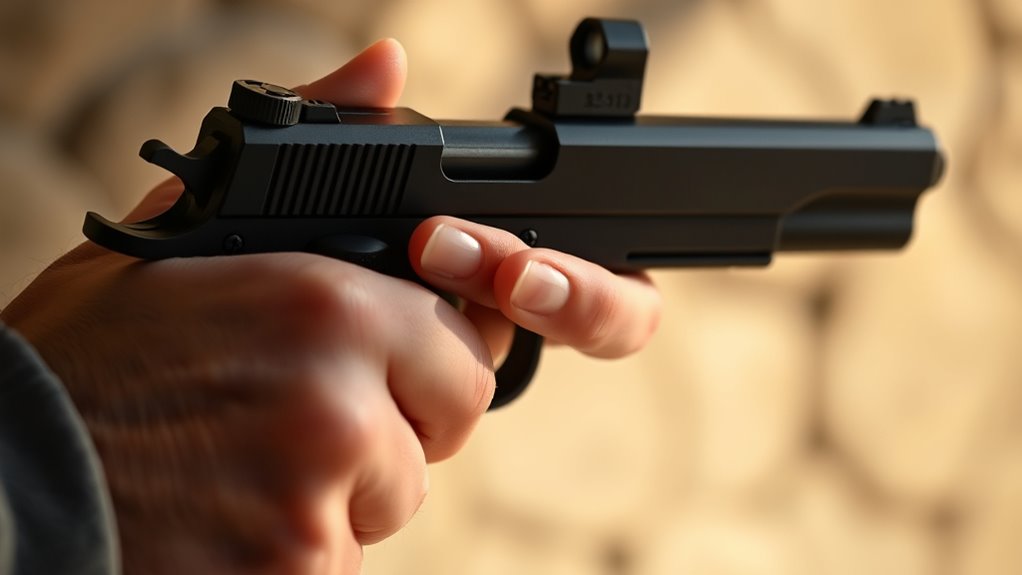
To adjust your pistol sights effectively, start by understanding how proper sight alignment and sight picture guarantee shooting accuracy. These essential steps will help you improve your marksmanship and confidence with your firearm.
Gather the necessary tools such as screwdrivers, a target, and eye protection before you begin.
Set up in a well-lit, safe area to ensure optimal shooting conditions.
Fire a small group of shots to observe where they land on the target. This initial grouping will guide your adjustments for accuracy.
Adjust windage to correct side-to-side impacts and elevation to fix high or low hits. Use small, precise turns on your sights for the best results.
Practice regularly and fine-tune your adjustments with consistent shooting until your shots cluster tightly on target.
Keep practicing to discover additional tips for reliable and confident shooting.
Key Takeaways
- Establish a safe, well-lit shooting environment with proper safety gear and a stable rest for consistent shooting.
- Fire a baseline group of 3-5 shots using consistent technique to analyze shot placement and deviation.
- Adjust windage by turning the rear sight screw opposite the horizontal shot drift in small increments.
- Adjust elevation by raising or lowering the rear or front sight based on vertical shot placement, following the pistol manual’s click values.
- Verify adjustments by firing test groups, maintaining consistent grip and stance, and fine-tuning incrementally until shots cluster on the target.
See How Pistol Sights Affect Accuracy
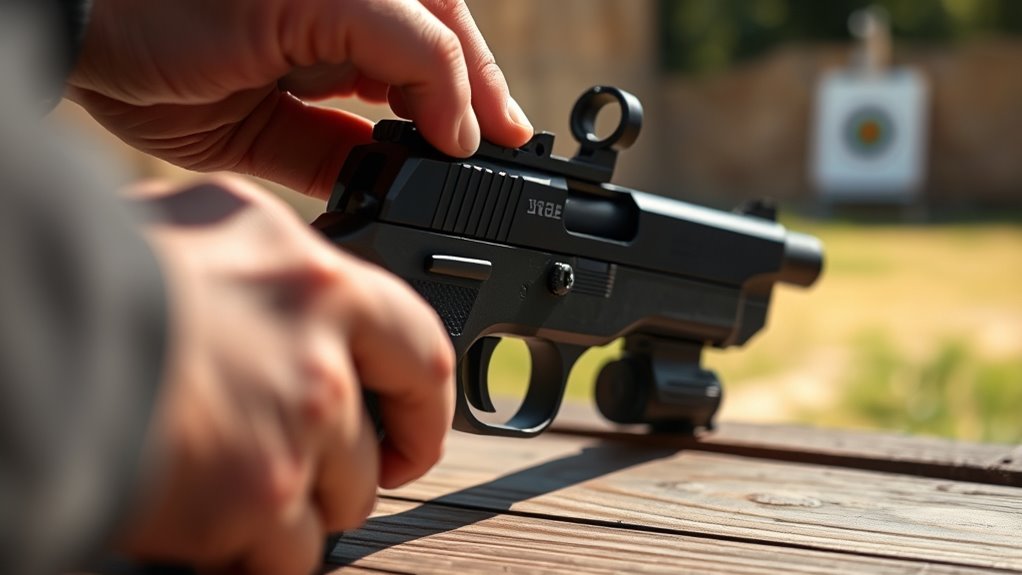
Although it might seem like a small detail, your pistol sights play a crucial role in hitting your target accurately. When you line up your sights properly, you guarantee the bullet goes exactly where you want it to. Misaligned sights can cause your shots to stray left, right, high, or low, making even the best aim ineffective.
You rely on the front and rear sights to create a precise sight picture. The front sight should be centered and level with the rear sight, and the target should appear just above the front sight post. If your sights are off, your shots won’t hit the bullseye, no matter how steady your hand.
Understanding how your sights affect shot placement helps you recognize when adjustments are necessary. Once you see this connection, you’re ready to make those adjustments confidently, boosting your accuracy and overall shooting performance.
Gather Essential Tools and Set Up Your Shooting Area
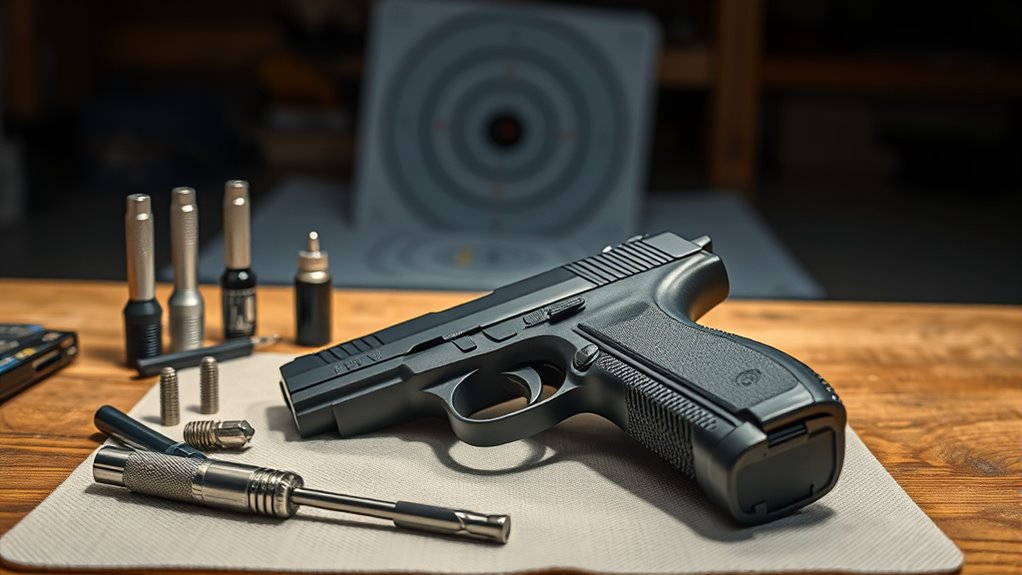
Before you start adjusting your pistol sights, make sure you have all the essential tools on hand, like screwdrivers and a target. You’ll also want to set up a safe shooting environment to keep yourself and others protected.
Proper lighting is key too, so you can clearly see your sights and target.
Essential Tools Checklist
When you’re ready to adjust your pistol sights, having the right tools on hand will make the process smoother and more accurate. Start with a sight adjustment tool or a small punch, depending on your sight type. A screwdriver set with precision tips is essential for screws.
Bring a cleaning cloth to wipe away debris and a flashlight or good lighting to clearly see the sights. A stable rest or shooting bench helps keep your pistol steady during adjustments. Don’t forget your ammunition for test firing after each tweak.
Keep a notebook or phone handy to record changes and results. Gathering these tools guarantees you’re prepared and can make precise, safe adjustments without unnecessary delays. Having everything organized before you start saves time and frustration.
Safe Shooting Environment
Where should you set up to adjust your pistol sights safely and effectively? Choose a controlled environment like a designated shooting range or a secure, private area with a solid backstop. Verify the area is free from distractions and unauthorized people.
Gather your essential tools and arrange them within reach. Keep safety gear, such as eye and ear protection, nearby. Confirm your shooting lane is clear and well-defined to avoid accidents.
| Safety Aspect | What You Need | Why It Matters |
|---|---|---|
| Location | Shooting range or private area | Limits risk to others |
| Backstop | Solid, bulletproof material | Stops bullets safely |
| Tools | Sighting tools, cleaning kit | Smooth adjustment process |
| Protective Gear | Eye and ear protection | Prevents injury |
| Clear Shooting Lane | No obstructions or people | Ensures safe firing direction |
Proper Lighting Setup
Although adjusting your pistol sights requires focus, proper lighting is just as essential to guarantee accuracy. You’ll want to gather a few essential tools: a bright, adjustable lamp and possibly a magnifying glass to inspect your sights closely. Set up your shooting area in a well-lit space, preferably with minimal shadows that could distort your view.
Position your light source so it illuminates the sights evenly without causing glare or reflections, which can mislead your eye. Natural daylight is ideal, but if unavailable, use a high-quality LED light with a daylight color temperature to mimic it. Ensuring consistent, clear lighting lets you make precise adjustments and verify your sight alignment confidently, preventing errors caused by poor visibility.
Fire a Group to Identify Sight Adjustment Needs
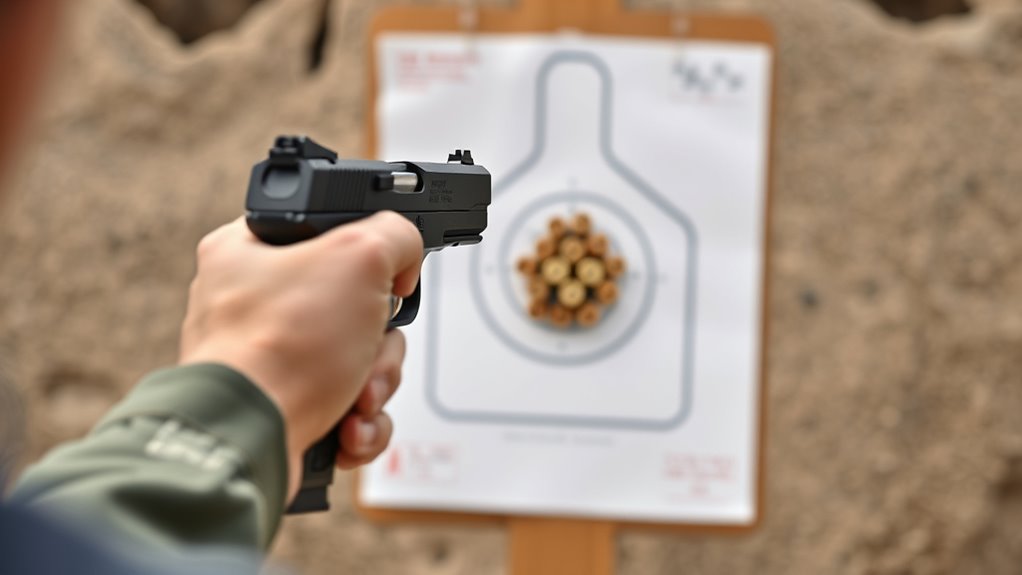
Now it’s time to fire a group of shots to establish your baseline. Pay close attention to where the bullets land on the target.
This will help you analyze shot placement and figure out which way to adjust your sights.
Establish A Baseline
Before making any adjustments, you’ll want to fire a group of shots to see exactly where your pistol is hitting relative to your target. This initial grouping establishes your baseline—your starting point for sight adjustments. Make sure you use consistent shooting techniques, stance, and grip to get an accurate representation of your pistol’s current point of impact.
Aim carefully and fire at least three to five shots without changing your sights. The cluster’s position on the target will reveal whether your sights are aligned or need correction. Once you have this baseline, you can confidently proceed with adjustments tailored to your pistol’s actual performance, rather than guessing.
This step is *essential* for making precise, effective sight changes.
Analyze Shot Placement
Once you’ve established your baseline, you’ll want to carefully analyze where your shots are grouping on the target to determine how your sights need adjusting. Firing a consistent group allows you to see patterns in your shot placement. Look for how far and in which direction your group is off from your intended point of aim.
Consider these key points:
- Group size and consistency
- Vertical placement relative to the bullseye
- Horizontal placement relative to the bullseye
- Any noticeable drift or spread in shots
- Whether shots cluster tightly or scatter
This analysis will give you the information needed to make precise sight adjustments. It’s essential to focus on the group as a whole rather than single shots to avoid misjudging your sight alignment.
Determine Adjustment Direction
Although analyzing your shot placement gives you valuable insight, you’ll need to fire a fresh group to confirm exactly how your sights should be adjusted. Set up at your normal shooting distance and aim carefully, firing a tight group of three to five shots.
Once you’ve done that, examine where the group hits relative to your target’s center. If your shots consistently land left, you’ll want to adjust your sights to the right; if they’re low, raise your sights.
Adjust Pistol Sight Windage to Correct Side Shots
If your shots consistently land to one side of the target, adjusting the pistol sight windage is what you need to bring your aim back on point. Windage controls horizontal alignment, so tweaking it shifts your point of impact left or right.
Here’s how to adjust windage effectively:
Here’s how to adjust windage effectively and bring your shots back on target with simple steps.
- Identify which side your shots are grouping—left or right of the bullseye.
- Locate the windage adjustment screw or knob on your pistol’s rear sight.
- Use the appropriate tool, usually a small screwdriver or an adjustment tool, to turn the windage screw.
- Turn the screw in the direction opposite your shot group: if shots land left, adjust sight right, and vice versa.
- Make small, incremental adjustments and re-fire to check your new impact point.
Adjust Pistol Sight Elevation to Fix High or Low Shots
After adjusting windage to correct side-to-side shot placement, the next step is to address elevation for shots that consistently hit too high or too low. Start by firing a group of shots at your target, noting where they land vertically. If your shots are low, you’ll need to raise your rear sight or lower your front sight.
Conversely, if shots land high, lower the rear sight or raise the front sight. Most pistols have elevation adjustments on the rear sight, which you can turn with a screwdriver or an adjustment tool. Remember, each click moves the point of impact a specific distance—check your pistol’s manual for exact values.
Make small adjustments and fire another group to verify changes. Keep adjusting incrementally until your shots land precisely on target vertically. This method guarantees your sight elevation matches your point of aim, improving accuracy and confidence.
Check Your Sight Alignment With Practice Shots
Once you’ve made your sight adjustments, you’ll want to confirm your alignment with practice shots. This step verifies your changes are effective and helps you identify any further tweaks needed.
Start by firing a small group of shots at your target, focusing on maintaining a consistent grip and stance. Observe where your shots land relative to your intended point of aim.
Begin with a small shot group, keeping a steady grip and stance, then note where shots land.
Here’s what to keep in mind during this process:
- Use a stable shooting position to minimize movement.
- Aim carefully and control your breathing before each shot.
- Note if shots consistently group left, right, high, or low.
- Compare shot placement to your target’s bullseye.
- Record your results to track improvements or issues.
Perform Final Fine-Tuning for Reliable Accuracy
Although your initial adjustments should bring you close to the target, you’ll want to perform final fine-tuning to guarantee consistent and reliable accuracy. Start by firing a small group of shots at your chosen distance, observing where the rounds hit in relation to your point of aim. Make minor adjustments, moving the sights in small increments—usually a click or two at a time.
Remember, each pistol sight adjustment affects your point of impact subtly, so patience is key. After each tweak, fire another group to confirm the change. Repeat this process until your shots consistently cluster around the bullseye.
Don’t rush; fine-tuning is about precision, not speed. Also, factor in your natural shooting stance and grip, as consistency here directly influences your accuracy. By carefully performing these final refinements, you’ll ensure your pistol sights are perfectly calibrated for dependable performance every time you shoot.
Frequently Asked Questions
What Types of Pistol Sights Are Available?
You’ll find several pistol sights types: iron sights, fiber optic, night sights, and red dot. Each offers different visibility and precision, so you’ll want to pick one that matches your shooting style and conditions.
How Often Should I Clean My Pistol Sights?
You probably don’t need to clean your pistol sights—unless you want them to work properly. In reality, you should clean them regularly, especially after shooting sessions, to keep your aim sharp and sights clear from grime and residue.
Can I Adjust Sights on All Pistol Models?
You can’t adjust sights on all pistol models since some have fixed sights. Most modern pistols offer adjustable sights, but older or budget models may not.
Always check your specific model’s manual before attempting adjustments.
What Is the Best Lighting for Sight Adjustment?
You’ll want lighting so perfect it feels like the sun just decided to spotlight your sights—bright, natural daylight is best. Avoid shadows or glare; otherwise, you’ll be guessing instead of adjusting with precision and confidence.
Are There Safety Tips for Adjusting Pistol Sights?
Yes, you should always guarantee the firearm is unloaded before adjusting sights. Keep the gun pointed in a safe direction, use proper tools, and wear eye protection to prevent injury from springs or small parts during adjustments.
Conclusion
Now that you’ve mastered adjusting your pistol sights, you might wonder if perfect accuracy is truly attainable. While sights are essential, remember that consistency in your grip, stance, and trigger control plays a huge role too.
So, keep practicing and fine-tuning all aspects of your shooting. With patience and persistence, you’ll see your shots grouping tighter and your confidence growing.
Ready to put these steps to the test and realize your full potential in pistol sight adjustment and shooting accuracy?