What Is a Co-Witness Sight and How to Use It
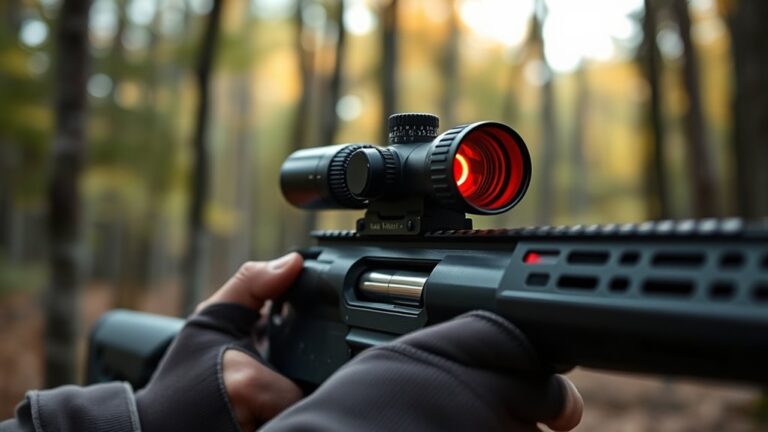
A co-witness sight is a crucial setup for shooters who want to seamlessly combine iron sights and optics on their firearm. By aligning both sighting systems, you can use your iron sights and optic simultaneously without changing your position.
This arrangement enhances shooting speed and confidence by providing a reliable backup in case your optic fails.
With a co-witness sight, you’ll either have the iron sights perfectly centered behind the optic, known as absolute co-witness, or visible in the lower third of your sight picture. Properly zeroing both sights ensures a consistent point of aim, allowing for quick target acquisition.
There’s also plenty of room to optimize and troubleshoot your setup for peak performance.
Key Takeaways
- A co-witness sight aligns iron sights with an optic for simultaneous aiming and quick backup if the optic fails.
- There are two main setups: absolute co-witness centers iron sights with the reticle, while lower 1/3 places the reticle in the bottom third.
- To use, zero iron sights and optic at the same distance, ensuring both point of aim and impact match precisely.
- Co-witness allows fast switching between iron sights and optic without repositioning or losing the sight picture.
- Regular maintenance and proper mounting secure alignment, prevent issues, and enhance reliability during critical shooting moments.
What Is a Co-Witness Sight and Why Use It
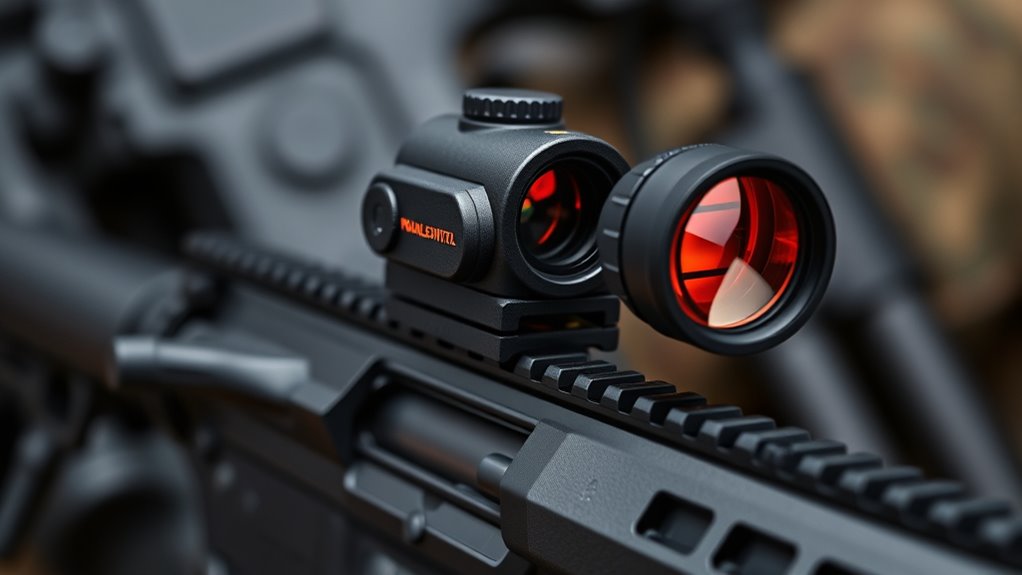
What exactly is a co-witness sight, and why might you want to use one? A co-witness sight allows you to align your iron sights with your optical sight, so both are usable without adjusting your position or swapping devices. This setup guarantees that if your optic fails, you can quickly rely on your iron sights without losing your target or needing to zero again.
Using a co-witness sight enhances reliability and speed, especially in critical situations where every second counts. It gives you a backup that’s always ready, reducing the risk of being caught off guard.
Plus, it can improve your shooting confidence since you know you have two aiming options perfectly aligned.
Types of Co-Witness Setups
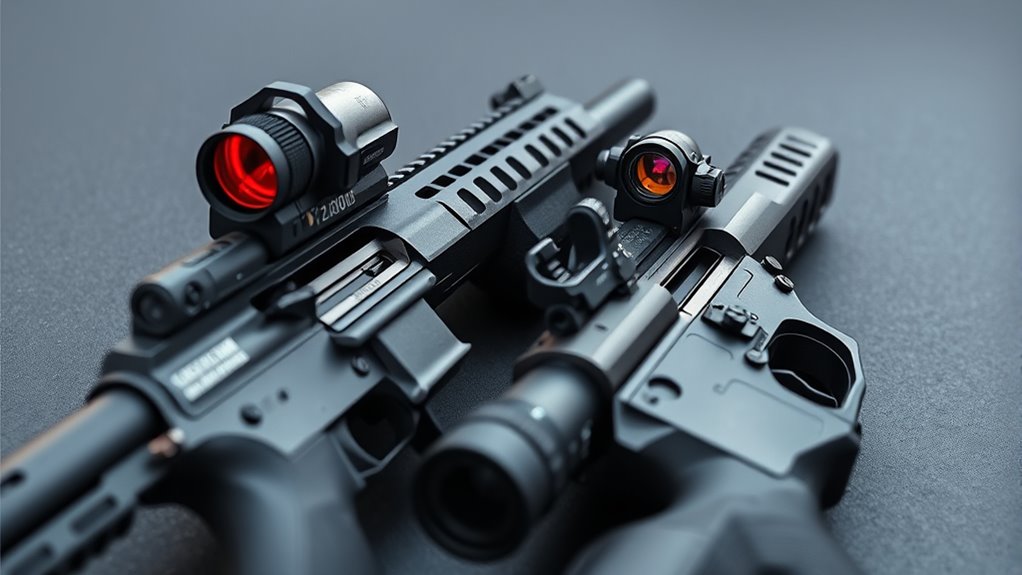
Although co-witness setups all aim to align iron sights with optics, they come in different styles that affect how you use your firearm. The two main types are absolute co-witness and lower 1/3 co-witness. With an absolute co-witness, your iron sights sit perfectly centered with the optic’s reticle when you look through it.
This means when you’re aiming, you see both sights overlapping, which can be useful for quick target acquisition but may clutter your view.
In contrast, the lower 1/3 co-witness places the optic’s reticle slightly above your iron sights, usually in the lower third of your sight picture. This setup lets you use the optic without the iron sights obstructing your view, but you can quickly transition to irons if needed by slightly lowering your head.
Choosing between these setups depends on your preference for sight picture clarity and how you plan to engage targets. Both offer reliable ways to co-witness effectively.
Benefits of Using a Co-Witness Sight
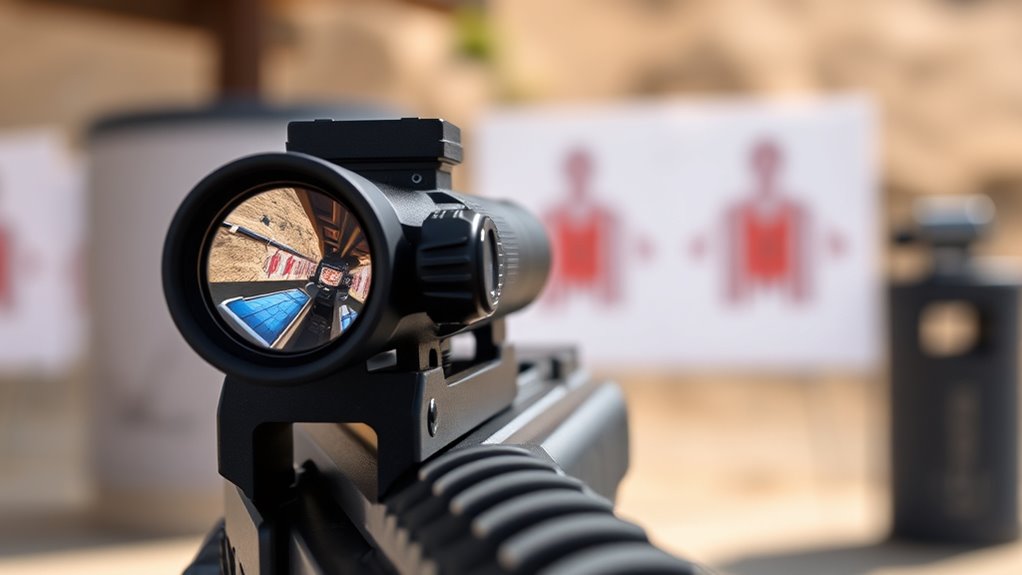
When you rely on a co-witness sight, you gain the advantage of quickly switching between your optic and iron sights without losing your point of aim. This setup guarantees that if your optic fails or gets damaged, you can immediately fall back on your iron sights without needing to realign. It also helps you maintain consistent sight picture and muscle memory, making target acquisition faster and more reliable under stress.
You won’t have to worry about zeroing issues since both sights share the same line of sight, reducing guesswork during shooting. Additionally, co-witness setups improve your adaptability in various lighting or environmental conditions, as you can choose the sighting method that works best at the moment.
When to Choose Absolute vs. Lower 1/3 Co-Witness Sight?
When deciding between Absolute and Lower 1/3 co-witness sights, you’ll want to evaluate how each aligns with your shooting style and needs. Absolute co-witness offers a perfectly aligned sight picture with your iron sights, while Lower 1/3 keeps the optic slightly lower for quicker target acquisition.
Your choice depends on whether you prioritize traditional sight alignment or faster, unobstructed viewing.
Absolute Co-Witness Benefits
Because absolute co-witness aligns the iron sights perfectly with your optic, it gives you a consistent point of reference every time you aim. This alignment means you can quickly verify your sight picture without adjusting your head position, which is essential in high-pressure situations.
If your optic fails, you can seamlessly switch to iron sights without losing your target or needing to realign, ensuring reliability. Absolute co-witness also simplifies training, as you learn one clear sight picture rather than managing different sight heights.
You’ll find it particularly beneficial if you prefer a straightforward, no-fuss setup or rely heavily on iron sights as a backup. It’s a practical choice when consistency, speed, and reliability are your top priorities during shooting.
Lower 1/3 Advantages
Although absolute co-witness offers a straightforward alignment, you might prefer a lower 1/3 co-witness if you want an unobstructed sight picture with your optic. With the lower 1/3 setup, your iron sights sit just below the optic’s window, allowing you to see through the red dot or holographic sight without obstruction. This means you can keep both eyes open, maintaining better situational awareness while aiming.
It also lets you quickly glance down and use your iron sights if your optic fails or gets damaged, without adjusting your head position too much. The lower 1/3 co-witness is especially helpful if you want a cleaner, less cluttered view through your optic, giving you flexibility without sacrificing backup sight accessibility.
Choosing Based On Use
Deciding between an absolute and a lower 1/3 co-witness depends largely on how you plan to use your firearm and optic. If you rely heavily on iron sights as your primary aiming method or expect frequent optic failures, an absolute co-witness is ideal. It guarantees your iron sights align perfectly with the red dot, allowing seamless changeover without adjusting your cheek weld or sight picture.
On the other hand, if you primarily use the optic but want quick access to iron sights for backup, the lower 1/3 co-witness offers a less cluttered sight picture. It lets you keep the red dot centered while the iron sights sit below, giving you faster target acquisition and better situational awareness. Choose based on your shooting style and mission needs.
How to Zero Your Co-Witness Sight
To zero your co-witness sight, start by aligning your iron sights on a target at your preferred distance. Once the irons are set, adjust your red dot so it matches the point of impact. This guarantees both sights work seamlessly together for accurate shooting.
Aligning Iron Sights
When you zero your co-witness sight, you’ll guarantee that both your iron sights and optic align perfectly at your chosen distance. Start by securing your firearm on a stable rest, then adjust the rear and front iron sights. Use a target at your zeroing range, typically 25 to 50 yards, and align the front post inside the rear aperture so the bullet impacts where your optic indicates.
Minor adjustments to windage and elevation will sync your iron sights with the optic perfectly.
| Step | Action |
|---|---|
| 1 | Secure firearm on rest |
| 2 | Set target at zero distance |
| 3 | Align front post in rear aperture |
| 4 | Adjust windage |
| 5 | Adjust elevation |
This guarantees consistent aiming using either sight system.
Adjusting Red Dot
After aligning your iron sights, the next step is zeroing your red dot to guarantee both sight systems work seamlessly together. Begin by mounting your firearm securely on a rest to minimize movement. Aim at a target placed about 25 yards away, then activate the red dot and fire a group of shots.
Note where the shots land relative to your point of aim. Use the windage and elevation adjustments on your red dot sight to shift the dot toward the center of the group. Repeat this process until your point of impact aligns precisely with the red dot.
Once zeroed, verify your settings at various distances to ensure consistent accuracy. Proper adjustment ensures your co-witness setup provides quick, reliable target acquisition.
Step-by-Step Guide to Setting Up a Co-Witness Sight
Although setting up a co-witness sight might seem complex at first, following a clear sequence will make the process straightforward. Start by securely mounting your red dot sight on the firearm’s rail system, ensuring it aligns properly with the iron sights. Next, position the red dot so its center matches the iron sights’ bore axis—this is vital for an absolute co-witness.
Once mounted, tighten the screws firmly but avoid over-tightening to prevent damage. Now, check the eye relief and sight picture by looking through the iron sights and confirming the red dot appears directly over them. If needed, adjust the red dot’s windage and elevation to line up perfectly with the iron sights at your desired zero distance.
Finally, verify the sight’s stability by gently tapping and rechecking alignment. With these steps, you’ll have a reliable co-witness setup that enhances your aiming options efficiently.
Common Co-Witness Sight Problems and Fixes
Setting up your co-witness sight correctly is just the start; you might still encounter some common issues that can throw off your aim or affect reliability. One problem is misalignment, where the iron sights and optic don’t perfectly line up. This can cause inconsistent point of impact.
To fix this, double-check your mounting and zero both sights carefully. Another issue is sight obstruction—dirt, debris, or lens fogging can block your view. Clean your sights regularly and consider anti-fog treatments.
Parallax errors can also affect accuracy at different distances; make sure your optic is designed for co-witnessing and properly zeroed at your preferred range. Finally, if the iron sights interfere with the optic’s view, you might need to adjust your height or switch to lower 1/3 co-witness mounts. By addressing these problems promptly, you’ll keep your co-witness setup reliable and ready for any situation.
Tips for Faster Shooting With Co-Witness Sights
To shoot faster with co-witness sights, you need to focus on proper sight alignment every time. Keeping a consistent sight picture helps you quickly acquire your target without hesitation.
Let’s look at how these two factors can improve your speed and accuracy.
Proper Sight Alignment
When you line up your co-witness sights correctly, you’ll notice a significant improvement in both speed and accuracy. Proper sight alignment means the front post is centered perfectly between the rear sights, with the tops level. This guarantees your shot goes exactly where you intend.
To help you stay consistent, here’s a quick reference:
| Step | Focus Point | Tip |
|---|---|---|
| 1. Grip | Steady hands | Maintain firm control |
| 2. Sight Level | Rear sight | Keep it flat |
| 3. Front Focus | Front sight post | Sharp and clear |
| 4. Centering | Between rear sights | Equal spacing |
| 5. Alignment | Tops of sights | Even and level |
Practice these steps to make your shot faster and more precise.
Consistent Sight Picture
Although mastering proper sight alignment is essential, developing a consistent sight picture is what truly speeds up your shooting with co-witness sights. You want to train your eyes to quickly find the front sight post perfectly centered within the rear sight aperture, creating a reliable and repeatable visual reference.
Practice focusing on the front sight while keeping the target and rear sight slightly blurred. This focus helps you acquire your target faster and maintain accuracy under pressure. Consistency in your sight picture reduces hesitation and guesswork, which is key for faster follow-up shots.
The more you drill this, the more natural it becomes, allowing you to instinctively align your sights without conscious thought, making your shooting faster, smoother, and more precise every time you draw.
How Co-Witness Sights Improve Backup Reliability
Because co-witness sights align your primary optic with backup iron sights, you can quickly switch between them without losing your point of aim. This alignment guarantees that if your primary optic fails—due to battery loss, damage, or fogging—you can immediately rely on your backup sights without having to re-acquire your target. You won’t waste critical seconds adjusting your stance or sight picture, which boosts your confidence and effectiveness in high-pressure situations.
Additionally, co-witness setups reduce the chance of misalignment between sights, a common issue when irons and optics are mounted separately. By having both sights share the same line of sight, you eliminate guesswork during switches. This consistency improves your backup’s reliability because you always know where your bullets will land when switching.
Fundamentally, co-witness sights streamline your shooting process, making your backup iron sights a dependable and ready option whenever you need them.
Advanced Tips for Optimizing Your Co-Witness Setup
To get the most out of your co-witness setup, you’ll want to fine-tune the alignment and positioning of both your optic and iron sights. Start by making certain your optic is mounted at the correct height to achieve either absolute or lower 1/3 co-witness, depending on your preference. Adjust the windage and elevation of your iron sights so they perfectly align with your optic’s reticle.
This reduces the need for compensation if your optic fails. Next, practice switching between sights smoothly. Drilling this regularly builds muscle memory, helping you switch quickly under stress.
Also, consider ambient lighting—some optics have adjustable brightness, so tweak it for varying conditions to maintain visibility of both reticle and irons. Finally, secure your mounts tightly to prevent shifts during recoil. Using thread locker on screws can help maintain zero.
These steps guarantee your co-witness setup remains reliable, fast, and precise when it matters most.
Frequently Asked Questions
Can Co-Witness Sights Be Used With Night Vision Devices?
Yes, you can use co-witness sights with night vision devices, but you’ll want to make certain the sights don’t interfere with your device’s image. Proper alignment and compatibility are key for effective use in low-light conditions.
Ensuring that the sights are properly adjusted will help maintain a clear sight picture through the night vision device. It’s important to test the setup in various lighting scenarios to confirm optimal performance.
With the right combination, co-witness sights can enhance your accuracy without compromising the functionality of your night vision equipment.
Are Co-Witness Sights Compatible With All Handgun Models?
No, co-witness sights aren’t compatible with all handguns. You’ll need to check your specific model’s slide and mounting options since some pistols don’t support co-witness setups without custom modifications or specific sight systems designed for them.
How Do Co-Witness Sights Affect Firearm Weight and Balance?
Co-witness sights add minimal weight, so you probably won’t notice much difference. However, depending on the model, they might slightly shift your firearm’s balance.
This shift usually won’t affect your shooting comfort or performance.
What Maintenance Is Required for Co-Witness Sights?
You’ll need to keep your co-witness sights clean and free of debris. Regularly check for loose screws and guarantee proper alignment. Applying a light lubricant can prevent rust, keeping your sight reliable and accurate during use.
Can Co-Witness Sights Be Used Effectively in Competitive Shooting?
You absolutely can use co-witness sights effectively in competitive shooting—they offer quick target acquisition and reliability.
Like a knight trusting his sword, you’ll appreciate the seamless shift between iron sights and optics under pressure.
Conclusion
While you might worry that co-witness sights complicate your setup, they actually streamline your aiming process by aligning your optic with iron sights for faster target acquisition. Once zeroed correctly, they enhance backup reliability without slowing you down.
With a bit of practice, you’ll find co-witness sights not only boost your shooting speed but also provide a dependable fallback in critical moments. This makes them a smart addition to your gear, improving both accuracy and confidence. Incorporating co-witness sights into your setup ensures you’re prepared for any situation.