7 Tips to Store Guns Without a Safe
You can store your guns securely without a traditional safe by using sturdy lockboxes with tamper-resistant locks and hidden compartments that blend into your space. These alternative gun storage solutions provide safety and accessibility while minimizing the need for bulky safes.
Disassembling firearms to limit access adds another layer of security and helps prevent unauthorized use.
Anchor your storage units to prevent theft or movement. Keep ammunition locked away separately in labeled containers to ensure safe handling and storage.
Portable gun safes offer flexible options for on-the-go security and convenience.
Regularly maintain and check your storage to guarantee safety and longevity.
By following these practical gun storage tips, you can keep your firearms safe without investing in a traditional safe. Keep exploring to discover even more practical tips and details.
Key Takeaways
- Use sturdy, lockable gun lockboxes with tamper-resistant features like biometric or keypad locks for secure, portable storage.
- Conceal firearms in hidden compartments such as hollow furniture, behind artwork, or removable wall panels for discreet access.
- Anchor storage units or lockboxes to walls or heavy furniture to prevent easy removal by intruders.
- Store ammunition separately in locked, labeled, and dry containers to reduce risks and unauthorized access.
- Regularly clean firearms and maintain controlled humidity to prevent corrosion and ensure long-term functionality without a traditional safe.
Choose Secure Lockboxes for Gun Storage
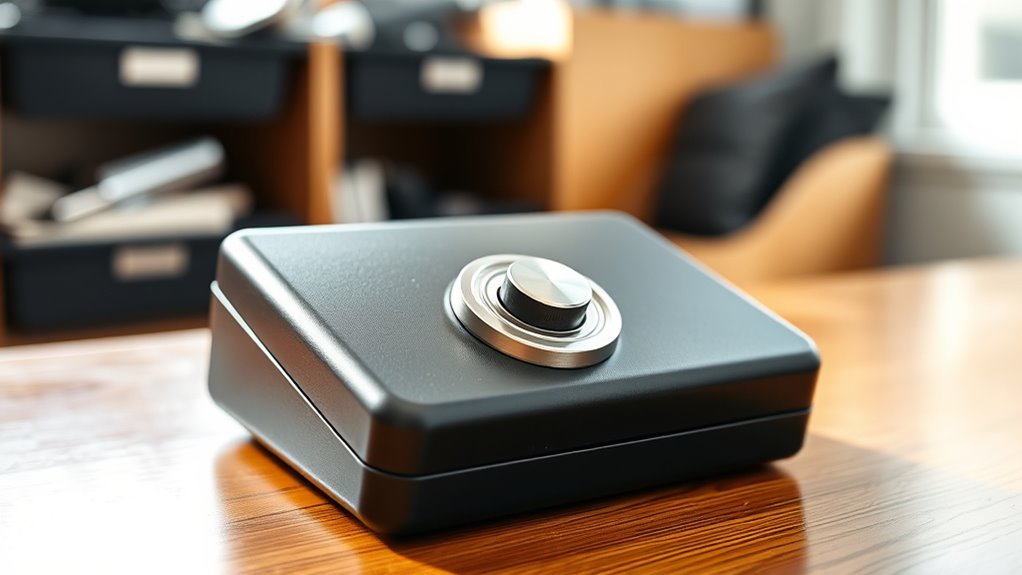
Why settle for less when it comes to storing your guns? Choosing a secure lockbox is a smart alternative if you don’t have a safe. Lockboxes offer reliable protection, keeping your firearms locked away from unauthorized access while still being more compact and portable.
When selecting one, look for sturdy materials like steel and a tamper-resistant lock mechanism—keypad or biometric options provide quick access without compromising security. Make sure the lockbox is big enough to fit your firearm comfortably, including any accessories. You’ll also want a lockbox that’s easy to anchor to a fixed object, preventing thieves from simply grabbing and running.
Use Hidden Compartments to Conceal Firearms
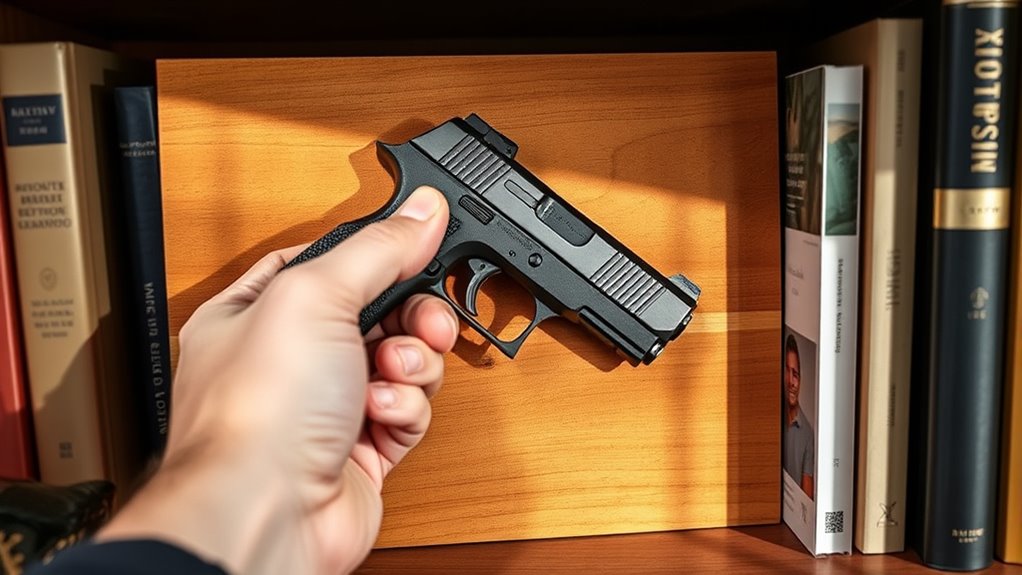
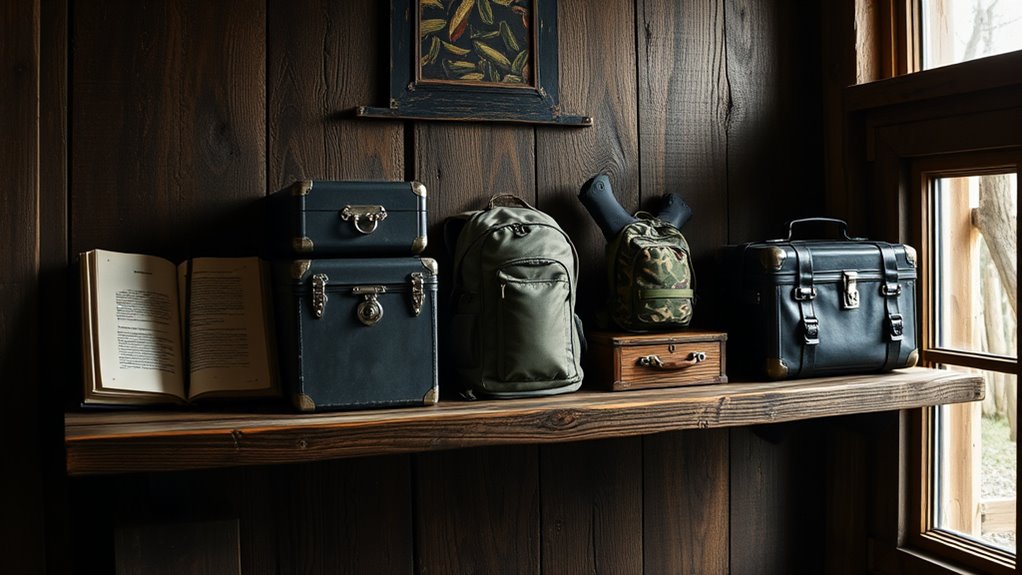
You can use hidden compartments to keep your firearms out of sight and add an extra layer of security. Think about creative spots like false drawers or behind artwork, but always prioritize safety to prevent accidental access.
Finding the right balance between concealment and quick access is key.
Creative Concealment Ideas
One of the smartest ways to keep your firearms secure without a traditional safe is by using hidden compartments. You can cleverly integrate these into everyday items or furniture, making your guns less noticeable and readily accessible.
Think about spots like inside hollow books, under drawers, or behind removable wall panels. These creative concealment ideas help keep your firearms out of sight from unwanted eyes while maintaining quick access when needed.
| Concealment Spot | Benefits |
|---|---|
| Hollow Books | Blends with decor, discreet |
| Under Drawers | Easy access, hidden from view |
| Wall Panels | Large space, customizable |
Using these ideas, you enhance security without bulky safes, combining stealth and convenience effectively.
Safety Considerations
Although hidden compartments offer clever ways to conceal firearms, ensuring safety should always be your top priority. When using these spaces, make sure they’re secure enough to prevent easy access by children or unauthorized individuals. Avoid obvious spots that intruders might quickly check, but don’t sacrifice quick access for yourself in emergencies.
Use lockable compartments or add secondary locking mechanisms to enhance security. Regularly inspect your chosen hiding place to confirm it remains sturdy and functional. Remember, concealment doesn’t replace responsible storage practices like unloading firearms and keeping ammunition separate.
Disassemble Firearms to Reduce Accessibility
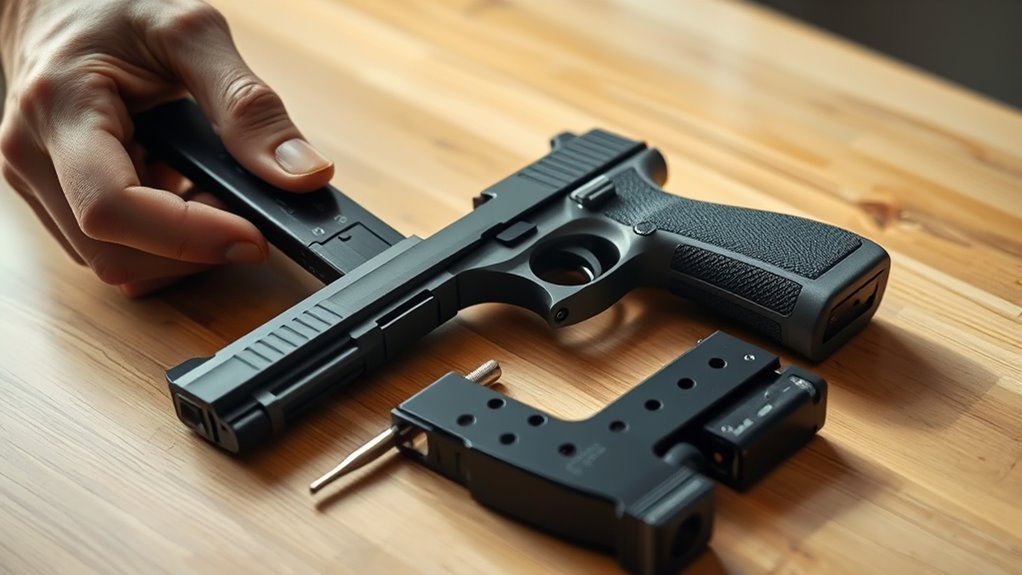
If you disassemble your firearm, it becomes much harder for anyone to use it quickly or without your knowledge. Breaking down your gun into key parts allows you to store them separately, adding an extra layer of security.
You’ll want to follow safe storage techniques to keep all components secure and out of reach.
Benefits of Disassembly
Why make the effort to disassemble your firearm when storing it? Taking your gun apart reduces the risk of unauthorized use because it’s less accessible and harder to operate. When components like the barrel, slide, or bolt are separated, the firearm can’t be quickly or easily assembled, adding a layer of security without needing a safe.
Disassembly also helps protect your gun from damage caused by improper storage. By keeping parts separated, you minimize wear and tear, and it’s easier to clean and maintain each part before storage. Plus, if you have children or guests in your home, disassembled guns provide peace of mind since they’re not immediately functional.
Safe Storage Techniques
When you disassemble your firearm before storing it, you make it much harder for anyone to use it without your knowledge. Taking apart key components, like removing the bolt or separating the slide, reduces immediate accessibility and prevents quick reassembly. This method is especially useful if you don’t have a traditional safe.
Store the disassembled parts in separate, secure locations—consider lockable containers or hidden compartments. Always verify each part is clean and dry before storage to avoid damage. Labeling parts discreetly can help you reassemble quickly when needed.
Anchor Gun Storage to Prevent Theft or Movement
Although you might not have a traditional safe, anchoring your gun storage is essential to stop theft or accidental movement. You can secure your firearms by attaching them to a heavy piece of furniture or a sturdy wall using anchor bolts or specialized gun locks. This prevents easy removal and adds a layer of security against unauthorized access.
If you store guns in a cabinet or closet, consider installing locking brackets or cables that firmly hold the firearm in place. Avoid placing guns where they could fall or be knocked over, which could cause damage or accidental discharge. Remember, the goal is to keep your firearms both secure and stable, so think about the best anchoring method based on your storage location and the specific firearm size.
Separate and Secure Ammunition From Guns
Since storing guns safely is essential, you shouldn’t overlook the importance of keeping ammunition separate and secure. Storing ammo apart from your firearms reduces the risk of accidental discharge and unauthorized use. Choose a cool, dry place away from your guns to prevent moisture damage and corrosion.
Use lockable containers or ammo cans designed specifically for safe storage, ensuring they’re sturdy and tamper-resistant. Label your ammo storage clearly to avoid confusion and to keep track of different calibers. If you have children or unauthorized individuals around, keeping ammunition locked up is even more critical for safety.
Avoid storing loose rounds in easily accessible spots like drawers or boxes without locks. By separating your guns from their ammunition, you add an extra layer of safety, reducing the chance of accidents or theft. This simple step helps you stay responsible and organized while protecting everyone in your household.
Use Portable Gun Safes for Flexible Gun Storage
Separating your ammunition from your firearms is a smart safety move, but you still need a secure way to store your guns themselves. Portable gun safes offer a flexible solution that combines security with convenience. These compact, lockable cases are designed to protect your firearms from unauthorized access while allowing you to move them easily when needed.
You can store portable safes in discreet locations, such as under a bed, inside a closet, or in a locked cabinet. Many models feature biometric locks or combination dials, giving you quick access without compromising safety. Since they’re lightweight and compact, you can also take them along when traveling or hunting.
Using a portable gun safe helps prevent accidental handling and keeps your firearms out of reach of children or intruders. It’s a practical choice if you don’t have space for a large safe but still want reliable protection for your guns.
Check and Maintain Your Gun Storage Regularly
To keep your firearms safe and functional, you should regularly check and maintain your gun storage. Over time, dust, moisture, and temperature changes can impact both your guns and their storage environment. Make it a habit to inspect your storage area for signs of rust, corrosion, or any mechanical issues with locks or closures.
Wipe down your firearms with a clean, dry cloth and apply a light coat of oil to prevent rust. Confirm the storage location remains dry and well-ventilated to avoid moisture buildup, which can damage your guns and accessories. If you use gun racks, hooks, or cases, check for wear or damage that might compromise security or safety.
Regular maintenance also helps you stay aware of your firearm’s condition, ensuring they’re always ready when needed. By staying proactive, you’ll extend the life of your guns and keep them stored safely without needing a traditional safe.
Frequently Asked Questions
How Do Temperature and Humidity Affect Gun Storage Without a Safe?
Temperature and humidity can cause rust and damage to your gun’s metal and wood parts. You’ll want to keep your guns in a cool, dry place with low humidity to prevent corrosion and maintain their condition over time.
What Legal Considerations Apply to Storing Guns at Home?
You’ve got to follow local laws about secure storage, especially if kids live nearby. Many places require guns to be locked or unloaded.
Always check your state’s specific legal requirements to avoid serious penalties.
Can Gun Storage Methods Prevent Children From Accessing Firearms?
You might think storing guns without a safe isn’t secure, but using trigger locks, unloaded storage, and high, hidden spots can effectively prevent kids from accessing them.
Just combine methods to guarantee safety and peace of mind.
How Often Should Firearms Be Cleaned When Stored Long-Term?
You should clean your firearms at least every six months during long-term storage to prevent rust and corrosion.
If you live in a humid area, consider cleaning them more often to keep them in good working condition.
Are There Insurance Benefits for Using Alternative Gun Storage Methods?
You might not get direct insurance benefits for using alternative gun storage methods, but securely storing your firearms can lower risk, which some insurers appreciate.
Always check your policy details and discuss storage options with your provider.
Conclusion
Storing guns without a safe can feel tricky, but with these tips, you’re well on your way to keeping them secure. Did you know over 60% of gun thefts happen from unlocked or improperly stored firearms? That’s a powerful reminder to take precautions seriously.
By using lockboxes, hidden compartments, and anchoring your storage, you’re not just protecting your guns—you’re protecting your home and loved ones too.
Stay safe and stay smart! Remember, proper gun storage without a safe is essential for preventing theft and ensuring firearm safety in your household.