How Do You Wear a Paddle Holster in 7 Easy Steps?
To wear a paddle holster correctly, it’s important to understand how this convenient carrying option clips directly to your waistband without the need for a belt. Paddle holsters offer ease of use and quick attachment, making them popular for concealed carry.
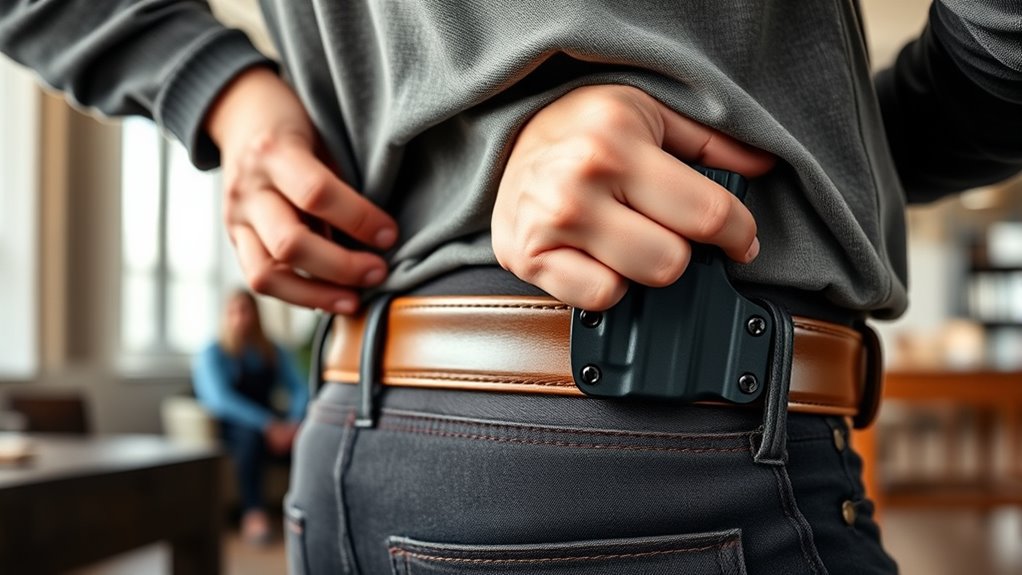
Start by choosing a comfortable position, typically on your strong side hip, where the holster feels natural and accessible. Secure the paddle clip firmly onto a sturdy belt or waistband to prevent shifting during movement.
Next, adjust the cant angle to about 10-15 degrees to allow a smooth and efficient draw. Set the ride height so that the holster is easy to reach while remaining concealed under your clothing.
Once everything feels right, test the comfort level and tighten any retention screws to keep your firearm secure.
Finally, practice drawing and reholstering safely and smoothly. Following these steps will help you improve your carry skills with a paddle holster quickly and confidently.
Key Takeaways
- Attach the paddle holster clip securely onto a sturdy, rigid belt at your preferred carry position on the waistband.
- Choose a comfortable holster position, commonly at the strong side hip (3-5 o’clock for right-handed users).
- Adjust the cant angle by tilting the holster forward 10-15 degrees for a smoother and quicker draw.
- Set the ride height to balance accessibility and concealment, testing comfort while sitting, walking, and bending.
- Tighten retention screws to securely hold the firearm without hindering a smooth draw or reholstering.
Understand What a Paddle Holster Is and Why It Matters
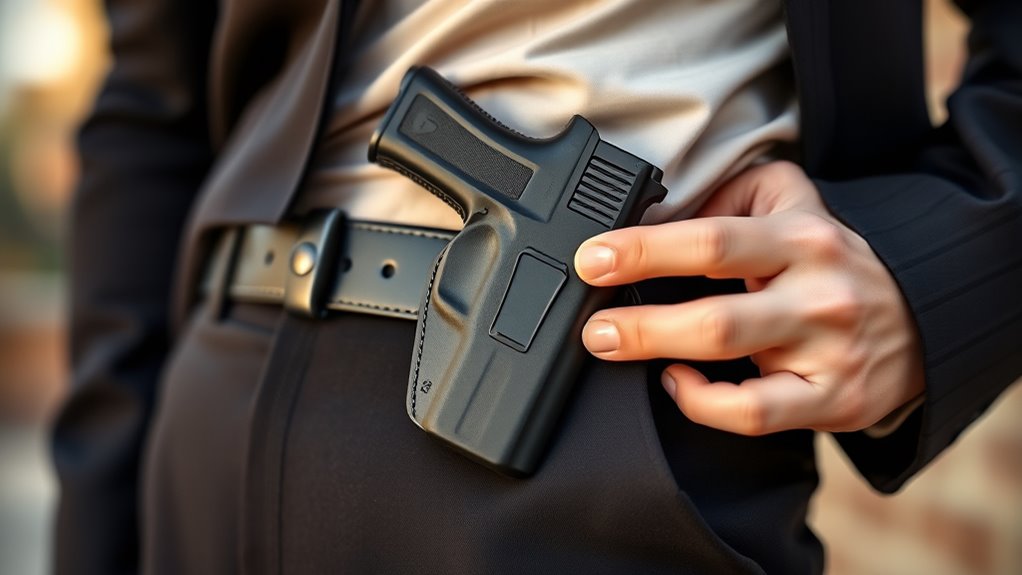
Before you start wearing a paddle holster, it’s important to know what it is and why it matters. A paddle holster is a type of gun holster designed to be worn on your waistband without needing to be threaded through a belt. It has a flat, paddle-shaped piece that slides inside your pants, holding the holster securely against your body.
This design makes it easy to put on and take off quickly, which is why it’s popular for concealed carry and law enforcement use. Knowing what a paddle holster does helps you appreciate its convenience and versatility. It offers a balance between accessibility and security, keeping your firearm stable while allowing quick draws.
Since it doesn’t require a belt, it’s great if you prefer flexible or casual wear. Understanding these basics guarantees you’re prepared to wear the paddle holster effectively and comfortably before moving on to positioning it properly.
Find the Right Position for Your Paddle Holster
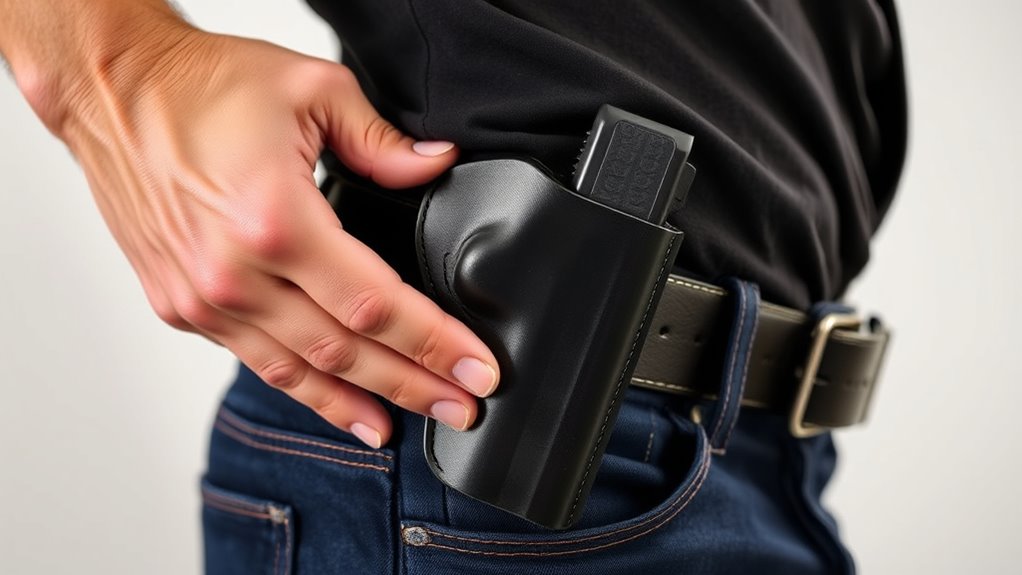
You’ll want to find the ideal placement zone on your body to guarantee your paddle holster feels comfortable and stays secure. Positioning it where you can easily access your firearm without restriction is key.
Let’s look at the best spots to balance comfort and quick reach.
Ideal Placement Zones
Although paddle holsters offer flexibility, finding the ideal placement zone is key to comfort and quick access. Typically, the most common spots are the strong side hip, around the 3 to 5 o’clock position for right-handers, or 7 to 9 o’clock for left-handers. This allows natural, unobstructed draws.
You can also consider the appendix carry, near the 1 to 2 o’clock position, which some find faster for close-quarters. However, it’s important to avoid placing the holster too far forward or back, as that can interfere with sitting or walking. Try positioning it where your arm naturally rests and your body movements won’t hinder access.
Experiment slightly within these zones to find what fits your body shape and daily activities best.
Comfort and Accessibility
When choosing the right position for your paddle holster, comfort and accessibility should be your top priorities. You want the holster to sit where it feels natural, without digging into your side or restricting movement. Try placing it on your strong side hip, around 3 to 5 o’clock, where you can easily draw without awkward twists.
Make sure the paddle sits flush against your body to prevent shifting during activity. Test different heights and angles to find what lets you reach your weapon smoothly and quickly. Remember, discomfort will distract you and slow your response.
Take time adjusting your holster position until it feels secure yet unobtrusive, allowing you to move freely while keeping your firearm accessible at all times.
Secure the Paddle Holster Clip to Your Belt
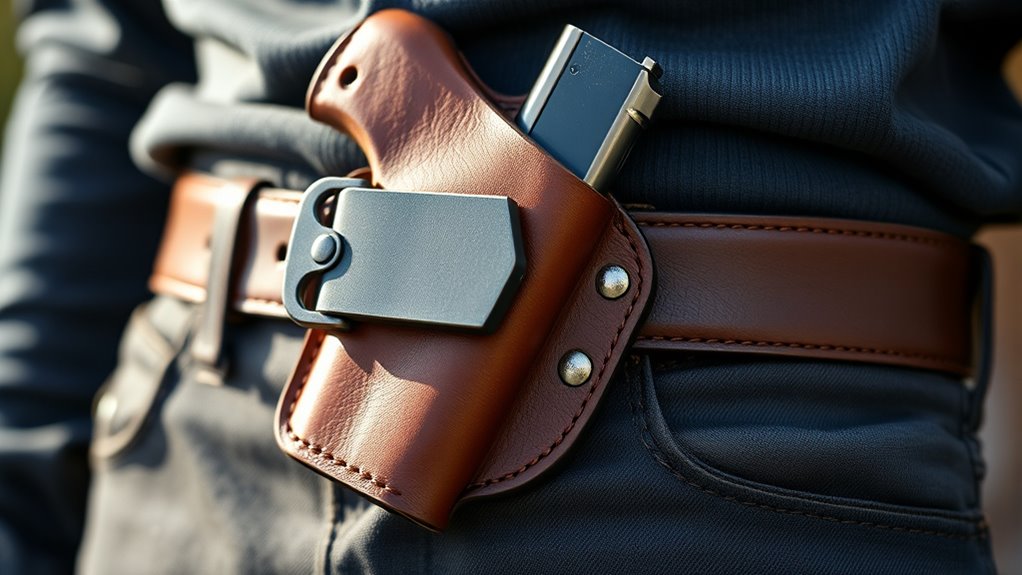
Make certain you choose a sturdy belt that can support the weight of your paddle holster. Next, position the paddle clip carefully to make sure it sits comfortably and securely on your belt.
Finally, double-check that the holster is firmly attached to prevent any unwanted movement.
Choosing The Right Belt
Choosing the right belt is essential for keeping your paddle holster securely in place throughout the day. You’ll want a belt that’s sturdy and designed to handle the weight and movement of your holster. Look for belts made from thick leather or reinforced nylon, as they provide the necessary rigidity.
Avoid thin or flexible belts that may sag or shift, causing discomfort and insecurity. Make sure the belt fits well—too loose, and your holster will wobble; too tight, and it’ll be uncomfortable. Also, choose a belt wide enough to accommodate the paddle clip without causing strain.
A good belt complements the holster’s retention, giving you confidence that your gear stays put no matter what your day brings.
Positioning The Paddle Clip
Although securing the paddle clip might seem straightforward, proper positioning is key to comfort and accessibility. You want the holster to sit securely without digging into your side or restricting movement.
Here’s how to position it effectively:
- Align with Your Belt: Place the paddle clip so it grips the center of your belt, ensuring the holster stays stable during activity.
- Adjust Height: Position the clip so the holster rests just above your hip bone for easy reach and natural draw.
- Check Angle: Tilt the paddle slightly forward or backward to suit your draw preference, whether straight up or angled toward your body.
Ensuring A Secure Fit
Once you’ve positioned the paddle clip correctly, the next step is securing it firmly to your belt. Slide the paddle fully against your body, ensuring the clip hooks over the top edge of your belt. Make sure the clip sits snugly without gaps, preventing any wobbling or shifting during movement.
Check that the belt is sturdy enough to support the holster’s weight; thinner or loose belts might not hold it securely. If the clip feels loose, adjust the paddle’s angle or reposition it slightly until it grips tightly. After attaching, give the holster a gentle tug to confirm it won’t slip off.
A secure fit keeps your firearm accessible and stable, making it safer and more comfortable to carry throughout the day.
Adjust the Cant Angle for a Quick, Comfortable Draw
When you adjust the cant angle of your paddle holster, you make it easier and faster to draw your firearm. The cant angle is the tilt of the holster on your hip, and finding the right angle improves both comfort and accessibility.
Here’s how to fine-tune it:
- Start Neutral: Begin with the holster straight up and down. This neutral position is a good baseline to see what adjustments feel natural.
- Tilt Slightly Forward: Experiment by tilting the holster forward (around 10 to 15 degrees). This angle often allows a smoother, more natural draw motion, especially when seated or moving.
- Adjust for Comfort: If you prefer a more aggressive draw or your everyday movements require it, try a stronger cant. But avoid extremes that might slow your draw or cause discomfort.
Adjust Ride Height for Easy Access and Better Concealment
Adjusting the cant angle helps with your draw, but how high or low your paddle holster sits on your hip can be just as important. The ride height affects both how quickly you can access your firearm and how well you can conceal it under your clothing.
If the holster rides too high, it might print or be uncomfortable when sitting. Too low, and your draw becomes slower or awkward.
Here’s a quick guide to help you find the right ride height:
| Ride Height | Accessibility | Concealment |
|---|---|---|
| High | Quick draw, easier grip | May print, less concealed |
| Mid | Balanced draw and concealment | Ideal for daily carry |
| Low | Draw may be slower | Better concealment, less comfort |
Try adjusting your holster up or down a notch and see what feels most natural. Your comfort and speed should guide your choice.
Test Comfort and Tighten Retention Screws to Secure Your Holster
Before you finalize your paddle holster setup, you’ll want to test how comfortable it feels during movement and daily activities. Comfort is key, as you’ll be wearing it for extended periods.
Once you’re satisfied with the positioning, it’s important to tighten the retention screws to make sure your firearm stays securely in place.
Here’s how to do it effectively:
- Wear the holster and move around — Walk, sit, and bend to check for any pinching or discomfort.
- Adjust if necessary — Slightly loosen or tighten the screws to find the right balance between retention and ease of draw.
- Secure the screws firmly — Use a screwdriver to tighten retention screws so your holster holds your firearm snugly without being too difficult to draw.
Practice Drawing and Reholstering Your Paddle Holster
Once you’ve guaranteed your paddle holster fits comfortably and the retention screws are secure, it’s time to focus on practicing your draw and reholstering technique. Start by standing in a safe environment, ensuring your firearm is unloaded for safety. Grip your handgun naturally, and draw it smoothly from the holster, paying attention to your hand placement and the motion’s fluidity.
Reholstering requires just as much care—never force the gun back in. Instead, guide it gently until it clicks into place, confirming the retention mechanism engages properly.
Practice this sequence repeatedly until it feels instinctive and quick without fumbling. This builds muscle memory, which is vital in high-pressure situations. Also, practice while seated or moving to simulate real-life conditions.
Frequently Asked Questions
Can Paddle Holsters Be Used for Left-Handed Shooters?
Yes, paddle holsters can be designed for left-handed shooters. You’ll want to look for models specifically made for left-hand carry to guarantee comfort and quick access, making your draw smooth and efficient.
How Do Paddle Holsters Compare to Inside-The-Waistband Holsters?
About 60% of users find paddle holsters easier to put on and remove than inside-the-waistband ones. You’ll appreciate paddle holsters for convenience, but inside-the-waistband offers better concealment and security during movement.
Are Paddle Holsters Suitable for Concealed Carry in Hot Weather?
Paddle holsters can work for concealed carry in hot weather, but you might find them less comfortable due to increased heat and sweat. You’ll want breathable clothing and maybe a holster with ventilation to stay comfortable all day.
Choosing the right materials for your holster can also help manage moisture. Consider lightweight fabrics and holsters designed to allow air circulation. This can make a significant difference during extended wear in the heat.
What Materials Are Commonly Used to Make Paddle Holsters?
You’ll find paddle holsters commonly made from materials like leather, Kydex, and nylon. Each offers different benefits—leather is classic and comfortable, Kydex is rigid and durable, while nylon is lightweight and flexible for easy wear.
Can Paddle Holsters Accommodate Different Firearm Sizes?
Oh, because one size fits all, right? Actually, paddle holsters do accommodate different firearm sizes, but you’ll want to pick one designed for your specific gun model to guarantee a secure fit and easy access when you need it most.
Conclusion
Now that you’ve mastered these steps, wearing your paddle holster will feel as natural as a cowboy holstering his six-shooter at high noon. With the right position, secure fit, and smooth draw, you’re ready to handle any situation confidently and comfortably.
Keep practicing, and soon, your paddle holster will be an extension of yourself—quick, reliable, and always ready when you need it most. Just like the legends, you’ve got this down.
Wearing a paddle holster correctly ensures maximum comfort and accessibility. By following these easy steps, you can achieve a secure fit and efficient draw every time. Embrace the confidence that comes with mastering your paddle holster.